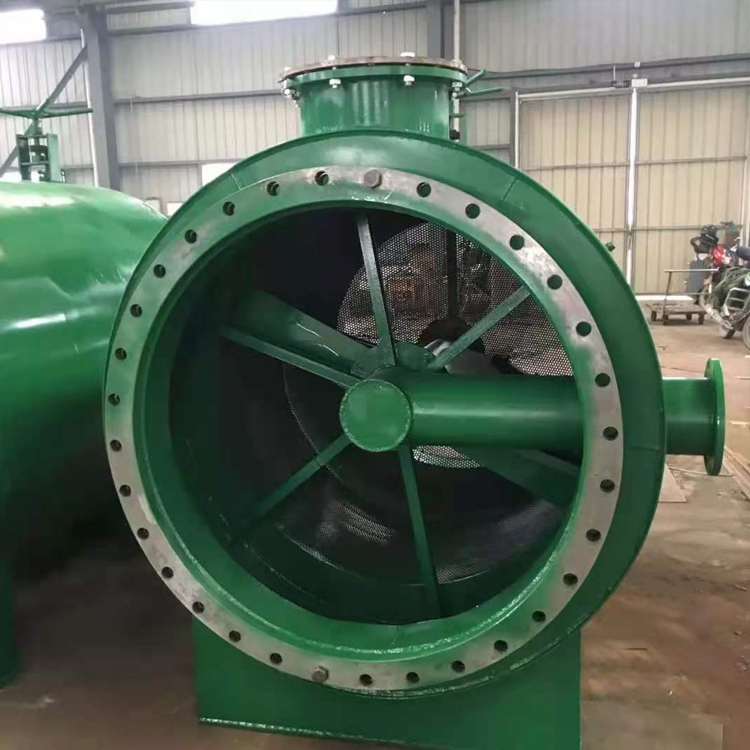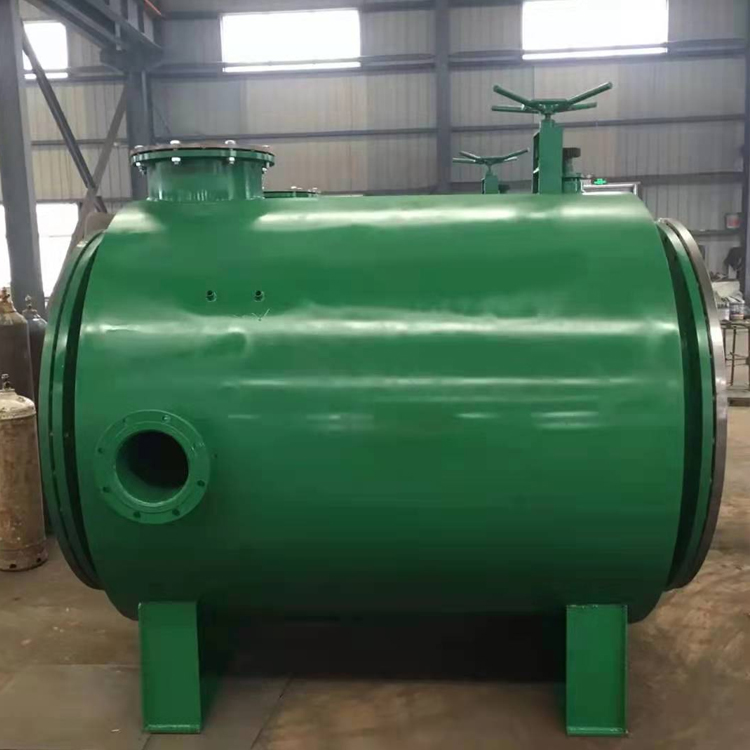










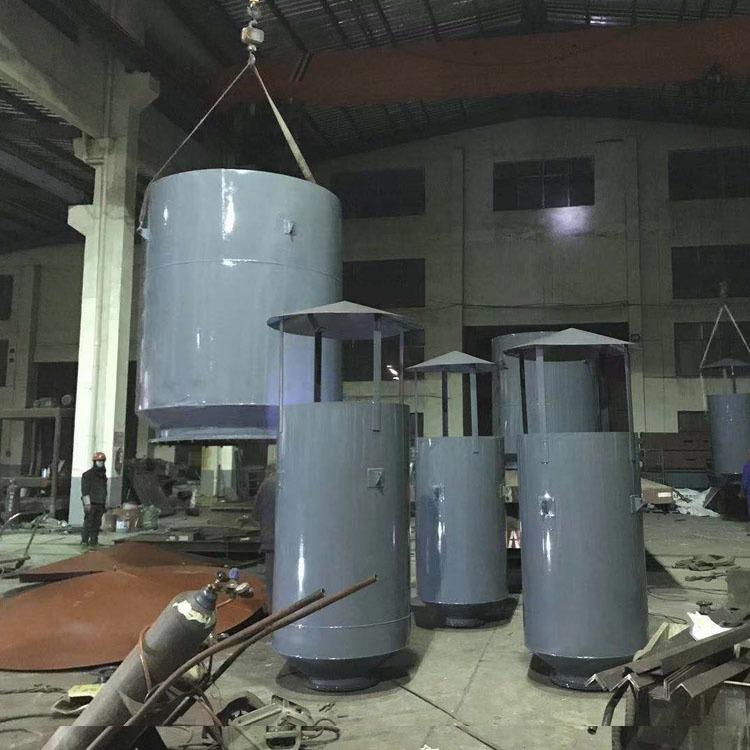
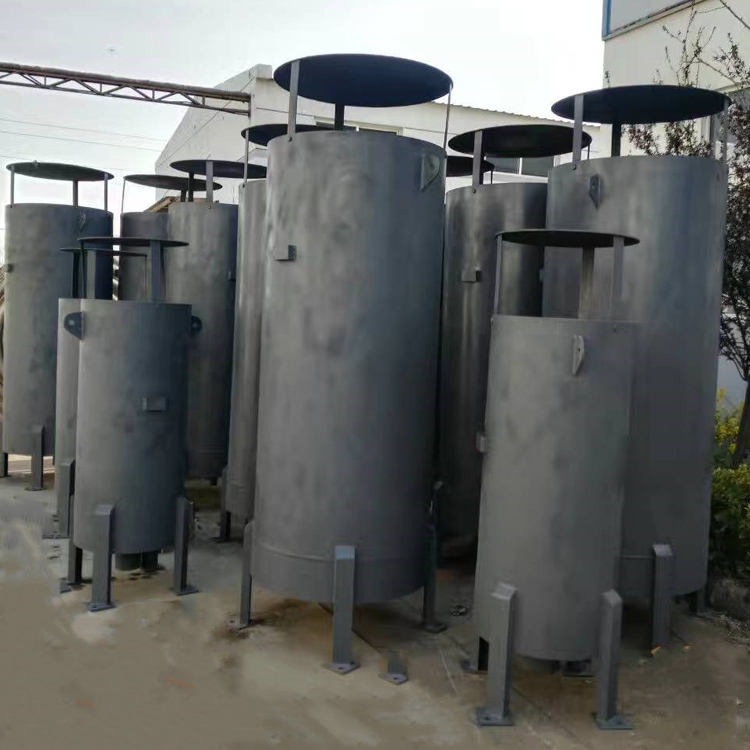
Remove debris larger than 8mm from recirculating water to prevent it from entering the heat exchanger tubes of the condenser, blocking the tubes and affecting cooling efficiency, as well as ensuring the ball collection rate of the ball cleaning device.
II. Format:
Our company has launched a product after years of practice, featuring strong cleaning power, low water resistance, high level of automation, and reliable operation.Easy-to-maintain secondary filter screen. Its specific forms include:
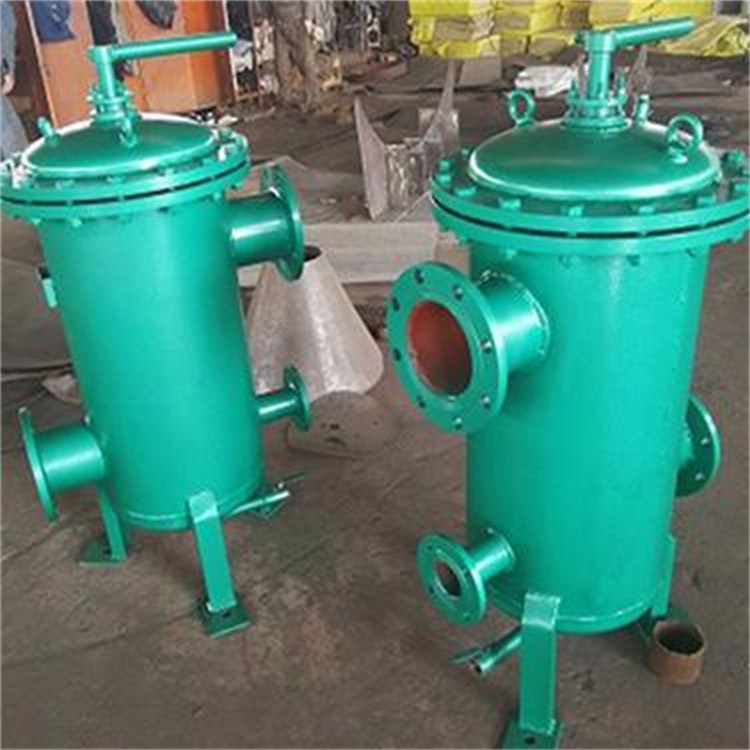
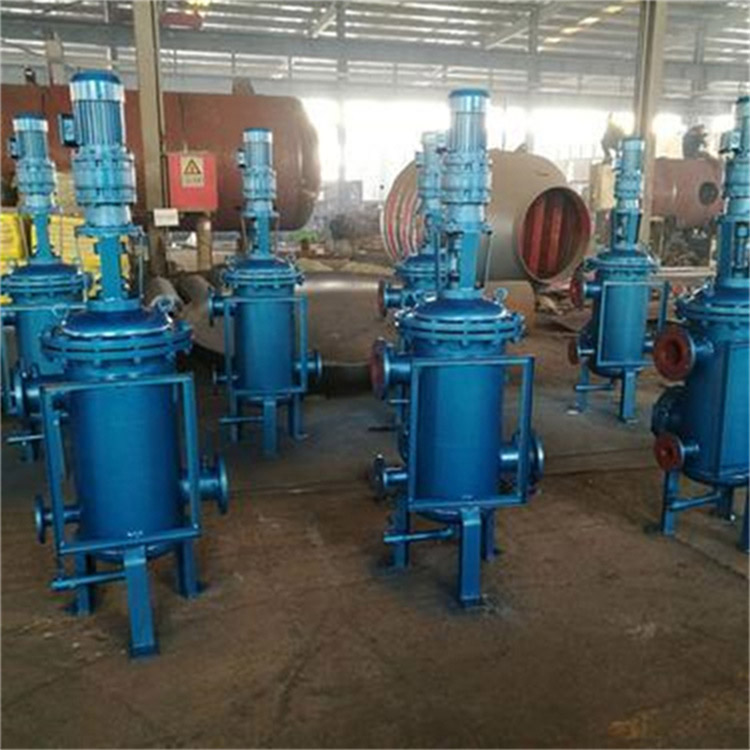
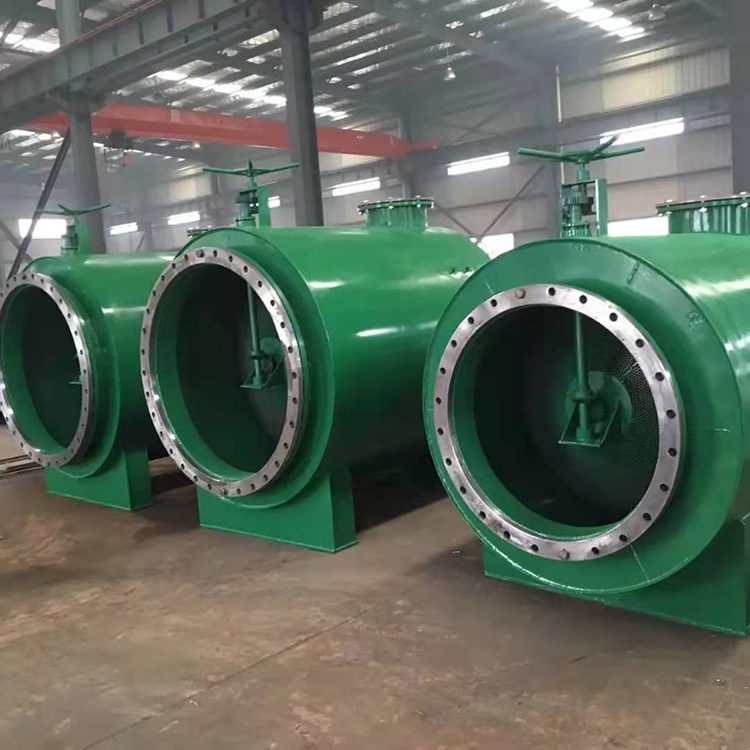
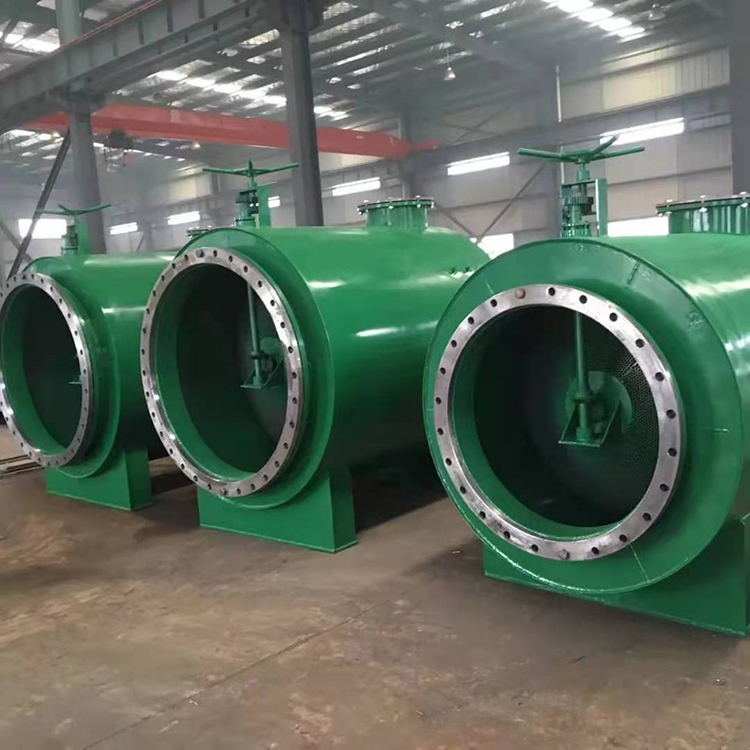
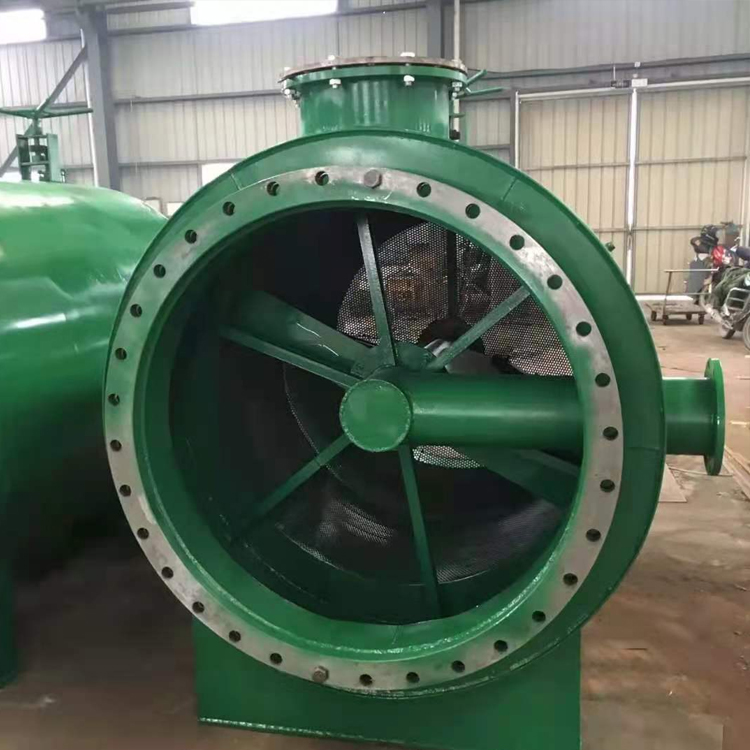
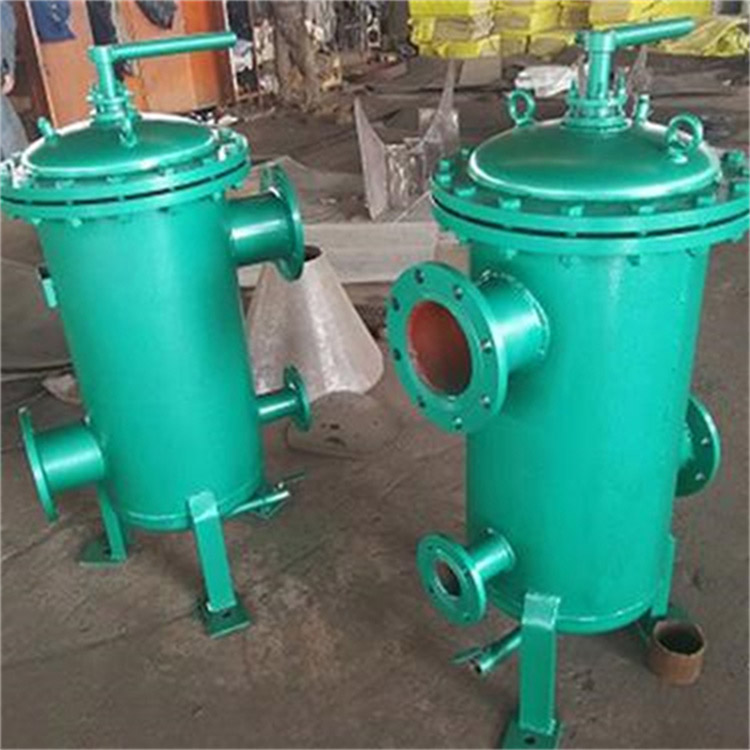
WE-type outer-rotating secondary filter with core fixed (see figure) and EDF-type negative pressure backflush secondary filter with drain grate (core).
1. WE External Rotation Secondary Filter Mesh
A. Structural Features
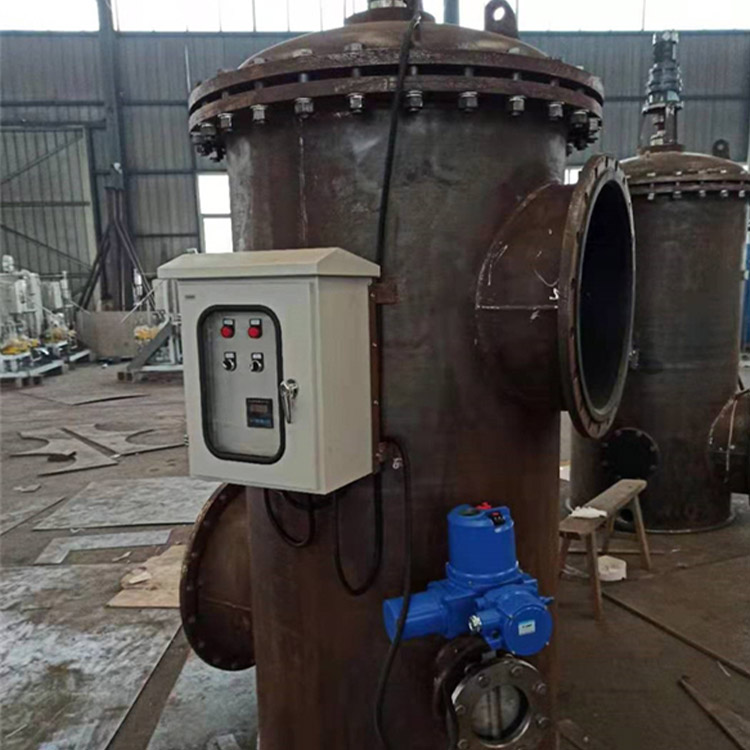
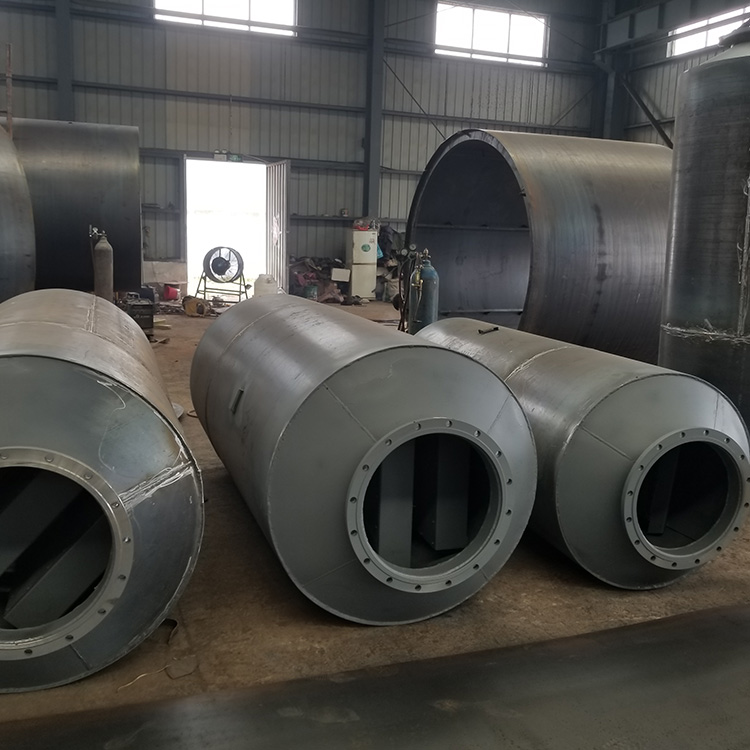
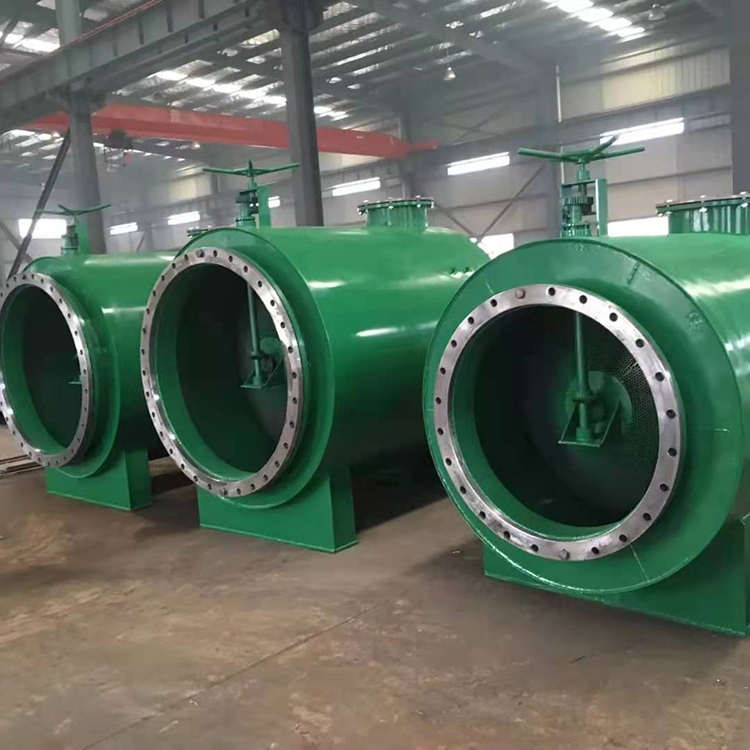
The WE series externally rotated secondary filter is a vertical installation, consisting of a housing, filter core, butterfly valve, and drain valve, etc. The filter core is made of stainless steel.Outfall and manhole locations are designed based on the actual conditions of the power plant.
B. Working Principle
The incoming water of the WE series external rotation secondary filter is from the outer to the inner core, where the debris in the circulating cooling water is intercepted and accumulates around the outer core. When the pressure difference between the inner and outer cores reaches a certain value, open the drain valve and shift the butterfly valve from the fully open position to the guiding position. This allows the circulating cooling water to rapidly rotate and flow tangentially around the outer core, washing away the accumulated debris, which is then collected and drained through the drain pipe. After the cleaning and flushing is completed, move the butterfly valve back to the fully open position and close the drain valve.
c. Key Technical Parameters
Wastewater Removal Rate: >95%, Water Resistance: <300H20, Mesh Core Aperture Diameter: 8.0mm
D. Specifications, Model Numbers, and Dimensions

E. Order Instructions
(1) Buyer to provide installation type (vertical, horizontal), pipe size, and site location space.
(2) Design flow rate for recirculating water.
(3) What type of impurities are most prevalent in recycled water?
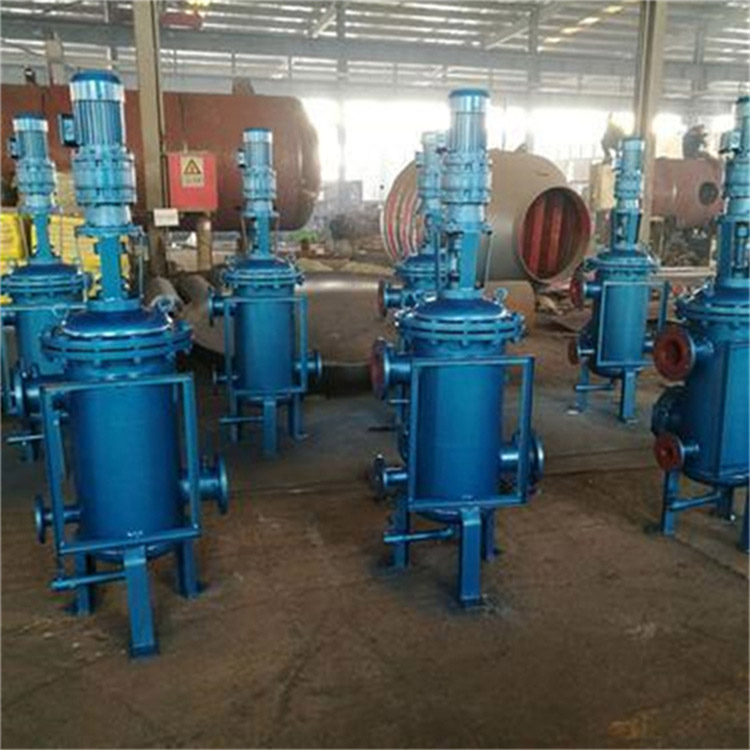
2. EDF Type Secondary Filter
A., Structural Features:
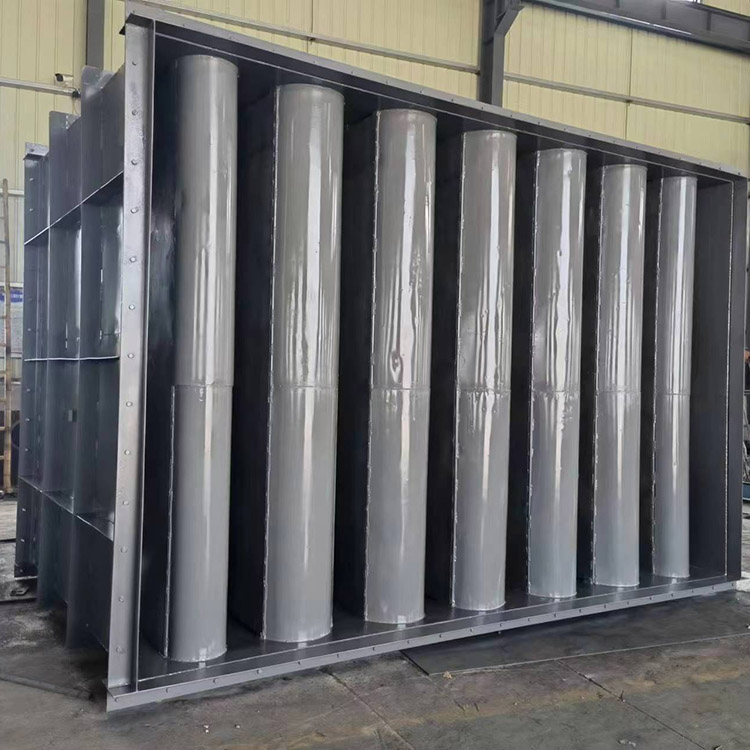
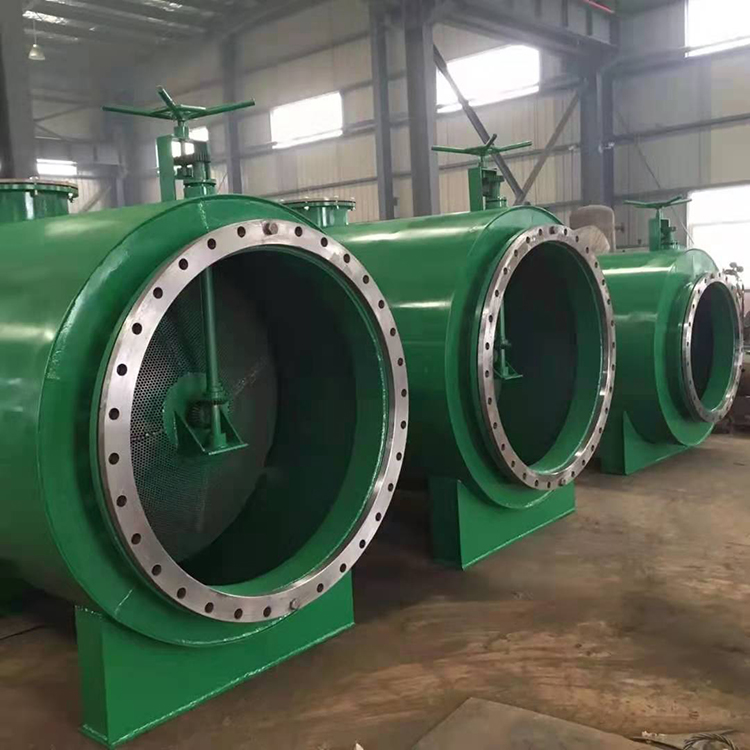
It is primarily composed of six components: the housing, stainless steel core mesh, transmission mechanism, reducer, and drain valve, available in both vertical and horizontal configurations.
B. Operating Principle
The recirculated water, after passing through a debris rack and a primary filter, still contains a considerable amount of suspended solids and silt, among other impurities. It then enters a secondary filter via a circulating pump for further filtration. When the suspended solids and silt accumulate to a certain level on the filter, the internal and external water pressure difference increases to the control system's specified value (typically 500mmH20 column). The automatic control system activates, the drain valve opens, and the drain sump starts rotating. The adhered debris is flushed away by the vacuum backwash water, which is expelled through the open drain valve. Once the internal and external pressure differences return to normal (usually, 300mmH2 column), the driving mechanism automatically shuts off, and the drain valve closes as well. This cycle repeats to complete the filtration and drainage process. Additionally, the secondary filter can be connected to the DCS system for online operation.
C. Key Technical Parameters and Performance
(1) Key Technical Parameters
Wastewater Cleaning Rate: 295%, Water Resistance: M300mmH2O. Mesh Core Aperture: 8mm, Secondary Filter - Backwashing Time Less Than 5 Minutes, and Water Volume Removed During One Cleaning Less Than 5% of the Rated Flow Rate in the Same Time Period, Compliant with Power Ministry Standard DUT581-95T.
(2) Operating Mode
Secondary filter operation: Manual and Automatic? Four operation modes
A. Differential pressure control for secondary filter: A pressure and differential measurement system is set before and after the secondary filter. When the pressure and differential reach the set value of 500mmH2, the secondary filter core's internal or external drain (trench) rotates synchronously under the drive of a planetary pinion reducer. Debris attached to the inner or outer surface of the filter core is flushed into the drain (trench) covering the inner surface of the filter core, then it is flushed into the drain (trench) from the outer or inner flow of the filter core, and finally enters the drain pipe. It is discharged through the automatically opened drain valve, and the drainage time ends, the differential...The pressure measurement system re-checks the differential pressure value. When the differential pressure exceeds 500mmH20, the drainage device restarts and undergoes a further cleaning cycle until the differential pressure is reduced.When the pressure drops below the design value of 300mmH20, the reducer automatically stops rotating, the drain valve closes automatically, and the cleaning is complete.
B. Secondary Filter Scheduling Control: For instance, the secondary filter is designed to auto-clean once every 8 hours (can be set arbitrarily). Regardless of whether the differential pressure or flow rate reaches the designed value, the cleaning process will automatically initiate. After the cleaning duration is over, the reducer stops operating, and the drain valve closes accordingly. During the timing control, the differential pressure and flow rate controls are in the stop state and cannot run simultaneously.
C. On-Site Control: For convenient on-site debugging, facilitate adjustments through manual/automatic control switching and directional tuning of the discharge valve and reducer.
D. Through the operation of the unit's DCS in the centralized control room, remote operation can be achieved to automatically start and stop the program.
(3) Model and Dimensions (Unit: mm)
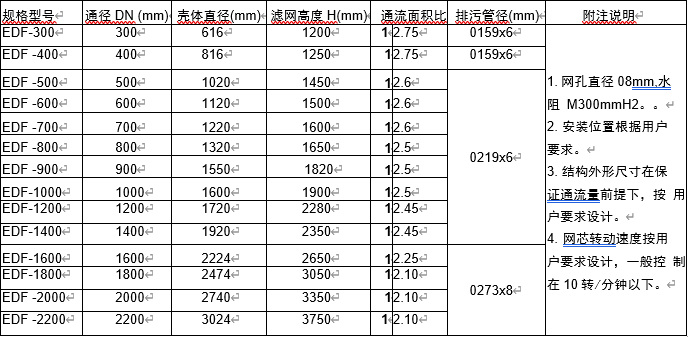
(4) Order Instructions
(1) Offer installation types (vertical, horizontal), pipe connection size, and on-site space location
(2) Design Flow Rate for Recirculating Water
(3) The most common impurities in recirculated water are contaminants.
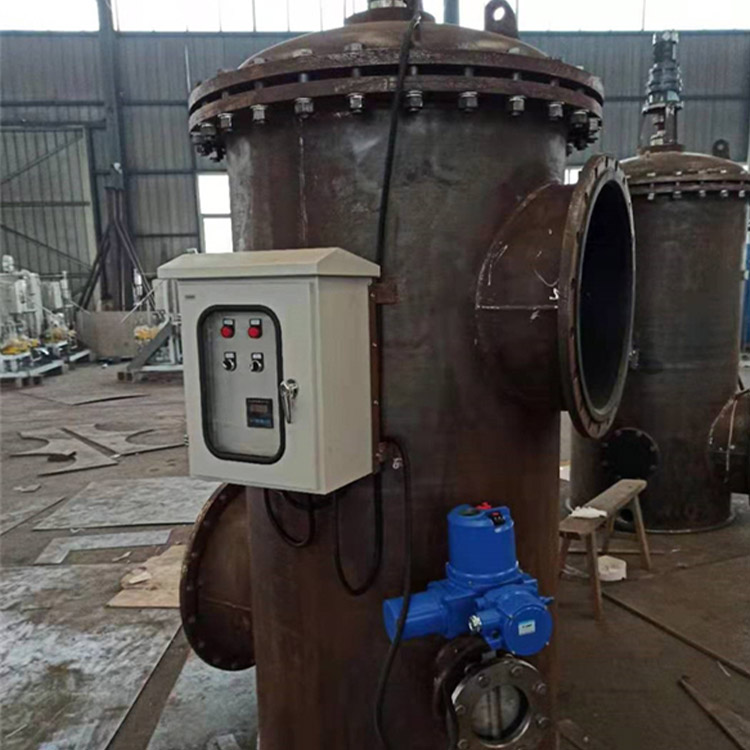
Programmable cabinet
The programmable cabinet is a dedicated equipment for ball cleaning, utilizing a PLC programmable controller with both automatic and manual control functions. Features include a digital input module DI and a digital output module DO. The equipment is grouped according to the process flow requirements, primarily controlled by level and pH signals, with the operation and standby status of each device sent to the control panel for display. The PLC is responsible for point collection and loop control, ensuring more accurate and precise detection, improved ball recovery rates, and remote control capabilities.