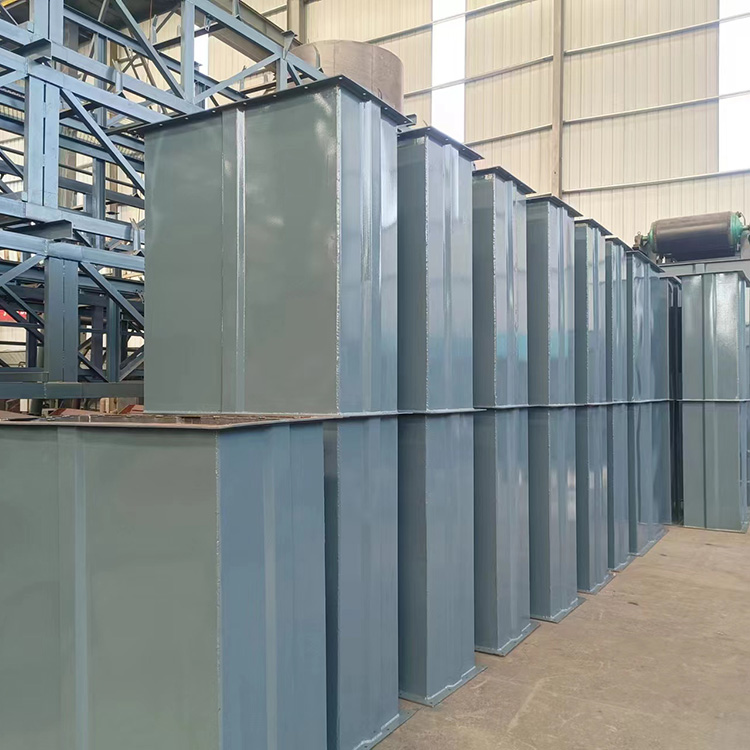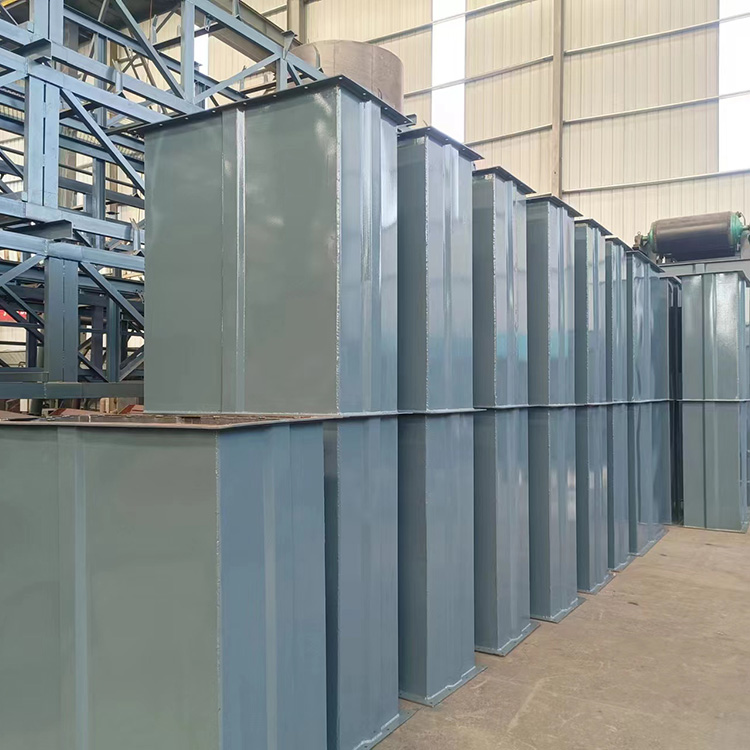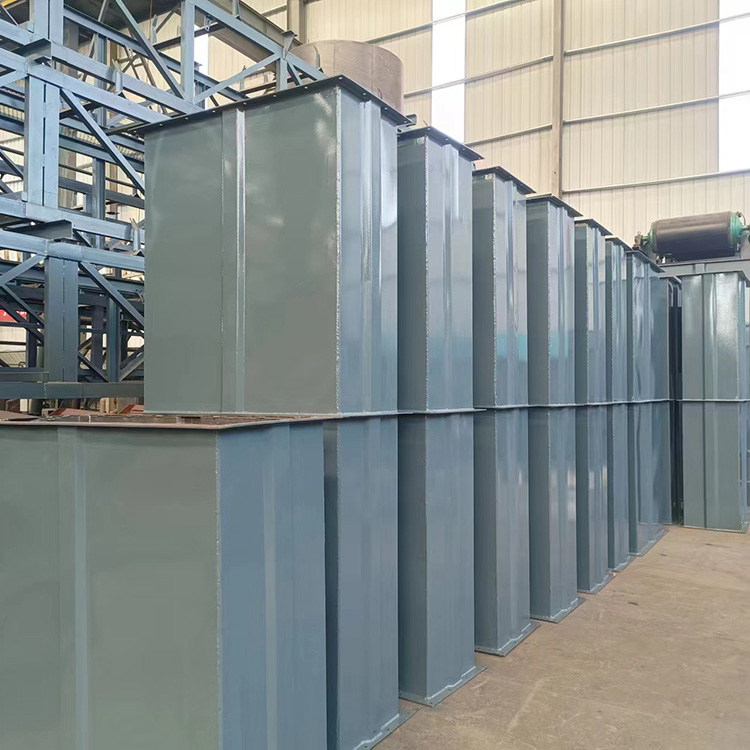












The working principle of the NE bucket elevator:
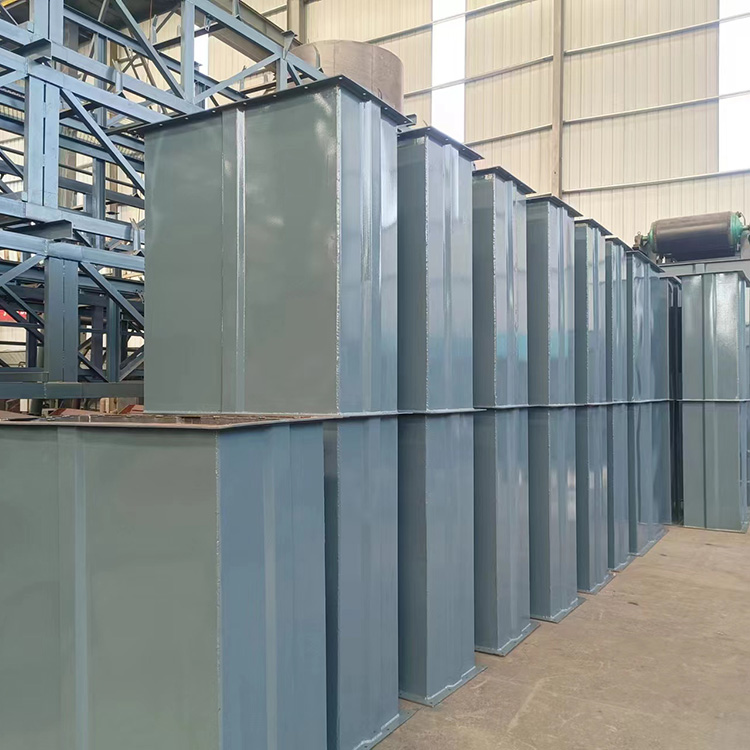
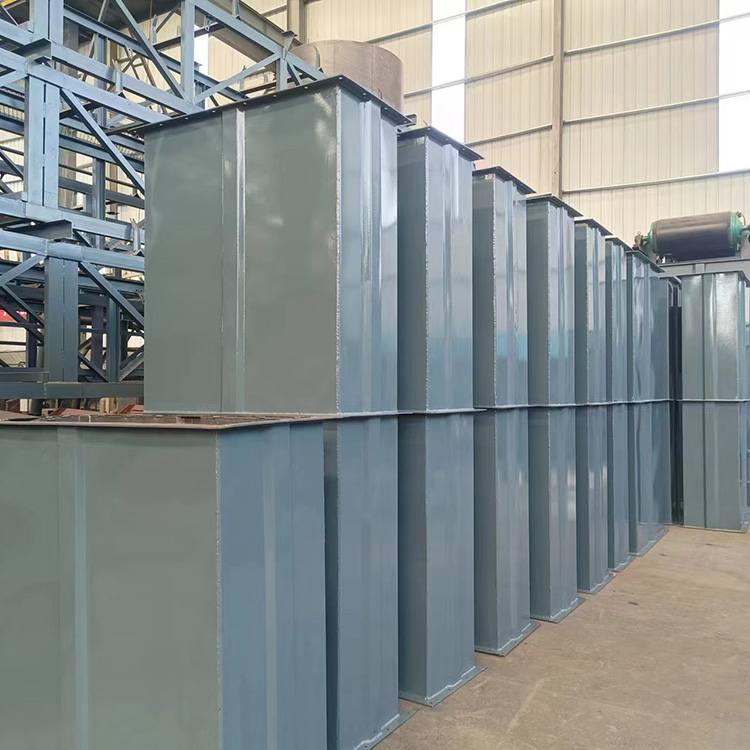
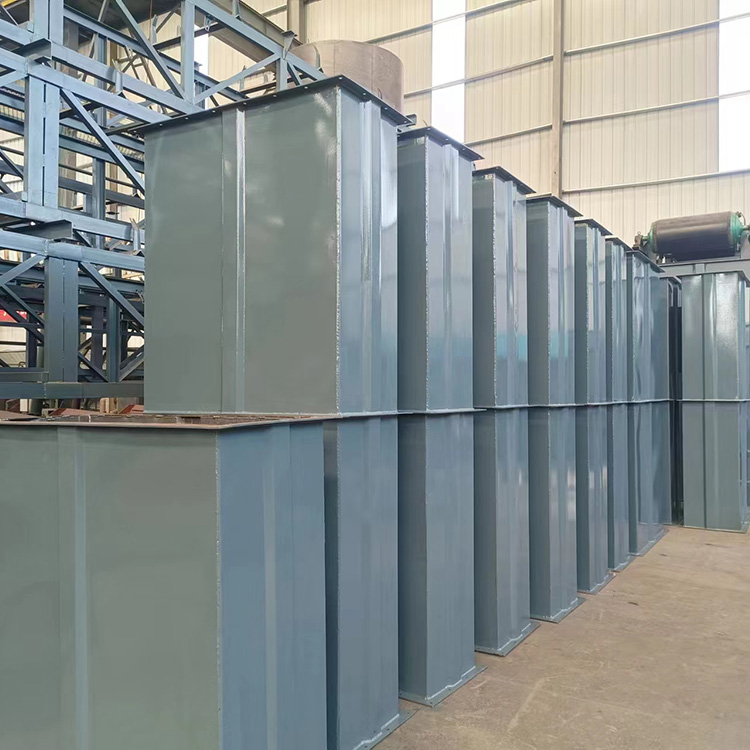
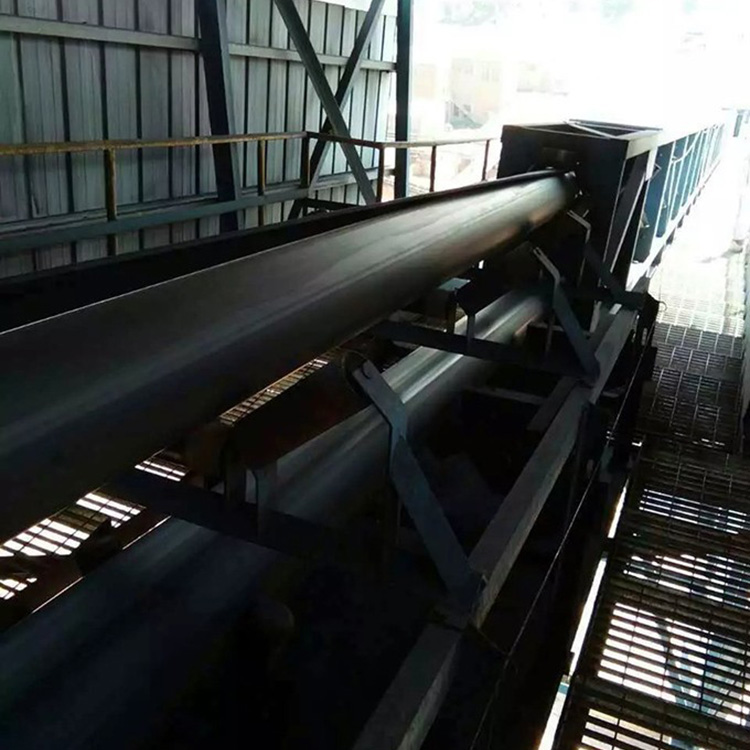
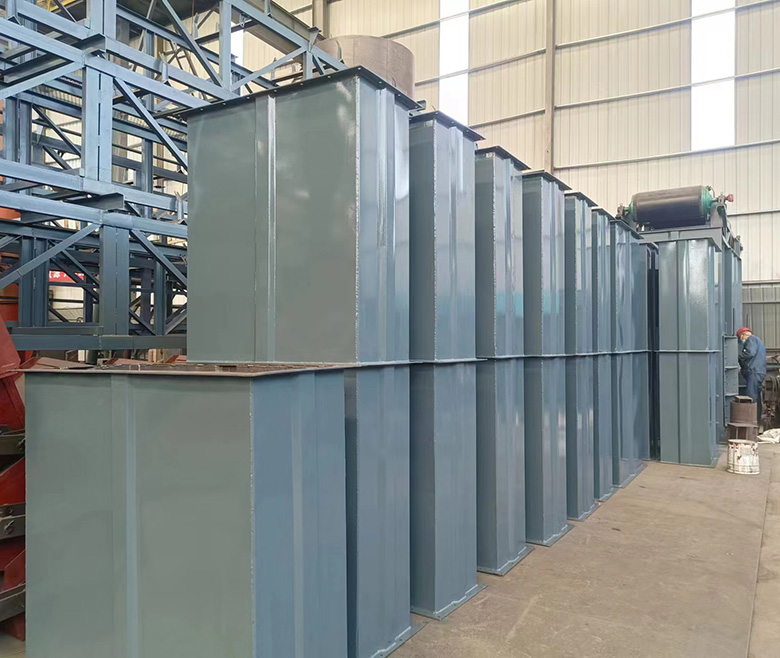
The NE Bucket Elevator consists of the running part (buckets and traction belts), the upper section with a drive roller, the lower section with a tensioning roller, the middle casing, the drive unit, the anti-reverse braking device, etc. It is suitable for upward conveying of non-abrasive and semi-abrasive bulk materials with a loose density of ρ<1.5t/m³, such as coal, sand, cinder, cement, crushed ore, etc.
NE Bucket Elevator Structure: The transmission unit of TD type bucket elevators has two forms, each equipped with YZ type reducer and ZQ (or YY) type reducer. This reducer has low noise, stable operation, and floats with the main shaft, which can eliminate installation stress. The YZ type shaft reducer is directly mounted on the main shaft hub, eliminating the need for transmission platforms and couplings, making the structure compact and lightweight. Additionally, it features a non-standard roller ratchet, ensuring reliable reversal.
The NE bucket elevator is a continuous conveying machine that vertically lifts materials using a series of buckets uniformly mounted on a endless traction member. The bucket elevator transports loose materials upwards vertically or nearly vertically by utilizing a series of buckets fixed on a traction chain or belt. It comes in three types: ring chain, flat chain, and belt.
Main Features of NE Bucket Elevator
Low driving power, with an inflow feeding, induced discharge, and dense arrangement of large capacity hoppers. There is almost no backflow or digging of material during material lifting, resulting in minimal waste power.
2. Wide scope of improvement; these hoists have minimal requirements for material type and characteristics, capable of handling not only general powdery or fine-grained materials but also abrasive ones. Excellent sealing, with minimal environmental pollution.
3. Excellent operational reliability, with advanced design principles and manufacturing methods ensuring the overall reliability of the machine, with more than 20,000 hours of trouble-free operation. High lifting height, with the lifting mechanism operating smoothly, enabling a significant lifting height.
4. Long service life; the feeder of the hoist is designed for flow-in, eliminating the need for digging with buckets, thus reducing the occurrence of material compression and collision. The machine is engineered to minimize material spillage during feeding and unloading, thereby reducing mechanical wear.
Bucket Elevator Conveying Principle
The hopper scoop material from the storage below, lifting it up to the top via a conveyor belt or chain, then flipping it down after passing over the top wheel. The bucket elevator pours the material into the receiving trough. Belt-driven bucket elevators typically use rubber belts, mounted on the drive pulley and the idler pulley above or below. Chain-driven bucket elevators usually have two parallel drive chains, with a pair of drive sprockets above or below and a pair of idler sprockets. Bucket elevators are generally equipped with a housing to prevent dust from飞扬 inside.