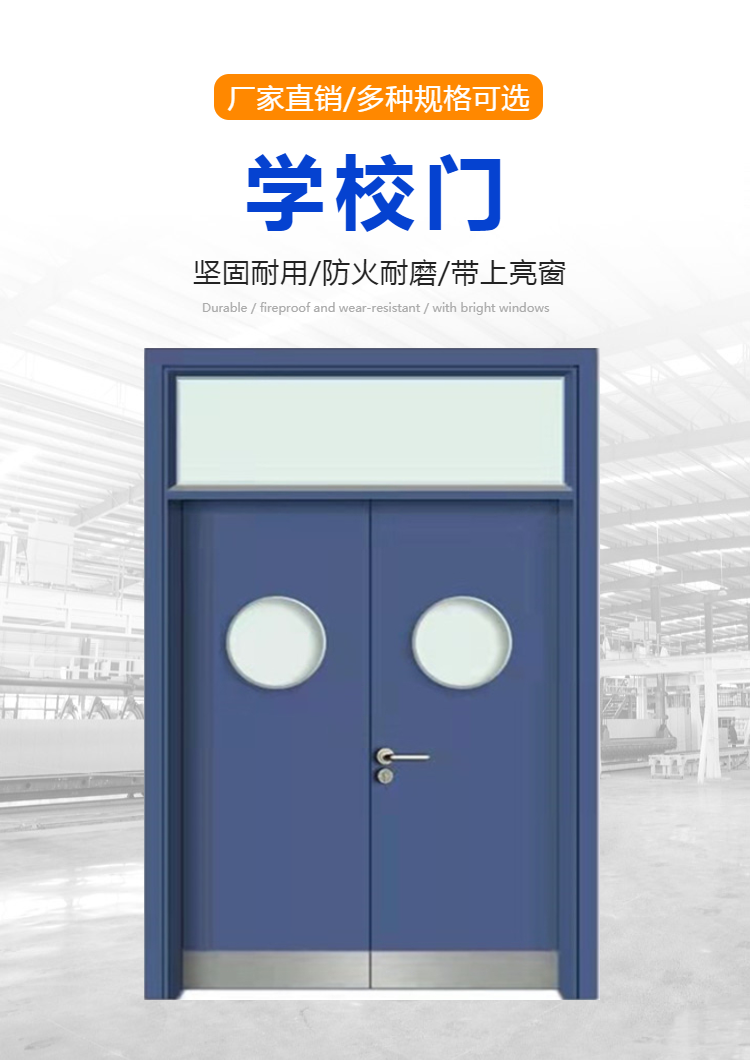
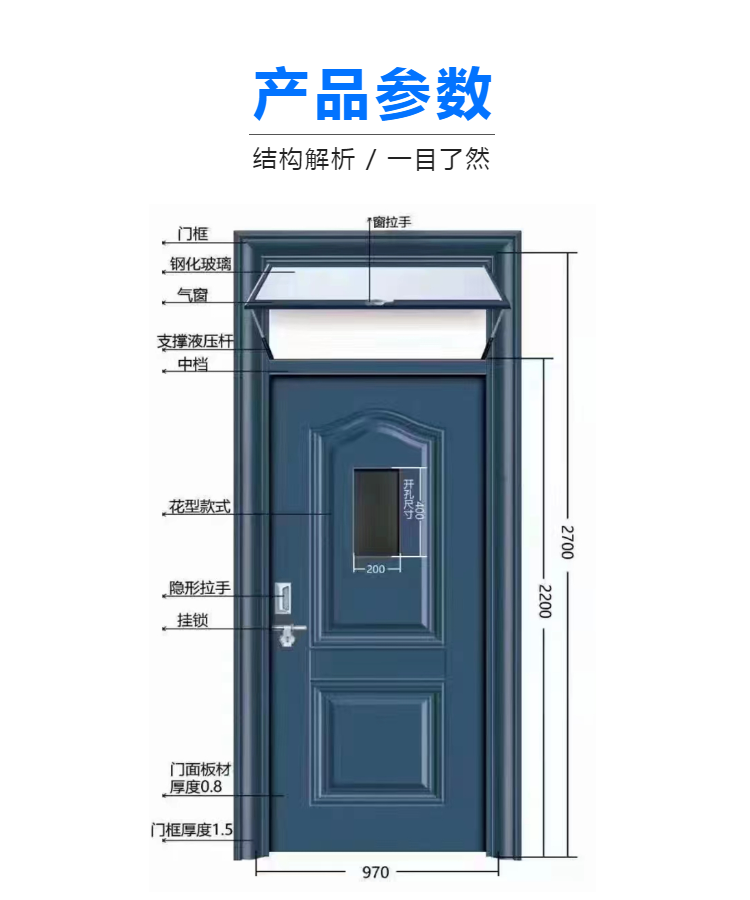
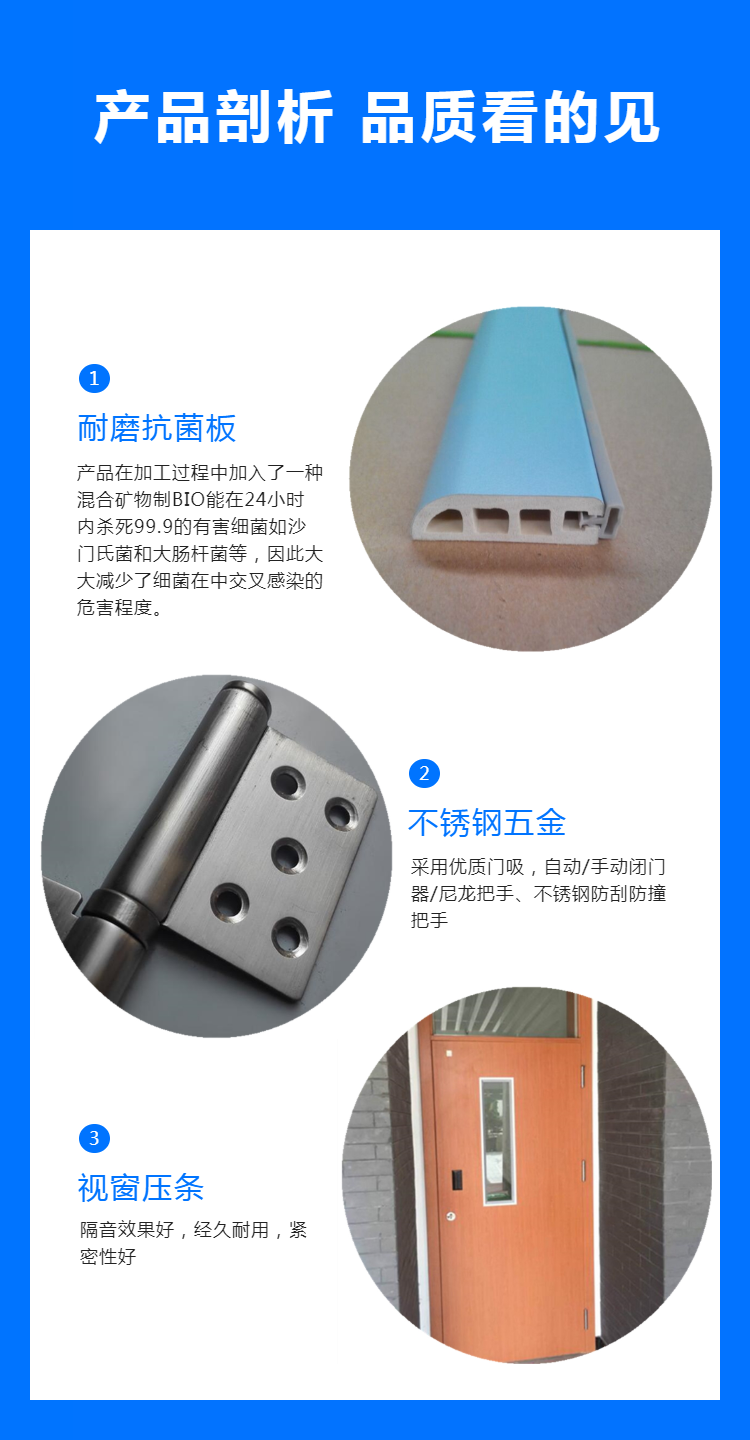
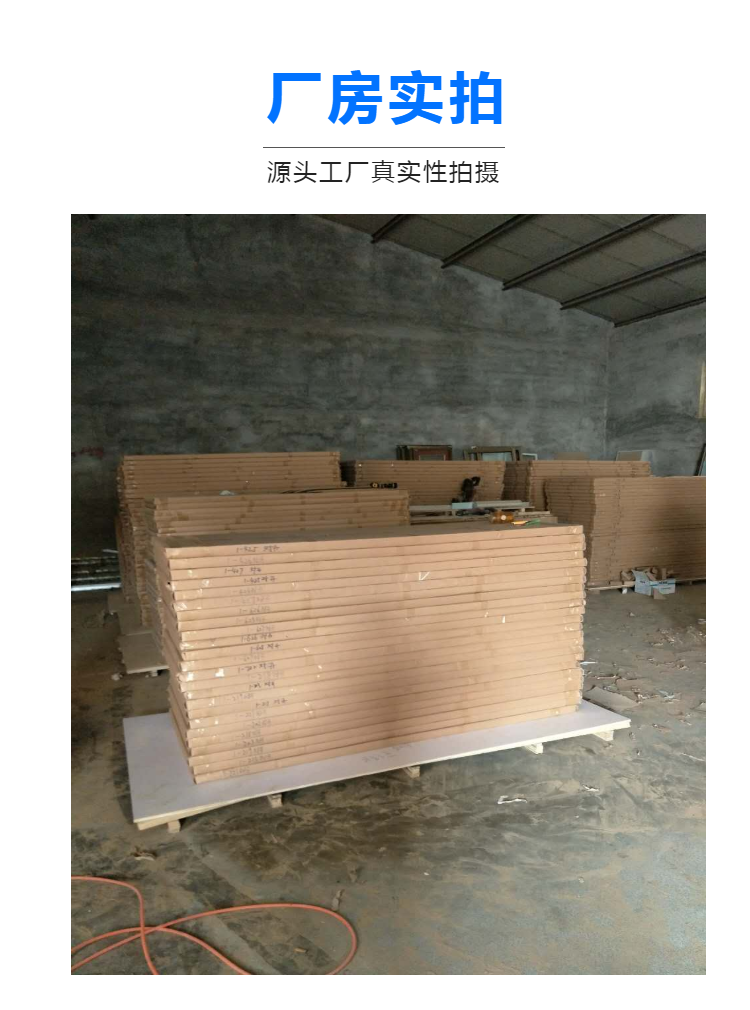
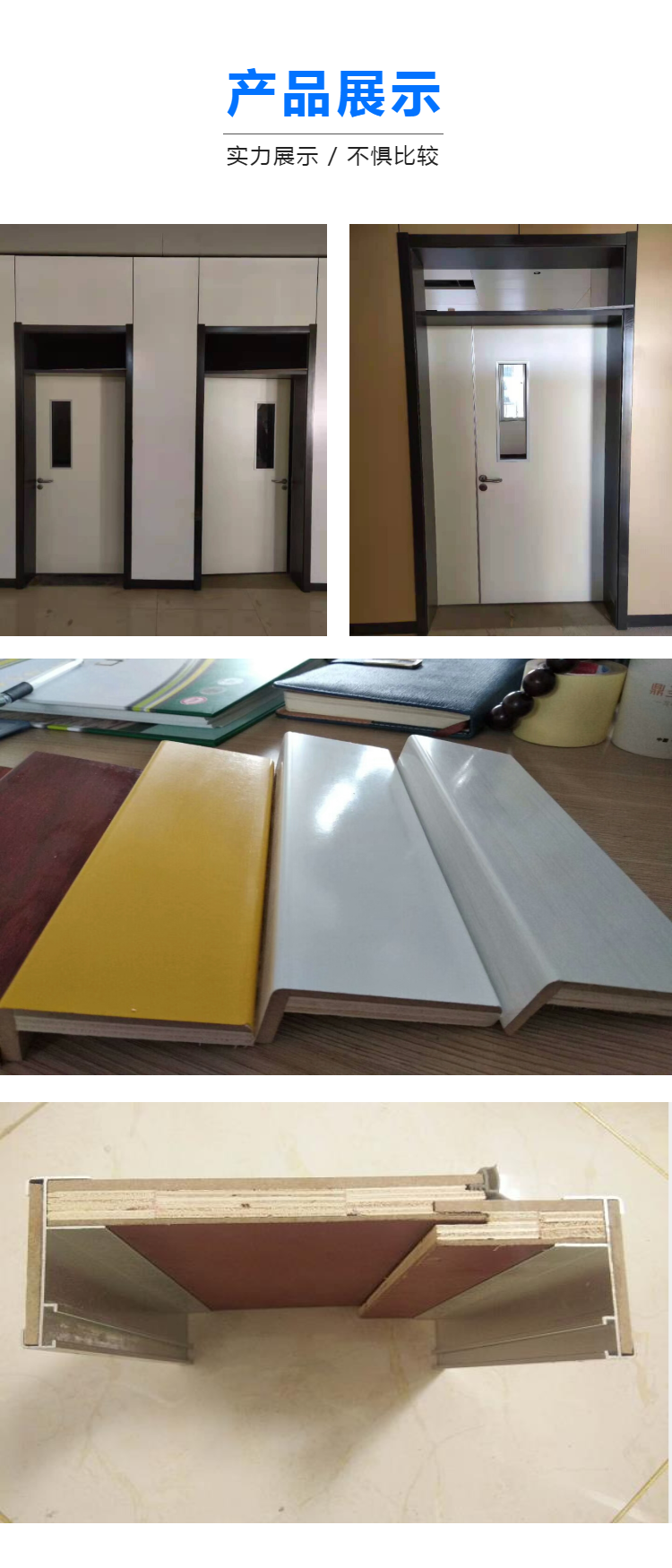
Structure and processing technology of school door leaf
1.1 Door Panel Structure
Solid wood composite door leaves are typically made in a three or five-layer structure.
The intermediate layer forms the main structural layer, consisting of frames (skeleton) and door cores. The frames are cut to the required dimensions from composite materials and assembled to form the outer skeleton. The door cores are the internal filling of the door leaves, which can be made of solid wood strips, plywood, or honeycomb paper, among other materials.
The surface layer is available in decorative veneers of 3mm thickness or density boards of 5mm, 7.5mm, or 12mm thickness. For a five-layer construction, decorative veneers can be applied over the thin density board surface. Additionally, aesthetic enhancement and diversification in design can be achieved by inlaying various decorative strips in the middle of the door panel or on its surface.
1.2 Ingredients Process
The process of processing quality and material-compliant sheets into the required specifications for raw materials is known as batching. During batching, it's important to allocate sufficient processing allowance, making efficient use of the wood while ensuring the quality of wooden doors. For parts with grain pattern requirements, attention must be paid to the direction of the wood grain to meet the drawing specifications and appropriate markings should be made.
1.3.1 Pressure Sintering Process
The degree of deformation in finished wooden doors is closely related to the composite lamination process of frames and surface panels. To avoid or minimize door leaf deformation, strict control is required in the following aspects:
(1) Adequate adhesive application, evenly coated. The adhesive can be applied using a coating machine, ensuring proper adhesive quantity during the process. Insufficient adhesive application can lead to reduced bonding strength, lack of adhesive on bonding surfaces, and localized separation; excessive application results in thick adhesive layers, requiring longer curing time and a higher risk of cracking.
(2) Appropriate hot pressing temperature. A low hot pressing temperature can lead to adhesive layer delamination and insufficient bonding strength; a high temperature can cause extended cooling time after hot pressing and material plastic deformation. Generally, the hot pressing temperature should be controlled within the range of 90-95°C. Moreover, it is crucial to ensure that the upper and lower pressing plates of the press are at the same temperature during hot pressing, to achieve consistent and even temperature rise on both sides of the door leaf.
The first piece must meet the following criteria to be considered合格:
The product surface must be free of indentation, scratching, or damage.
Edge should be straight, corners slightly rounded, no burrs allowed.
(3) Edge strips must not protrude above the plane.
(4) The edges of the boards must be smoothly joined without any gaps or overlaps.
(5) Edges of the edge banding must not have glue overflow or any glue lines or black lines.
Edge face is evenly coated with glue, bonded firmly.
During edge sealing, first seal the two long sides, then the two short sides of the product. After edge sealing is completed, conduct a full check of the product quantity and quality to ensure they meet the工艺 standards, and then make the identification.