













Water Treatment System
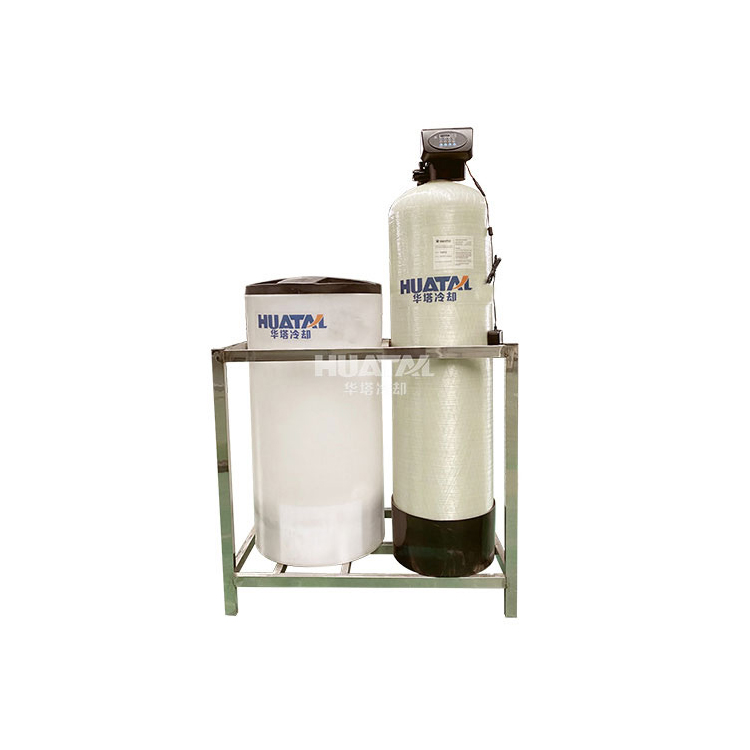
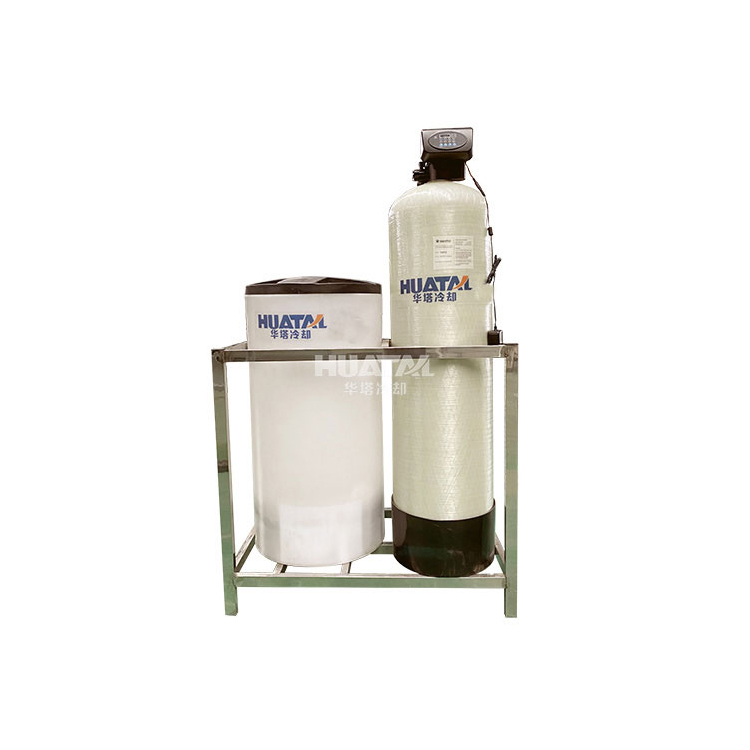
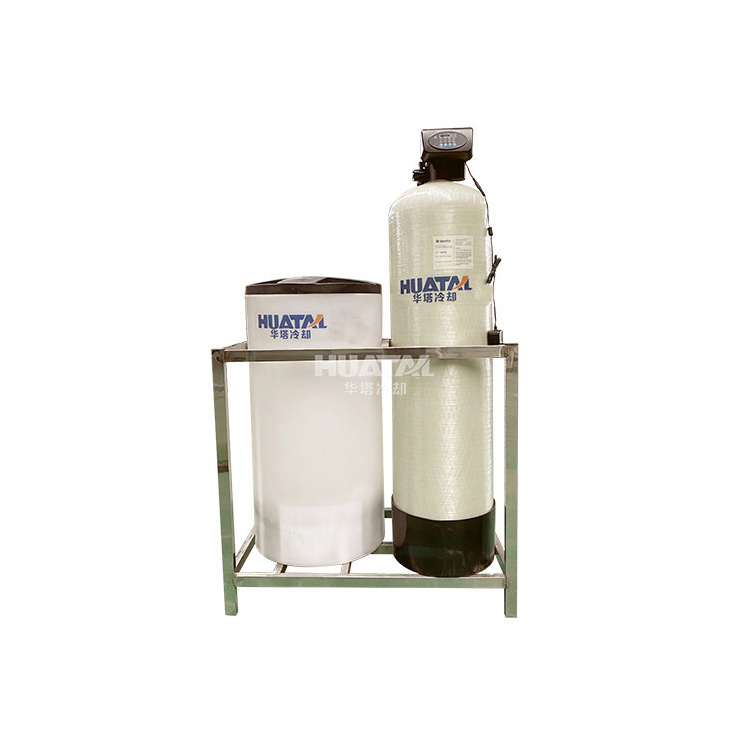
HRH Series Softeners
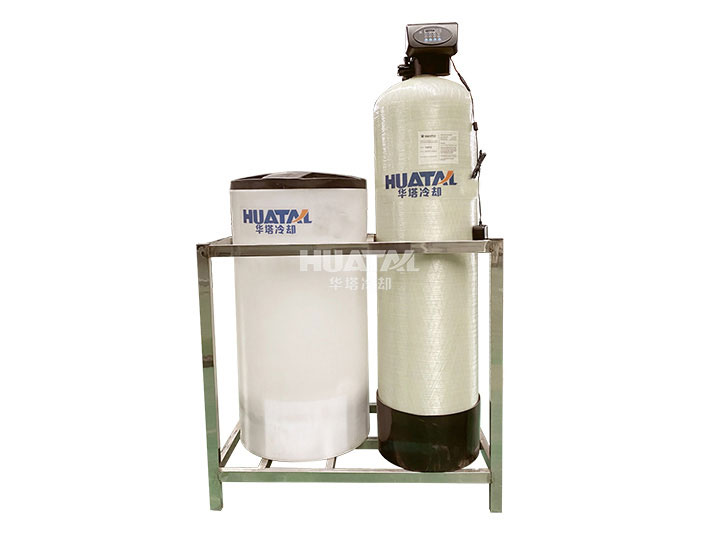
Our company's HRH series fully automatic softening water units (fully automatic sodium ion exchange units) are primarily driven by the fully automatic control valve. This design operates fully automatically with the exception of the need for periodic salt refilling by personnel. The configuration options include single, double, and multi-tank setups. Control methods are divided into time-based and flow-based control (or manual and semi-automatic control devices of domestic manufacture can be selected according to the user's needs). Unit water production ranges from 0.5 tons/hour to 500 tons/hour.
The hardness of water is primarily composed of cations: calcium (Ca) and magnesium (Mg) ions. When hard water passes through the resin layer of the exchange unit, the calcium and magnesium ions are adsorbed by the resin, while sodium ions are released. Thus, the water flowing out of the exchange unit is softened, free of hardness ions. Once the resin has adsorbed a certain amount of calcium and magnesium ions, the outgoing water hardness increases. At this point, the water softener automatically regenerates the exhausted resin according to a pre-set program, using a concentrated sodium chloride solution to pass through the resin, restoring the exhausted resin to sodium form.
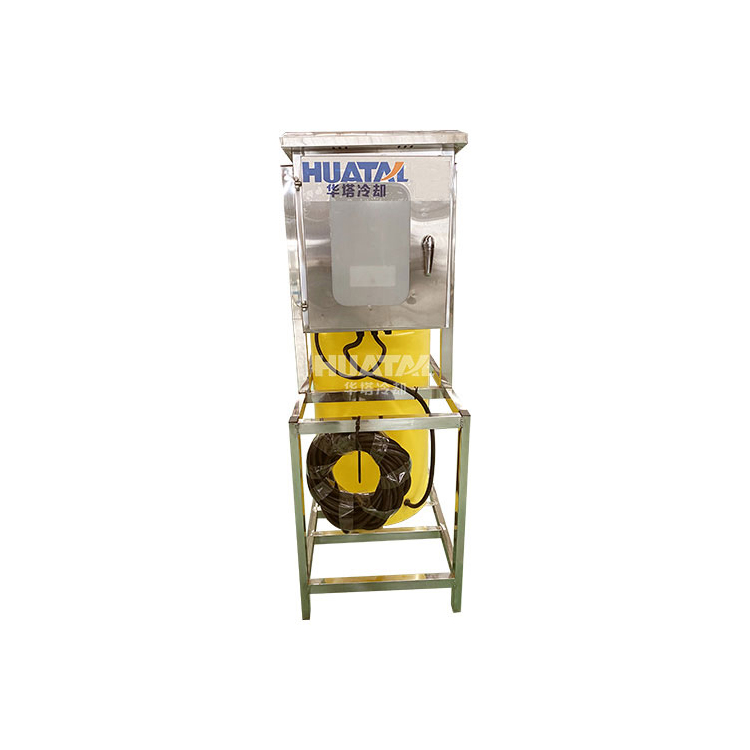
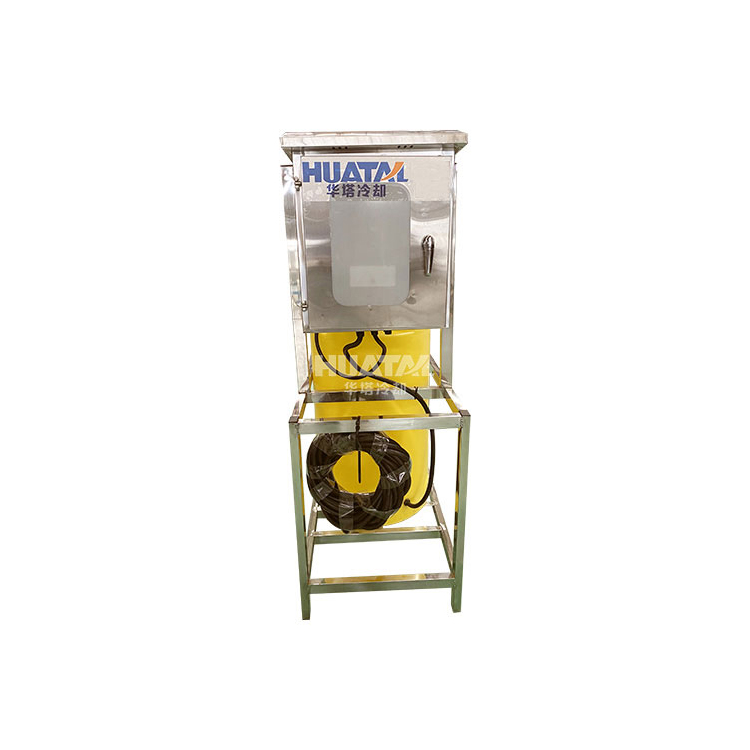
2. Fully Automatic Chemical Dosing System
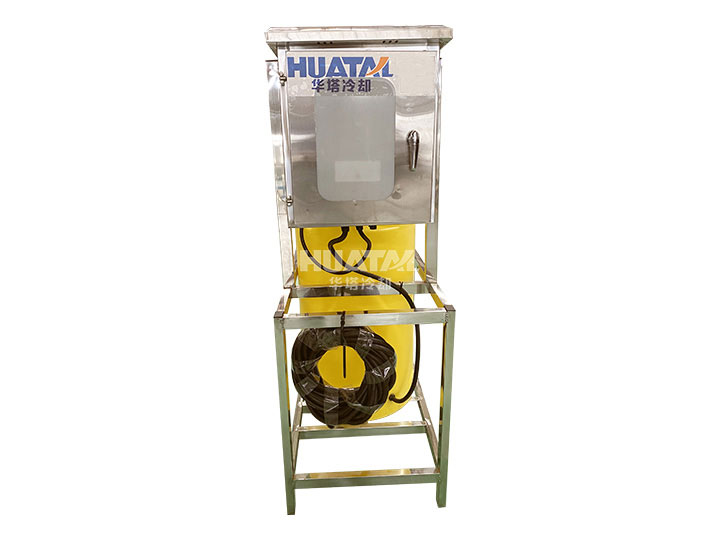
The dosing unit is primarily composed of a solution tank, agitator, metering pump, level gauge, electrical control cabinet, piping, valves, safety valve, back pressure valve, check valve, pulsation damper, pressure gauge, Y-type filter, and more. The dosing unit is configured within the mixing tank according to the required concentration of the medication, mixed evenly by the agitator, and then transferred to the solution tank. It is supplied to the dosing point or system using a metering pump. The complete dosing unit features a compact structure, simple safety, and ease of operation. It can also be designed and configured specifically to meet the requirements of different process flows, including necessary components and functions such as automatic remote control.
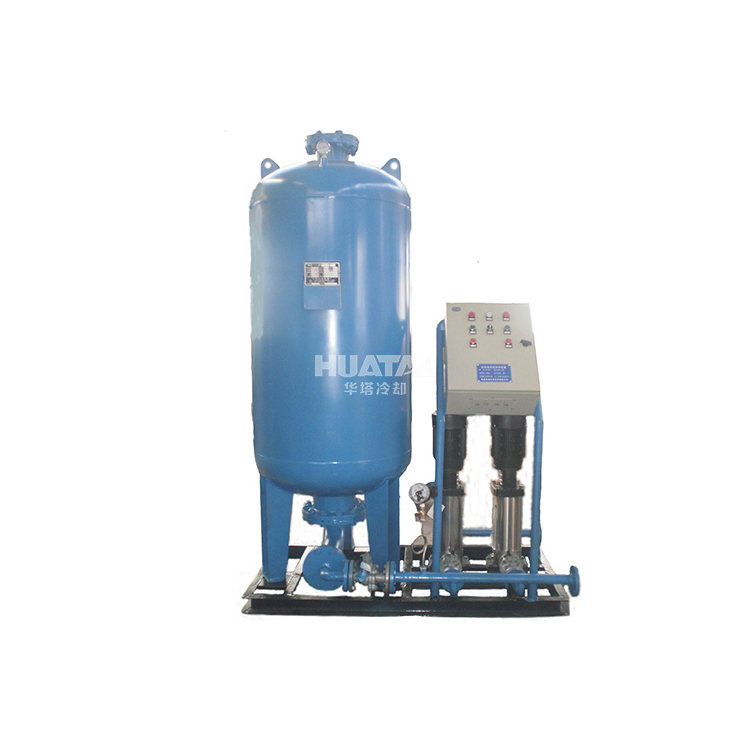
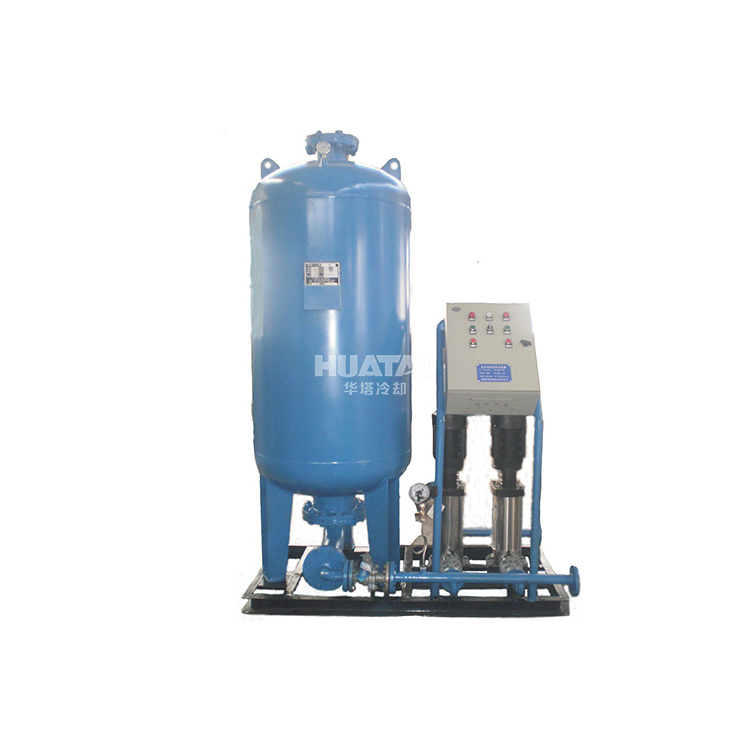
Section 3: Constant Pressure Water Supply System
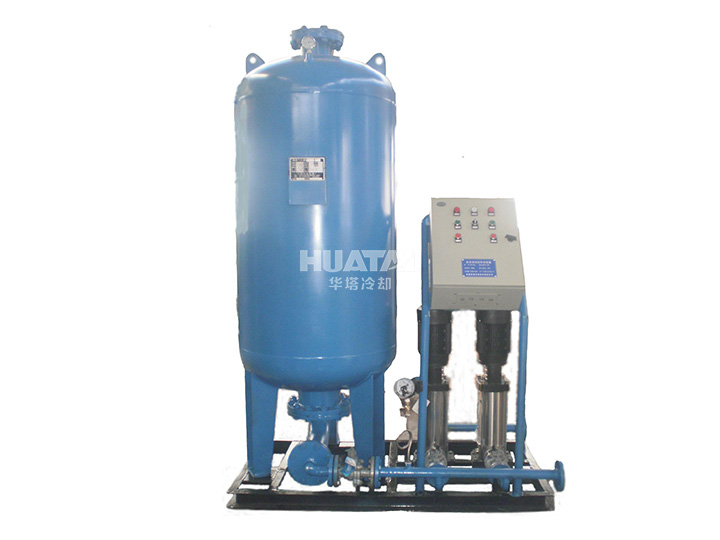
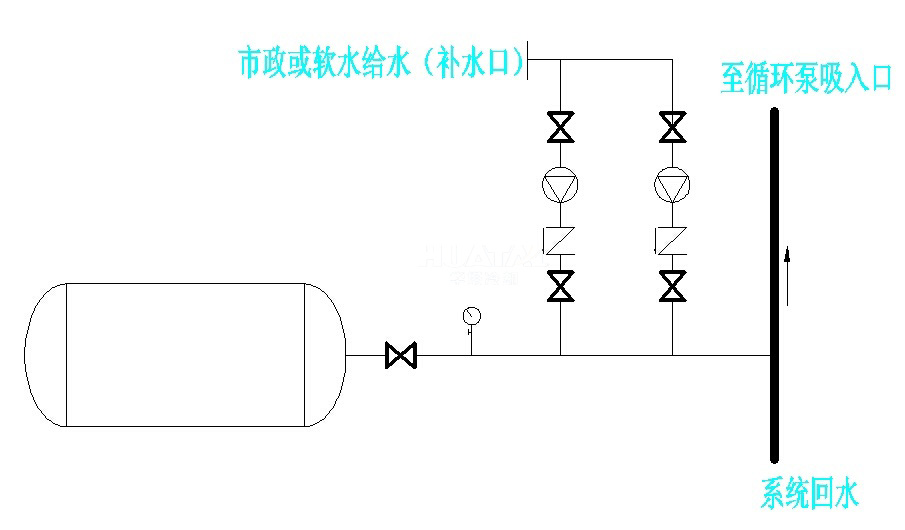
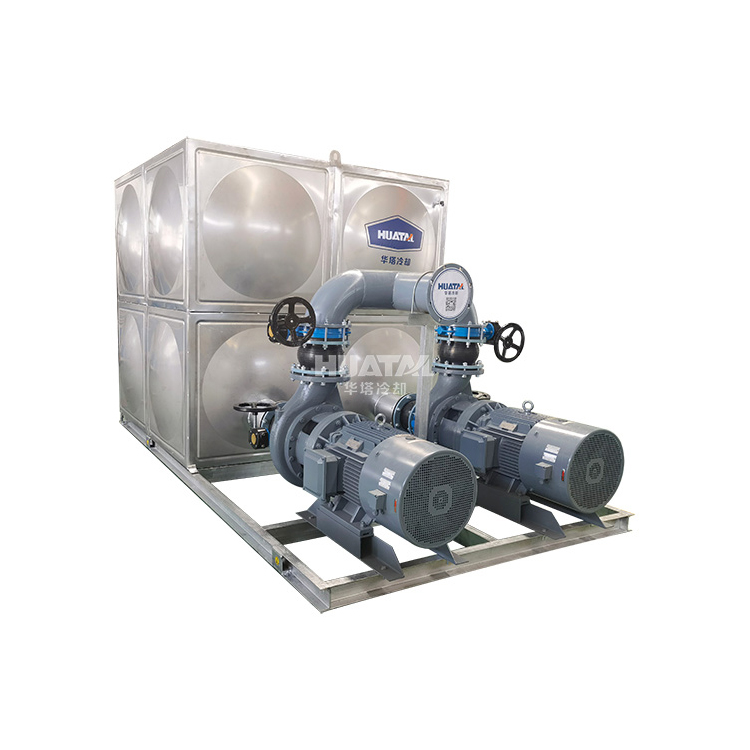
A Pressure-Regulated Water Supply Device is a type of pressure-regulating water supply system, widely used in closed-loop cooling tower water supply networks. It can replace traditional water tanks and reduce the frequency of pump startups. It can absorb a portion of the system's water expansion, and is easy to implement automatic water replenishment, automatic air exhaust, automatic pressure relief, and automatic overpressure protection. It is mainly composed of a bladder-type pressure tank, pump, pressure switch, control box, safety valve, base, and connecting pipelines.
As the temperature inside the system rises and the volume of water expands, the system pressure increases, causing some water to enter the capsule of the pressure tank. The expansion of the capsule compresses the gas inside the tank until the system and tank pressures are balanced. When the volume of water in the system decreases and the pressure drops, the gas inside the tank expands, pushing water back into the system. If this supplementary water is still insufficient to meet the system's water requirements, the pump is activated to replenish water. The start and stop actions of the pump are controlled by the system's electrical pressure switch and control box.