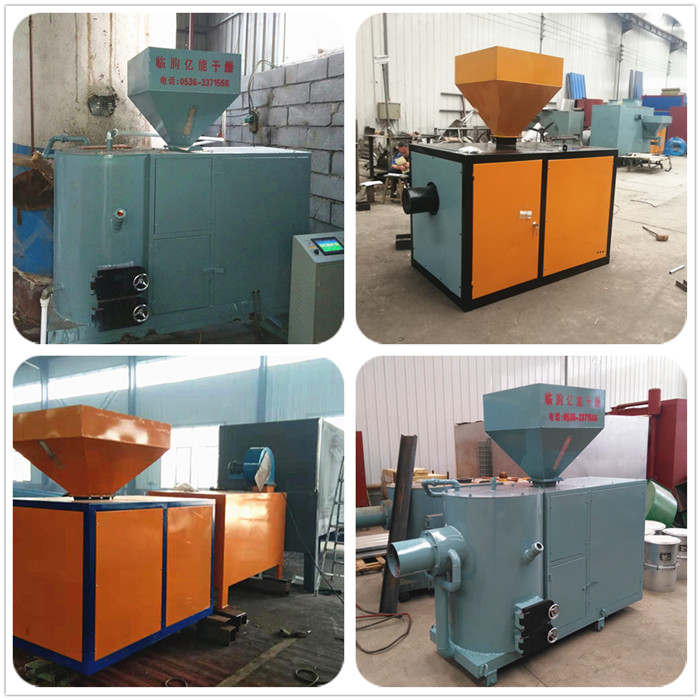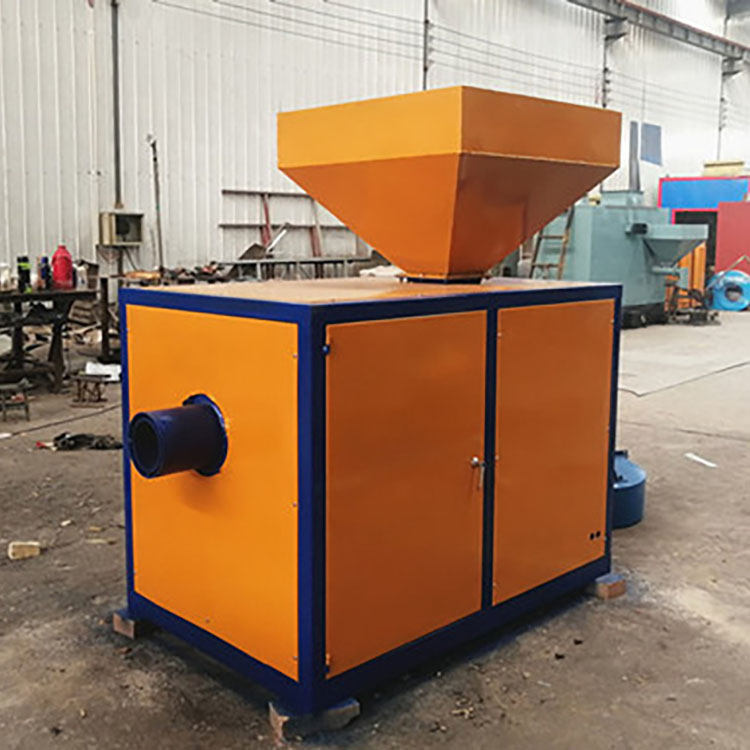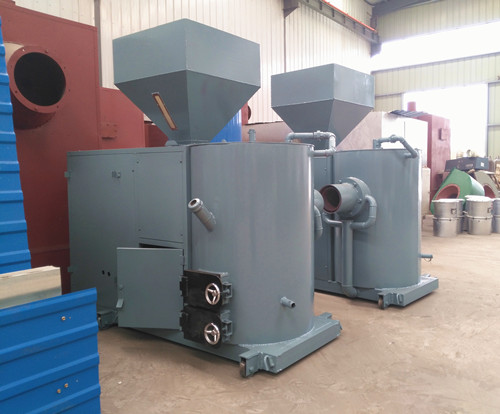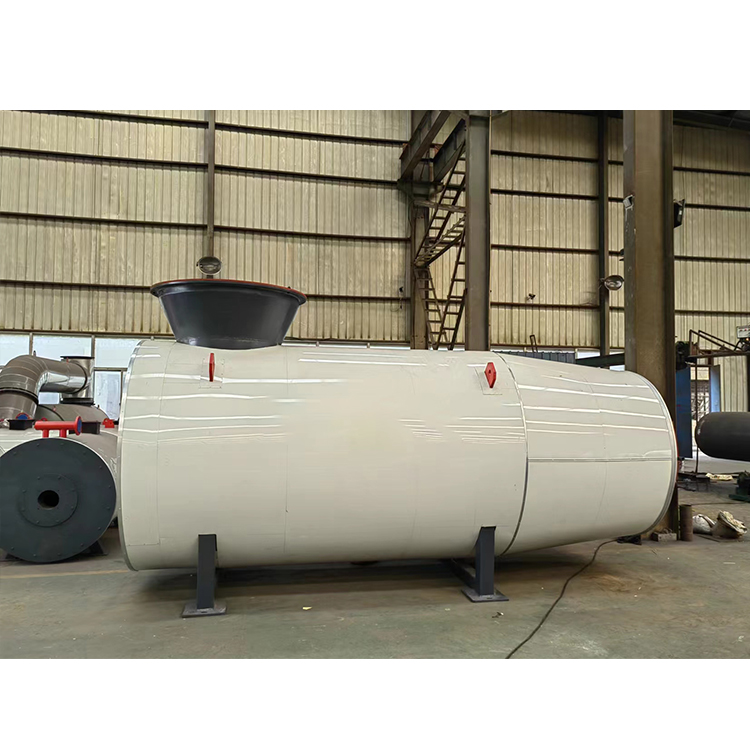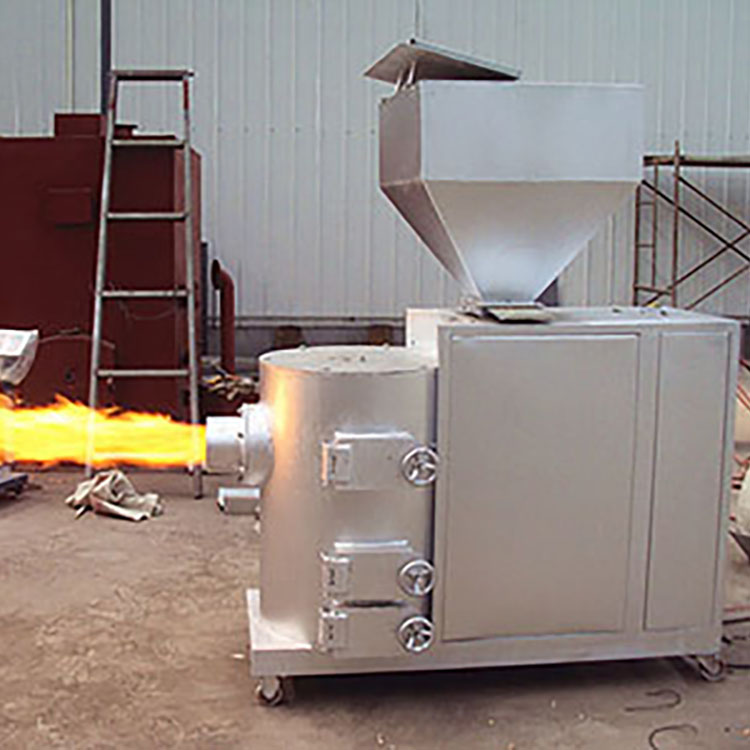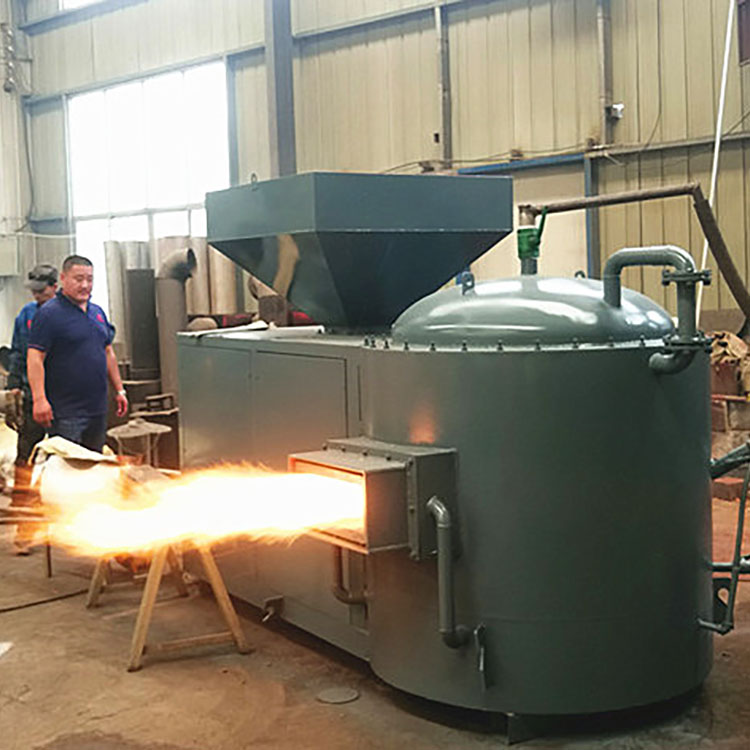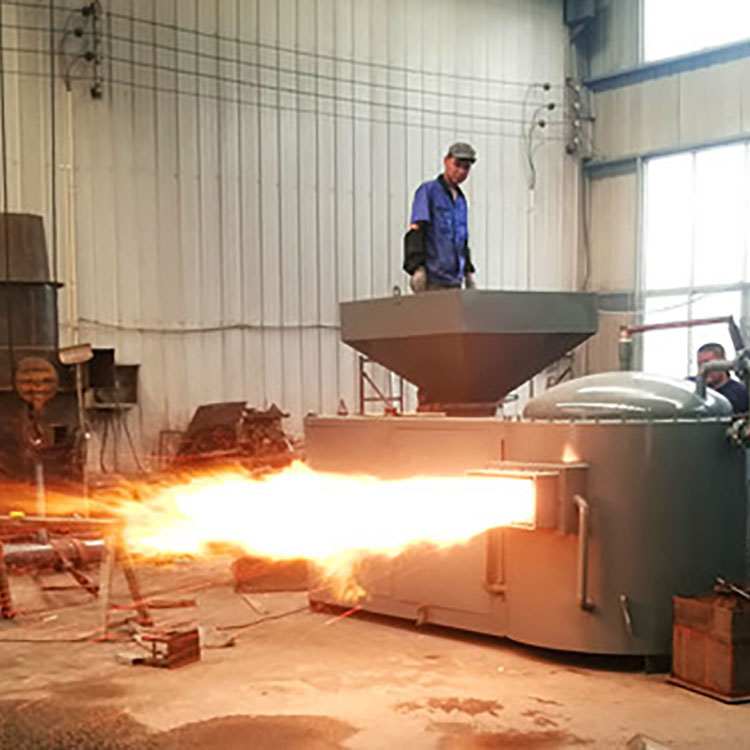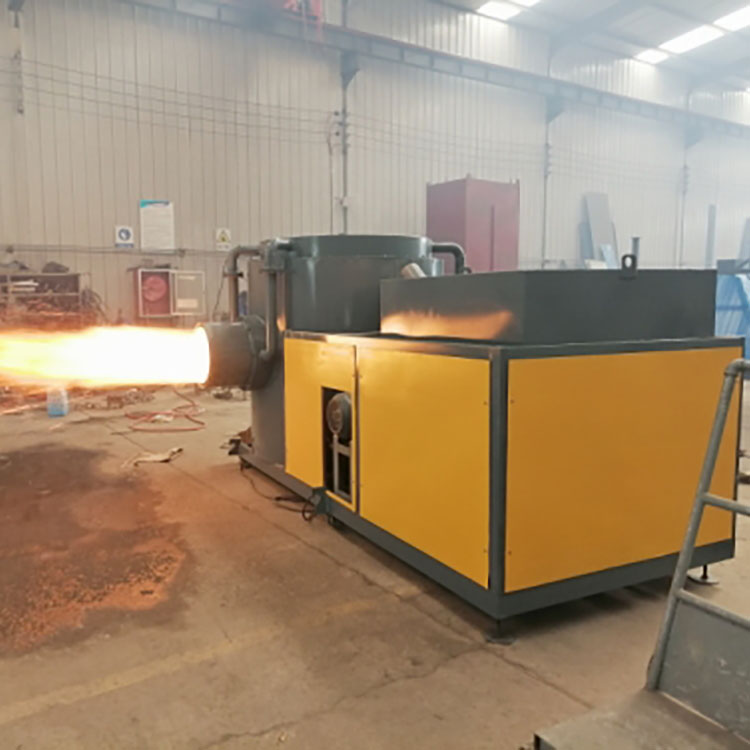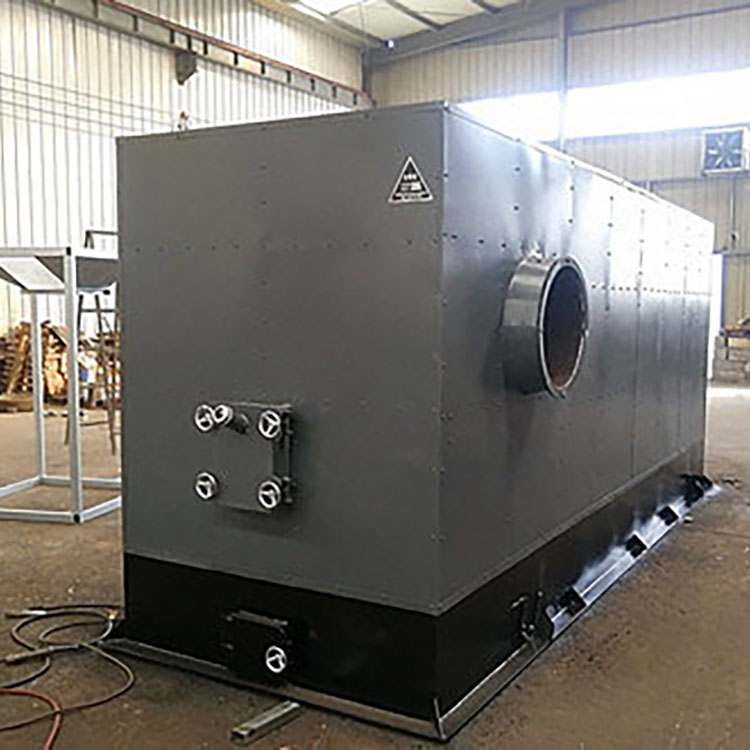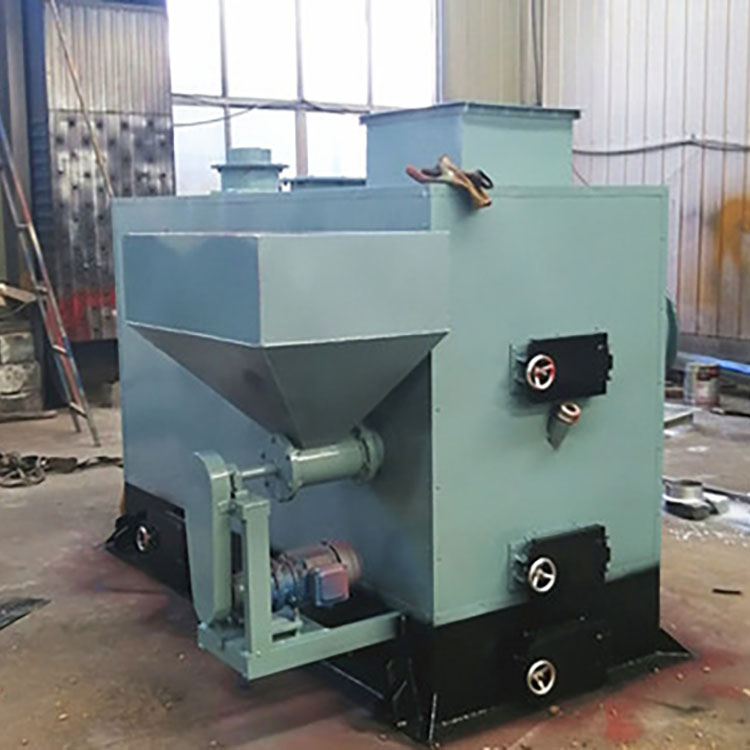

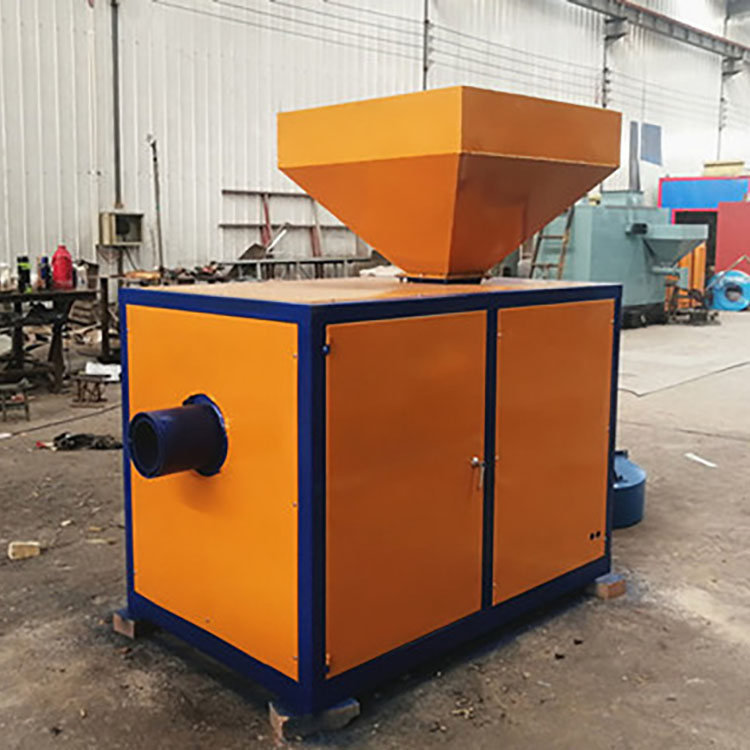

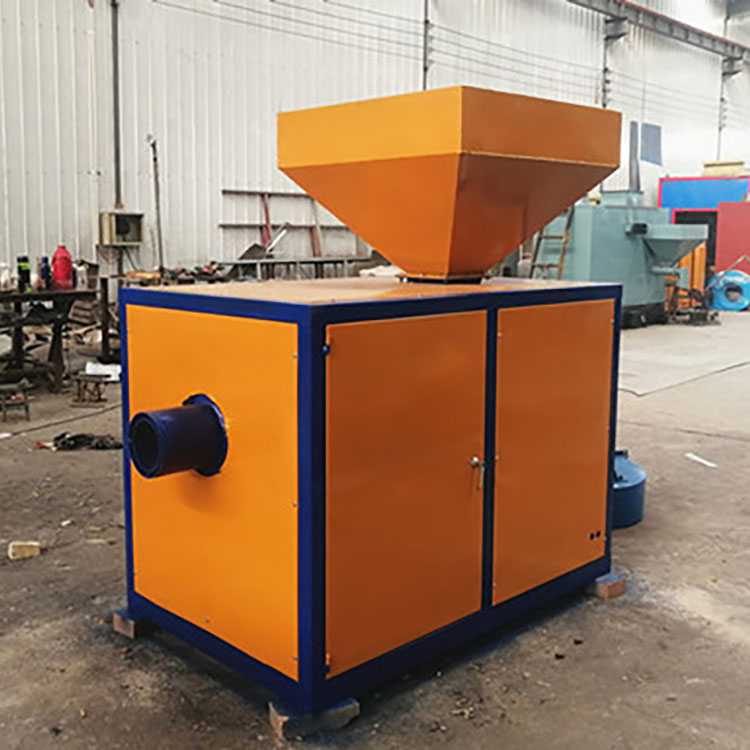
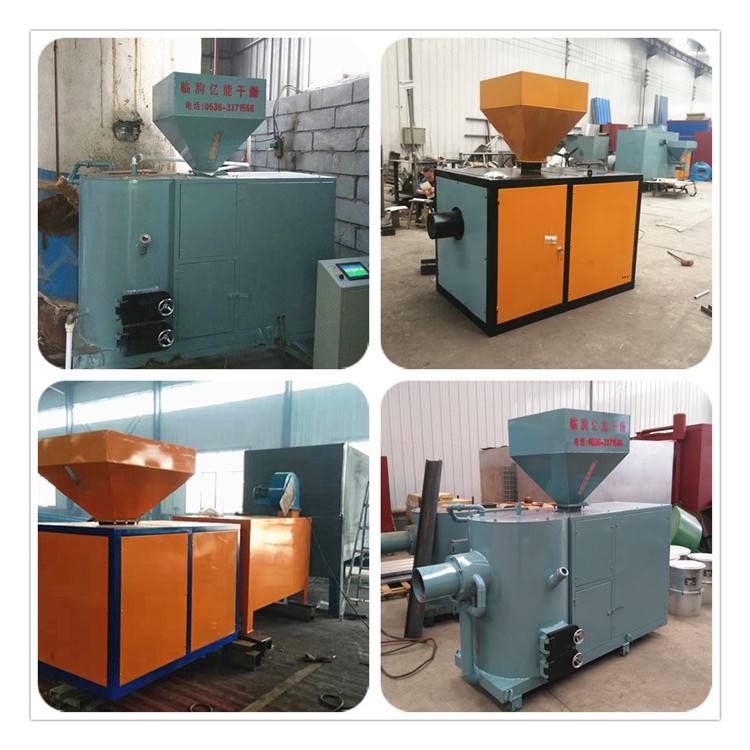
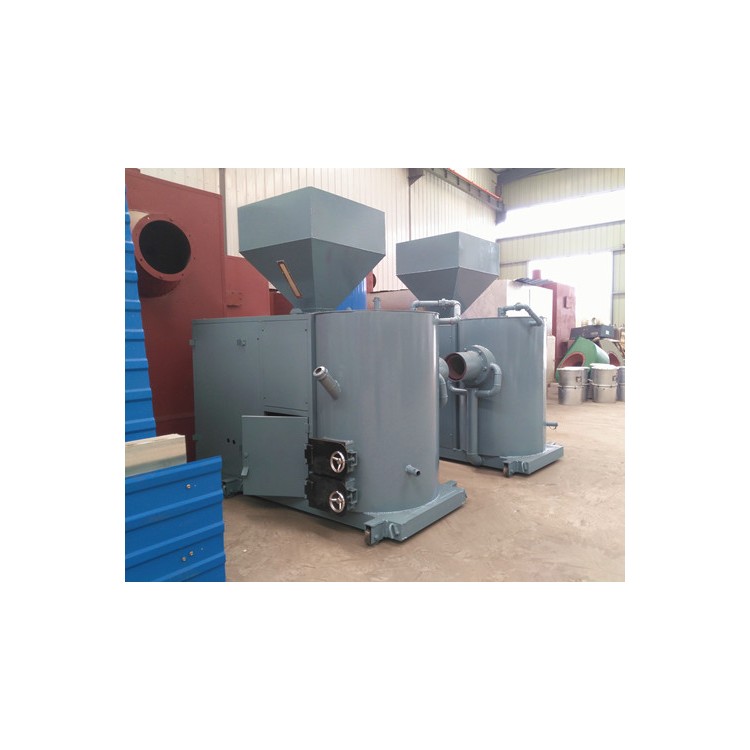


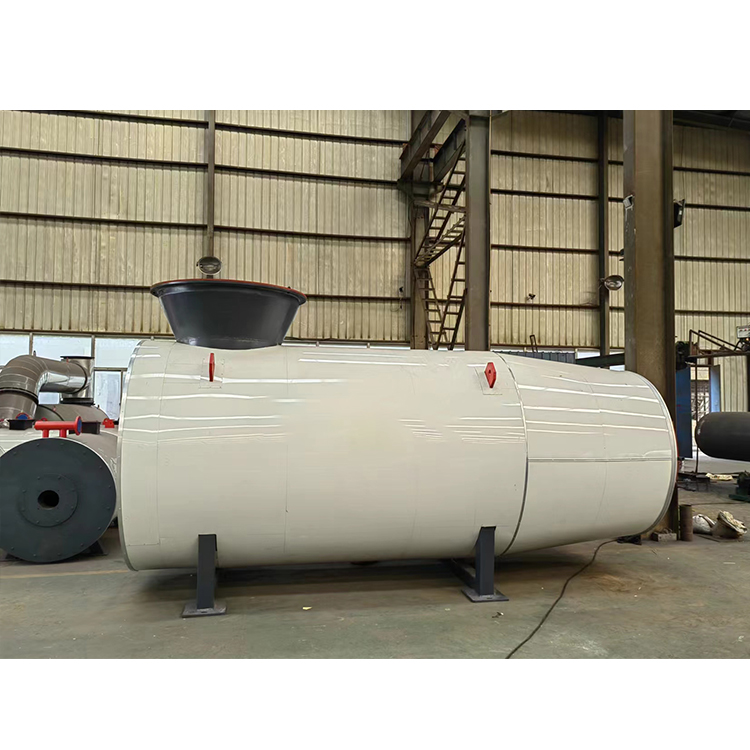
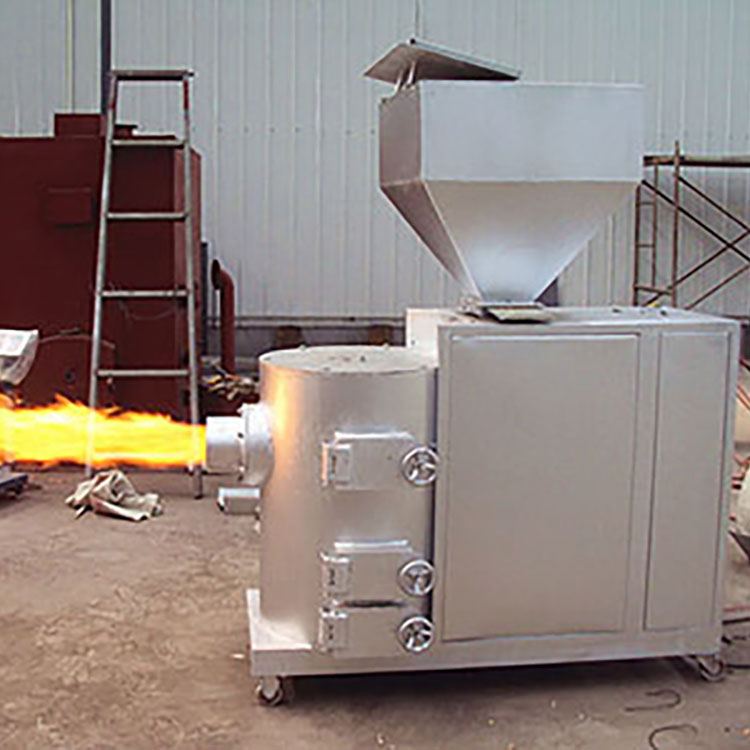
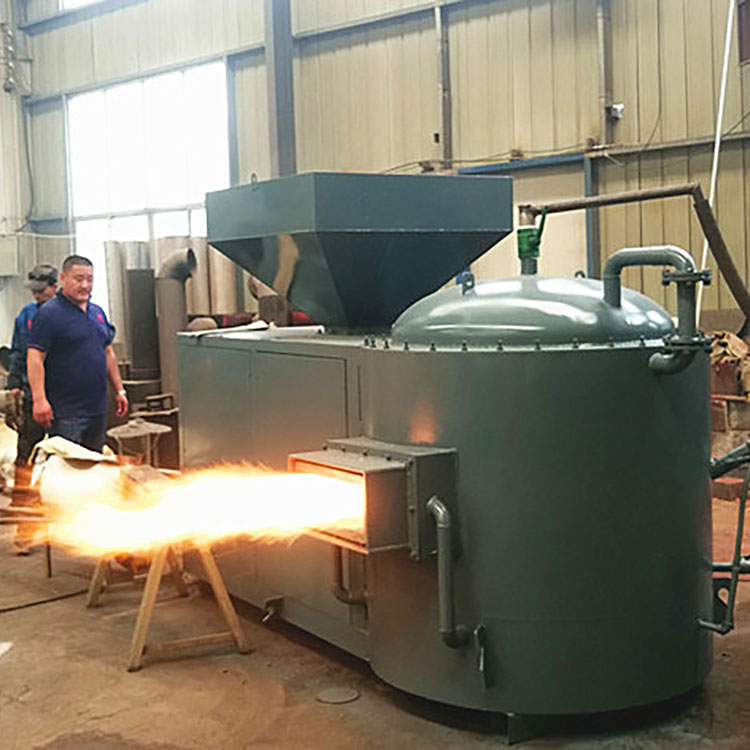
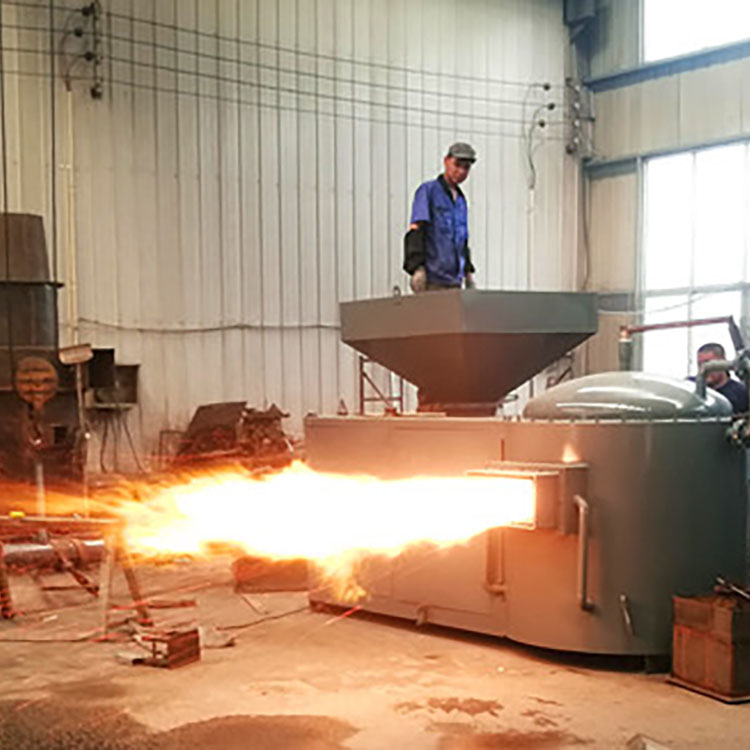





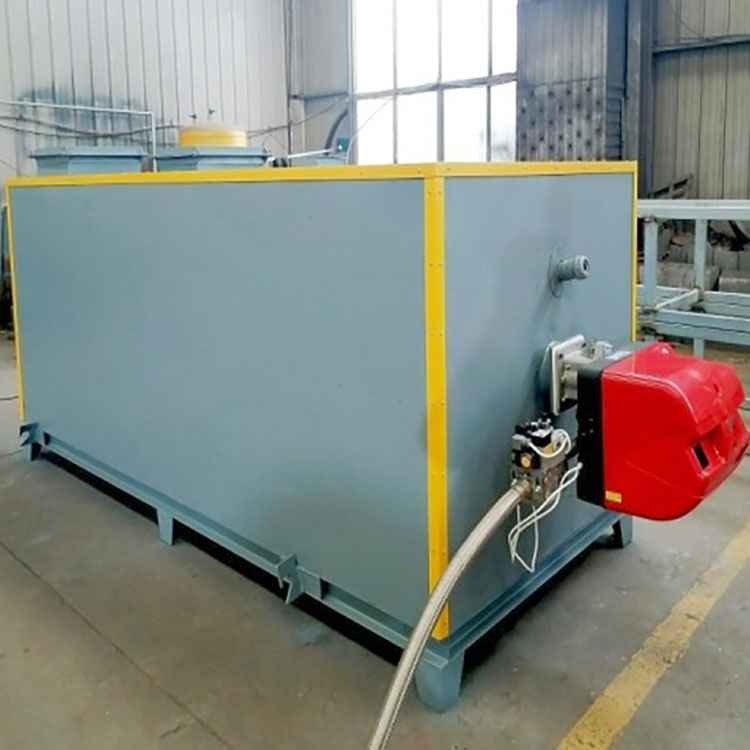
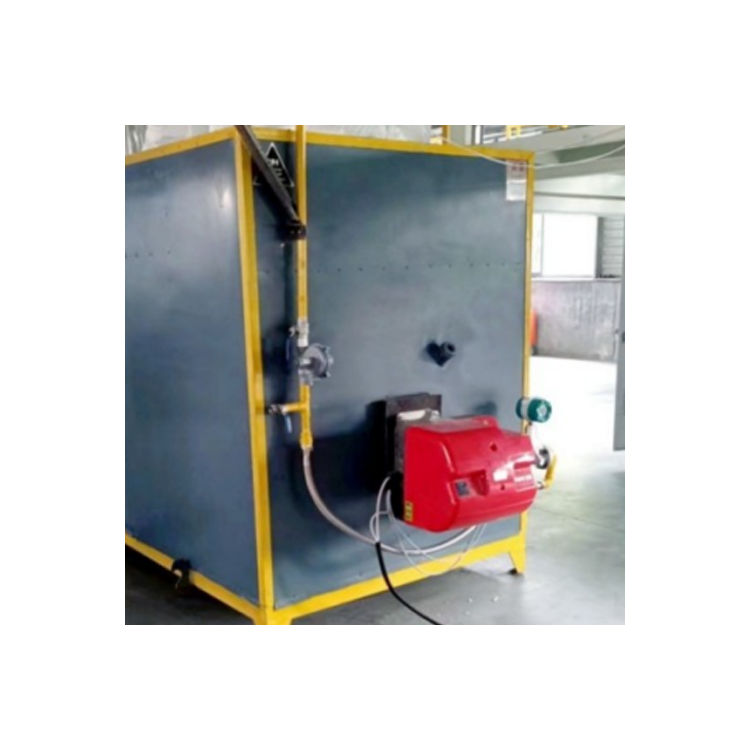
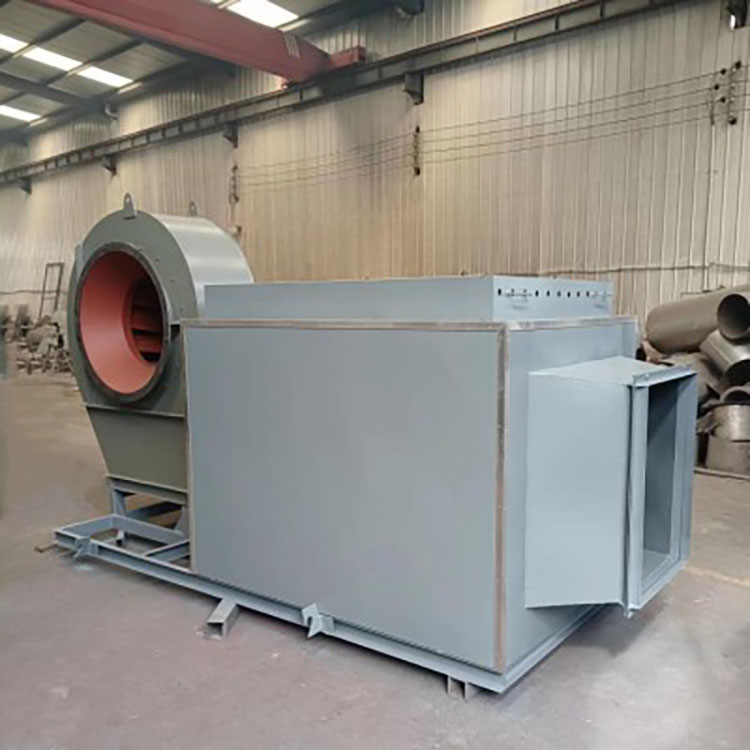
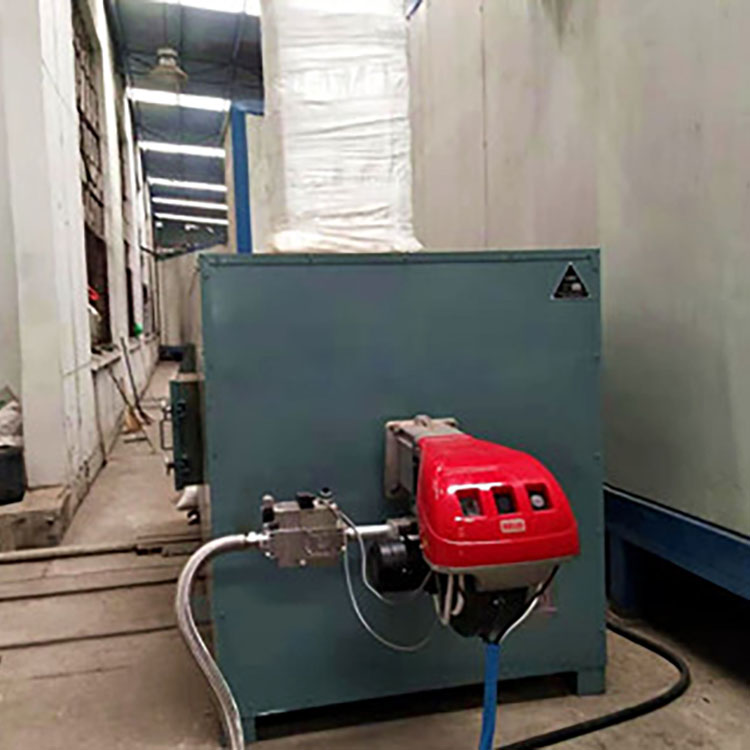
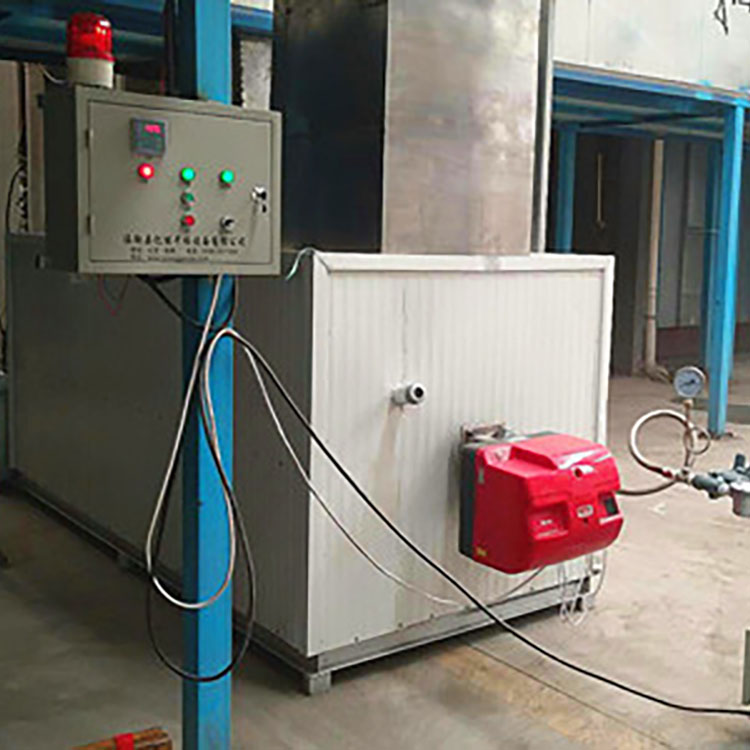
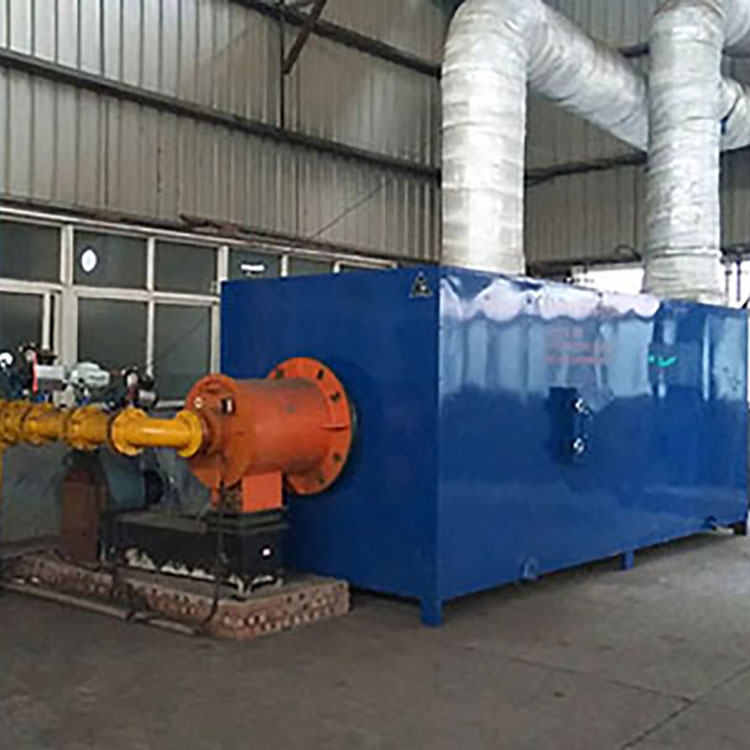
Biomass pellet burners use biomass pellets as fuel, are made of steel, and feature an inner and outer shell. They incorporate a water circulation cooling design, ensuring thorough high-temperature combustion with a large flame area and high thermal efficiency. The blown flame can reach temperatures of up to 800-1000 degrees Celsius.
Its features include:
1. Full-Automatic Intelligent Control System: Equipped with PLC operating system, featuring fully automatic and intelligent operation, a Chinese LCD operation interface, dynamic display operation, fault alarm indication, fully sealed variable frequency speed feed, automatic ignition, automatic temperature control, and automatic switch between high and low flames for constant temperature control based on varying temperature requirements. Automatic control of the entire combustion process of the burner.
2. High thermal efficiency: The "heating" of the combustion unit is achieved through the combustion of the inner shell particles, which blow out flames that are in full contact with air for secondary combustion before undergoing heat exchange with air. This results in a fully combusted flame with high thermal energy content, making it a completely clean flame and suitable for a wider range of applications.
3. Low Carbon and Environmental Protection: Utilizes combustion technology to eliminate residual flue gas through secondary high-temperature combustion, reducing particle emissions from dust, and achieving environmental protection and energy saving.
4. Simple Operation: PLC full automatic control, automatic ignition, automatic feeding, minimal labor required, large hopper capacity (available for custom large capacity hoppers), one feeding can run for 3-12 hours.
5. Low investment, low operational costs, reasonable structural design, suitable for retrofitting various boilers; an ideal product for quickly modifying vertical and horizontal coal-fired boilers.
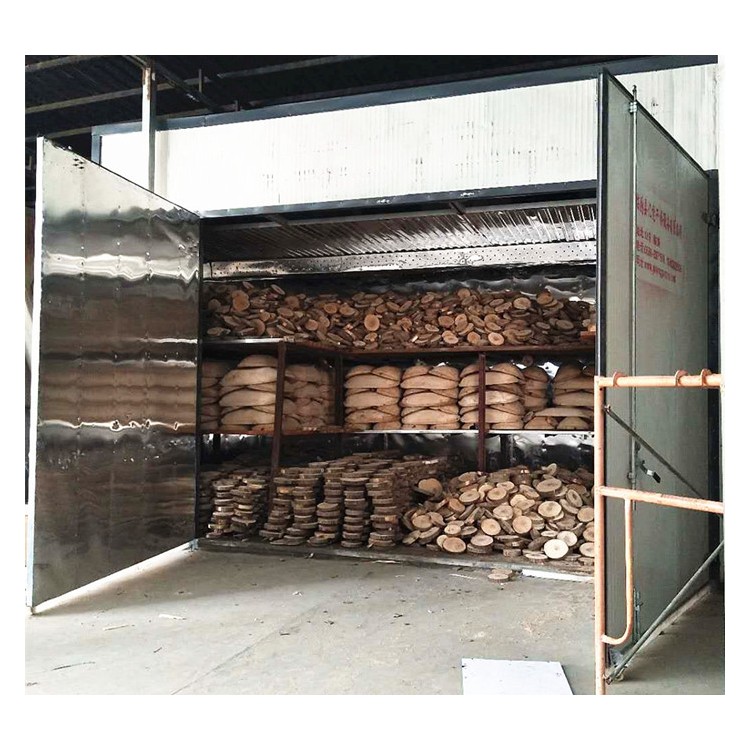
Application Range: Biomass burners are suitable for paint line systems, electroplating furnace, boilers, small power plant boilers, industrial kilns, incinerators, melting furnaces, die casting machines, drying equipment, kitchen equipment, drying equipment, food drying equipment, ironing equipment, paint baking equipment, road construction machinery and equipment, industrial annealing furnaces, large tonnage boilers fueled by oil, gas, and coal, as well as asphalt heating equipment in various thermal energy industries.