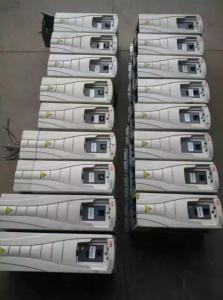


Steps After Recycling the Variable Frequency Drive
1. Inverter module damaged:
Generally, it is caused by motor or cable damage, as well as faults in the drive circuit. After repairing the drive circuit, upon testing the drive waveform in good condition, replace the module.
2. Rectifier module damage:
通常 caused by grid voltage fluctuations or internal short circuits. In the absence of internal short circuits, replace the rectifier bridge. During on-site troubleshooting, pay close attention to the user's grid conditions, such as grid voltage, and the presence of equipment like welders that may pollute the grid.
3. Display overvoltage or undervoltage:
通常 due to phase loss in the input, circuit aging, and moisture in the circuit board. The solution is to locate the voltage detection circuit and detection points, and replace the damaged components.
4. Power on with no display
Typically caused by a damaged switch-mode power supply or a faulty soft charging circuit, which results in a lack of DC power in the DC circuit, such as when the start resistor is damaged. Similarly, a damaged operation panel can also lead to this condition.
5. Indication of overcurrent or ground short circuit:
Typically due to damage in the current detection circuit, such as Hall elements, operational amplifier circuits, etc.
6. Overcurrent display during power supply and driver board startup:
Oftentimes, it's due to a damaged drive circuit or inverter module.
Siemens inverter current recirculation is a particularly important issue to be aware of during inverter operation. So, how much do you know about the causes of inverter overcurrent and how to ensure proper protection? Therefore, as a manufacturer of inverters, today we will discuss this with you. The inverter manufacturer states, the main reasons for inverter overcurrent are as follows?
Non-short-circuit overcurrent, mainly caused by: a. severe overloading of the motor; b. rapid acceleration of the motor; c. the U/f ratio (torque compensation) set too high, but the motor is in a light load state. 2. Short-circuit overcurrent, as stated by the inverter manufacturer, is mainly due to: a. overcurrent caused by a short circuit on the load side; b. grounding on the load side; c. the formation of a direct connection, where both transistors on the same arm of the inverter bridge conduct simultaneously. Since the inverter operates with both transistors on the same arm alternating in conduction, any change in component parameters due to a reason such as high ambient temperature can lead to a direct connection. The inverter manufacturer suggests the following protective measures against overcurrent: 1. Within the scope of meeting production equipment and manufacturing process requirements, strive to increase acceleration or deceleration time to avoid overcurrent during the acceleration or deceleration process.
Siemens variable frequency inverter user program, which is a program created by the user to handle specific automation tasks and downloaded into the CPU. The tasks to be completed by the user program include the following: 1. Determine the restart (hot start) and hot restart conditions (such as initializing signals with specific values). 2. Process process data (such as logical links for generating binary signals, obtaining and evaluating analog signals for binary output signals, and outputting analog values). 3. Respond to interrupts. 4. Handle disturbances during normal program cycles.