














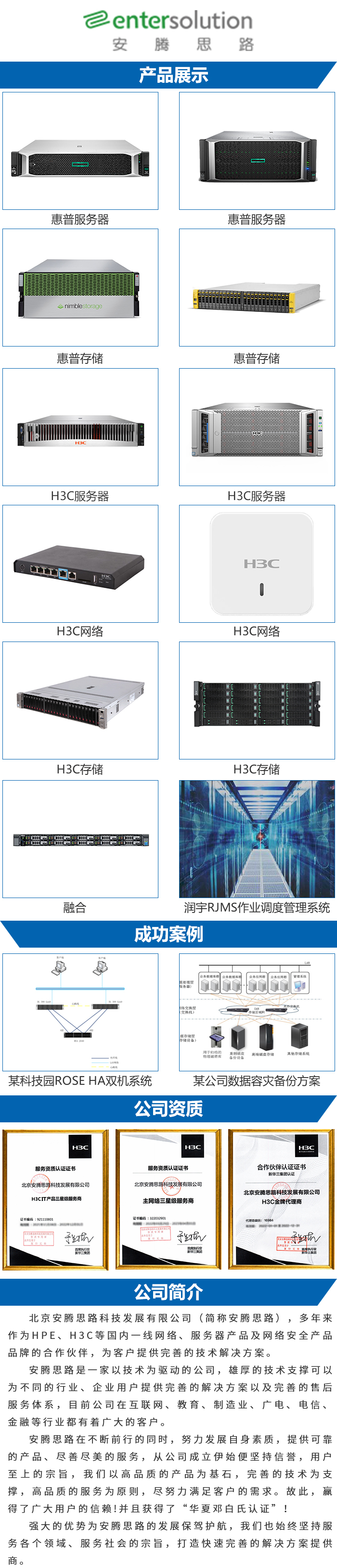
H3C NetworkingCategorized by network topology
Star Network: Each site is connected to the central station through point-to-point links. Features include easy addition of new sites to the network, easy control over data security and priority, and easy implementation of network monitoring. However, a failure in the central node can cause the entire network to fail.
Ring Network: Sites are connected into a closed loop through communication media. Ring networks are easy to install and monitor, but have limited capacity; it is difficult to add new sites once the network is established.
Bus topology: All stations on the network share a single data channel. Bus topology is easy to install and requires less cable, making it cost-effective. A failure at one station typically doesn't affect the entire network. However, a failure in the medium can cause the network to fail, and bus networks are less secure with monitoring being more challenging, and adding new stations is not as easy as in a star topology. Other types of network topologies, such as tree, cluster star, and mesh, are based on these three topologies.

H3C Network Features
Flexible networking to meet diverse user requirements
Supports multiple gigabit Ethernet ports and gigabit SC fiber optic ports, easily enabling distance extension. Users can choose from point-to-point, cascading, and aggregation networking methods according to on-site requirements, to meet various networking needs.
2. Supports lossless, high-efficiency data transmission via multiple protocols
Full/half-duplex adaptive; supports IEEE802.3x flow control, backpressure flow control; broadcast storm suppression; supports multicast, employee internet access auditing and authentication, supports MAC address auto-learning, supports QoS, ensures high network efficiency.
3. Plug and Play for easy use
Supports MDI/MDI-X port auto-negotiation, no additional settings required. Simply plug in the power, fiber, and network to use. Beijing staff internet audit compliant, easy to use, and offers high cost-effectiveness.
H3C Network Switches Connection Methods
1. ADSL/VDSL PPPoE: To access the internet on a computer, use third-party dial-up software like Enternet 300 or the dial-up program included in the WinXP system. Enter the account and password provided by the ISP, and the employee's internet access is audited by the agency. A dial-up is required before each internet session.
2. Enabled routing feature, entered the account and password provided by the ISP, employees audit purchases online, and the dialing action is delegated to the MODEM.
3. Static IP: The ISP provides you with a fixed IP address, subnet mask, default gateway, and DNS.
4. Dynamic IP: Set the computer's TCP/IP properties to "Obtain IP address automatically," and the computer can go online each time it boots up.
5. 802.1X + Static IP: The ISP provides a fixed IP address, dial-up software, username, and password.
6. 802.1X + Dynamic IP: The ISP provides dial-up software, username, and password.
7. Web Authentication: Before each online session, open the IE browser, which will automatically redirect to the ISP-specified homepage. Enter the username and password provided by the ISP, and authentication is required before you can proceed with other online activities.

Employee Internet Usage Audit Agency - Beijing Employee Internet Usage Audit, provided by Beijing Antengsi Technology Development Co., Ltd. Striving Forward, Forging Ahead. Beijing Antengsi Technology Development Co., Ltd. is committed to becoming a strategic partner that wins together, coexists, and progresses together with you, and is also determined to become a competitive enterprise in servers and workstations, soaring with you and achieving success together!




















