














Combined Refrigeration and Heating Machine - Heating Section:
1. Computer touch control, separate electrical control, easy and intuitive operation; (Select)
2. The temperature control chart uses RKC microcomputer dual-group P.I.D. control, with a tactile internal storage for automatic calculation, reliable, and energy-saving by over 35%.
3. Comprehensive safety protection and fault indication system.
4. Utilizing imported components.
5. Extract mold return oil, full vacuum operation features; (Optional)
6. Seamless stainless steel construction, small tube diameter, even wall thickness.
7. Automatic exhaust function upon startup

The heating and cooling unit is a laboratory instrument with both heating and cooling functions. This instrument utilizes multiple proprietary technologies, offering high temperature control accuracy and is primarily used in fields such as biology and chemistry (e.g., rotary evaporators, reactors, fermentation tanks, calorimeters, and other equipment). The unit is highly automated and can automatically heat or cool according to the set requirements. The temperature control, heating, and cooling functions are universal, capable of meeting various biochemical experiment needs.
This instrument boasts an attractive appearance, compact size, and reasonable structure. With a rational arrangement of various internal components and external accessories, the device is easy to operate, has excellent heat dissipation, cooling performance, and operates quietly.
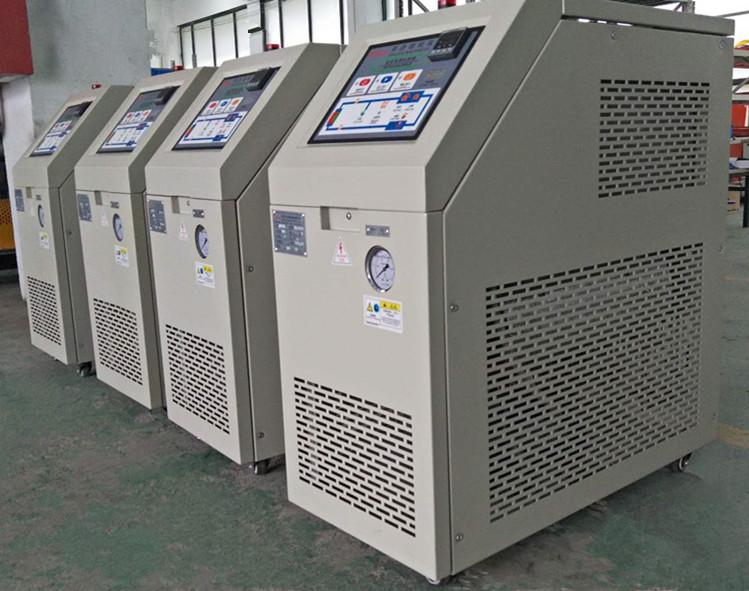
Combined Refrigeration and Heating Unit: Electrical Operation Panel
1. Total power overcurrent non-fuse circuit breaker
2. Motor reverse protection and indicator light
3. Coolant Water Low-Level Protection and Indicator Light
4. Recirculation pump overload protection and indicator light;
5. By-pass Pressure Relief Circuit
6. Alarm Buzzer for Anomaly Alerts
7. Pressure Gauge for Water Discharge
8. Overheat Protection Temperature Switch
9. Return Water Temperature Indicator.

The working principle of the refrigeration and heating unit: The pump drives the heat transfer medium (usually water or oil) from the oil tank equipped with an internal heater to the temperature control device, and then back to the oil tank. The controller adjusts the temperature of the heat fluid, thereby regulating the temperature of the temperature control device, based on the temperature of the hot fluid measured by the temperature sensor or the internal temperature of the temperature control device. Generally, water-based systems have a lower temperature control range, while oil-based systems have a higher range. The operating temperature for water systems is 90°C, for pressurized water systems it is 160°C to 180°C, and oil-based systems are used for temperatures of ≥150°C, with a high operating temperature of 350°C.




















