









U.S. Early Sweet Cherry Variety Planting Area
Our country boasts a wide variety of cherry cultivars, and when it comes to planting large cherries, variety selection is our top priority. Despite the short season for cherry availability, cherries mature in three periods: early, mid, and late. They can be categorized by color into yellow, red, purplish-red, and deep red, with over dozens of varieties. Today, let's discuss the "Mei Zao" cherry variety and the key points for cultivation:
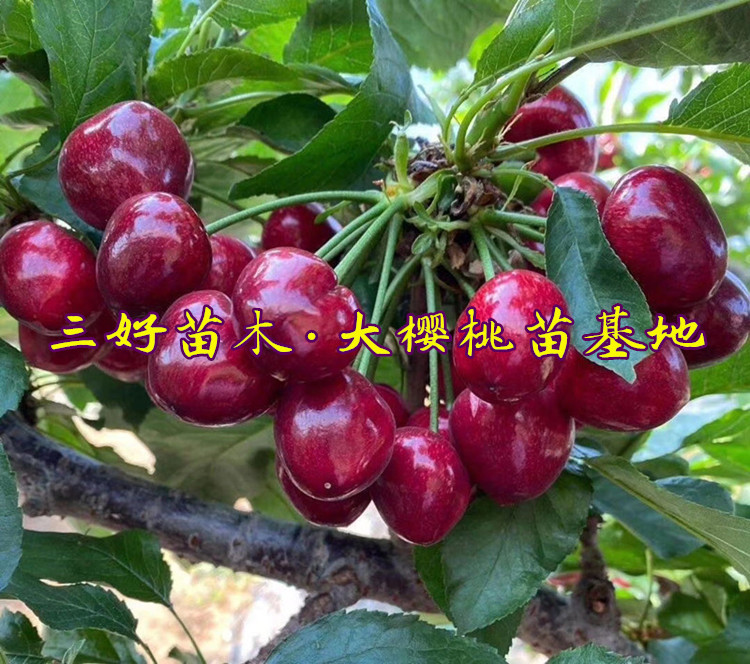
American Early is a U.S. variety introduced to our country in the 1990s, dominating the market for nearly eight to nine years, with stable prices and consistently high demand. Its consumer recognition stems from the quality of its fruit, which is large, sweet, and has now become synonymous with large Chinese cherries.
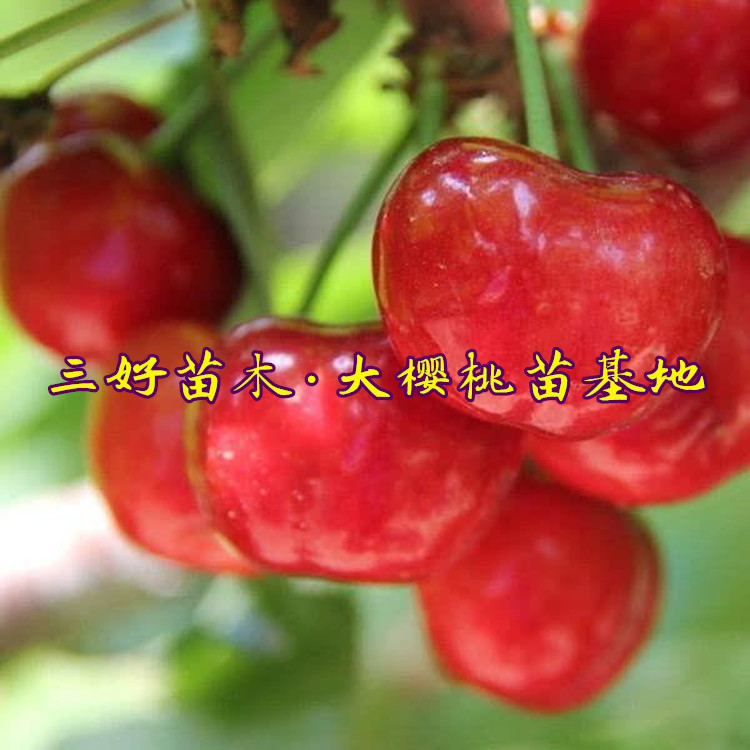
The American Early Large Cherry is one of the most popular cherry varieties available. These cherries are particularly large, with thick, juicy flesh and a dark red appearance. The deeper the color, the better the flavor. They have a sweet taste and are considered premium among cherries. The American Early Large Cherry is a variety developed in the United States and was introduced to China in 1996. It is known for its resilience during storage and transportation and is an early-bearing, high-yielding, fine cherry variety. Each fruit weighs approximately 9 grams, with the larger ones reaching up to 12 grams.
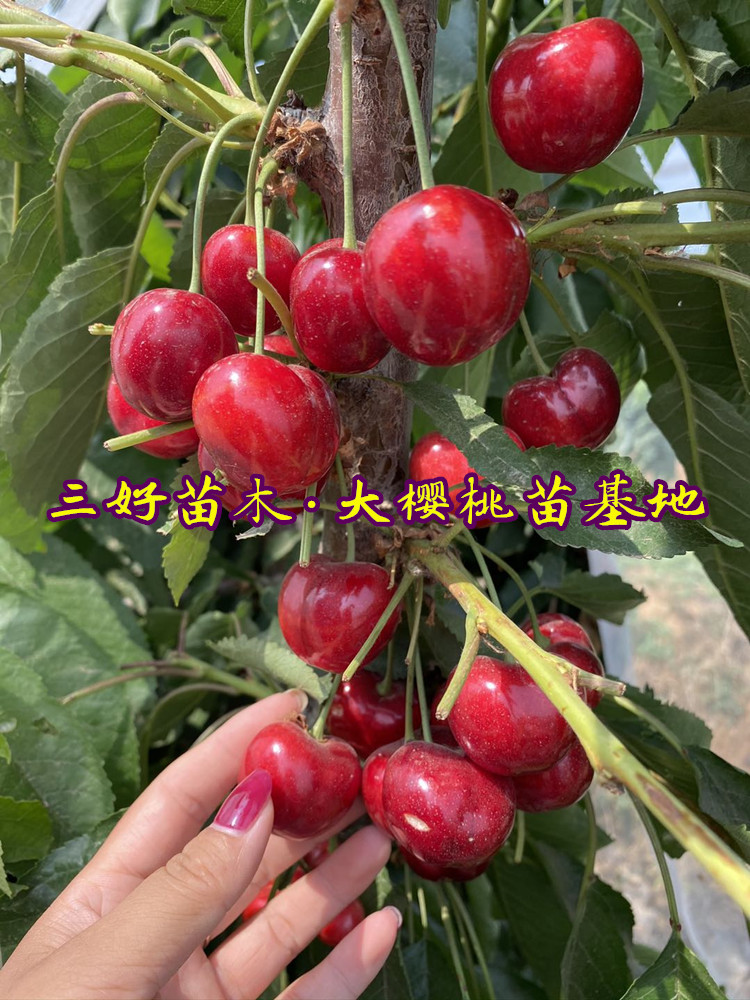
The Meizao large cherries have a heart-shaped fruit, with a purple-red skin that has a glossy appearance. When fully ripe, they turn purple, with a crisp texture that is neither soft nor overly juicy. They are thick and juicy with a sweet and tart flavor. They typically mature from May to June and are only available for sale in June.
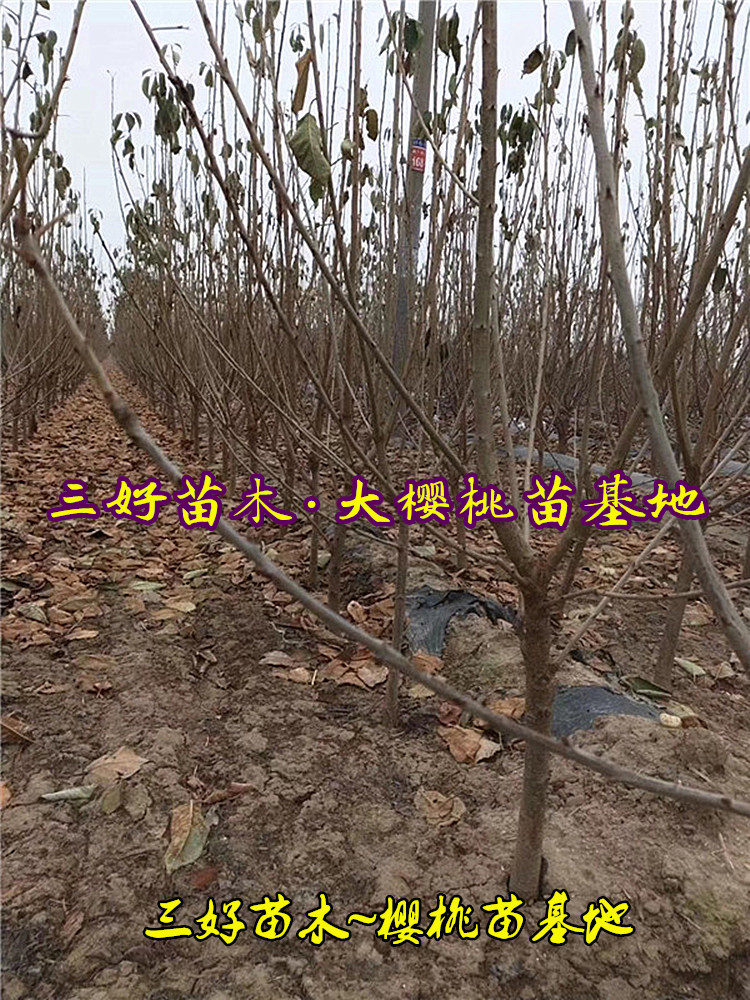
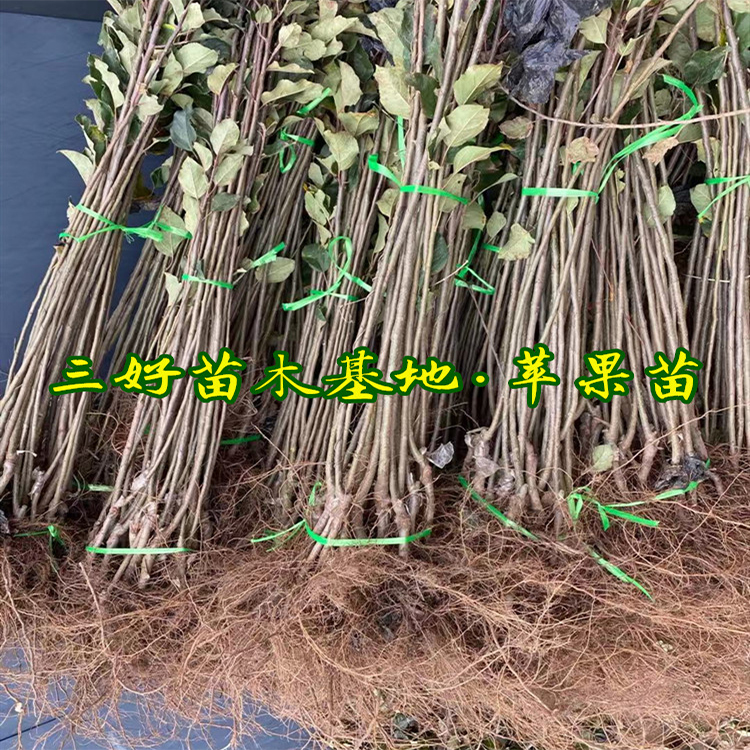
Early American cherry tree cultivation: Mid-early ripening, robust tree vigor, semi-spreading tree shape, strong萌芽 and branching abilities in young trees. Primarily produces fruit on medium and short fruit spurs and cluster spurs, with low self-pollination rate, requiring pollination trees. Suitable pollinating varieties include Sammit, Pioneer, Lapins, etc., with an ideal ratio of 3:1 between the main variety and the pollinator. Gisela No. 6 is used as the rootstock, suitable for dense planting. Bears fruit within three years after planting, and reaches full production in five years.
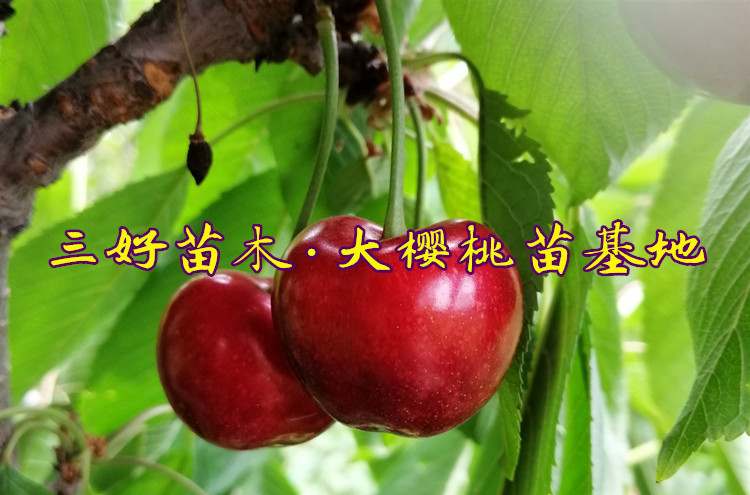
Cherry seedling planting period:
Cherry seedling planting is generally divided into spring and autumn planting periods. Spring planting must be done as soon as the soil thaws, around early March in the North China region. In the warm and humid south, autumn planting is preferable to spring planting. Autumn planting should be done after the leaves fall and before the soil freezes, typically from late October to early November. In the North China region, it is recommended to plant as early as possible in spring. Apart from the risk of the trees drying out due to the severe winter cold, cherry trees have early sprouting and a slower root activity. Delaying the planting time can lead to a significant imbalance between the water demand of the tree's upper canopy and the supply from the roots, causing the seedlings to dry out, the bark to wrinkle, and even the death of the plants.
Cherry Seedling Planting Method:
Cherry seedlings require careful planting techniques. Before planting, dig holes or trenches according to the predetermined spacing. For hole planting, create a pit that is 40-60 cm deep and wide. For trench planting, dig a trench approximately 40 cm deep and wide. While digging, separate the topsoil from the subsoil and place them apart. Fill the planting hole or trench with 20 cm of mixed organic matter, such as leaves, straw, weeds, or farmyard manure, compacted with your feet. Then, add some topsoil to a height of about 20 cm from the ground, making the middle slightly higher than the edges. Place the seedling in the hole (trench), ensuring the roots spread out. As you backfill with soil, gently shake the seedling and compact it with your feet for a tight root-soil contact. To prevent the seedling from leaning or being blown over after watering, you can stabilize it with a stick or bamboo. Water immediately after planting, and after the water has渗入, create a small soil mound at the base of the seedling's trunk or cover it with a 1-square-meter geotextile. This will help protect against cold and drought.
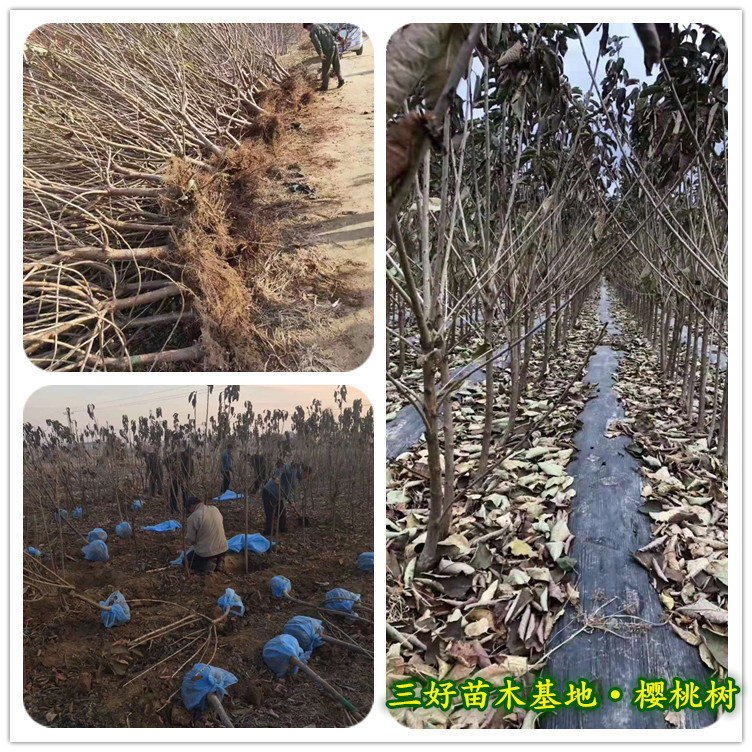
Cherry seedling cultivation precautions:
Plant in fields with high water levels by first raising ridges, 20-30 cm in height and 1-1.2 meters wide, then proceed with the planting method. Due to the longer chilling requirement of large cherries, in warmer regions, the inverted greenhouse method should be used to extend their dormancy period, ensuring the chilling requirement for large cherries.