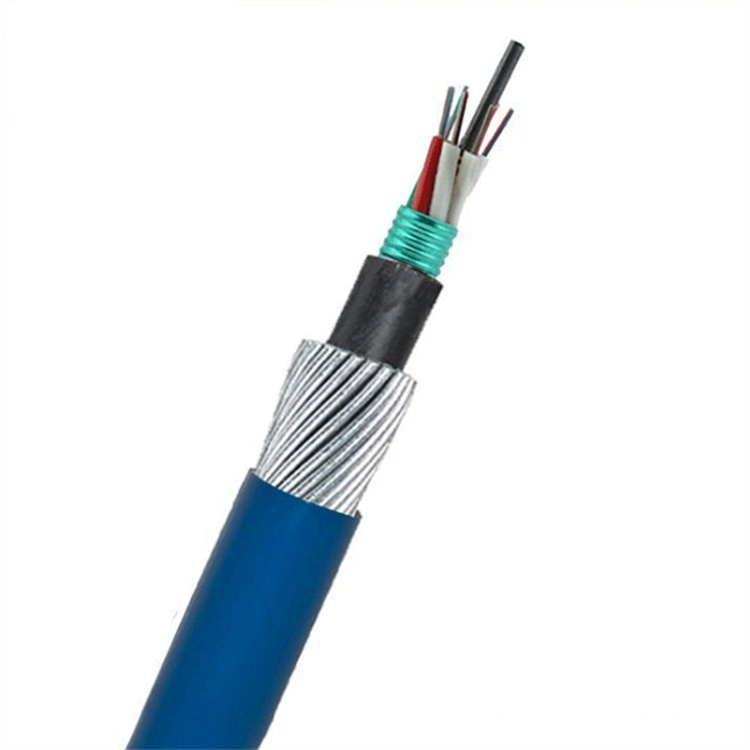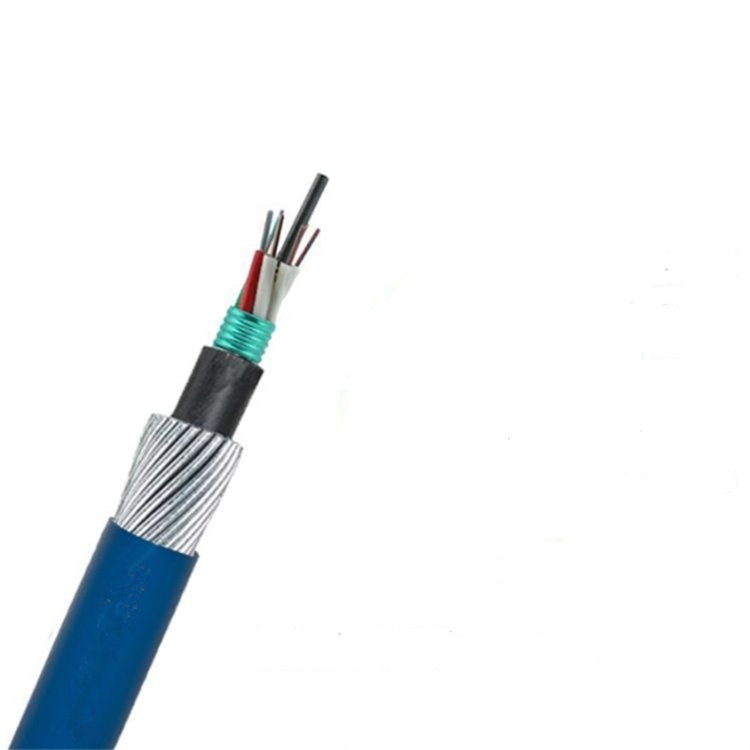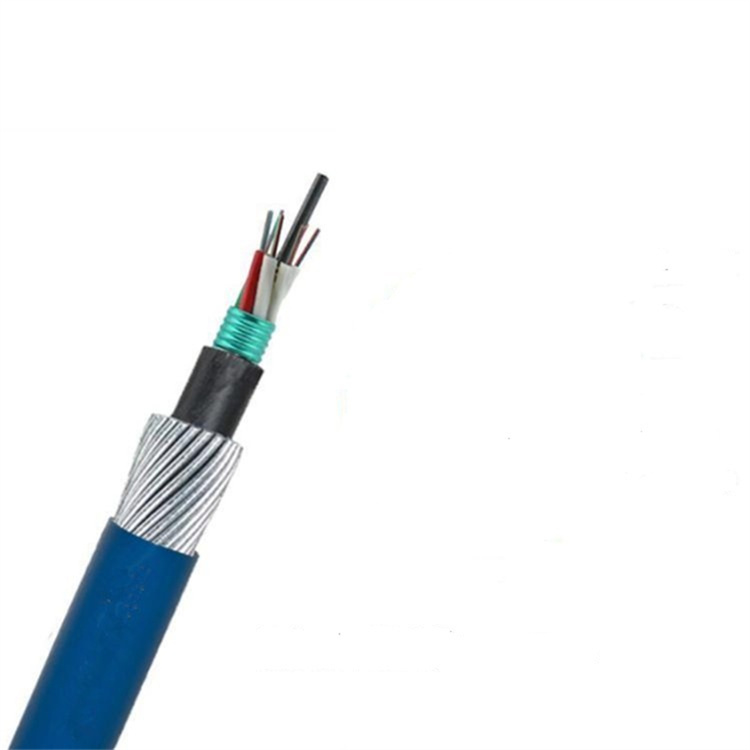

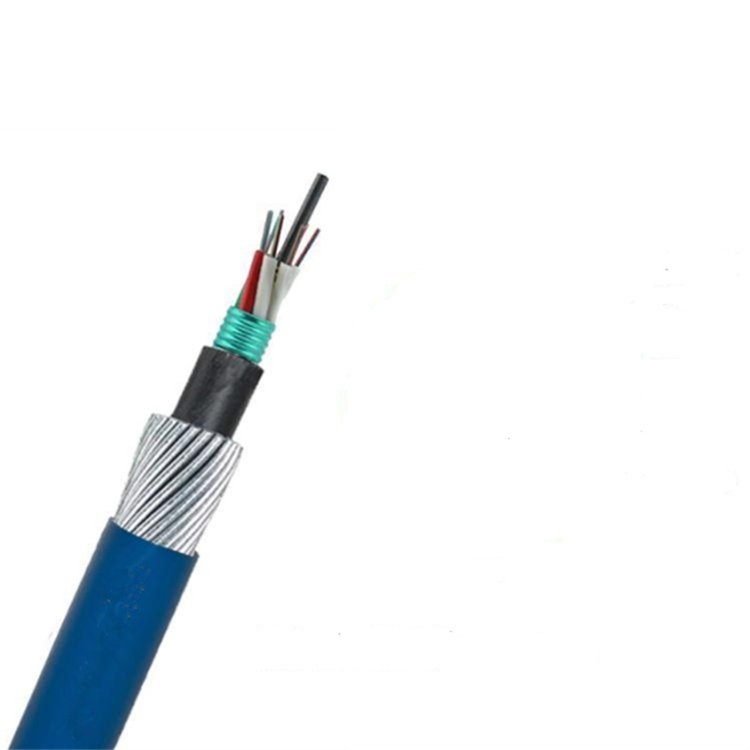


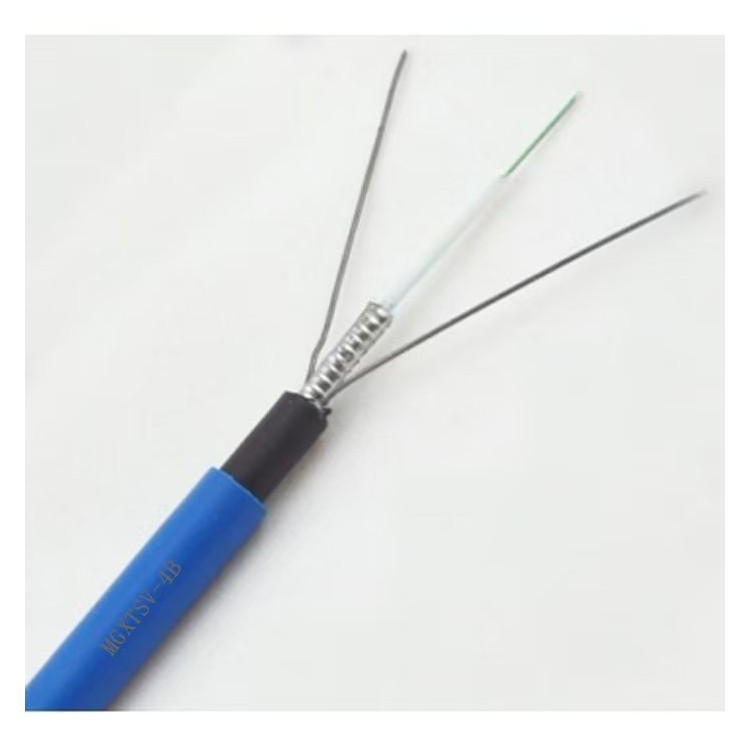







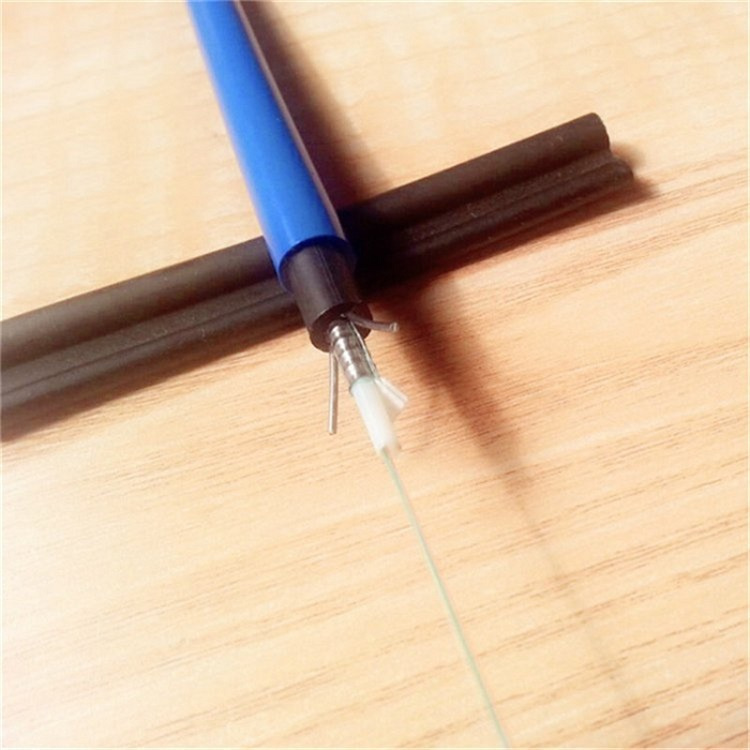
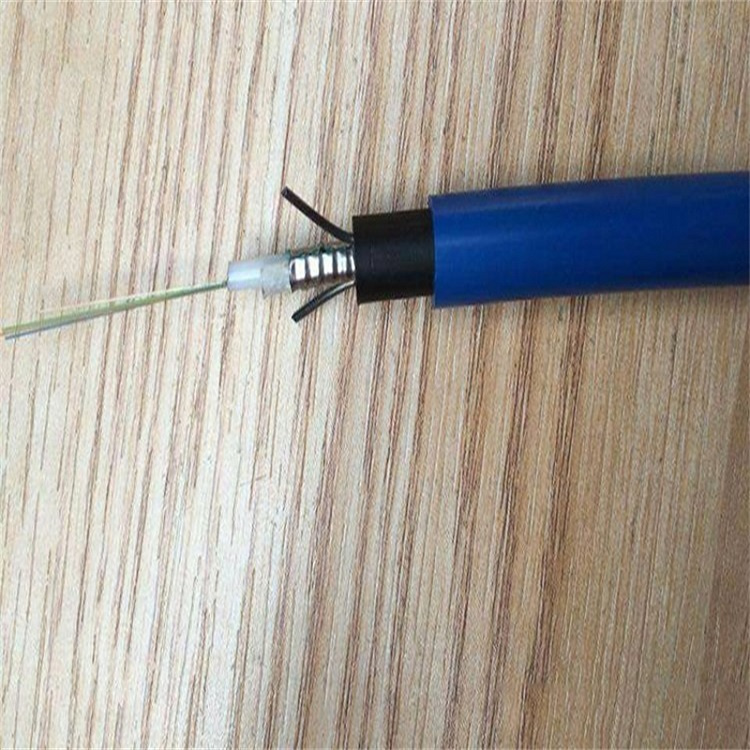

1. The mining optical cable MGTSV is a specialized application of fiber optic cables in the communications field, specifically designed for the coal mining industry's communication cables. It is used in mining sites such as coal mines, gold mines, and iron mines.
2. The mining cable MGTSV not only inherits all the performance of optical fibers but also adds many special features due to the specific requirements of the coal mining industry, primarily including:
Our products are equipped with flame-retardant and rodent-proof features, especially designed for the unique mining environment such as coal mines, gold mines, and iron mines. Considering that coal mines are prone to accidents, the State Administration of Work Safety (State Administration of Coal Mine Safety) mandates that all products used in coal mines, including communication optical cables, must undergo safety certification, i.e., the Mine Product Safety Mark Certification, to ensure uninterrupted communication during emergencies and minimize losses.
3. Due to the absence of corresponding standards for other minerals like gold and iron ores, since the comprehensive performance of coal mine cables is a standard for mining applications and also a high-execution standard required by the industry, other mines generally design and produce cables according to the specifications of coal mine cables.
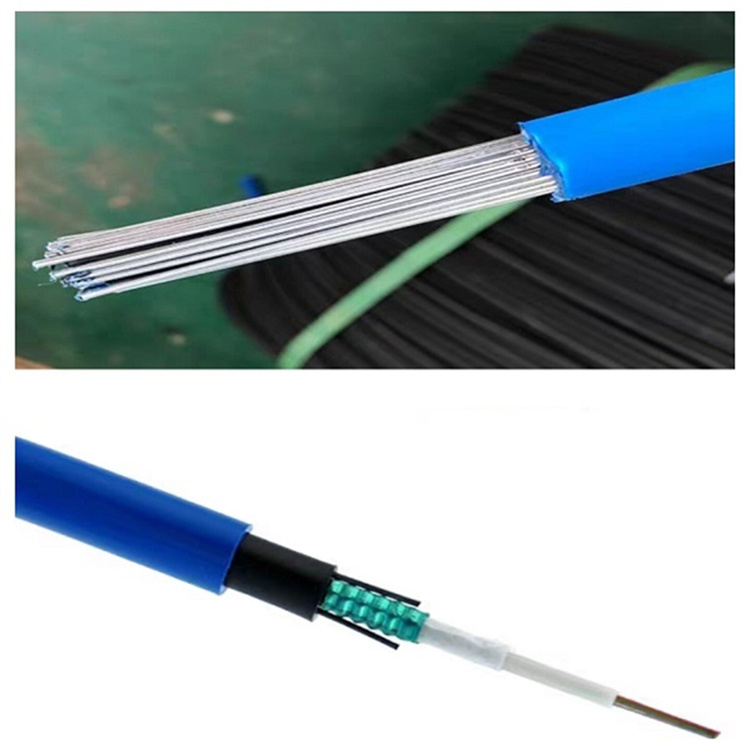
Categorized into: a - Centered stranded cable (2-12 cores, due to manufacturing issues, this process can only produce up to 12 cores)
B-Stranded (2-144 cores, center tube construction is usually preferred when less than 12 cores)
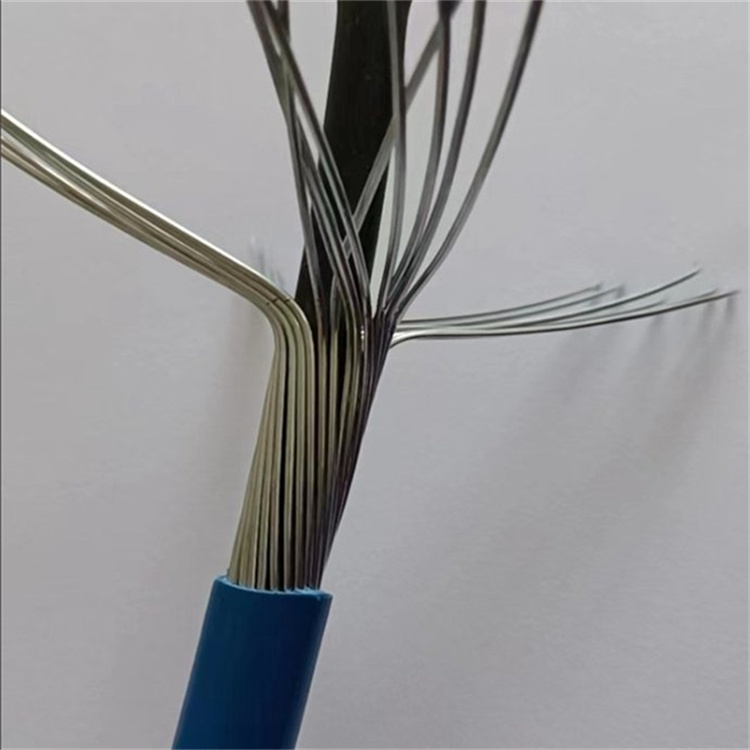
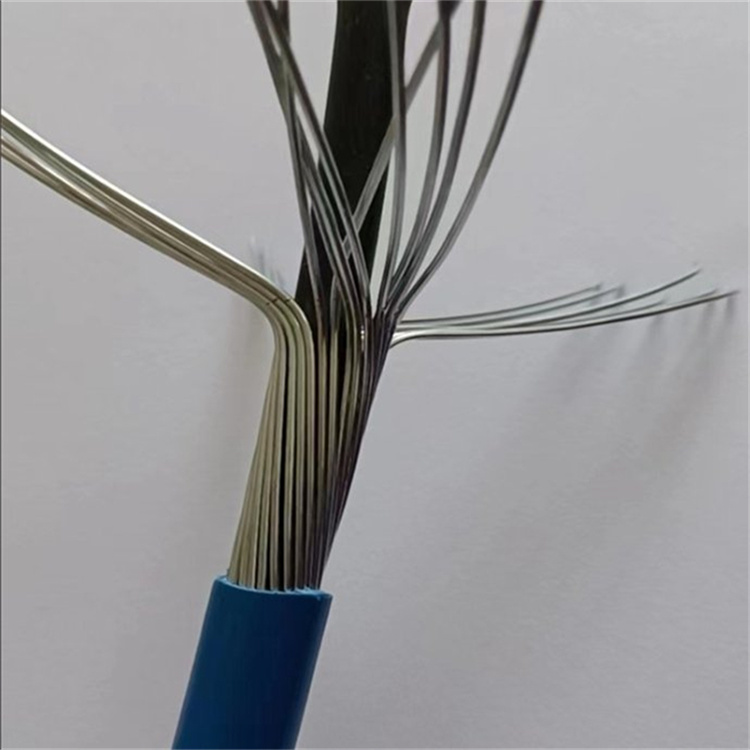
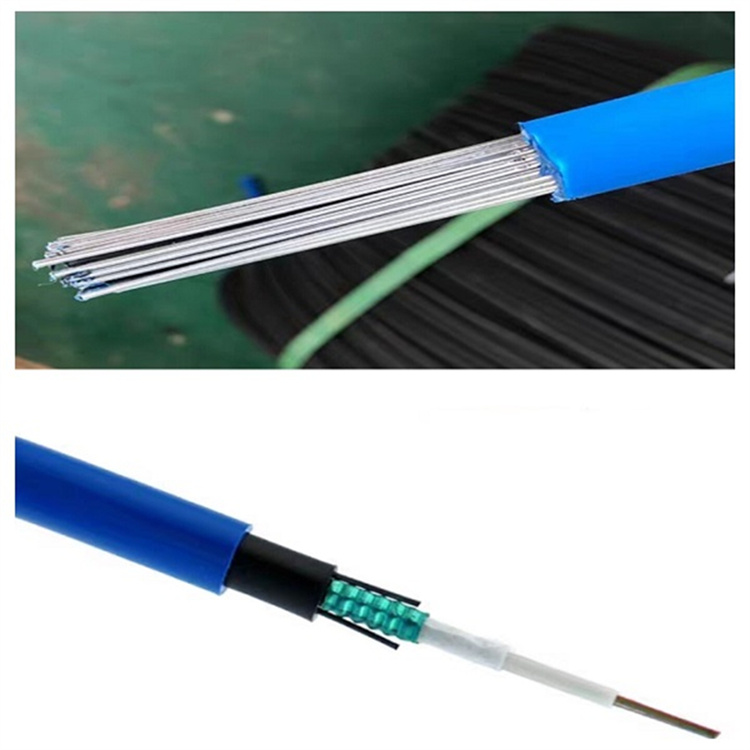
1. Central tube design: From inside to outside, it includes fiber optic, fiber optic grease, loose tube, fine steel wire (multiple wires wrapped in a circle), steel strip, PE inner sheath, flame-retardant jacket (blue)
2. Stranded Construction: Centered with reinforcing elements (typically phosphated steel wire), followed by optical fibers, fiber grease, loose tube, ties, cable grease, steel tape, PE inner sheath.
Flame Retardant Sheath (Blue)