


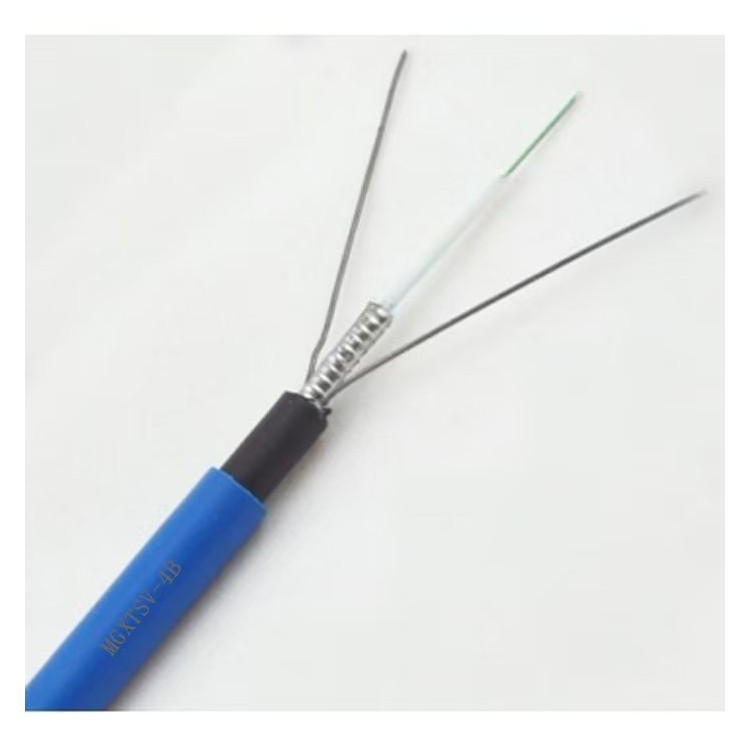









Power cables are used for the transmission and distribution of electrical energy. They are commonly employed in urban underground power grids, transmission lines from power stations, internal power supply for industrial and mining enterprises, and underwater transmission lines across rivers.
Electrical cables – To ensure the normal operation of the cables and motors, the following three principles should be adhered to when selecting the cable cross-section:
1. When the cable is operating normally, the actual temperature rise should not exceed the maximum temperature rise allowed by the insulation.
2. Select based on the allowable voltage loss during the operation of the cable line.
3. The selection of cable cross-section must meet the requirements of mechanical strength.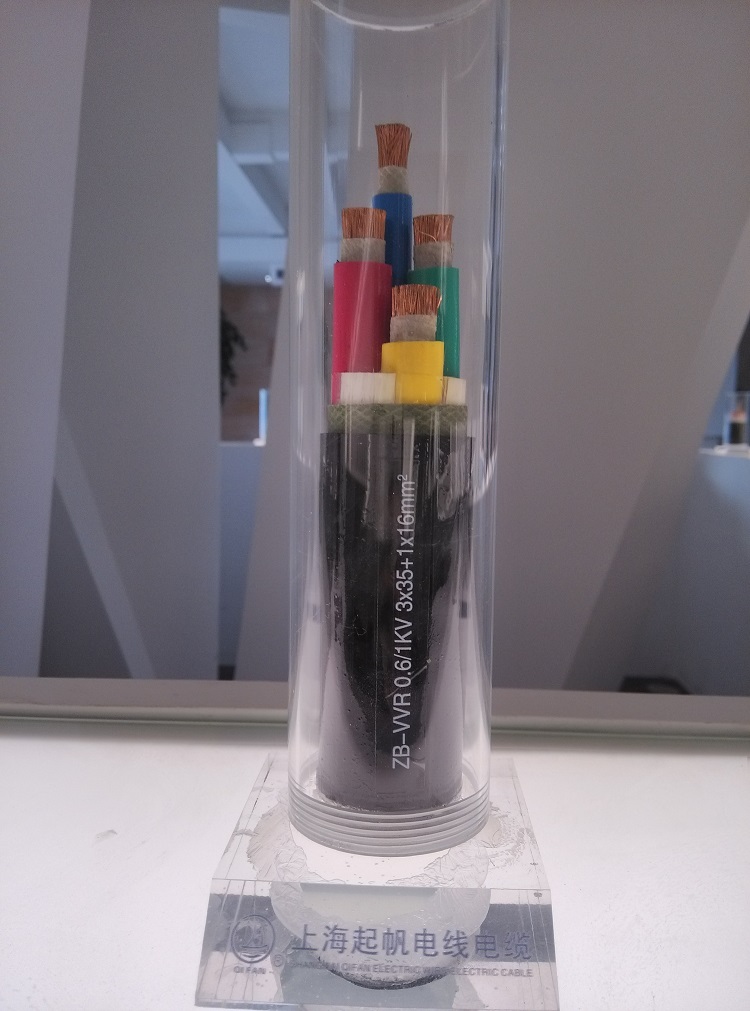 Basic Structure of Power Cables:
The basic structure of power cables consists of four parts: the core (conductor), insulation layer, shielding layer, and protective sheath.
1. Conductor. The conductor is the conductive part of an electrical cable used for transmitting electrical power, being the main component of the power cable.
2. Insulation. Insulation is essential in electric cables, as it electrically isolates the core from the earth and between cores of different phases, ensuring the transmission of electrical power. It is an indispensable component of the cable structure.
3. Sheath layer. Power cables with 15kV and above typically have both conductor屏蔽层 and insulation屏蔽层.
4. Protective Layer. The role of the protective layer is to shield power cables from external impurities and moisture, as well as to prevent direct physical damage to the power cables.
Flame-retardant/Fire-resistant power cables. The flame-retardant grade is indicated by adding "A," "B," or "C" after the letter "Z," such as "ZA," "ZB," "ZC." When "ZR" is used, it is generally considered to be "C" grade flame-retardant. The fire-resistant grade is indicated by adding "A," "B," or "C" within "ZN," such as "ZAN," "ZBN," "ZCN." When "NH" is used, it is generally considered to be "ZCN." For example:
Model Name Equivalent
ZC-YJV Copper-core Cross-linked Polyethylene Insulated and PVC Jacketed Flame-retardant C-Class Power Cable ZR-YJV
ZCN-YJV Copper Core Cross-Linked Polyethylene Insulated PVC Jacket Flame Retardant C-Class Fire-Resistant Power Cable NH-YJV
Key Advantages of Power Cables:
1. Minimal land use: Typically buried in soil or laid indoors, in trenches, or tunnels, with small inter-wire insulation distances; no need for towers, occupying minimal land, and virtually no space on the ground surface.
2. High Reliability: Minimal impact from climate and surrounding environmental conditions, stable transmission performance, and high reliability.
3. Favorable conditions for development towards higher pressure and larger capacity, such as low-temperature, superconducting power cables, etc.
4. Larger distributed capacitance.
5. Low maintenance workload.
6. Low risk of electric shock.
Our company, adhering to the corporate spirit of "unity, pragmatism, dedication, and devotion," operates on the principle of mutual benefit, maintains integrity in business, strictly controls quality, and provides comprehensive services, thereby earning high praise from our extensive customer base.
WeChat Official Account

Scan to follow Official Account













