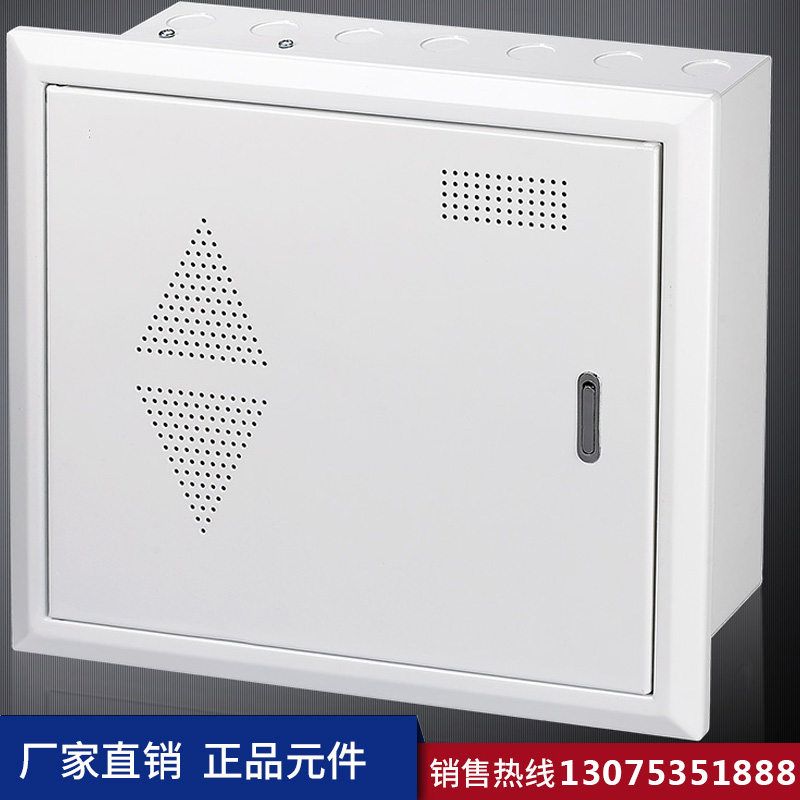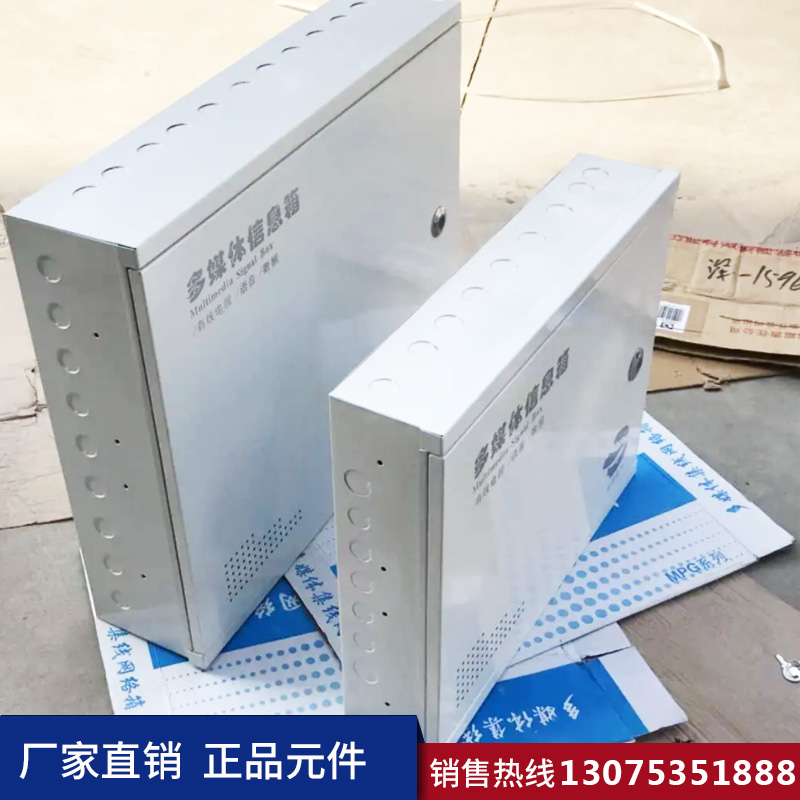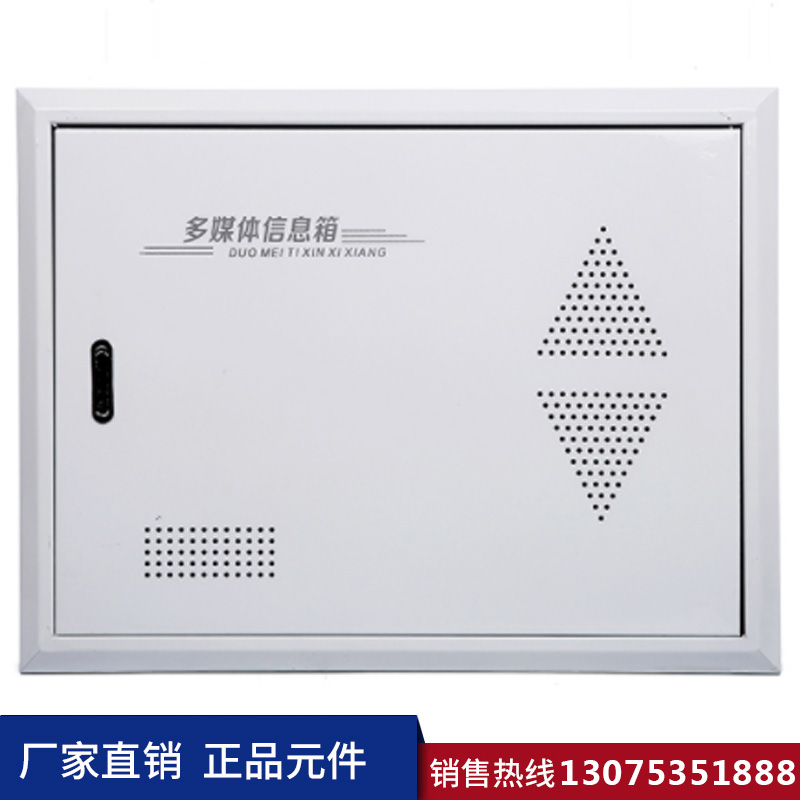

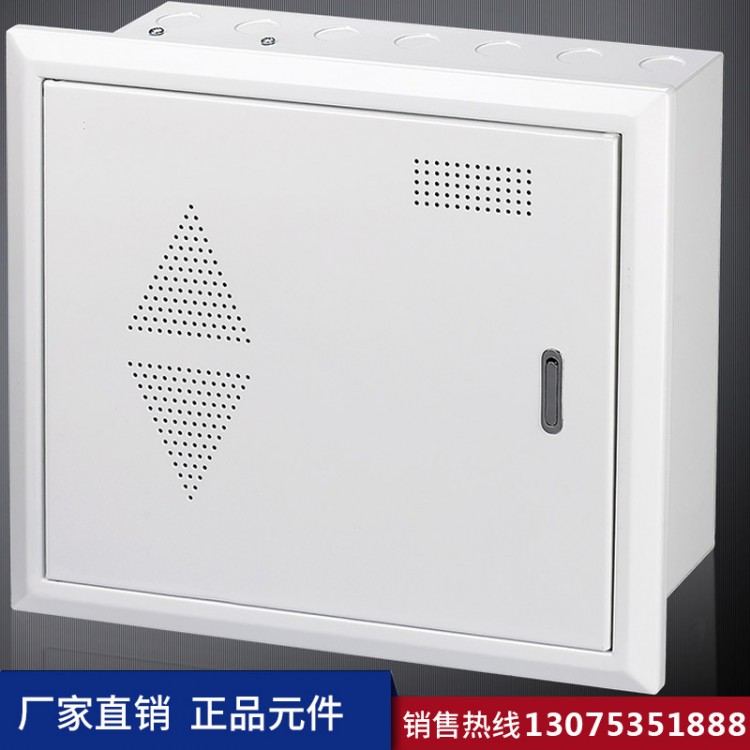


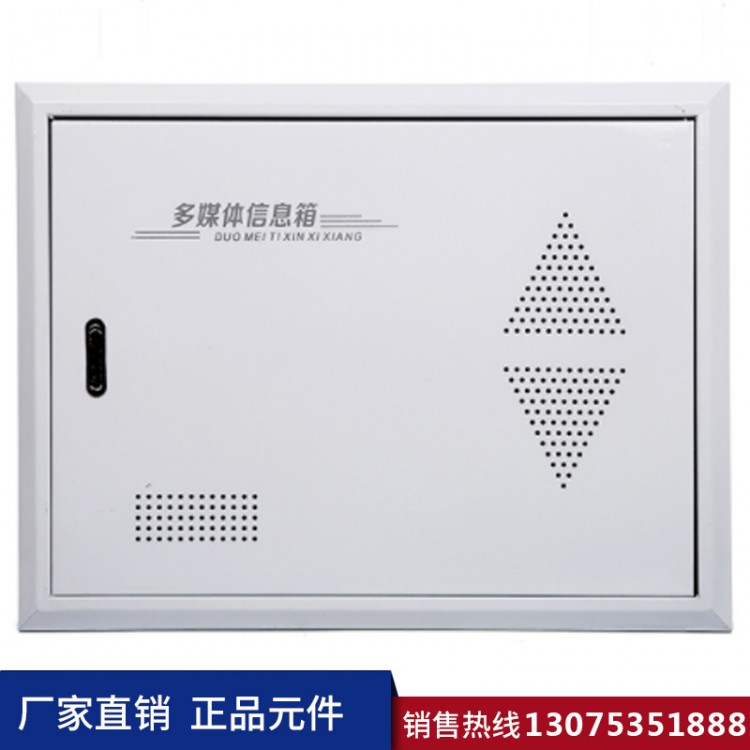











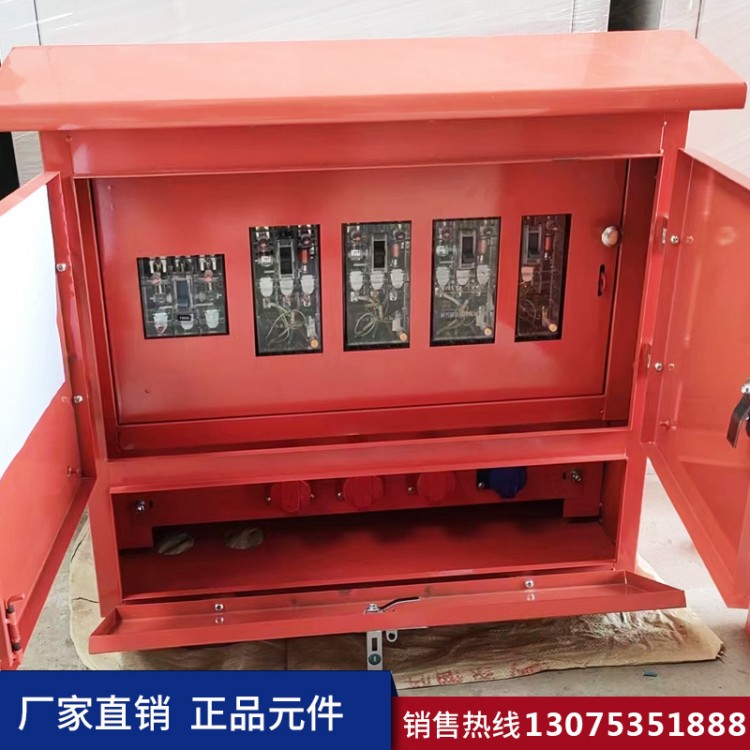
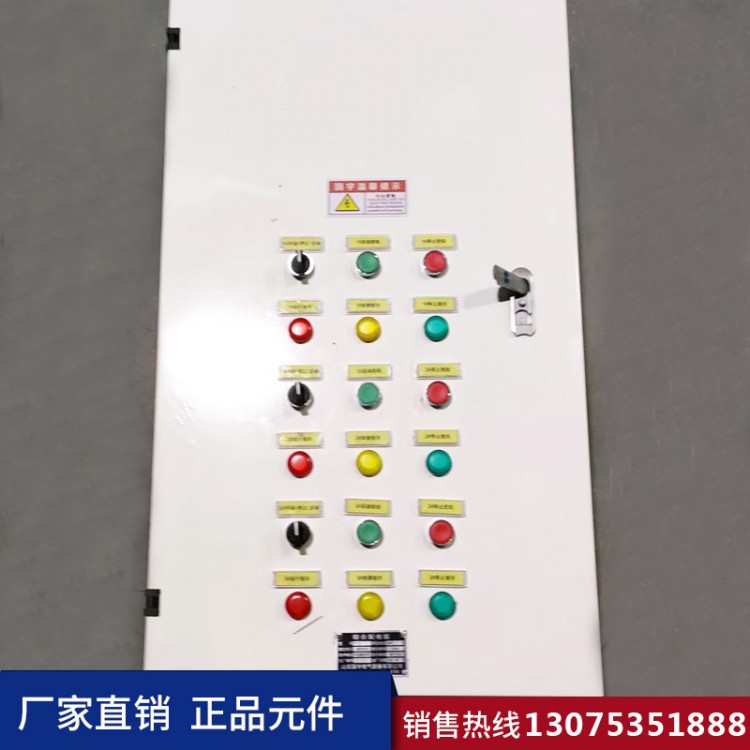

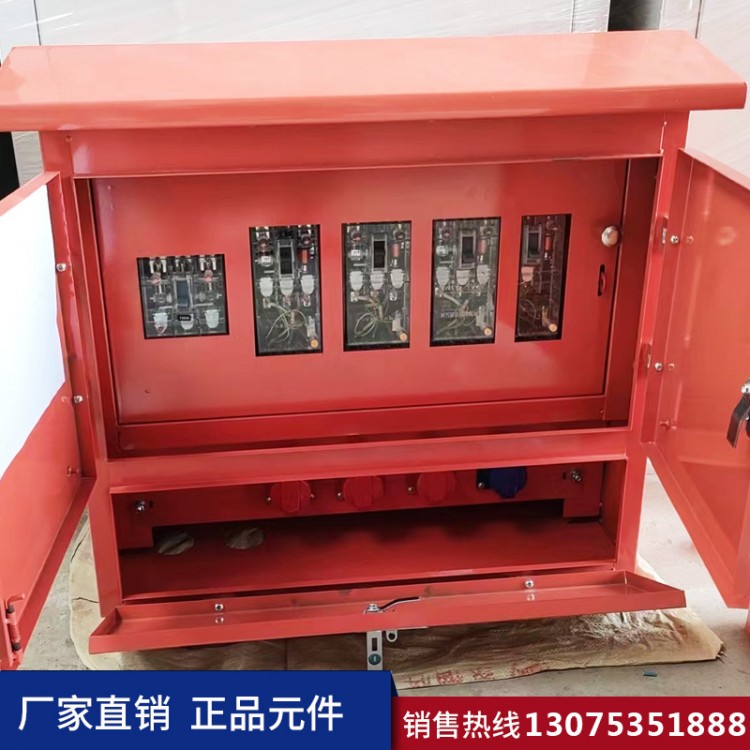
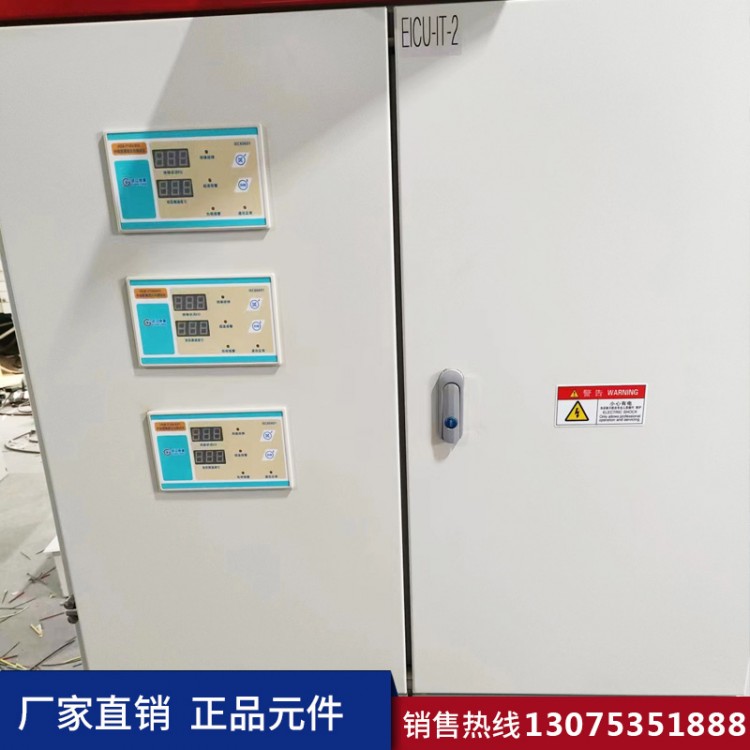
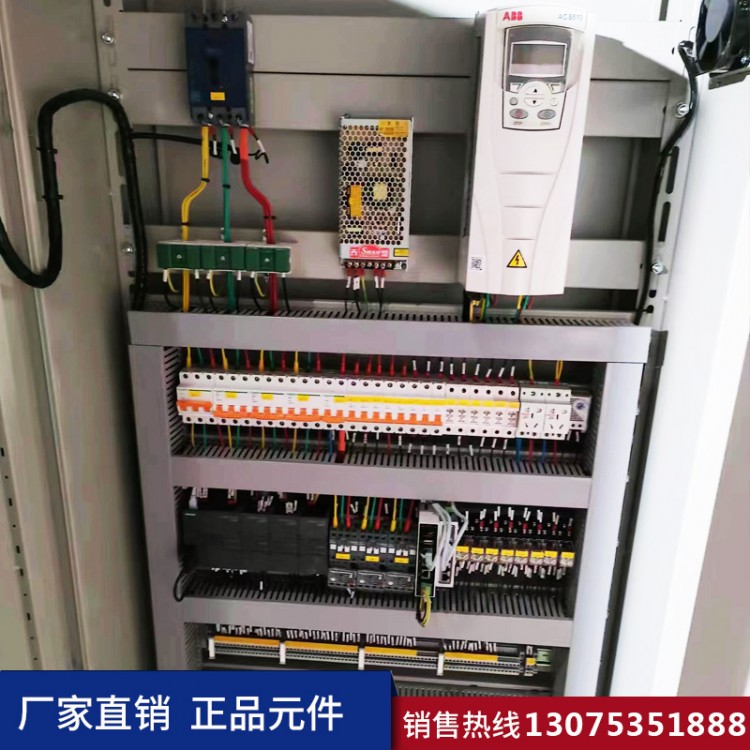
Low-voltage electrical box, as the name implies, is a concentrator for lines with lower voltages, commonly used in modern home renovations, such as network cables, telephone lines, computer monitors, USB cables, TV VGA, color difference, antennas, etc., which can all be placed inside; however, if these items are not arranged in order, they become a tangled mess, appearing disharmonious and affecting cleaning. In summary, the low-voltage electrical box is used for housing these devices and organizing cables.
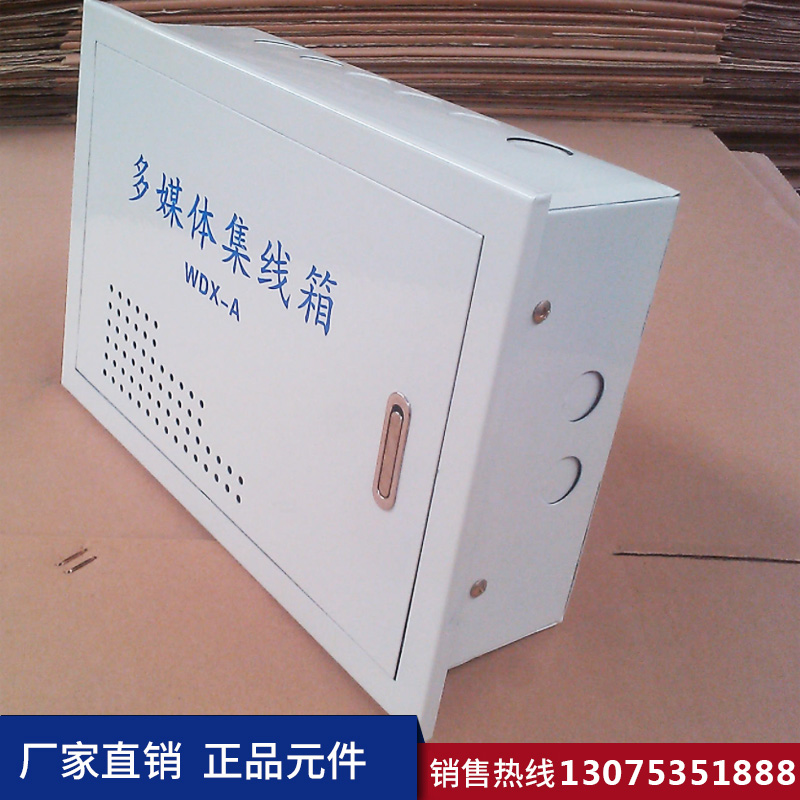
Brief introduction
In 2002, the government initiated a policy to separate low-voltage and high-voltage electricity, leading to the emergence of low-voltage distribution boxes. These boxes are primarily used for the unified management, distribution, and wiring of low-voltage signals in homes, including networking, telephony, television, and security wiring. They are mainly employed to prevent interference from high-voltage signals, thereby enhancing the quality of life at home. By 2007, their use expanded significantly. The government standardized the use of multimedia information boxes in Shanghai, Suzhou, and Fujian as pilot markets in 2007. Following this, markets across the country began to emulate the use of low-voltage distribution boxes, leading to their widespread adoption by real estate developers.
Low-voltage electrical box, also known as smart home wiring box, multimedia box, wiring box, home wiring box, integrated wiring box, corridor box, integrated cabinet, conduit box, multimedia information box, distribution box, home multimedia box, home information access box, multimedia wiring box, multimedia wiring cabinet, home information cabinet, residential information wiring box, home wiring cabinet, smart wiring box, smart cabinet.
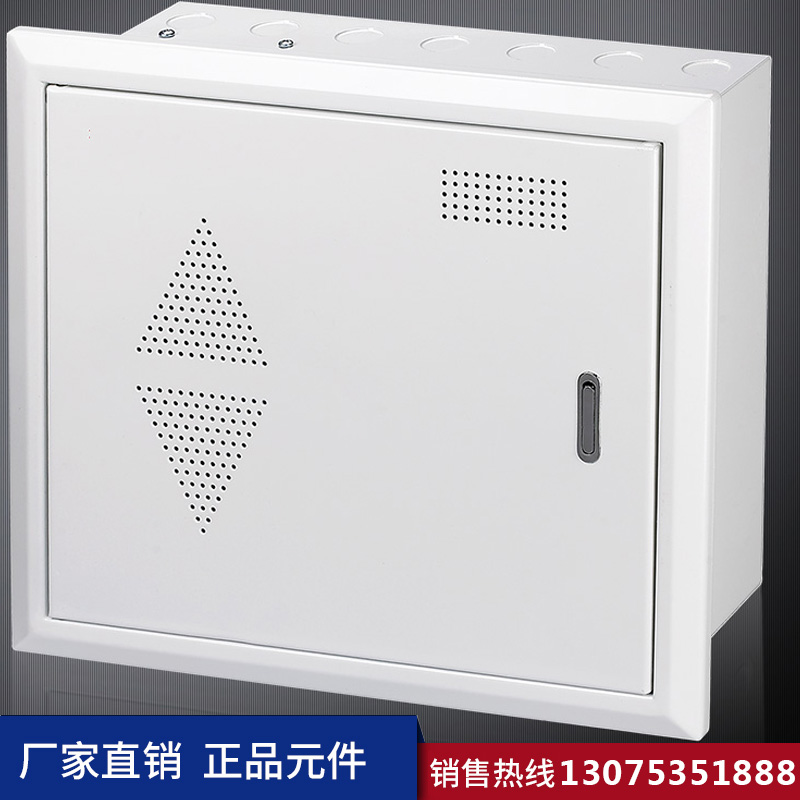
Difference in strength
Difference between a power distribution box and a low-voltage distribution box
In residential building construction, intelligent building electrical technology encompasses two main categories: strong and weak electricity. The strong electricity entering the home's distribution box has already resolved issues of centralized control and management. However, information sources carrying voice, images, and data, with numerous lines and increasing complexity, pose many inconveniences for users in terms of usage, distribution, and maintenance. Therefore, using integrated weak electricity products to standardize weak electricity wiring has become an essential project for future home renovations and the realization of smart buildings. To meet the demand for weak electricity products, new intelligent multimedia home information access boxes, wiring boxes, and weak electricity boxes have been introduced. They can connect transmission equipment for voice, data, images, and security, as well as control and management devices. They fundamentally change the issues in residential homes where users' self-wiring causes unclear images, loud phone signal noise, and slow broadband network speeds. They can effectively address the access issues for home phones, the internet, cable TV, and more, avoiding various network problems caused by conventional wiring system failures, as well as the repeated investment in re-wiring due to environmental changes. This not only saves material resources but also human resources.
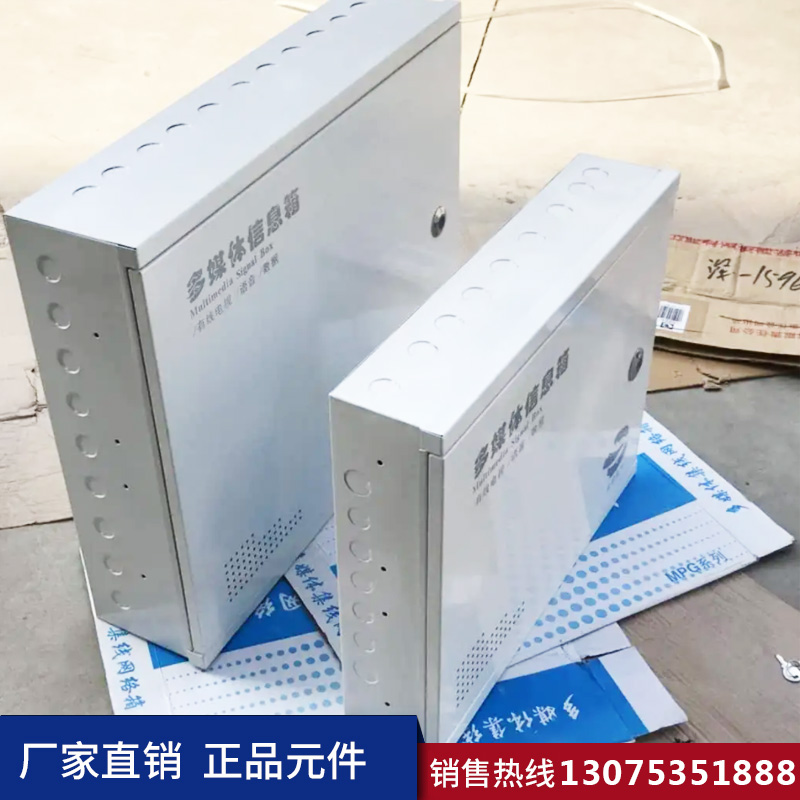
Key Advantages
Benefits of Low-Voltage Cabinets:
1. Centralized wiring management for home low-voltage signal cables, enhancing overall aesthetics. Also, it allows for resource sharing: with just one VCR/sound system/satellite receiver, you can watch movies and enjoy background music in every room. Multiple computers can share a broadband connection; multiple phone lines can be answered and transferred freely.
Section 2: Separate high and low voltage cables. The eddy current induction from high voltage cables will not affect the low voltage signals, making the low voltage section more stable.
Three, in compliance with urban residential building integrated cabling system engineering design specifications and other standards, meets the interface requirements of today's information appliances, and can also accommodate new technologies and products in the future. Truly achieving a "one-step solution."
Four: Safety and clarity, easy to maintain. The new assembly structure or home bus system is secure and reliable. Function modules separate inputs and outputs, making them clear at a glance, and maintenance and upgrades can be done without seeking help. All modules are designed for plug-and-play, requiring no professional wiring tools or installation personnel, allowing residents to install them themselves.
Five, Strong Scalability: Structured design with excellent expandability and upgradability to meet the current and future needs of different users. New outdoor entry lines can be simply connected to the smart multimedia box without the need for pulling new lines or re-trenching and wiring. It also facilitates independent management of low-voltage wiring. For real estate developers, it's a cost-effective way to enhance the selling points of houses, benefiting both residents and property sales.
High performance-to-price ratio, with minimal expenditure, we save you from many troubles in the future.
Application Fields
Wiring cabinets are widely used in smart home, smart building, building intelligence, intelligent electrical engineering, low-voltage engineering, system integration, smart community, building automation, building intelligence, building electrical, building appliances, cabling, home cabling, network cabling, smart cabling, cabling systems, the world of cabling, home local area network, home network, home decoration, home renovation, interior decoration, home renovation, home appliance intelligence, and various engineering projects.

Key Points for Electrical Wiring in Home Renovation
1. During home renovations, indoor wiring should be installed through conduits and use well-insulated single-core copper wire. When running through conduits, the total cross-sectional area of the wires inside should not exceed 40% of the conduit's internal diameter, and there should be no joints or twists inside the conduit. Wires should not be installed in the same conduit as telephone lines, closed-circuit television lines, communication lines, etc.
2. Pay attention to the laying of wires during wiring, and construct according to the specifications of the decorative design. Ensure short-circuit protection, over-load protection, and the selection of wire cross-sections. The installation of low-voltage electrical equipment should comply with the current national standards.
3. A leakage circuit breaker should be installed inside the distribution box, with branching lines for lighting, air conditioning, outlets, etc., ensuring each circuit operates the load normally.
4. Heaters must not be installed using standard outlets and should not be mounted directly on combustible structures. In the bathroom, it is recommended to use splash-proof outlets.
5. The selection of the cross-sectional area for lighting and electrical heating load wires should ensure that the safe current carrying capacity of the conductors exceeds the sum of the rated current of all appliances within the branch circuit. The capacity of each branch circuit should not exceed the capacity of the main incoming line. The color of heavy-duty wires should be distinguished by different colored wires, with live wires in red, green, or yellow, neutral wires in blue or black, and grounding wires in alternating yellow and green for dual-color grounding. The grounding protection should be reliable, and the insulation resistance between conductors and between conductors and ground should be greater than 0.5MΩ.
6. The outlet should be no less than 300mm from the ground. Leave some slack in the wiring inside the junction box, with a recommended length of 150mm. When wiring, the live wire should enter the switch, the neutral wire should go directly to the light socket, and the live wire of a screw-in light socket should not be connected to the case. The height of the lighting switch from the ground should be about 1.3 meters, and the switch should not be installed behind the door.
7. Electrical piping within suspended ceilings should be installed according to the requirements for exposed piping and must not be mounted on the ceiling hangers or rafters. The installation of lamp socket boxes and junction boxes should facilitate maintenance and be covered with a lid. For those connected with flexible hoses to the lighting positions, the length of the hoses should not exceed 1 meter. The ends of the flexible hoses should be connected to junction boxes with connectors, ensuring a secure connection to the lighting fixtures. The metal flexible hoses themselves should be equipped with grounding protection. No bare wiring of either strong or weak currents should be present within the suspended ceiling.
8. For power outlets, the phase and neutral wires are positioned right for phase and left for neutral. Outlets with a grounding hole should have the grounding pin on the top, ensuring reliable grounding. Switch outlets must be securely installed. Inspections should be conducted visually and manually, and the circuit testing tool should be used to verify that the phase, neutral, and grounding wires on the outlet meet the requirements.
9. The spacing between conductors and gas piping should be ≥100MM on the same plane, and ≥50MM on different planes. The distance between electrical switch joints and gas piping should be ≥250MM on the same plane, and ≥150MM on different planes.
10. Telephone lines, TV signals, and audio connection wires are separately laid and installed. Signal transmission wires are used, with a certain distance maintained between them to prevent interference among different signals. The shielded wire mesh of the TV signal transmission lines is trimmed evenly to avoid short-circuiting with the center line, otherwise, it may result in unclear images. Connectors are used for TV and telephone connections. Use a multimeter to check for open circuits and other issues between connections, and use an ohmmeter to test grounding. After inspection and confirmation of compliance, seal the connections.