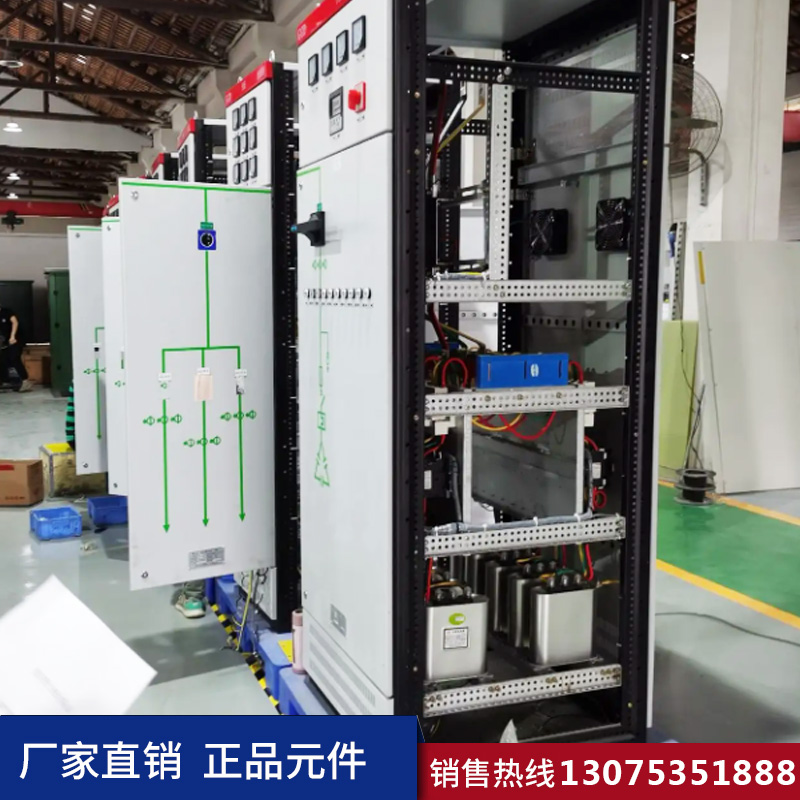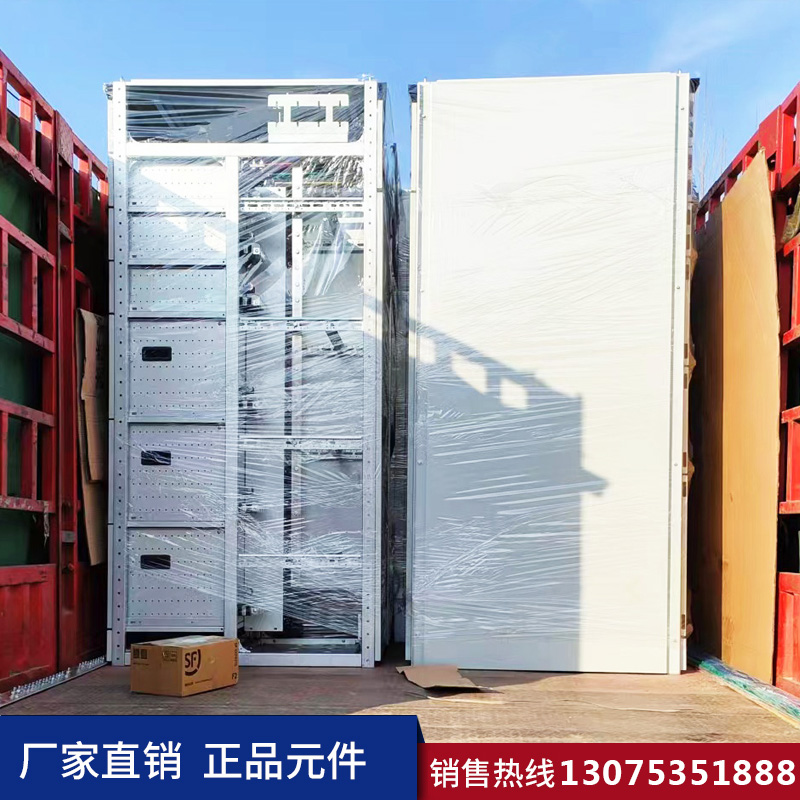

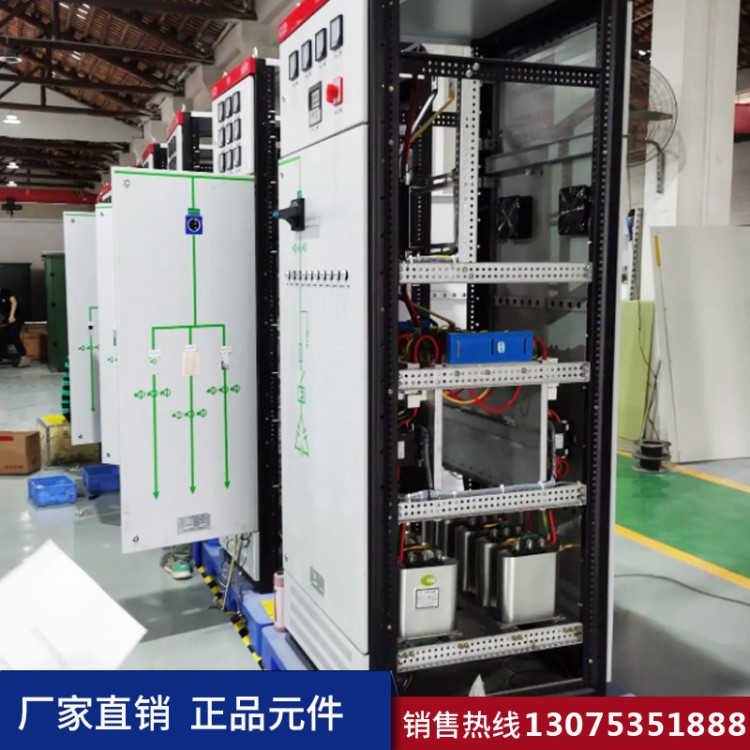

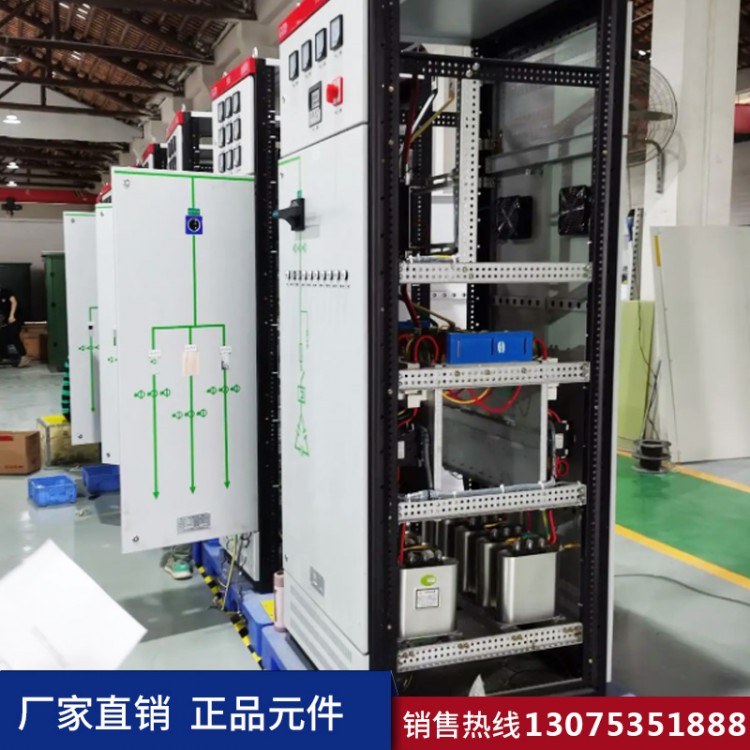
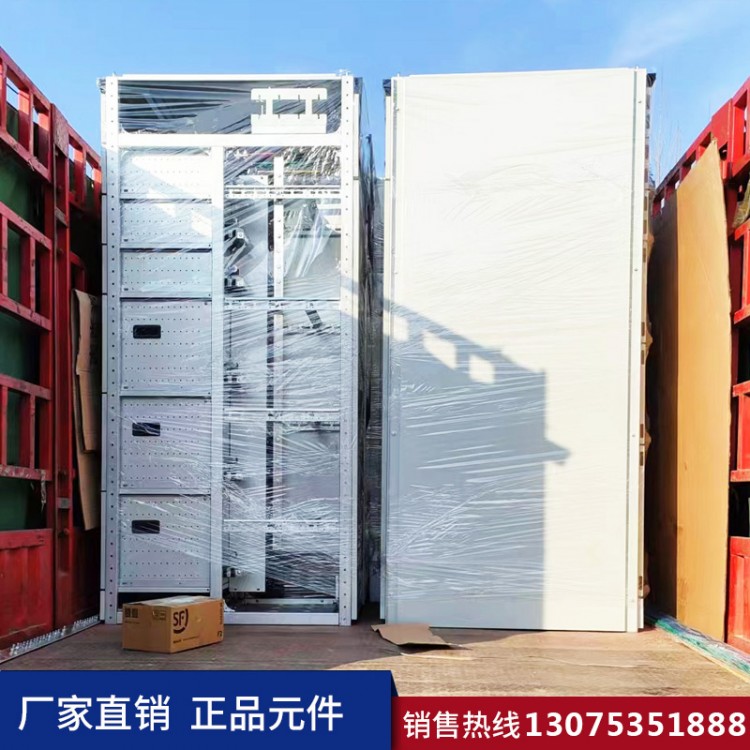









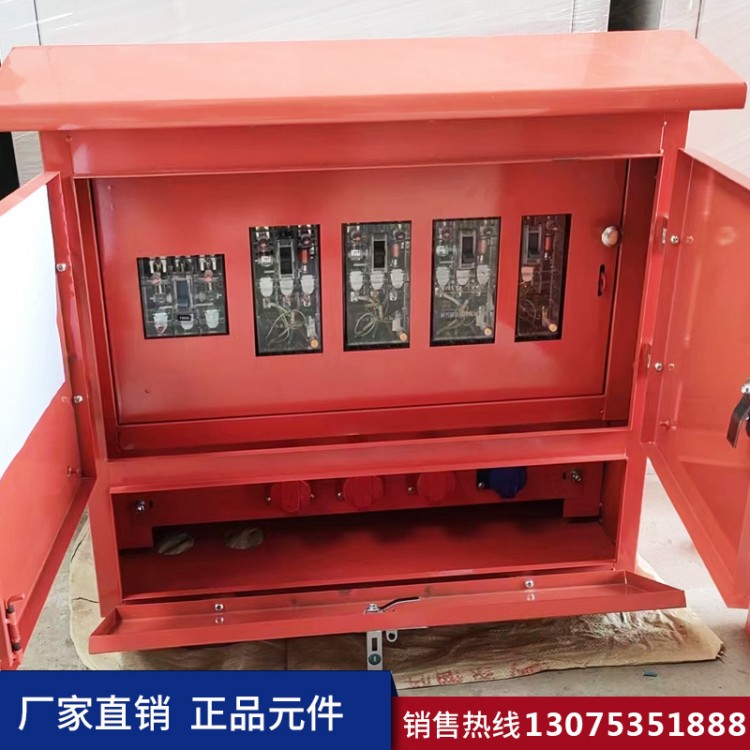
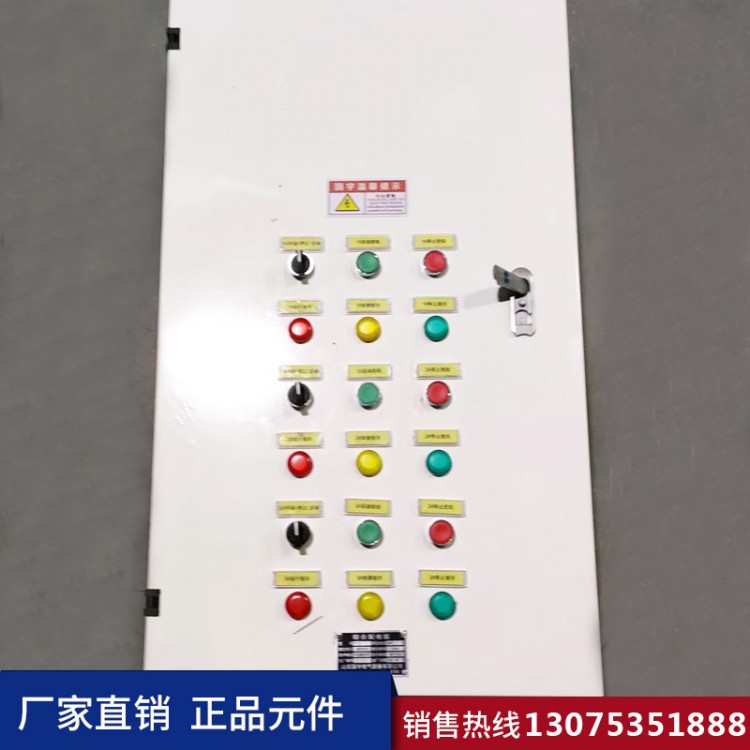

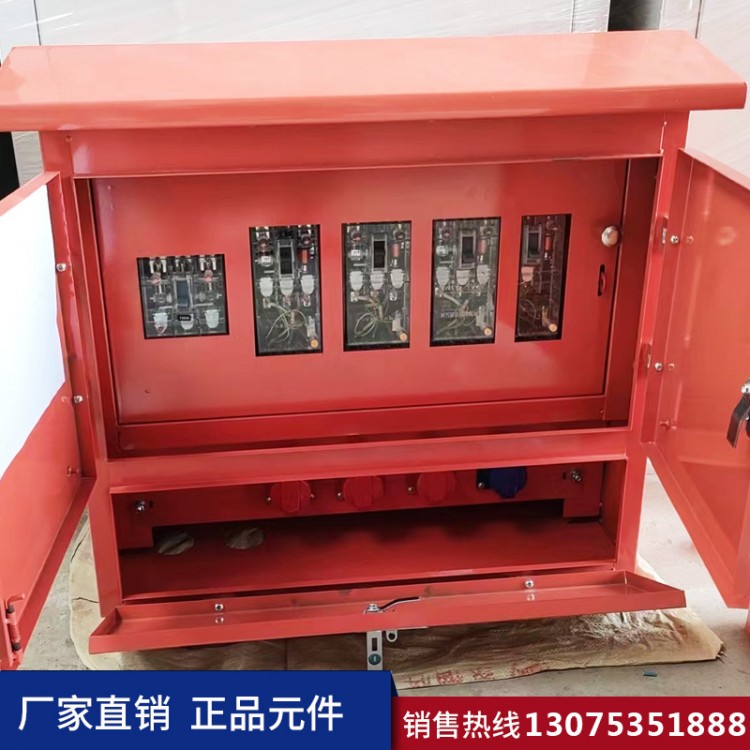
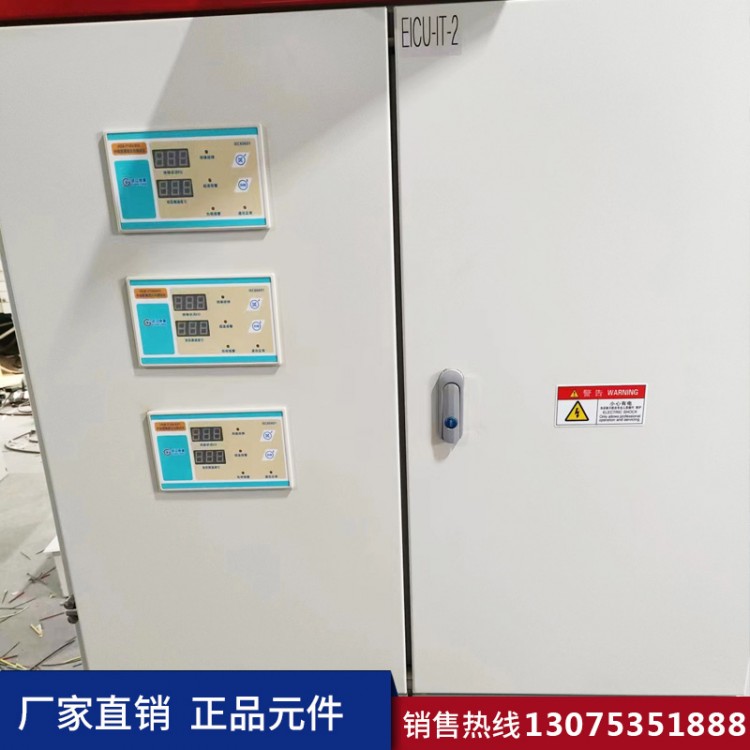
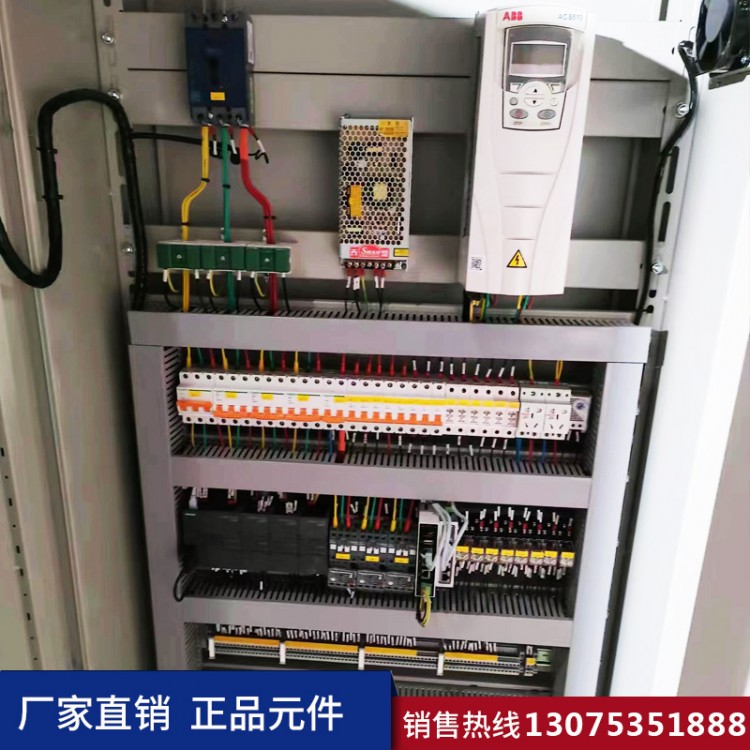
Low-voltage distribution panel
Products for converting and configuring electrical power
The low-voltage distribution cabinet is designed for a power distribution system with a rated current of AC 50Hz and a rated voltage of 380V, serving for power, lighting, and power distribution, as well as for energy conversion and control. This product boasts strong breaking capacity, good thermal stability, flexible electrical design, ease of assembly, strong series characteristics, practicality, and innovative structure.
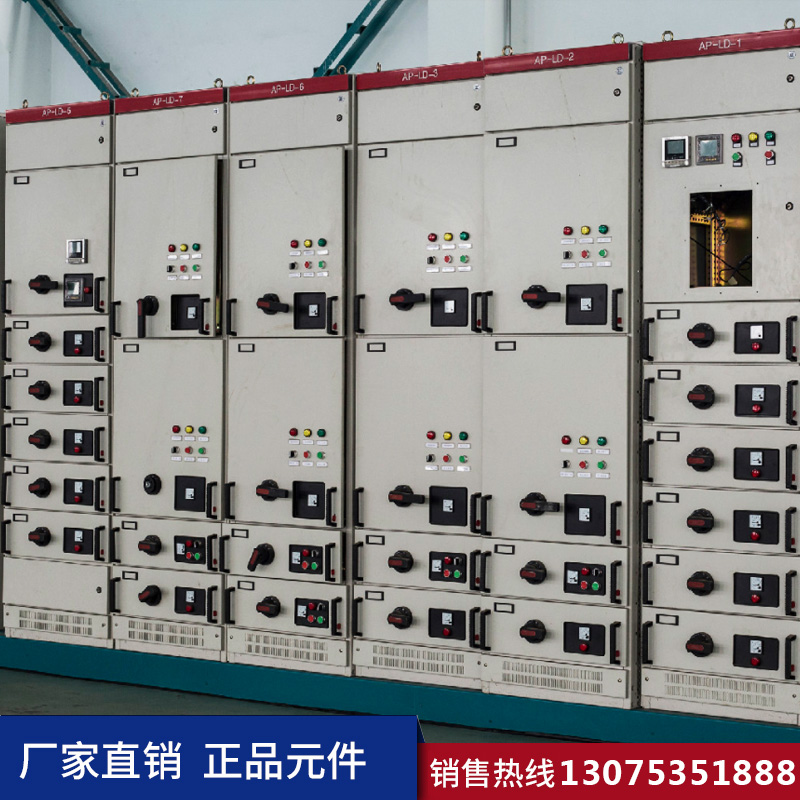
Current Development Status
1: Low-voltage complete switchgear and control equipment, commonly known as low-voltage switch cabinets, or low-voltage distribution cabinets, refers to a complete electrical system with alternating and direct current voltages below 1000V.
2: The low-voltage distribution cabinet market in our country has maintained a rapid growth momentum with the construction and implementation of smart grids, infrastructure, manufacturing investments, and the development of the new energy industry.
3: Monitoring data shows that in 2010, the total sales revenue of China's low-voltage distribution box market reached 10.633 billion yuan, with a year-on-year increase of 11.2%; in 2011, the total sales revenue of the low-voltage distribution box market in our country reached 11.96 billion yuan, with a year-on-year increase of 12.5%.
In a thriving market for low-voltage distribution cabinets in our country, internal industry competition is bound to intensify. Suppliers offering the latest generation of low-voltage equipment and system solutions will gain a competitive edge in the future market. Only products with the aforementioned features can secure a certain advantage in the future competition, thus seizing the high ground of the fourth-generation low-voltage electrical products.
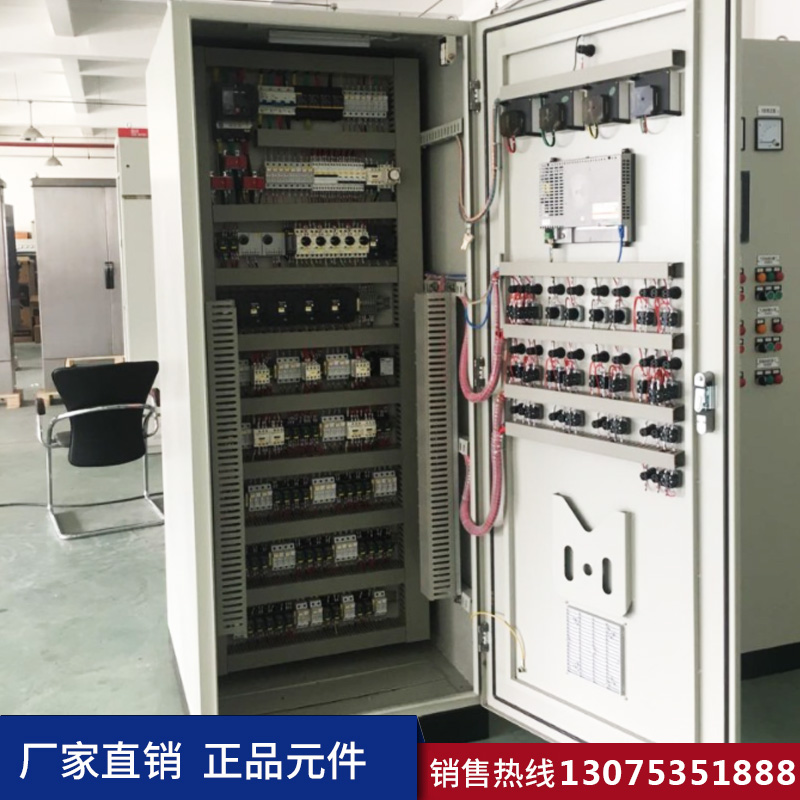
Product Range
GCS container
Primary Frame
The main frame is constructed with 8MF open section steel, featuring installation holes with a diameter of 9.2mm on the side, with module sizes of 20mm and 100mm.
2: The various functional rooms of the installation are isolated from each other, divided into functional unit rooms, busbar rooms, and cable rooms. The functions of each room are independent.
3: The horizontal main busbar is arranged in a flat, cabinet-mounted style to enhance its resistance to electromagnetic forces.
The design of the cable compartment facilitates the easy up and down entry and exit of cables.
Function Unit
Drawer height modulus: 160mm; rated current for unit circuit: 400A and below
GCK Container: (MCC)

Primary structure
GCK(L) Low-Voltage Distribution Box
GCK(L) Low-Voltage Distribution Box
The cabinet's basic structure is a modular assembly. Bolted connections, with each functional compartment isolated by 20mm modular mounting holes. The fundamental feature of the GCK cabinet is that the busbar is located at the top of the cabinet, with compartments divided into functional unit rooms (in front of the cabinet), busbar room (at the top of the cabinet), and cable room (at the back of the cabinet). It can also be wall-mounted; in this case, the cabinet's right side is widened by 200mm to accommodate the cable room, resembling the top busbar style of the MNS cabinet.
Function Unit
Drawer height module of 200mm
MNS Container: (MCC)

Main Structure
MNS Type Distribution Box
MNS Type Distribution Box
The cabinet's basic structure is assembled from C-shaped profiles. The C-shaped profiles are bent from steel plates with mounting holes at a module of E=25mm.
2: The pull-out MCC cabinet is divided into three compartments, which include the functional unit room (on the left side in front of the cabinet), busbar room (at the rear of the cabinet), and cable room (on the right side in front of the cabinet). Since the horizontal busbar compartment is at the back, it can also be designed as a double-sided cabinet.
3: Designed to reduce the width of switchgear arrangement, the rear outlet of the switchgear has the main busbar horizontally installed at the top of the switchgear, with the rear half serving as the cable room. At this point, it is similar to the busbar style of the GCK cabinet.
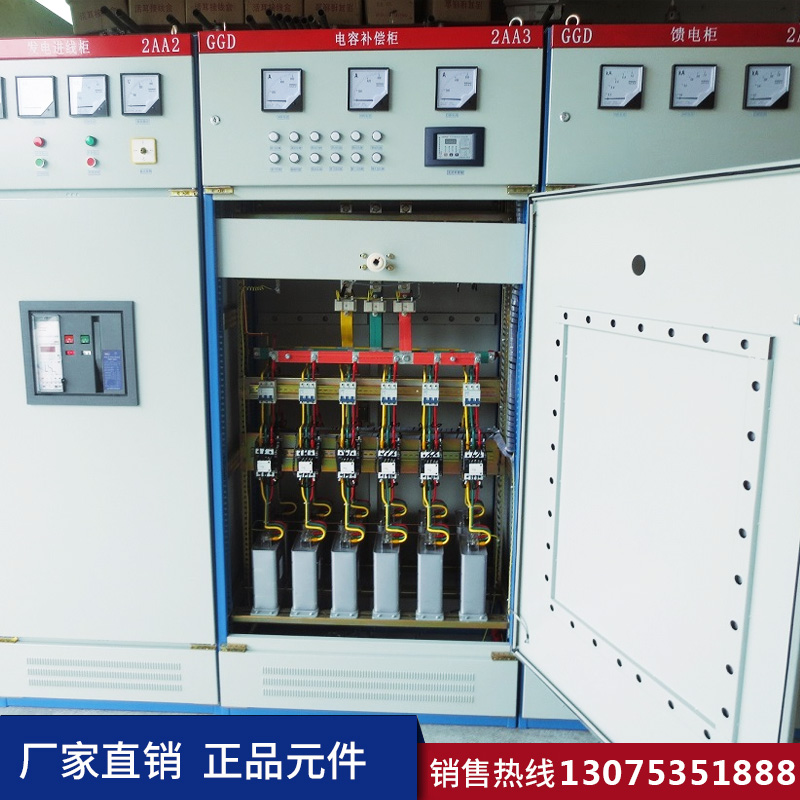
GGD Container: (ESS)

Electrical Performance:
1) Basic Electrical Parameters
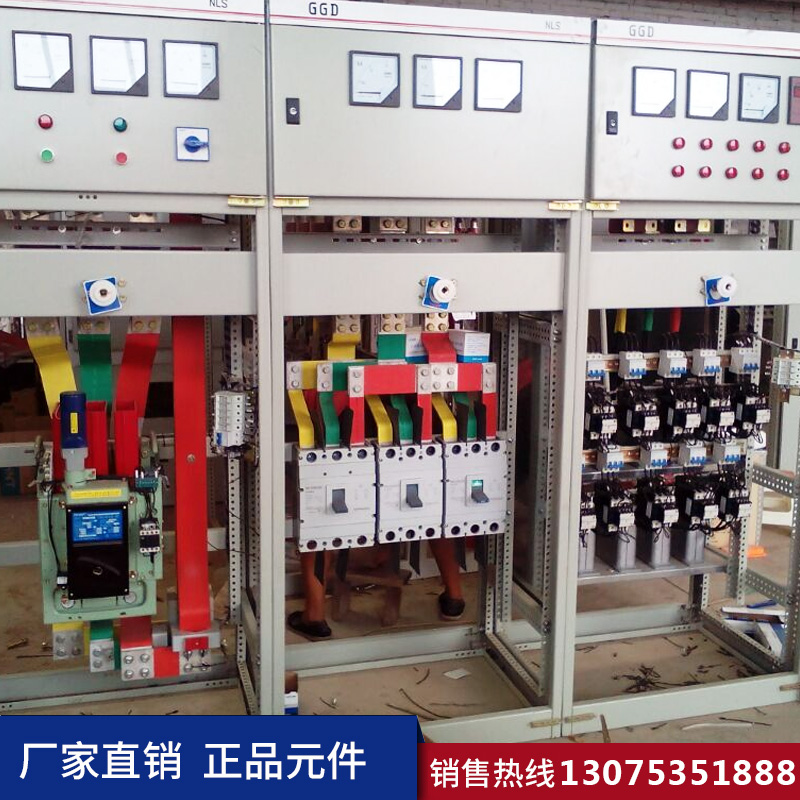
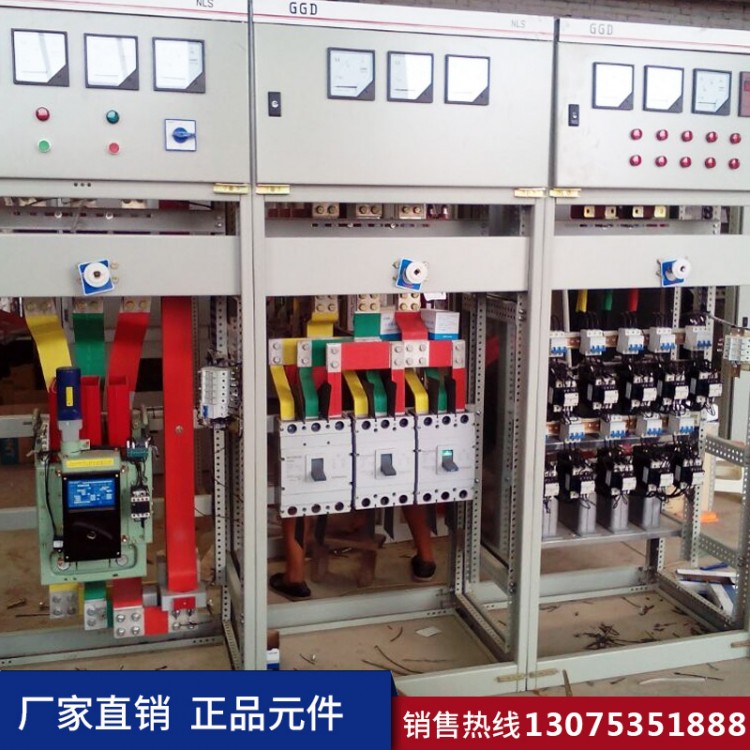
GGD Type Low-Voltage Distribution Box
GGD Type Low-Voltage Distribution Box
A) Rated Insulation Voltage: AC 660V (1000V) B) Rated Working Voltage: Main Circuit: AC 380V (660V); Auxiliary Circuit: AC 380V (220V) DC 220V (110V)
C) Rated Frequency: 50Hz
D) Rated Current: ≤4000A
E) Rated Peak Current Tolerance (0.1s): 105KA
F) Rated Short-Time Current Tolerance (1s) 50KA
The GCK series AC low-voltage distribution cabinets are recognized as a new energy-saving product by the state. They feature an advanced control center structure, attractive appearance, high electrical performance, high protection grade, safety, reliability, and easy maintenance, making them an ideal power distribution unit for low-voltage power supply systems in industries such as metallurgy, petroleum, chemical, electrical machinery, and light纺织.
Key Technical Specifications
b) Rated Working Voltage: 380V, 660V
c) Frequency of Use: 50Hz
d) Rated Current: Horizontal Busbar System 1600-3150A, Vertical Busbar System 400-800A
e) Rated Short-Time Current Withstand: Horizontal Bus 80KA RMS/1 second; Vertical Bus 50KA RMS/1 second
f) Rated Peak Current: Horizontal Bus 175KA, Vertical Bus 110KA
g) Functional Unit Breakdown Capacity: 50KA
h) Peripherals Protection Grade: IP40
PGL cabinet:
The PGL type AC low-voltage distribution cabinet is suitable for power users such as power plants, sub-stations, and industrial and mining enterprises. It is used in AC 50Hz, rated working voltage 380V, and rated current up to 2500A distribution systems for power conversion, distribution, and control of power, lighting, and distribution equipment. This product has high breaking capacity, with a rated short-time withstand current of up to 50kA.
This product complies with IEC 439 for Low-voltage switchgear and controlgear, GB 7251 for Low-voltage switchgear and controlgear, etc.
PGL's distribution cabinets are designed for indoor installation with open-type double-sided maintenance for low-voltage power distribution. The basic structure of the cabinet is composed of steel plates and angle iron焊接. The front of the cabinet features a door, and above the cabinet there is a control panel, which is a removable small door for installing indicator gauges. Cabinets assembled in parallel are equipped with partitions between them, reducing the possibility of an accident expanding due to a fault within a single cabinet. Above the cabinet frame at the back, there is a main busbar installed on a sub-insulating frame, and a busbar protective cover is provided to prevent metallic objects from falling above and causing a catastrophic short circuit of the main busbar. The neutral busbar is mounted on insulators below the cabinet, and the main grounding point of the grounding system is welded below the frame. The instrument door also has a grounding point connected to the housing.
PGL Type AC Low-Voltage Distribution Boards are divided into: Low-Voltage Metering Cabinet, Low-Voltage Incoming Line Cabinet, Capacitive Compensation Cabinet, Grid-Side Generator Conversion Cabinet, Bus Coupling Cabinet, and Low-Voltage Outgoing Line Cabinet.
Key Technical Parameters:
Rated Voltage: AC 380V
Rated Breaking Capacity:
PGL1:15KV
PGL2: 30KV (all are RMS values)
Rated voltage of auxiliary circuit:
AC220V、380V
DC110V、220V
Rated Current:
2000A,2500A

Maintenance Instructions
The maintenance of low-voltage distribution cabinets primarily ensures their normal and safe operation. An annual comprehensive inspection and maintenance of the low-voltage distribution cabinets should be conducted. Repairs should be completed with minimal downtime, usually scheduling the owner's downtime well in advance.
Maintenance Content and Steps for Low-Voltage Distribution Cabinets:
1: During maintenance, start from the low-voltage side of the transformer. After the power distribution cabinet is de-energized, clean the dust inside, check the busbars and down leads for good connections, and inspect for any signs of overheating or discoloration at the joints. Verify the stability and reliability of cable heads and terminal connections. Check for rust on the grounding wires and ensure the terminal connections are tight. All secondary circuit connections should be reliable, with insulation meeting requirements.
2: When inspecting the drawer-type switch, the drawer cabinet should operate smoothly when pushed in or pulled out, with a reliable mechanical lock. Check if the operating mechanism of the automatic air switch on the drawer cabinet is in place and if the wiring screws are tightened. Clean the contactor contact surface and surrounding area of any dirt. Inspect the contactor contacts for proper contact. If the contacts are not making good contact, gently file the contact surface if necessary. If the contacts are severely burned (the contact point is worn down to 1/3 of the original thickness), the contacts should be replaced. The power indicator gauge and indicator lights are in good condition.
When inspecting the capacitor cabinet, first disconnect the main switch of the capacitor cabinet. Use a wire with a cross-sectional area of 10mm² or more to discharge each capacitor to ground individually. After visual inspection, ensure the cabinet is in good condition with no oil leakage. If the capacitor housing expands, handle it promptly by replacing the discharge device, wiring screws for the control circuit, and grounding equipment. After closing the circuit, debug the indicator section and the automatic compensation section.
4: Maintenance of circuit breakers in power distribution and connection cabinets: After disconnecting all loads, pull out the circuit breaker using the handle. Re-tighten the wiring screws and check if the spring force of the blade is as specified. Inspect for any cracks or damage in the arc extinguishing grid. Manually adjust the mechanical interlock to ensure accurate opening and closing. Check if the contacts are in good contact; if necessary, file the contact surface. Inspect the internal springs, washers, and screws for looseness, deformation, or detachment.
Transformer cabinet maintenance:
1: Prior to operation, follow these steps: disconnect the loads on the low-pressure side one by one, disconnect the circuit breakers on the high-pressure side, close the grounding switch, and securely lock the high-voltage switchgear. Attach a "Do Not Close, Person Working" sign to the switchgear handle, then short-circuit the busbars with a 10mm2 or thicker wire and hang the grounding wire, and tighten the busbar screws.
2: Maintenance Operation Steps: Clean the busbar contact area thoroughly and apply electrical composite grease. Secure with new spring washers and screws. Check for any abnormalities in the insulators and spacing connections between busbars. Verify the reliability of the terminal connections for the secondary winding of the current transformer, voltage transformer, and ammeter.
3: Pre-power Supply Inspection and Testing: Remove all ground wires and jumper cables, check for any tools left at the work site, confirm all is correct, close the isolator switch, disconnect the high voltage side grounding switch, close the high voltage side circuit breaker of the operating transformer, remove the signboard, supply power to the transformer, then close the circuit breaker of the low voltage side receiving cabinet and supply power to the busbar, finally close the relevant interconnection cabinets and each branch automatic air switch.
Cautionary Notes:
During maintenance, a dedicated person must be on site to supervise.
2: Power must be tested before work.
3: The maintenance personnel should be familiar with and operate the electrical mechanical interlock system of the entire distribution cabinet.
4: During maintenance, it's important to thoroughly understand which lines are dual-powered.
When inspecting busbars, ensure that the residual charge in the circuit is fully discharged.
Inspection Process
The inspection process for low-voltage distribution cabinets is divided into two parts:
Firstly, it is the inspection of the structural part, specifically the inspection of the cabinet dimensions. A random inspection of standard cabinets is sufficient.
Secondly, electrical inspection is required. Firstly, based on the technical drawings, check the component models, verify the torque of the connection points, and make markings (this task is quite labor-intensive and requires a full check). At the same time, pay attention to the creepage distance and the clearance between phases, as well as whether the wiring meets the company's process requirements. Then, check if the main circuit and control circuit are correct, with the main circuit testing using a multimeter. Next, power on the test to ensure the electrical function meets the drawing requirements. A test report must be issued, regardless of whether it passes or fails. Passes are labeled and shipped, while fails are returned for correction.
Cabling
One. Location: To ensure the normal and safe operation of the low-voltage distribution cabinet, the low-voltage distribution room should be situated close to the load center. The placement area should be free of dust and corrosive substances; if any, they should be cleaned promptly. For safety reasons, the environment should be relatively dry, and the placement should minimize vibration.
II. Distribution Equipment Layout: Distribution equipment in low-voltage distribution rooms must be arranged with safety, reliability, applicability, and economy in mind, and should also be easy to install, operate, transport, maintain, test, and monitor. Adequate spacing and exit points for passages must be provided for rooms housing both low and high-voltage electrical equipment, as well as for rows of distribution cabinets. Necessary safety measures must be taken when arranging distribution equipment, such as covering exposed live conductors with shields or placing them beyond the reach of a person's extended arm. If it's difficult to use shields and outer covers, protective barriers can be used instead.
3. Conditions for the layout of distribution lines: Comply with the environmental characteristics of the placement location, match the features of the building, ensure an appropriate distance between people and lines, consider mechanical and electrical stresses that may arise due to short circuits, and account for other stresses that the wiring may encounter during installation and use, as well as the weight of the conductors.
Four, factors affecting the layout of power distribution lines: preventing external heat from affecting use, preventing water intrusion from affecting use, preventing external mechanical damage from affecting use, preventing dust accumulation on the wiring from affecting use, and preventing strong radiation from affecting use.