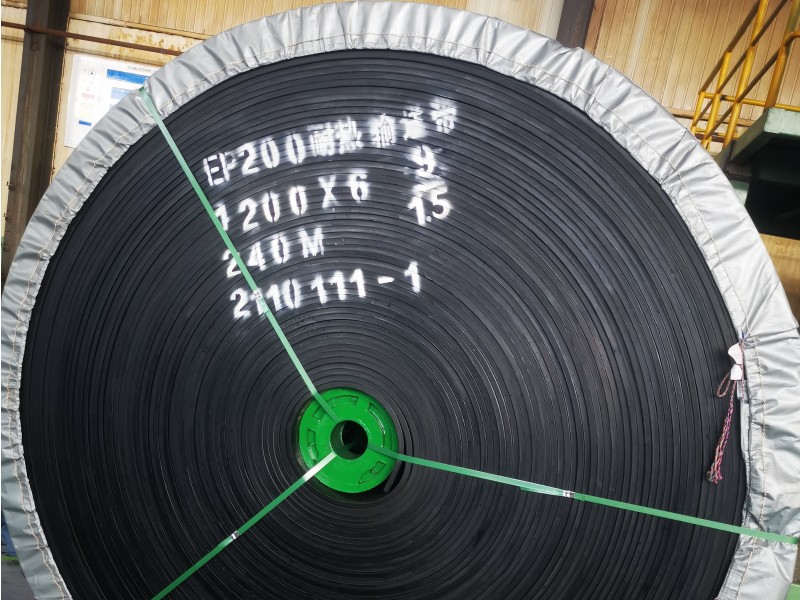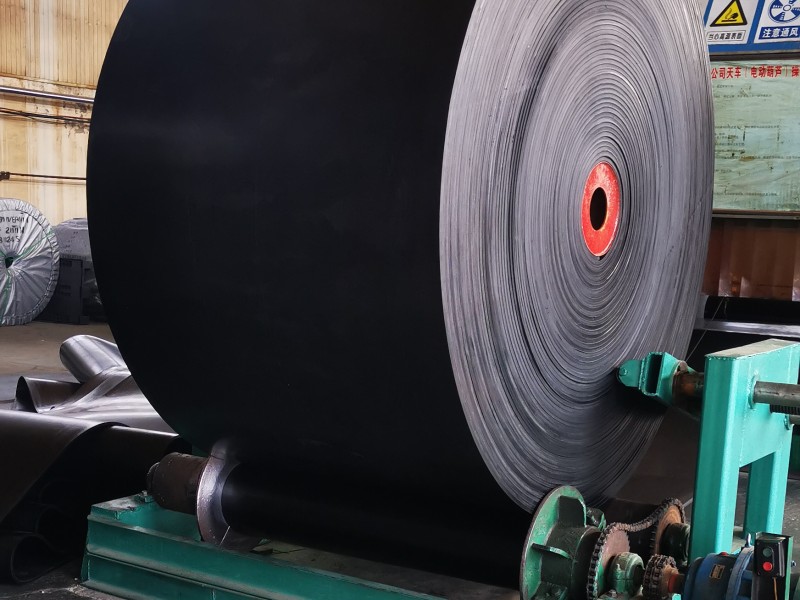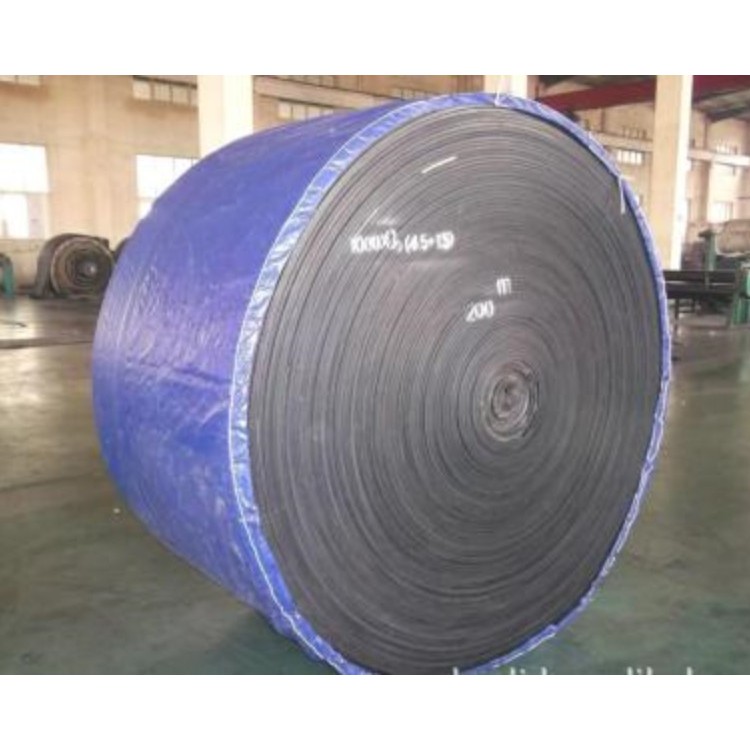









Polyester conveyor belts, also known as EP conveyor belts, abrasion-resistant conveyor belts, automatic conveyor belts, and cement conveyor belts, feature high modulus, low elongation, good thermal stability, and impact resistance. They are suitable for medium to long-distance, high-capacity, and high-speed material conveying. Polyester conveyor belts (EP conveyor belts) are widely used in industries such as coal, mining, ports, metallurgy, electricity, and chemicals for material conveying.
Covered with different rubber properties, they are categorized into cold-resistant, acid-resistant, alkali-resistant, oil-resistant, wear-resistant, and more.
Rubber conveyor belts are categorized by their application environments, including general types, heat-resistant, flame-retardant, heat-resistant to scorching, acid and alkali-resistant, and oil-resistant models. The general conveyor belts have an upper cover thickness of about 3.0mm and a lower cover thickness of about 1.5mm. For heat-resistant, cold-resistant, acid and alkali-resistant, and oil-resistant conveyor belts, the upper cover thickness is about 4.5mm and the lower cover thickness is about 2.0mm. The thickness of the upper and lower covers can be increased by about 1.5mm based on the specific application environment.
Product Features:
High strength, thin body, light weight
2. Utilize EP-impregnated canvas as the skeletal material
3. Soft body, good channel formation, excellent elasticity
4. Impact-resistant, wear-resistant, corrosion-resistant
5. Suited for material transportation with larger load capacities, higher speeds, and medium to long distances.
6. Smooth operation, no deviation