









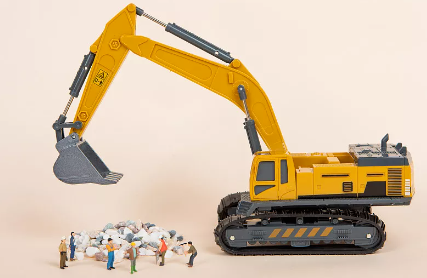
Since China's entryWith the advancement of China's manufacturing industry, the export volume of mechanical and electrical products has been increasing year by year. In March 2022, the export sales increased by 73.5% year-on-year, with the export growth rate of construction machinery in some regions even exceeding 100%.
Xiao Yu relies on years of experience in mechanical products.Experience with CE certification (Mechanical Directive CE-MD), compiled common issues and answers in the certification process, hoping to help friends with related questions.
Please inquire.
What is the Machinery Directive?
Mechanical specifications are a series of directives from the European Union.Regulations in the CE Directive for mechanical products, meaning all mechanical products exported to Europe must comply with the mechanical requirements. The current new Machinery Directive is the 2006/42/EC, which came into effect on December 21, 2009, commonly abbreviated as MD.
Ask
The relationship between MD directives and CE certification?
MD certification is a type of CE certification, with the "CE" mark serving as a safety certification symbol, regarded as a passport for manufacturers to enter and access the European market. Products bearing the "CE" mark can be sold in all EU member states without having to meet the requirements of each member state, thus achieving free circulation of goods within the EU member states.
Please inquire.
What is the product scope of the mechanical instructions?
The scope of the new version of the 2006/42/EC Machinery Directive has been expanded to include semi-finished products, lifting attachments, etc.
(1) Machinery and Equipment
(2) Interchangeable Equipment
(3) Safety Components
(4) Elevator Accessories
(5) Chains, ropes, and wire mesh
(6) Detachable mechanical transmission unit
(7) Mechanical Semi-Finished Products - Mechanical Assemblies
*Special Note: All equipment except for those used for lifting and lowering do not fall under the scope of the Machinery Directive.
Please inquire
What is hazardous machinery? Hazardous machinery
What sets it apart from the certification process for non-hazardous machinery?
In Appendix Four of the Mechanical InstructionsAnnex IV lists in detail the machinery and safety components deemed high-risk by the EU, which are referred to as dangerous machinery.
The difference between hazardous and non-hazardous machinery lies in the requirement for hazardous machinery to undergo on-site witnessing tests by an EU notified body and receive a certificate, as self-declarations are not accepted by buyers and regulatory authorities.
Below are the mechanical instructions (Hazardous machinery as specified in Appendix IV of MD
(1) Circular saws (single or multiple blades), equipment used for processing wood or similar materials, as well as meat or similar materials:
A circular saw machine with a fixed bed or support, equipped with manual feed or detachable powered feed, featuring a blade that remains fixed during cutting.
— Reciprocating bed or slide with manual operation, circular saw with a fixed blade during cutting.
A circular saw with an integrated mechanical feed device, manual loading and unloading, and a fixed blade during cutting.
A circular saw machine with mechanical moving blade, manual loading and unloading, and the blade moving in a circular motion during cutting.
(2) Manual feed wood planer
(3) Single-sided planer with built-in mechanical feed mechanism, manual loading and unloading, for wood processing.
(4) Band saws, used for processing wood or similar materials, as well as meat or similar materials.
—Miter saws with a fixed or reciprocating bed or support, blade held steady during cutting.
—A bandsaw machine with blades mounted on a reciprocating carriage;
(5) Combination machinery of processing equipment for wood and similar wood materials listed in Articles 1 to 4 and 7.
(6) Manual woodworking tenoners with multiple knife blocks.
(7) Manual feed, vertical wood and similar wood material processing machinery
(8) Portable woodworking chainsaw
(9) Equipped with a hydraulic press for manual loading and unloading of metal cold-forming, featuring a stroke over 6mm and a speed of over 30mm/s per second, including bending machines.
(10) Manual loading and unloading plastic injection or extrusion molding machinery
(11) Manual loading and unloading rubber injection or extrusion molding machinery
(12) The following types of underground construction machinery:
—Locomotives and switchers;
—Hydraulic Support Equipment
(13) Manually loaded vehicles equipped with compression units and used for collecting household waste.
(14) Detachable mechanical transmission units and their protective covers;
(15) Removable guard for mechanical transmission assembly.
(16) Car Lifts
(17) Lifting equipment for personnel or goods with a lifting height exceeding 3 meters, subject to fall risk.
(18) Portable nail gun and other impact tools
(19) Protective equipment used to detect if a person is exposed to a hazardous area.
(20) Power-driven interlocked guard covers for the equipment listed in Articles 9, 10, and 11
(21) Ensure logic units with secure functionality.
(22) Rollover Protective Structure (ROPS)
(23) Fall Protection Structure (FOPS)
Please inquire
MachineryCE Certification Models?
(1) Standard Machinery - Model A (Internal Production Control, EC Conformity Declaration, Annex VIII)
(2) Hazardous Machinery (manufactured in accordance with harmonized standards)
- Mode A (Internal Production Control, Annex VIII)
- Mode B (Type EC Inspection + Internal Production Control Assessment, Annex IX + Annex VIII, point 3)
- H Mode (Quality Assurance System, Annex X)
(3) Hazardous Machinery (not produced in accordance with, or only partially in accordance with, harmonized standards, or without harmonized standards)
- Mode B (EC Type Examination + Internal Production Control Assessment, Annex IX + Annex VIII, point 3)
- H Mode (Quality Assurance System, Annex X)
Please inquire
Which mechanical products must be included?Is the NB certification issued?
In principle, hazardous machinery (machinery listed in Appendix IV) must be shipped.NB Certificates.
Ask
Do each machine require individual certification?
Mechanical directive certification is based on product series certification. For equipment with the same structure and principle, if there are differences in specifications and processing capabilities, certification can be done on a per-series basis. A single prototype from the series can be tested for this purpose.
Ask
How to test machinery and equipment?
Due to the large size of machinery and equipment, testing is usually limited by the dimensions of the laboratory's space, and on-site testing is typically conducted.
Please inquire
Mechanical SpecificationsDo CE certificates require annual inspections?
Is there an expiration date?
Mechanical instructions do not require annual inspections. Generally, as long as the instructions and standards remain unchanged, and there are no modifications to the product, the certificates and reports will not expire.
Please inquire.
PerformCompanies with MD certification must have
ISO certification?
The company only needs to have a quality assurance program and manual in place to ensure that products can be produced in compliance withCE standard production.
Please inquire
MechanicalCan the CE certification corresponding test report be provided?
For countries like Saudi Arabia?
AvailableMechanical test reports certified by CNAS-accredited bodies are recognized by countries such as Saudi Arabia and Nigeria, so manufacturers can save on the cost of repeated testing by opting for mechanical testing services from CNAS-accredited bodies.
Please inquire.
MachineryWhat documents are required for CE certification?
(1) Company Information: Name, Address, Trademark, Business License
(2) Product Information: Name, Model, Technical Specifications; (If multiple models are available, series comparison materials required.)
(3) General assembly drawings, circuit diagrams, hydraulic circuit diagrams, pneumatic circuit diagrams, and control system diagrams.
(4) Mechanical Operation Manual (English Version)
(5) List of Mechanical Components (name, model, supplier, CE certificate)
(6) Relevant test and calculation materials
(7) Machine Installation/Operation Space/Operator Position Diagram
(8) EU Body Represents Information
(9) Quality Control System Documents (e.g., if the company has passed ISO9000 certification, please provide a copy of the certificate)
Please inquire.
MachineryWhat is the process for obtaining CE certification?
(1) By the company's application
(2) Both parties sign the certification contract
(3) The company provides inspection samples and technical documents.
(4) Conduct sample testing and technical document review
(5) Issue Compliance Certificates
(6) Corporate Certificate of Conformity
(7) The company affixes the CE mark to the product
Ask
Cost for Mechanical Instruction Certification?
The cost for CE Machinery Directive certification typically includes testing fees, certification fees, and travel expenses, with the exact amount depending on the complexity of the product.