










Product Categories:
Trough liquid distributors are gravity-type distributors. As they distribute liquids based on liquid level (gravity), they are easy to achieve uniform liquid distribution and stable operation.
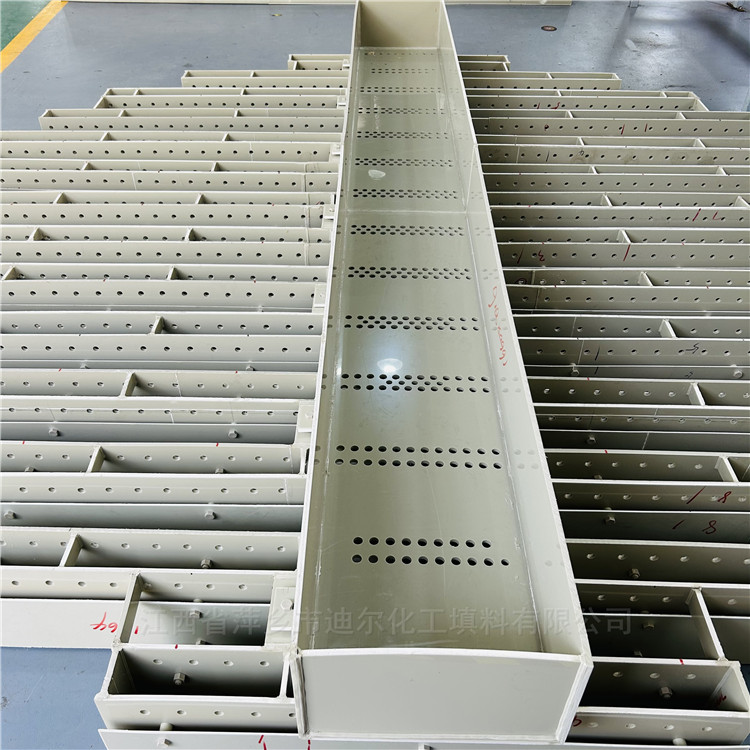
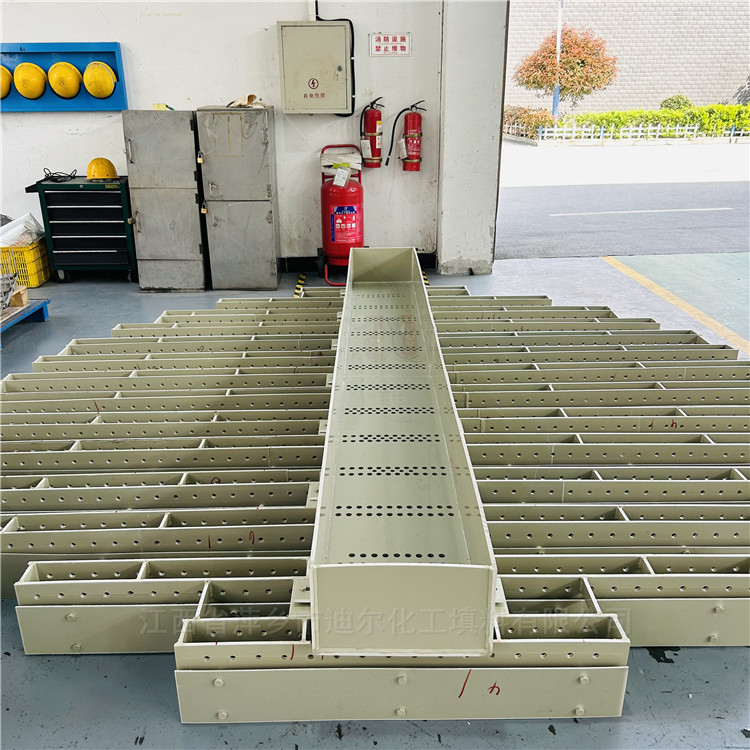
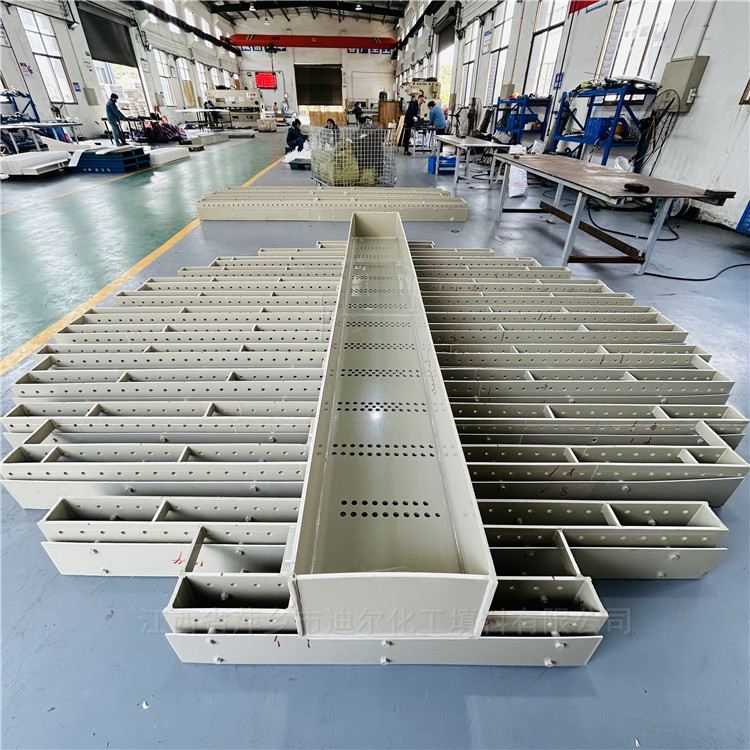
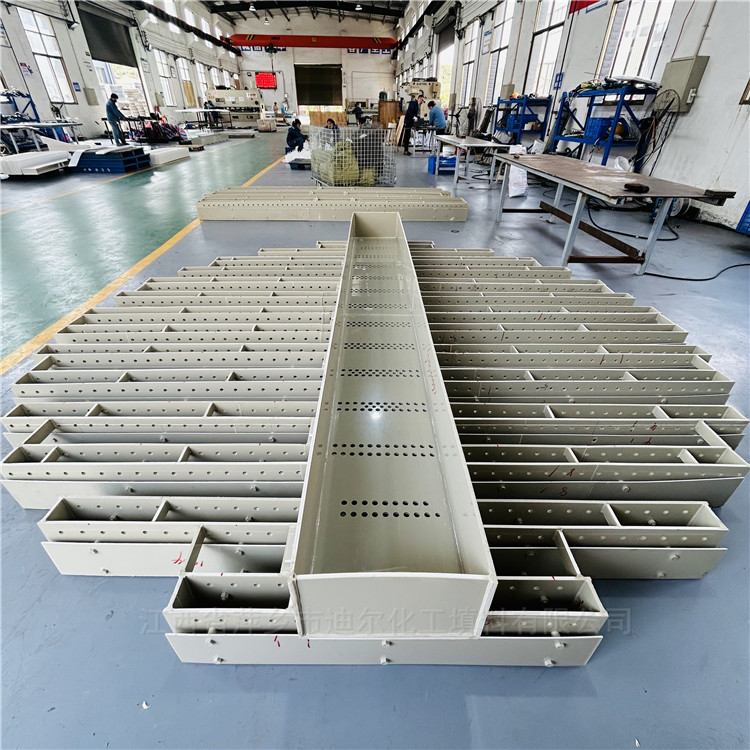
Trough liquid distributors are further categorized into single-stage trough liquid distributors, two-stage trough liquid distributors, and trough overflow liquid distributors.

1. Single-stage slot liquid distributor: Compact structure, slots are interconnected, ensuring all slots are at the same level of liquid surface, thus making it easy to achieve uniform liquid distribution. Commonly used in small towers with diameters of 250-1000mm, large towers can also be used when space is limited. Its anti-surge device is the same as that of the main slot of the slot distributor, and the liquid distribution structure can only be bottom-hole type.
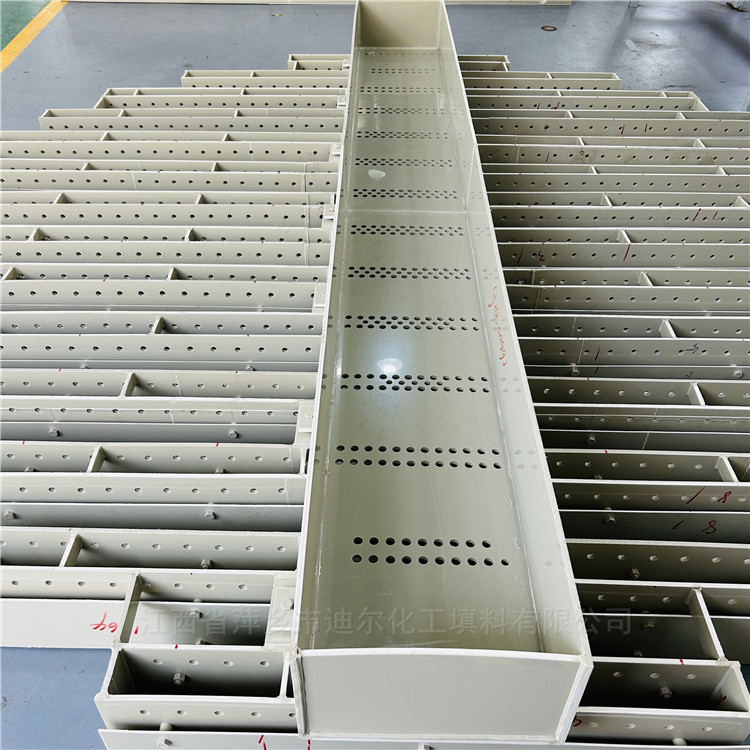
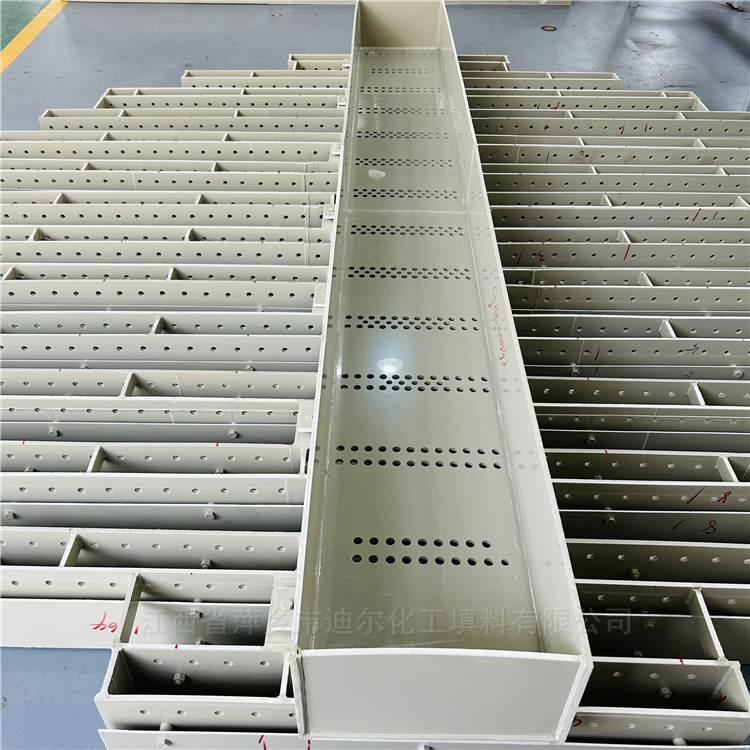
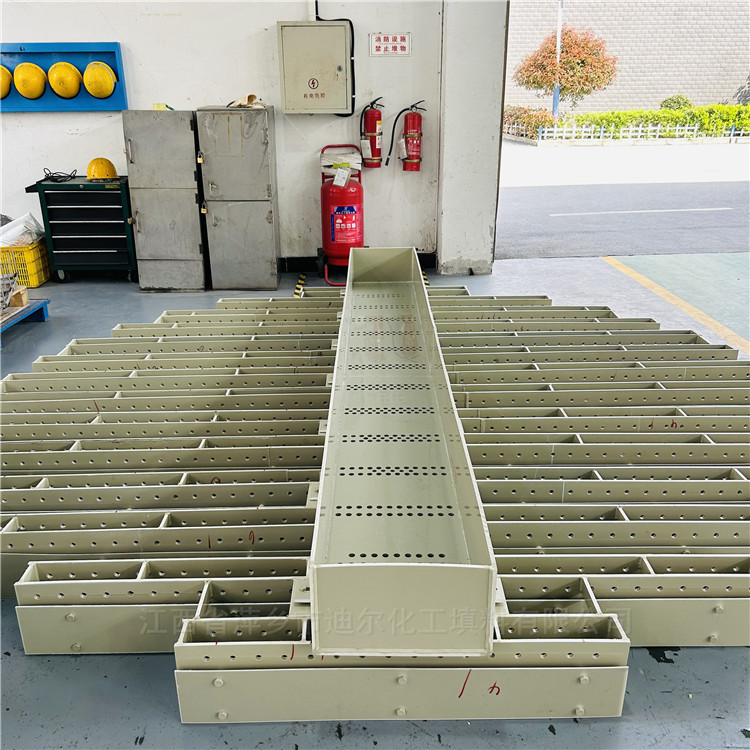
2. Secondary Channel Liquid Distributor: Composed of a main channel (primary channel) and branch channels (secondary channels), with the main channel positioned above the branch channels. Reflux liquid and feedstock liquids enter the main channel through an inlet pipe located above, and are then proportionally distributed to each branch channel. The structural dimensions of the main and branch channels are determined by the liquid flow rate, tower diameter, and the requirements for distribution quality. The secondary channel distributor has a simple structure, is easy to install into the tower through a manhole, and features uniform gas lift channels with a large free cross-sectional area. Its drawback is that it occupies more tower space, and it is difficult to achieve completely consistent liquid levels in each branch channel. This structure is commonly used in towers with diameters greater than 1 meter.
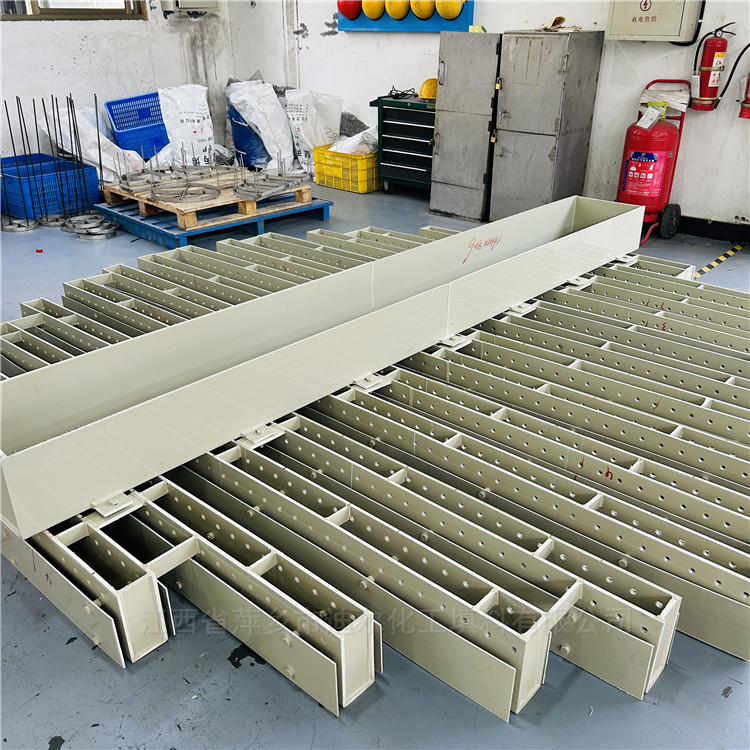
3. Channel Overflow Liquid Distributor: The channel overflow liquid distributor shares structural similarities with the channel orifice liquid distributor. It converts the bottom orifice of the channel orifice type into a side overflow orifice, typically in an inverted triangle or rectangular shape, suitable for high liquid volumes or prone to clogging situations. The liquid first enters the main channel and is distributed to the sub-channels via the rectangular (or triangular) overflow orifices of the main channel depending on the liquid level. Sometimes, the liquid can also enter the sub-channels through the bottom orifices and then be distributed to the sub-channels through the triangular (or rectangular) overflow orifices depending on the liquid level, which then flows onto the packing surface. The main channel can be configured with one or more channels based on the tower diameter.

In general, towers with a diameter under 2 meters can be equipped with one main channel, while towers with a diameter over 2 meters or those with smaller diameters but large liquid volumes can have one or more main channels. The triangular overflow holes increase the area of liquid flow as the liquid level rises, offering greater operational flexibility, typically up to 1:4. To enhance the quality of liquid distribution, it's best not to design the triangular overflow holes as open weirs. The purpose is to maintain a certain liquid level above them when there is a large liquid volume, ensuring more even distribution. This type of distributor is commonly used in packed tower applications. However, due to its slightly inferior distribution quality compared to the slot-type orifice distributor, it is not often used with high-efficiency, regular packing or for precise separation. Its installation is similar to the slot-type orifice distributor, fixed on a support ring. To achieve a geometrically uniform liquid distribution, the slots are wider than the orifice-type slots, typically 100-120mm, and their height is smaller, usually 100-150mm. The center distance between the slots is around 300mm.