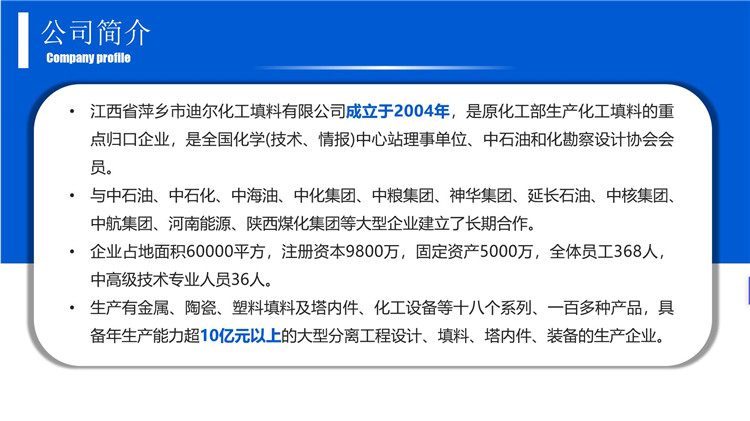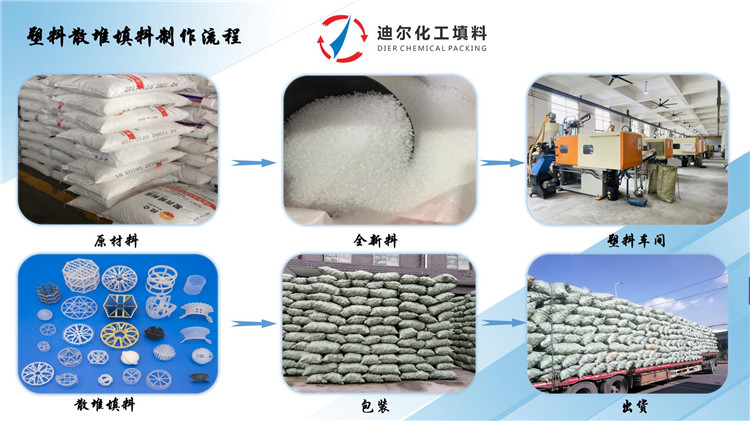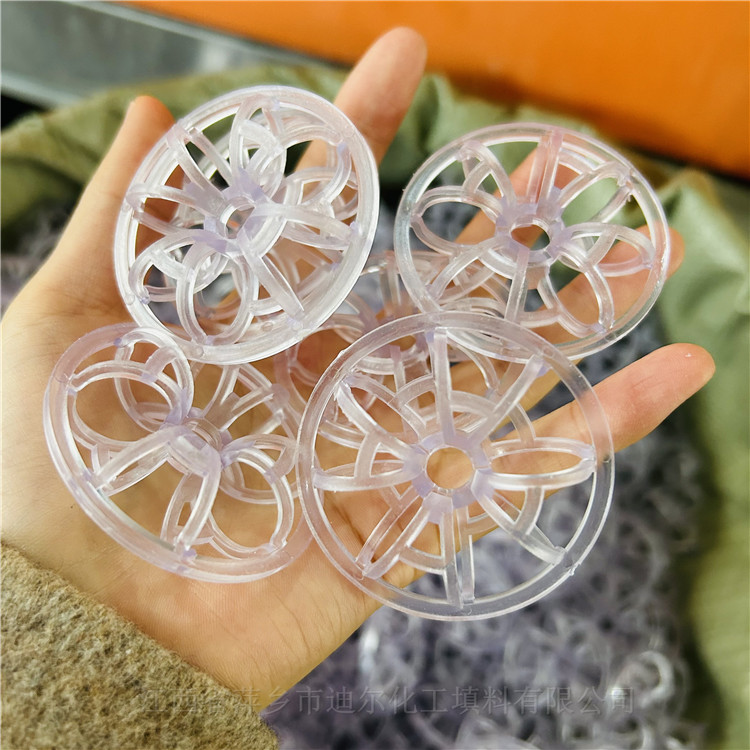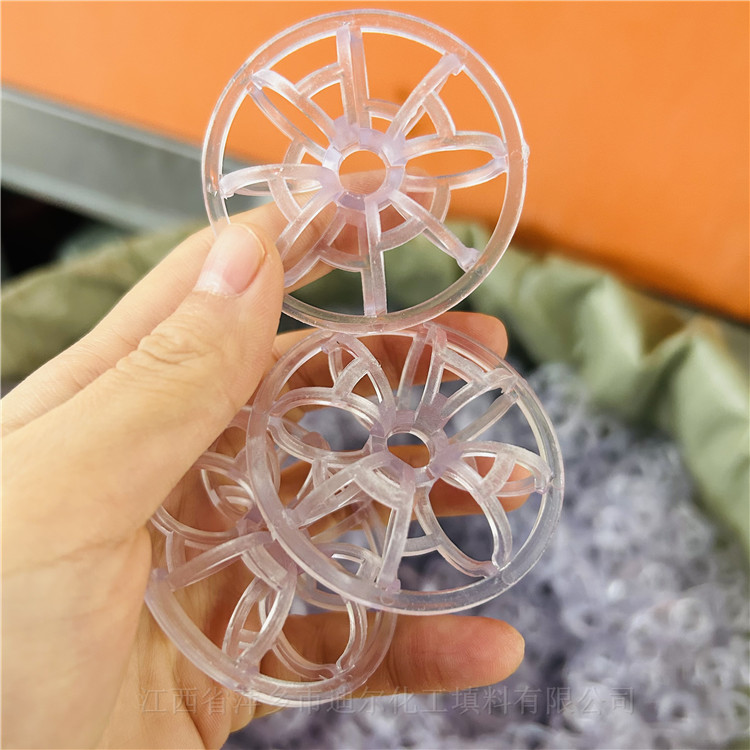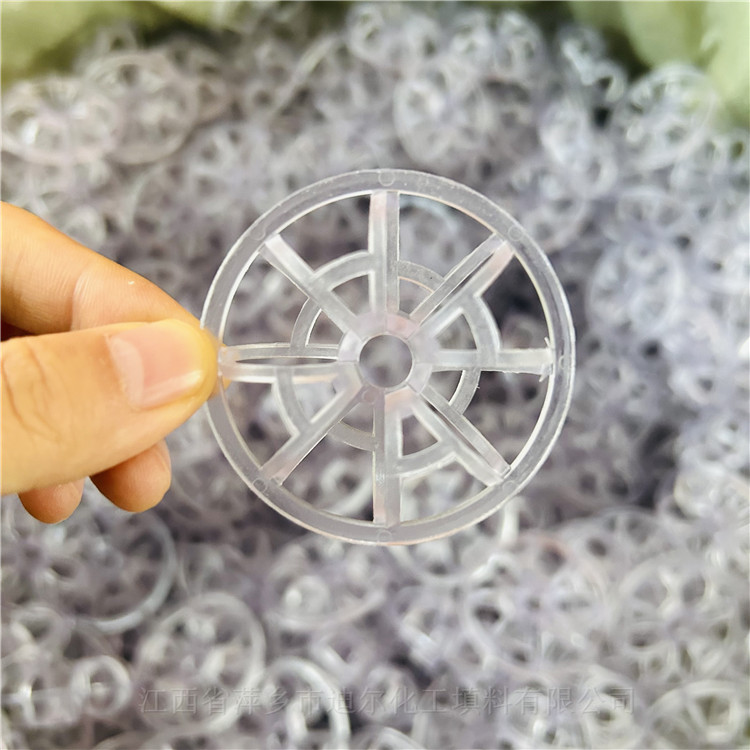


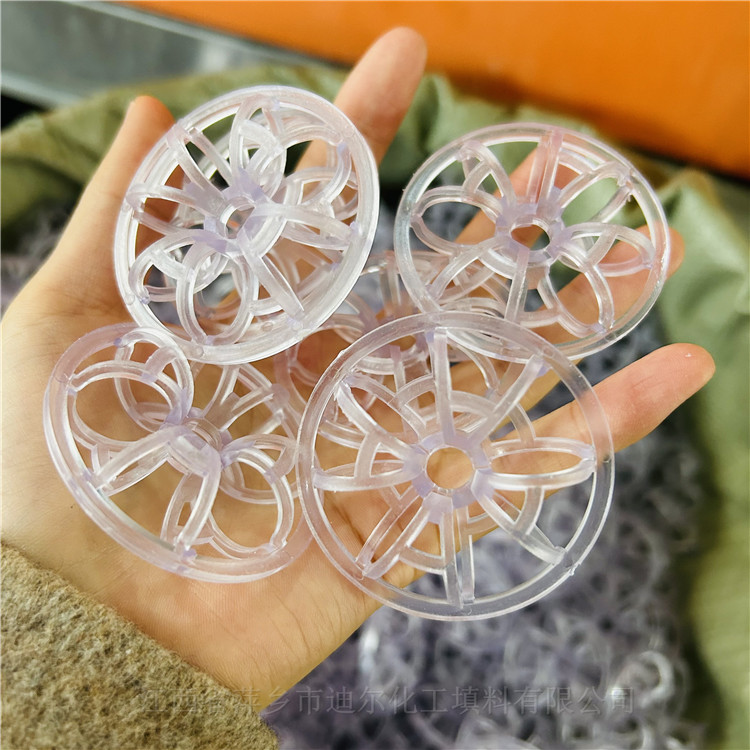









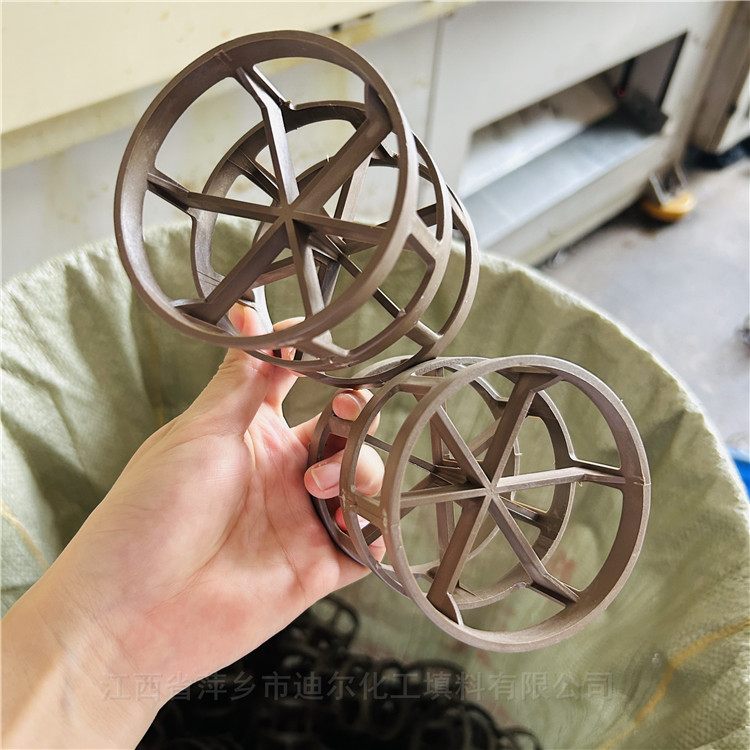
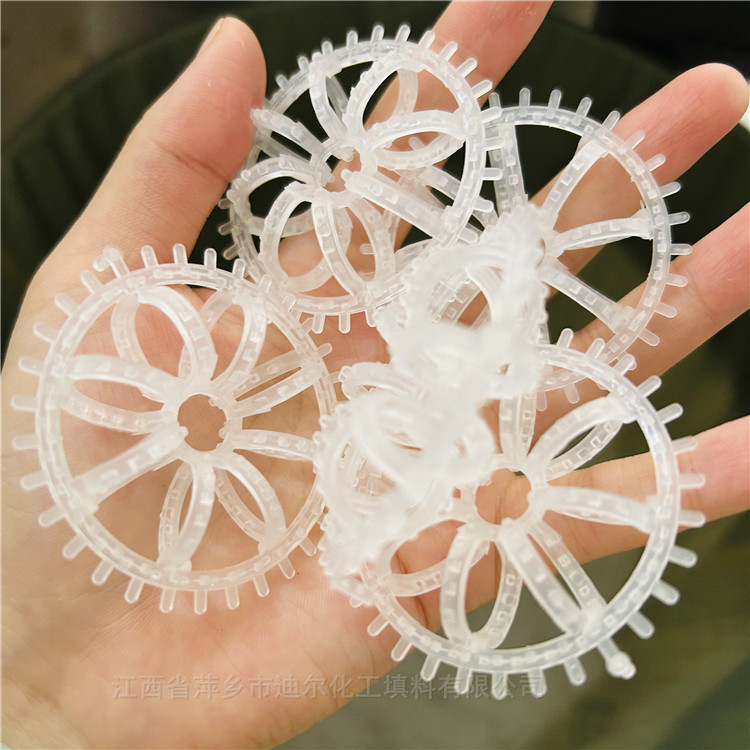
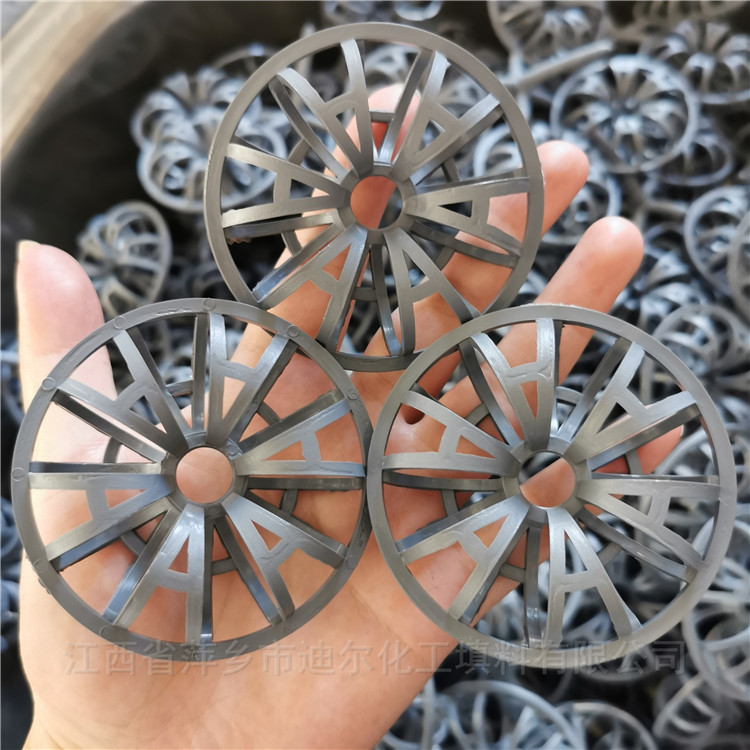
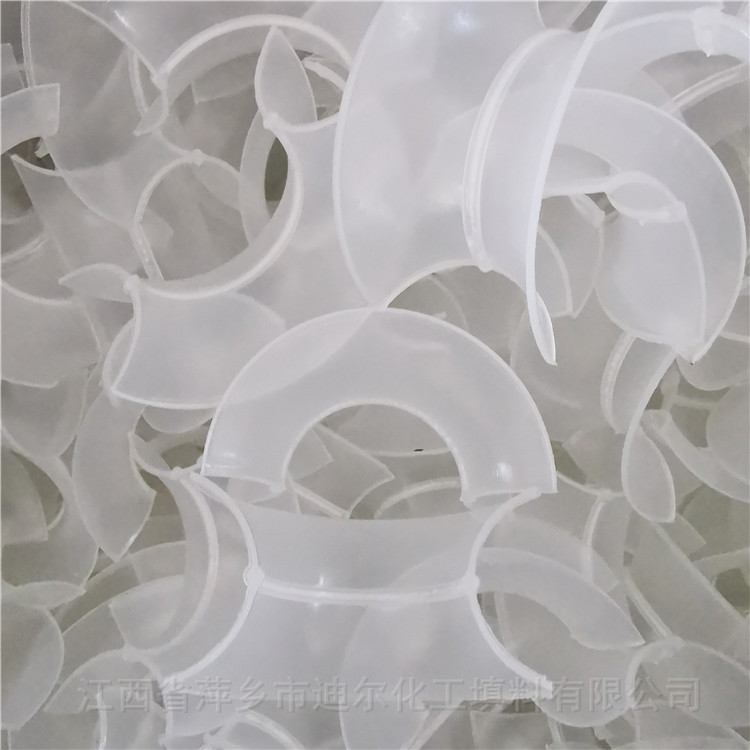
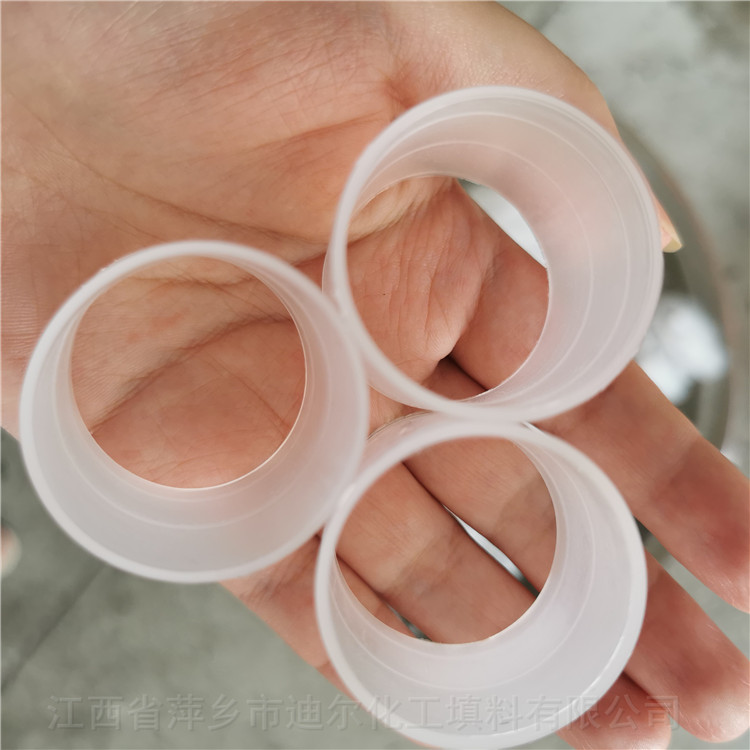
Taylor Spiral Ring Filler Model 51/73 for Chlor-Alkali Projects - PVC Chlorinated Polyvinyl Chloride梅花Ring Product Features: Low pressure drop, high energy, mass transfer. Users can select different materials such as polypropylene (PP), reinforced polypropylene (RPP), polyvinyl chloride (PVC), chlorinated polyvinyl chloride (CPVC), and polyvinylidene fluoride (PVDF) based on the operating conditions inside the tower (such as temperature, pressure, medium, etc.). It features high porosity, low pressure drop and height of mass transfer units, high flooding point, thorough liquid-gas contact, low specific gravity, and mass transfer capabilities. Suitable for use in various mediums at temperatures of 60-150 degrees Celsius, commonly used in gas washing and purification towers.
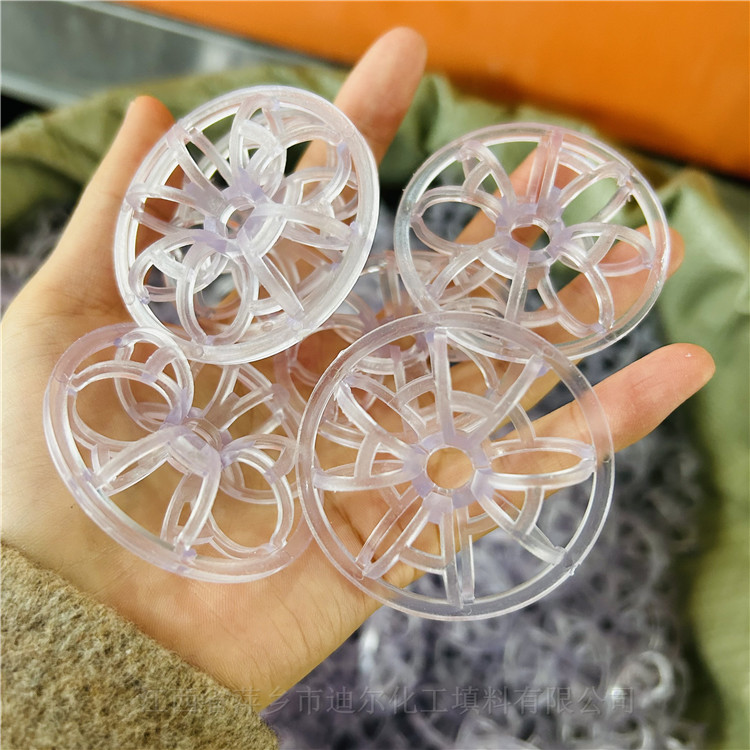
Taylor's flower ring packing model 51/73, a PVC chlor alkali project, is a large flattened sphere composed of 12 small circular rings arranged radially. It resembles a spherical shape formed by spiraling a helical spring with its ends connected. Some small circles are shaped like an "A"; others have teeth along the edges of the small and large circles; still others consist only of the inner small circles without an outer large circle.

Material Analysis:
Taylor Flower Ring Filler Model 51/73, PVC Chlor-Alkali Project Polyvinyl Chloride梅花Ring, Polyvinyl chloride (PVC), abbreviated in English as PVC, is a polymer formed by the polymerization of vinyl chloride monomer (VCM) under the action of initiators such as peroxides, azo compounds, or by free radical polymerization mechanism under light or heat. The homopolymer and copolymer of vinyl chloride are collectively referred to as vinyl chloride resin.
PVC is a white powder with an amorphous structure, low branching degree, and a glass transition temperature of 77~90°C. It begins to decompose around 170°C [1]. It has poor stability to light and heat. Above 100°C or after prolonged exposure to sunlight, it decomposes, producing hydrogen chloride, which then further catalytically decomposes automatically, causing discoloration, and rapidly degrading its physical and mechanical properties. In practical applications, stabilizers must be added to enhance its stability to heat and light.

Material Characteristics:
Taylor Flower Ring Filler Model 51/73, PVC Chlor-Alkali Project, Made of PVC Chlorinated Polyvinyl Chloride, features plum blossom rings. The molecular weight of industrial PVC typically ranges from 50,000 to 110,000, with significant polydispersity; the molecular weight increases with decreasing polymerization temperature. It has no fixed melting point, starting to soften at 80-85°C, becoming viscoelastic at 130°C, and transitioning to a viscous flow state at 160-180°C. It boasts good mechanical properties, with tensile strength around 60MPa and impact strength of 5-10kJ/m2. It also exhibits excellent dielectric properties. PVC was once the world's largest-producing general-purpose plastic, with extensive applications. It is widely used in building materials, industrial products, daily commodities, floor coverings, tiles, artificial leather, pipes, cables, packaging films, bottles, foaming materials, sealing materials, and fibers.