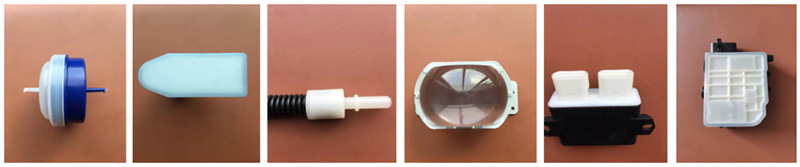









Product Details
Laser Plastic Welding
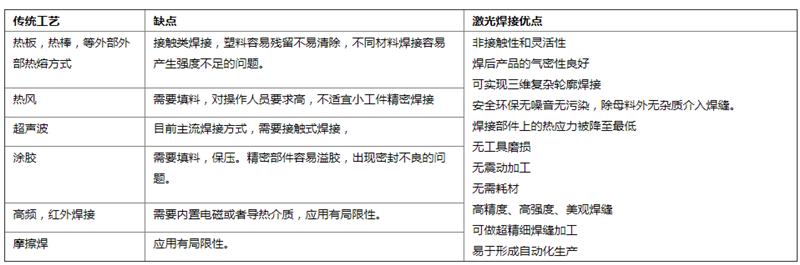
Plastic, as a conventional industrial material, is widely used in various fields of industrial product manufacturing, including automotive, consumer goods, electronic components, aerospace, and more. The types of plastic materials are continuously updated with the advancement of industrial applications. In terms of plastic bonding processes, for a long time, the focus has been on mature techniques such as adhesive coating, heat pressing, ultrasonic welding, and high-frequency infrared. However, as the process requirements for plastic products increase, traditional plastic processing methods have shown their limitations. Laser welding has recently demonstrated significant advantages in industrial manufacturing applications. Of course, the continuous improvement of laser technology and the decreasing cost of equipment have also driven the industry into a stage of widespread mass application. The transition has moved from general-purpose machines that adapt to materials to customizable equipment based on product specifications. Currently, laser welding is not a replacement for traditional processes but rather a complement to them. The cost of laser equipment remains relatively high, so laser welding is typically used only for high-precision processing applications that traditional methods cannot achieve. The following table provides a simple comparison with conventional processes:
Product Features:
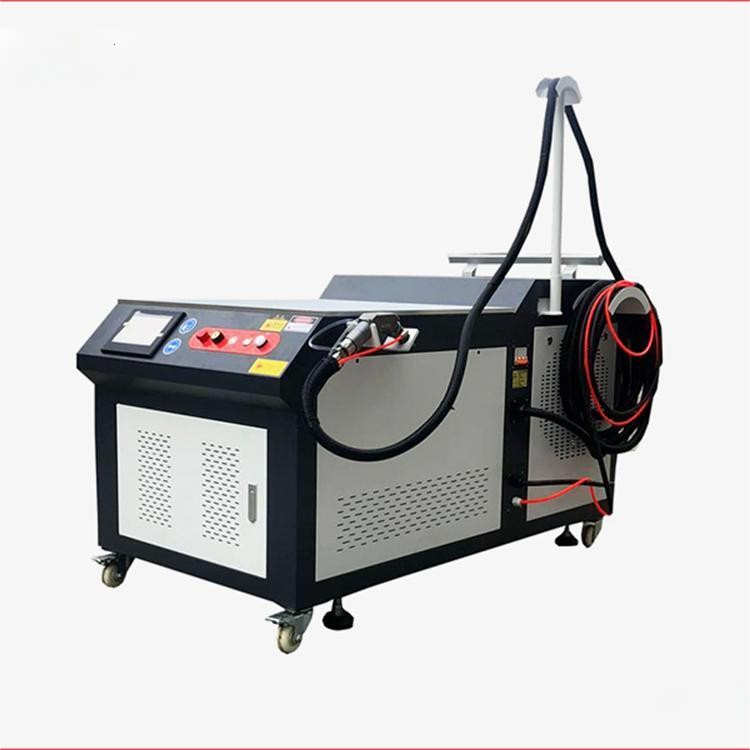
A fully enclosed, integrated design with ergonomic features and safety protection standards, with pre-set automatic line interfaces on both sides. Capable of single-machine operation and expansion for assembly line work. The processing area is completely isolated from the material loading area, ensuring work safety.
Integrated smoke treatment system effectively removes odors and dust generated during the processing, ensuring a safe working environment.
Full closed-loop feedback system, closed-loop response to processing temperature and speed, ensuring stability in mass production processing and traceability of experimental data.
Customized plastic welding fixtures, turnkey operation. Easy to operate, convenient.
Optional CCD coaxial monitoring system, allowing for real-time welding process surveillance.
Ultra-high-speed laser coaxial real-time temperature feedback system, temperature control within ±2 degrees during the welding process, ensuring stable welding quality.
Processing methods are customizable to your needs, offering options such as galvanometer scanning, direct beam four-axis three-axis联动translation table, for completing spatial trajectory welding processing.
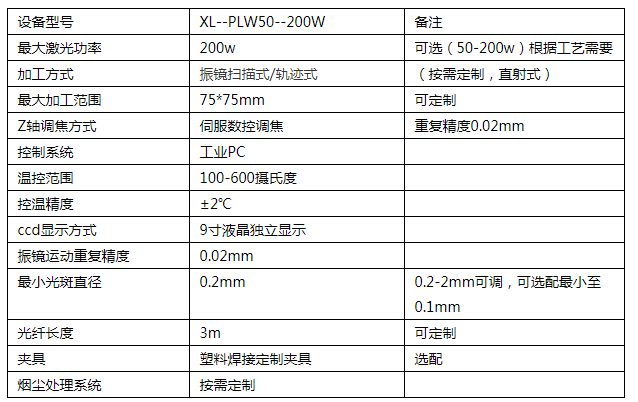
Equipment Technical Specifications:
Scope of Applicable Materials:
Almost all thermoplastic plastics and thermoplastic elastomers can be焊接 with laser technology. Common welding materials include PP, PS, PC, ABS, nylon, PMMA, polyformaldehyde, PET, and PBT. Other engineering plastics such as polyphenylsulfone (PPS) and liquid crystal polymers, however, are less suitable for laser welding due to their low laser transmittance. Therefore, carbon black is often added to the base material to absorb sufficient energy, meeting the requirements for laser transmission welding.
The right image shows the test results for commonly used materials based on a 980nm laser. Due to the limitations of previous laser processing techniques, there was a focus on the material transmittance, which had certain limitations. Our company can customize for different wavelengths of laser, thus significantly enhancing the applicability of materials. Theoretically speaking, materials with similar plasticizing temperatures can all be welded.
Sample Display: