
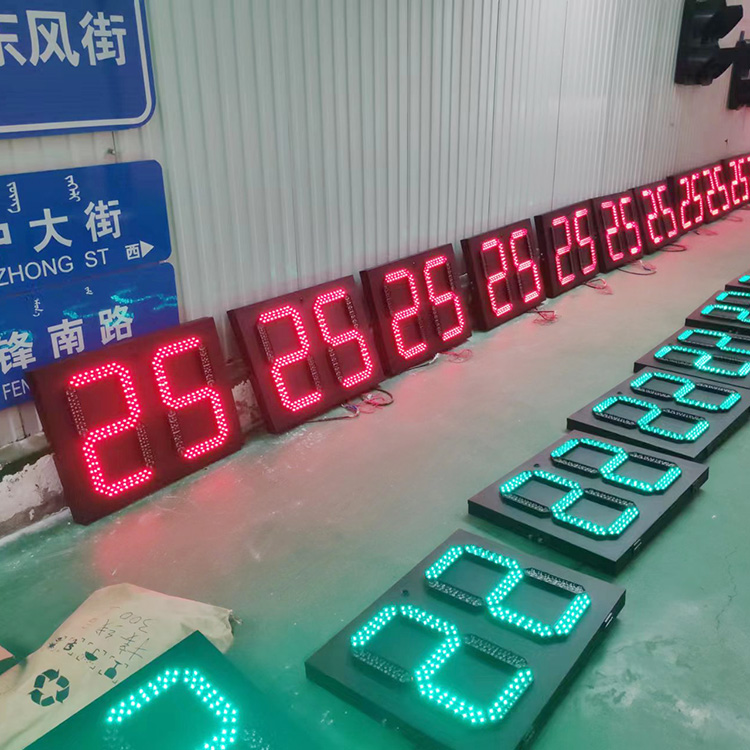

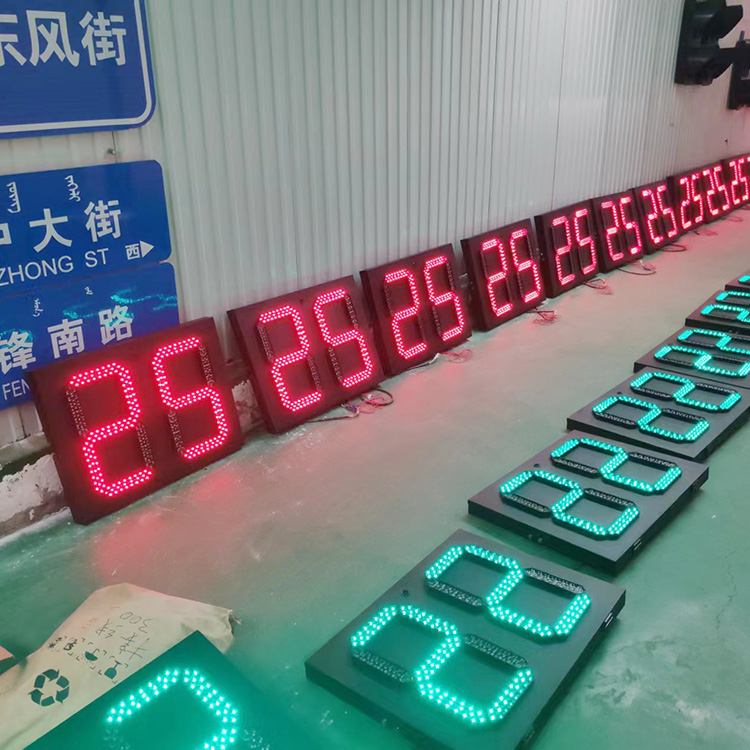
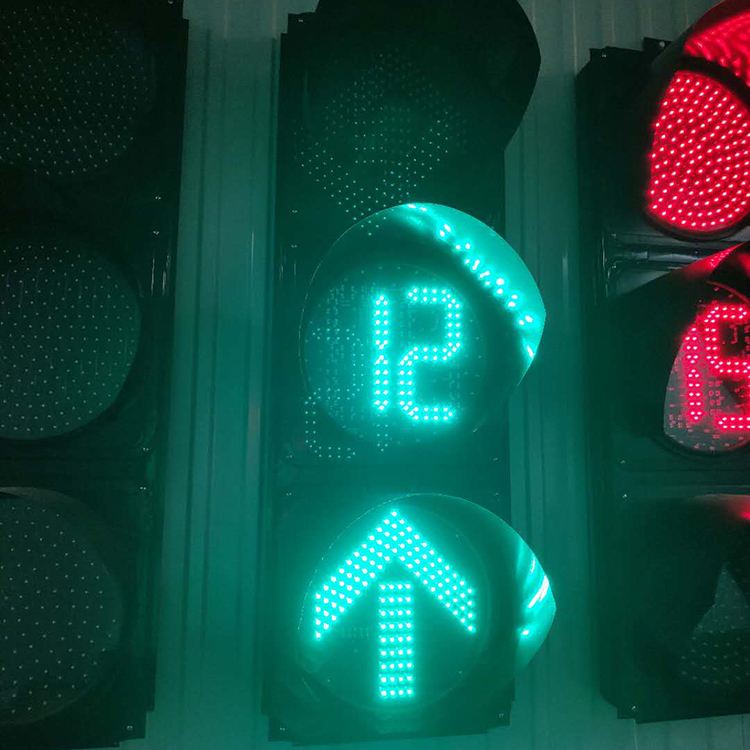
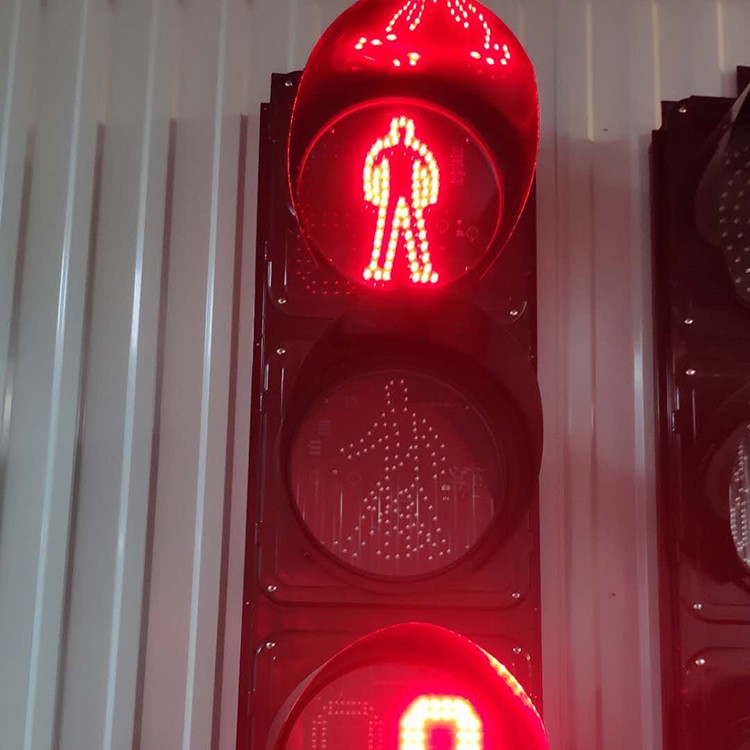










Countdown traffic signal control method:
Generally, they can be categorized into three methods: timer control, sensor control, and adaptive control.
1. Time-controlled
Intersections are controlled by traffic signal controllers operating according to pre-set timing plans, also known as fixed-time control. A single fixed-time control is when only one timing plan is used per day; a multi-segment fixed-time control is when several timing plans are used throughout the day based on varying traffic volumes at different times.
The basic control method is timing control at a single cross-point. Line control and surface control are also available in a timing control format, also known as static line control system and static surface control system.
2. Inductive Control
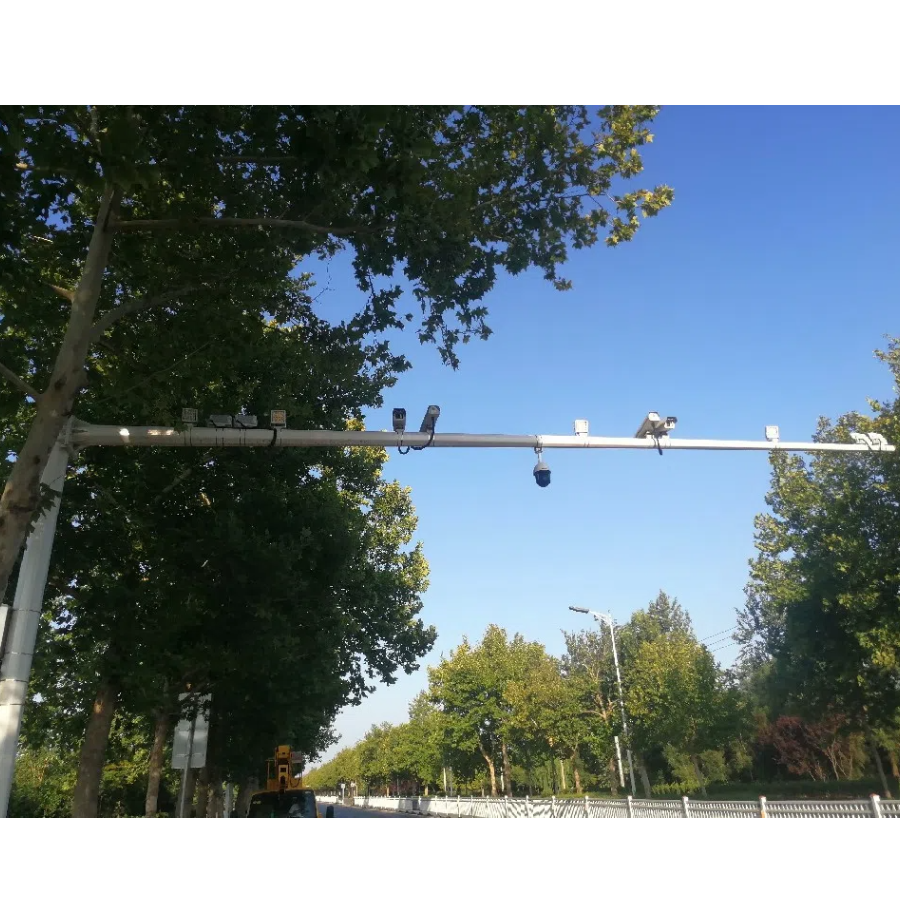
Inductive control involves setting up vehicle detectors on the entrance lanes of intersections, with the timing plan for countdown traffic signals calculated by a computer or an intelligent signal control unit. This control method can change at any time based on the traffic flow information detected by the sensors. The basic form of inductive control is single-intersection inductive control, also known as single-point inductive control. Single-point inductive control can be divided into semi-inductive control and full inductive control depending on the placement of the sensors.
3. Adaptive Control
Treat the transportation system as an uncertain system, continuously measuring its state such as traffic flow, parking frequency, delay time, and queue length, gradually understand and master the object. Compare them with the desired dynamic characteristics and use the differences to adjust system parameters or generate a control to ensure that the control effect remains relatively optimal or suboptimal regardless of environmental changes.