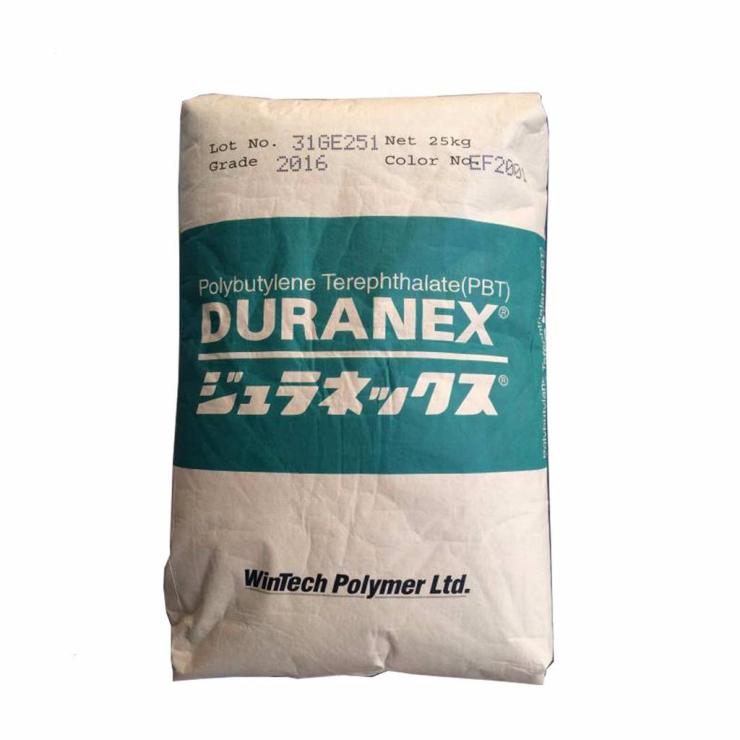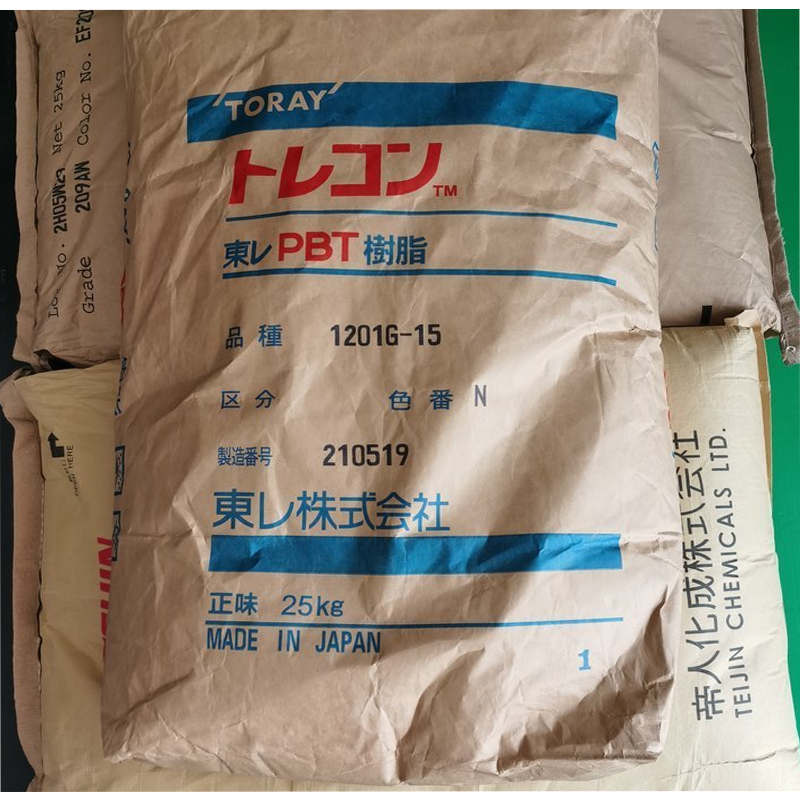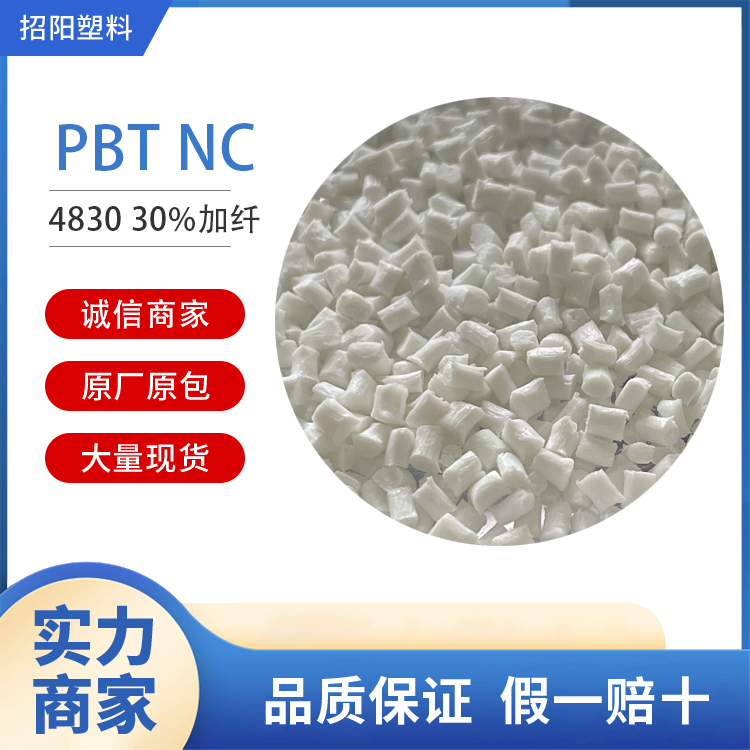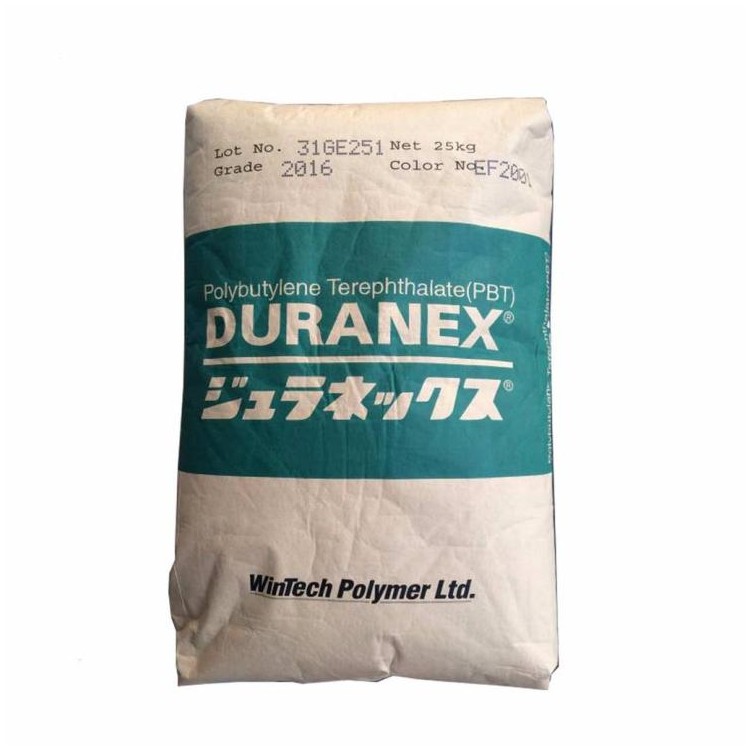
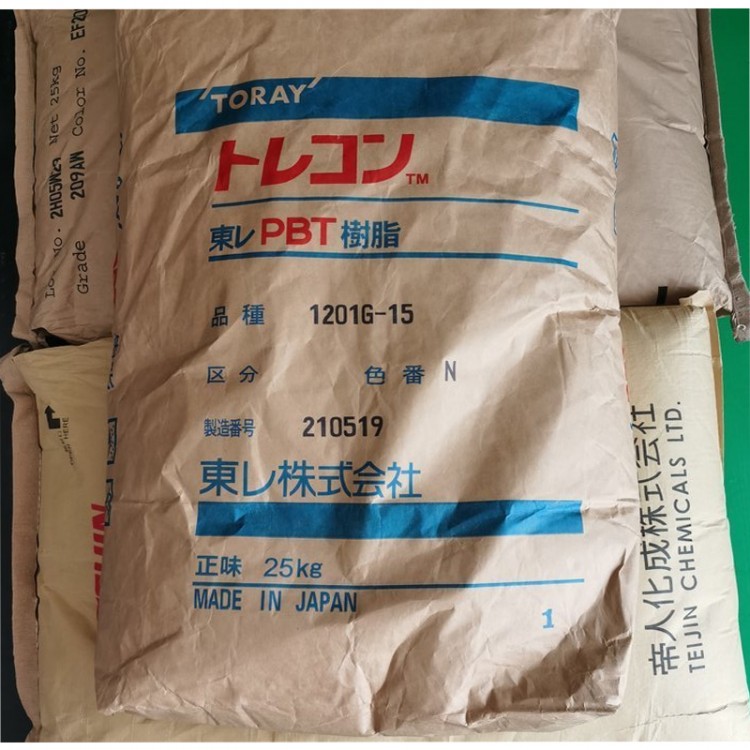
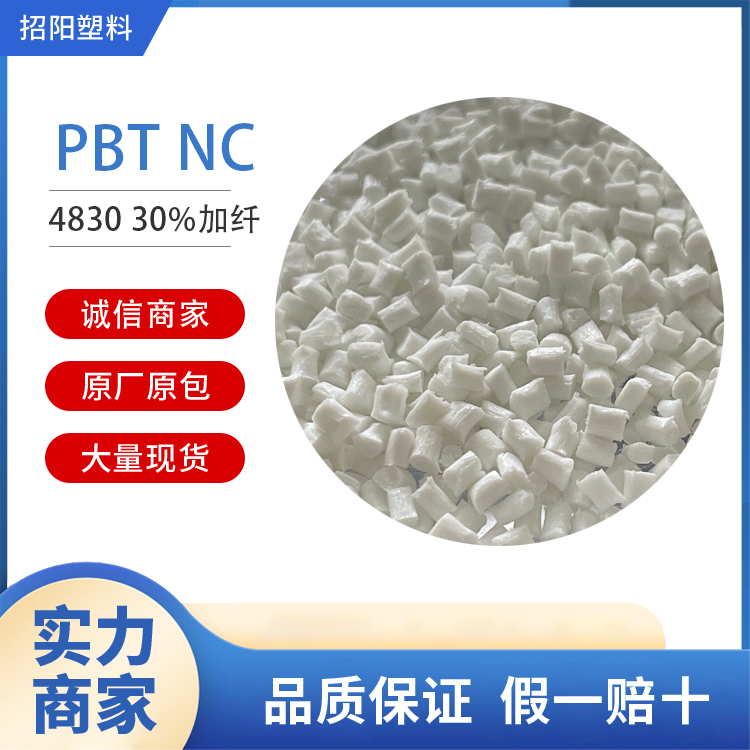
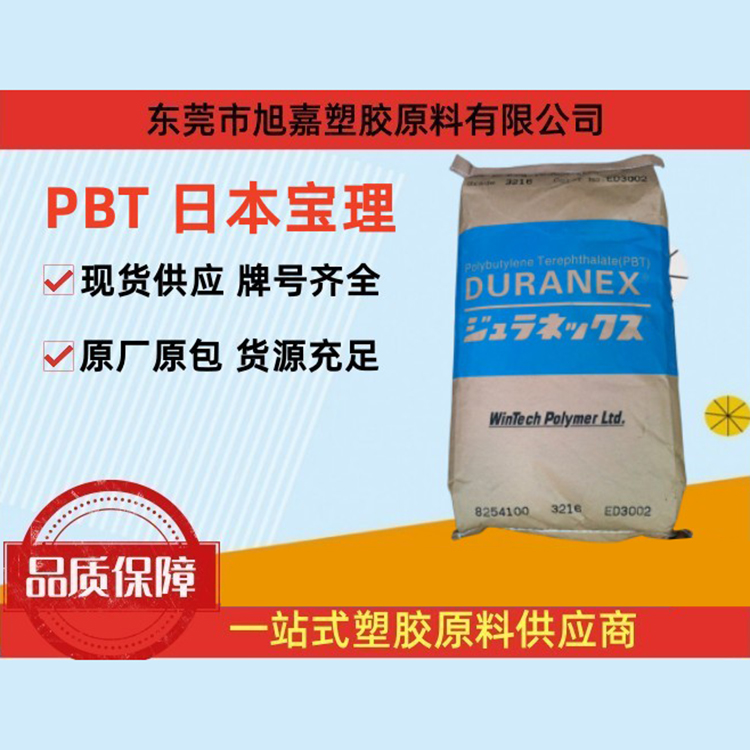







Polybutylene terephthalate (PBT) resin is a non-reinforced, moldable resin. This brominated flame-retardant PBT has a UL V0 rating.PBT is a semi-transparent to opaque, crystalline thermoplastic polyester with a milky white hue. It boasts high heat resistance, toughness, fatigue resistance, self-lubricating properties, low coefficient of friction, weather resistance, and low water absorption rate of just 0.1%, maintaining various physical properties (including electrical properties) in humid environments. It has excellent electrical insulation but high volume resistance and dielectric loss. It is resistant to hot water, alkalis, acids, oils, but is susceptible to halogenated hydrocarbons and has poor hydrolysis resistance. It can crystallize rapidly at low temperatures and has good molding properties. Its drawbacks include low notch impact strength and high shrinkage during molding. Therefore, most products are reinforced with glass fiber or inorganic fillers for modification, which can double the tensile and bending strength, and significantly increase the heat deflection temperature. They can operate continuously at 140°C. Post-glass fiber reinforcement, the products exhibit inconsistent longitudinal and transverse shrinkage rates, making warping more likely.
| Physical Properties | Rated Value | Unit System | Testing Method |
Specific Gravity | 1.40 | g/cm³ | ASTM D792, ISO 1183 |
Specific volume | 0.710 | cm³/g | ASTM D792 |
Melt Flow Rate (250°C/2.16 kg) | 8.6 | g/10 min | ASTM D1238 |
Melting Volume Flow Rate (MVR) (250°C/2.16 kg) | 8.00 | cm³/10min | ISO 1133 |
Shrinkage rate | Internal Methods | ||
Flowing 3 | 1.1 to 1.8 | % | |
Flowing 4 | 0.90 to 1.6 | % | |
Flowing 5 | 1.5 to 2.3 | % | |
Flow: 3.20 mm | 1.5 to 2.3 | % | |
Lateral Flow 3 | 0.90 to 1.9 | % | |
Horizontal Flow 4 | 1.0 to 1.7 | % | |
Horizontal Flow 5 | 1.6 to 2.4 | % | |
Absorption rate | ISO 62 | ||
Saturated, 23°C | 0.36 | % | |
Balance, 23°C, 50% RH | 0.080 | % | |
| Hardness | Rated Value | Unit system | Testing Method |
Rockwell hardness (R Scale) | 120 | ISO 2039-2 | |
Ball Press Hardness (H 358/30) | 105 | MPa | ISO 2039-1 |
| Mechanical Properties | Rated Value | Unit System | Test Method |
Tensile Modulus | |||
-- 6 | 2820 | MPa | ASTM D638 |
-- | 2800 | MPa | ISO 527-2/1 |
Tensile strength | |||
Yield 7 | 58.0 | MPa | ASTM D638 |
Yield | 55.0 | MPa | ISO 527-2/50 |
Fracture 7 | 58.0 | MPa | ASTM D638 |
Fracture | 40.0 | MPa | ISO 527-2/50 |
Tensile elongation | |||
Yield 7 | 20 | % | ASTM D638 |
Yield | 6.0 | % | ISO 527-2/50 |
Fracture 7 | 20 | % | ASTM D638 |
Fracture | 20 | % | ISO 527-2/50 |
Bending Modulus | |||
50.0 mm span 8 | 2620 | MPa | ASTM D790 |
-- 9 | 2600 | MPa | ISO 178 |
Bend Strength | |||
-- 9, 10 | 90.0 | MPa | ISO 178 |
Yield, 50.0 mm Span 8 | 101 | MPa | ASTM D790 |
Tungsten carbide wear resistance (1000 Cycles, 1000 g, CS-17 Cylinder) | 19.0 | mg | Internal Method |