










Photo & Description Product details
I. Overview
The deaerator is one of the key equipment in boilers and heating systems. The severe losses caused by oxygen corrosion to the boiler feed water pipes, economizers, and other auxiliary equipment annually have drawn increasing attention from the National Electric Power Department. The department has issued the GB1576-2001 "Water Quality Standard for Industrial Boilers" and the "Safety Supervision Regulations for Pressure Deaerators in Power Stations," which set departmental standards for the oxygen content of deaerators, i.e., the oxygen content of feed water for low-pressure deaerators should be less than 15 μg/L, and for high-pressure deaerators, less than 7 μg/L.
The spiral membrane oxygen removal unit differs from the existing spray and water curtain types in terms of heat and mass transfer methods, as well as oxygen removal capacity. It is a new type of thermal oxygen removal unit that has won the New Technology and New Product Innovation Award from the Ministry of Power, and has been listed as a key product for promotion by the Ministry.
II. Advantages
High deoxygenation capacity; high qualified rate of oxygen content in the water after deoxygenation.
2: Stable operation with no vibration. Suitable for vacuum start-up and sliding pressure operation, reducing the need for complex manual adjustments during start-up and operation.
3: High adaptability, not stringent requirements for water quality and temperature; can operate at 150% capacity for short periods.
4: Steam exhaust volume less than 0.1% of the inlet water volume; no additional exhaust cooler required. Optimized equipment, reduced heat consumption, and consumes one-third less energy than other types of the same output deaerators.
III. Structure and Principle
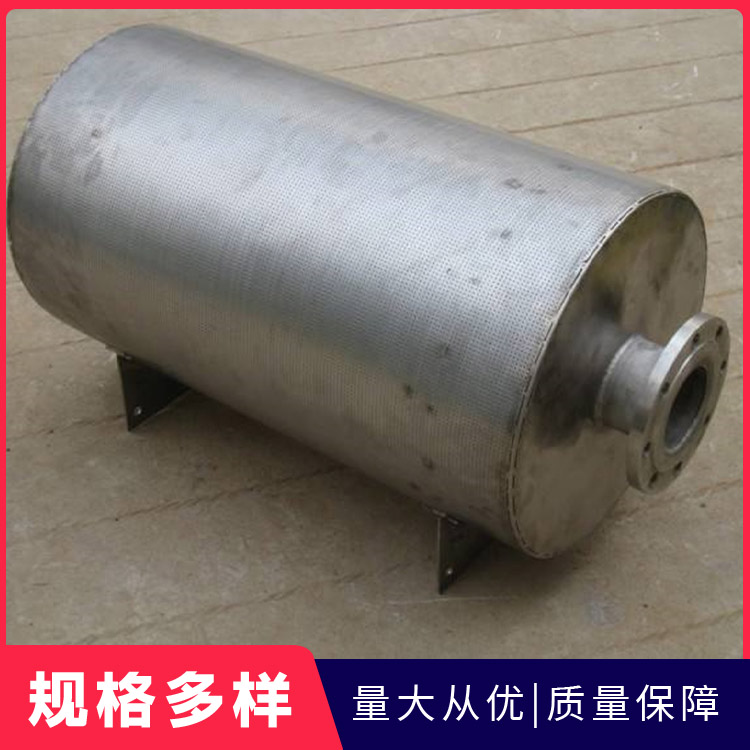
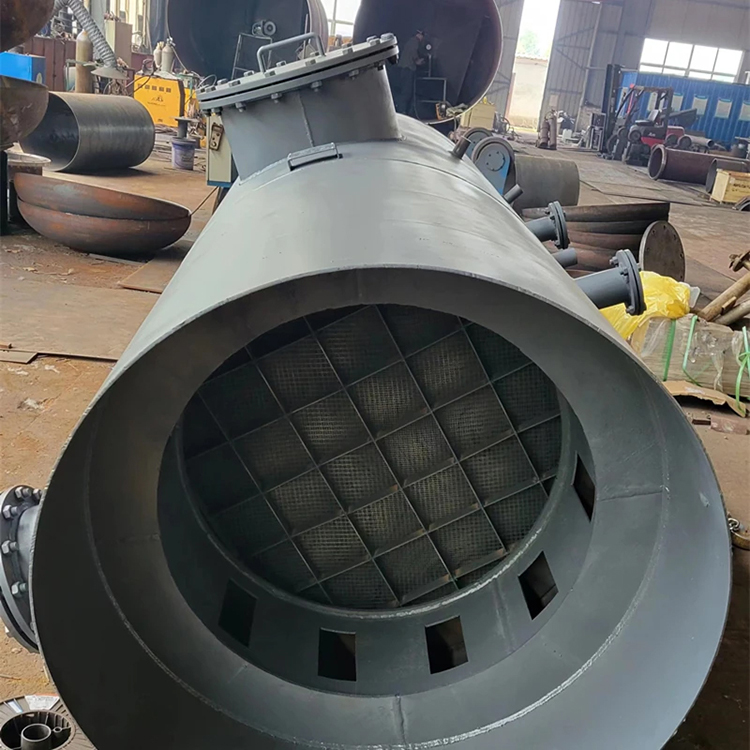
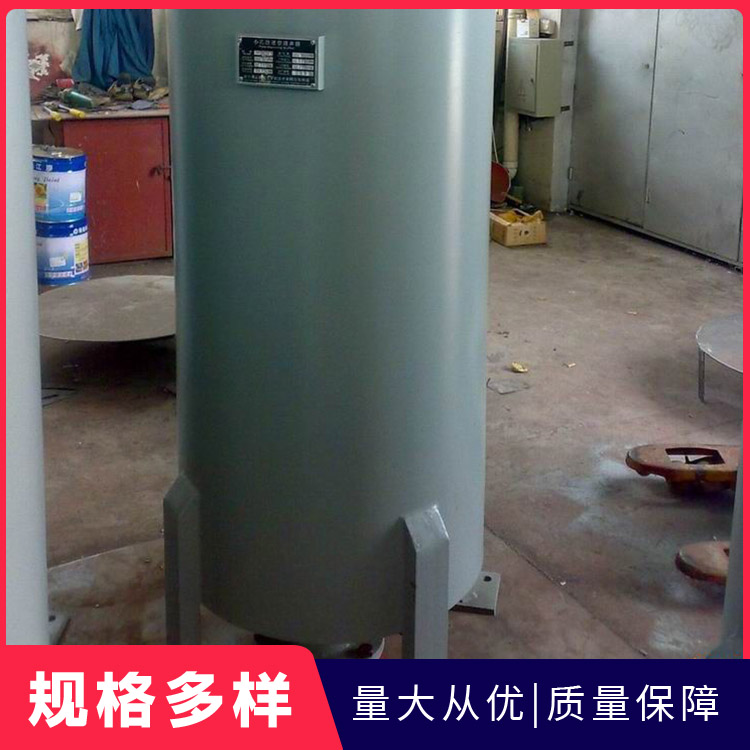
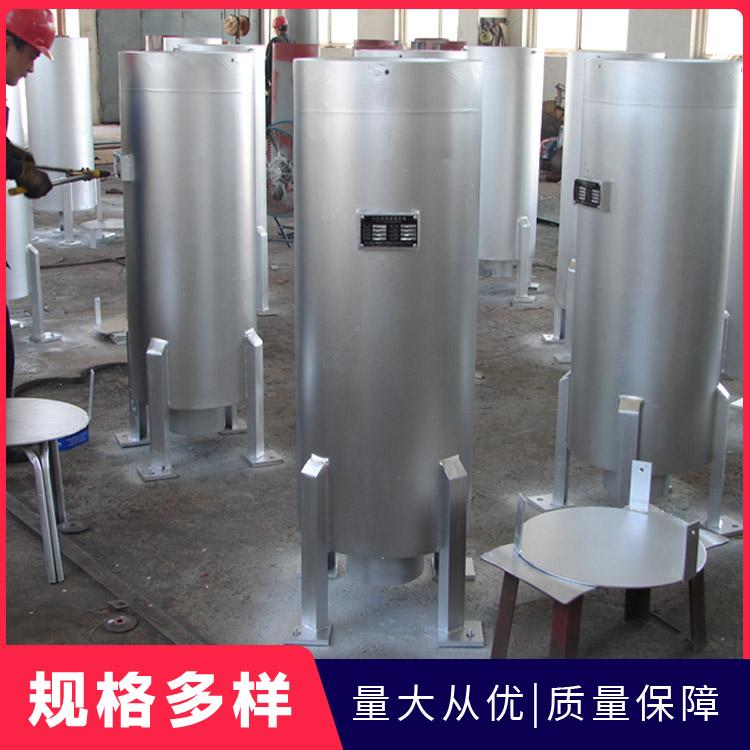
The structure of the rotary membrane oxygen removal unit consists of the oxygen removal head and the water tank. The oxygen removal head is composed of six main parts: the outer shell, the rotary membrane assembly, the water grate, the liquid-gas mesh, the steam distribution plate, and the steam-water separator. The water tank is made up of the main body and accessories.
1. Shell: Welded from the cylinder body and stamped elliptical end caps.
2. Membrane Assembly: Composed of the water chamber, membrane tube, condensate water inlet, and make-up water inlet. Both the membrane tube and the drain pipe are made of stainless steel, ensuring year-round operation without maintenance. It is also a major component of the rotary membrane deaerator, where 98% of the oxygen is removed.
3. Sprinkler Grating: The water supply for oxygen removal in the membrane forming section and condensate introduced from the drain pipe are subjected to secondary distribution here, reducing the flow to achieve a uniform sprinkling effect, thereby protecting the lower liquid-gas network. The grating's open area is not less than 50% of the total cross-section. Made of stainless steel, it operates year-round without requiring maintenance.
4. Filling Liquid-Vapor Screen: Composed of spaced flat steel strips and a cylindrical body, it contains two layers of specially designed 0.3mm O-type stainless steel flat wire mesh. Here, water is in thorough contact with the secondary steam, heated to saturation temperature and deeply deoxygenated to ensure the oxygen content of the deoxygenated water.
5. Steam Distribution Plate: The main heating steam is introduced here, and the uniform distribution structure ensures excellent heating quality, maintaining a uniform distribution of the heating steam. It rises to heat softened water under non-throttling conditions, working to achieve saturation temperature and deoxygenation.
6. Air-Water Separator: Composed of stainless steel packing, the internal mesh is designed with a ventilation structure, which effectively separates and returns the water carried by the steam during exhaust, making it an indispensable component for steam exhaust without water.
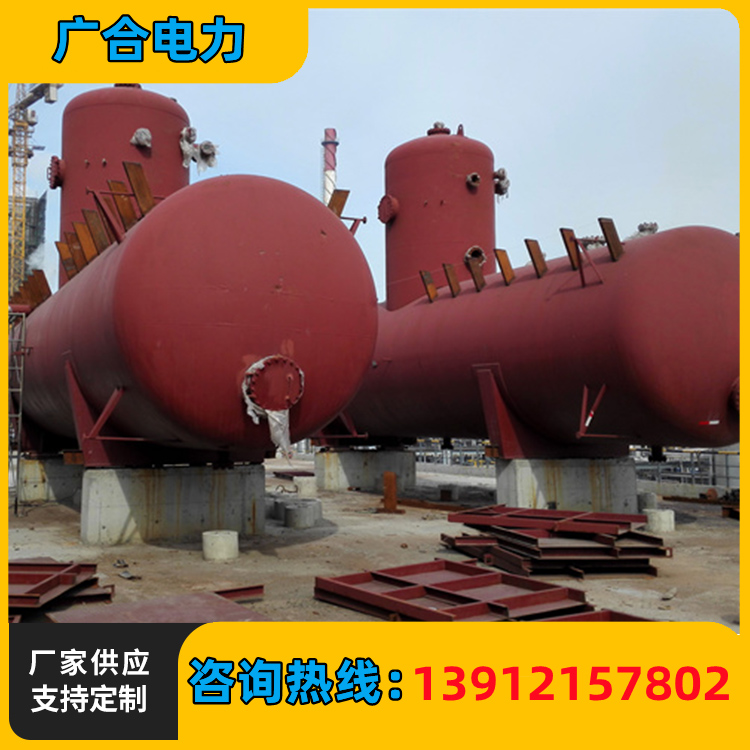
7. Water Tank: Welded from a cylindrical body and a stamped elliptical end cap, internally fitted with reinforcing rings. The base is mounted on a prefabricated worktable, with one end fixed and the other for installing the expansion roller assembly. The tank is equipped with inspection manholes, safety valve connection ports, drain outlets, boil-over pipe openings, water seal tube openings, level gauge interfaces, pressure gauge openings, temperature gauge openings, and water intake ports.
The basic principle of deaerator thermal deaeration: In a container, the amount of gas dissolved in water is proportional to the partial pressure of the gas above the water surface. The main method of thermal deaeration uses steam to heat the feed water, increasing its temperature. This causes the partial pressure of steam above the water surface to gradually rise while the partial pressure of dissolved gases decreases. As a result, dissolved gases continuously escape. When the water is heated to its boiling point at the corresponding pressure, the surface is entirely steam, with the partial pressure of dissolved gases at zero, rendering the water unable to dissolve gases, including oxygen. The effectiveness of deaeration depends on whether the feed water is heated to the boiling point at the corresponding pressure and on the rate of dissolved gas expulsion, which is greatly influenced by the contact surface area between water and steam.
Principle of the rotating membrane deaerator (jet, entrainment, turbulence, heat transfer, mass transfer, water film skirt, shower-like, saturated)
Condensate and make-up water first enter the water chamber of the internal spiral membrane separator in the deaerator, and under a certain pressure difference, they are sprayed diagonally into the inner cavity through small holes in the membrane tubes, forming a jet. Due to the inner cavity being filled with rising heated steam, a large amount of heated steam is drawn into the jet during its movement (experiments prove that the jet has an entrainment effect); a剧烈的mixing and heating effect is produced over a very short distance and small travel, resulting in a significant increase in water temperature. The rotating water continues to spiral down along the inner wall of the membrane tube, forming a turbulent water film skirt (the critical Reynolds number of water in rotational flow decreases significantly, causing turbulent rolling). At this point, the turbulent water has an ideal heat transfer and mass transfer effect, and the water temperature reaches the saturation temperature. Oxygen is then separated out, as it cannot diffuse freely within the inner cavity and can only rise with the steam through the exhaust pipe and into the atmosphere. The feed water from the rough deaeration section and the condensate introduced through the drain pipes are mixed here for secondary distribution, forming a uniform rain-like pattern and falling onto the liquid-vapor net below. After deep deaeration, it flows into the water tank. The oxygen content in the water in the tank is 0-7 цɡ/L at high pressure and less than 15 цɡ/L at low pressure, meeting the departmental operational standards.
The spiral membrane oxygen scavenger maintains the water in a turbulent state during operation, boasting a sufficiently large heat exchange surface area. Consequently, the better the heat transfer and mass transfer efficiency, the smaller the exhaust gas volume (which means less steam used for heating and thus lower energy loss, yielding considerable economic benefits). The excellent deoxygenation effect allows the oxygen scavenger to operate beyond its normal capacity (usually up to 50% over the rated output) or meet operational standards under low water temperatures with full补水.
4. Installation, Operation, and Maintenance
1. Installation, operation, and maintenance of deaerators, water tanks, and accessories should be conducted according to the CYD (G) type deaerator system diagram and <<Safety Supervision Regulations for Deaerators in Power Stations>>.
2. The deaerator should be placed above the feed pump, with the height difference between the low water level of the deaerator tank and the centerline of the feed pump not less than 6 to 7 meters. The bottom plate of the tank support should be in firm contact with the concrete.
3. Install temperature transmitters and flow sensors on the deaerator's inlet water pipe, a water level transmitter on the deaerator, to monitor signals such as incoming water temperature, flow rate, and deaerator water level. These signals are then input to the calculation and processing module to control the hydraulic and thermal conditions of the deaerator's water intake and heating steam, ensuring the deaeration effect is achieved with a deaeration temperature of (104±1.5℃). Adjust the electric actuator regulating valve installed on the steam pipe to control the steam flow, which automatically adjusts the steam flow rate based on the temperature changes of the deaerated water. After topping up is stopped, the electric actuator automatically closes.
4. The bottom of the water tank is equipped with a reboiling tube, which is used for heating and deoxygenation during the boiler's water filling and unit startup. When the water level in the tank exceeds half, slowly open the reboiling heating tube valve at the bottom of the tank to heat the water inside, maintaining a boiling state. The unit should stop using it once it starts up with load. Additionally, a anti-rotation plate is installed at the outlet tank opening to prevent water whirl at low water levels, thereby increasing the effective volume of the tank. Tests have proven that water whirl has a significant impact on pump cavitation. Without an anti-rotation plate, the water level must be maintained at three times the pipe diameter. With the plate, it can be reduced to below 1.5 times.
5. After on-site welding of the deaerator and water tank, a hydrostatic test must be conducted. The pressure parameters for the hydrostatic test are: atmospheric deaerator 0.2Mpa, pressure deaerator 0.75Mpa. Condensate steam should be initially accumulated in an intermediate storage tank before being evenly fed into the deaerator to ensure stable deaerator load.
6. Saturated Membrane Oxygen Remover Protection and Alarm
(1) Sufficient full-open safety valves are installed on the water tank and deaerator, with the number and specifications meeting the design technical specifications.
(2) Oxygen removal membranes should be equipped with both local and remote water level gauges, and have high and low water level alarms as well as high and low water level action devices. The oxygen removal water level control: when the water level drops, the softening pump (condensate pump) is automatically started to replenish the oxygen remover; when the water level rises, the pump automatically stops.
7. For the cold start of the deaerator, it is recommended to preheat the shell with auxiliary steam for 10-15 minutes. Under a certain steam pressure, send the demineralized water into the deaerator head, while adjusting and increasing the steam inlet valve to heat the feedwater in the film formation section to nearly the steam saturation temperature of the deaerator operating pressure (i.e., 102-104°C).
8. Adjust the water level regulating system to maintain the water level in the water tank within ±100mm of the normal level. (When two deaerators need to operate in parallel, in order to balance the pressure and water level within the deaerator, each deaerator tank must have a balance pipe for connecting steam and water. Aim for consistent pressure, water temperature, and water level.) When the water level reaches ±200mm of the normal level, the high water level drain valve (electromagnetic gate valve) should be able to open freely to release water, and it should automatically close when the water level drops. During operation, regularly check the responsiveness of the electromagnetic water level regulating system and the suppleness of the feed water regulating valve.
9. Gently open the top exhaust valve, open the valves on the steam pipe, supply steam for heating, and record the steam pressure and temperature. Generally, adjust the exhaust valve to be open about 2/3 to achieve an exhaust flow of approximately 2-3kg per ton of deaerated water.
10. When the deaerator is in operation, the inlet water valve should be opened first, followed by the steam inlet valve. When shutting down, do the opposite.
12. When operating the deaerator, if water in the exhaust steam is detected, the following methods can be adopted to handle the situation:
Adjust heating steam inlet valve
b. Inspect pressure adjustment device
c. Manual pressure reduction operation
d. Gradually close the secondary heating steam cutoff valve.
13. Test the oxygen content of the water in the sampling tank to ensure it meets the standard. If it does not, adjust the water inflow, air inflow, and exhaust gas flow to achieve compliance. Once qualified, you can supply water to the boiler.
14. Regularly test the oxygen content of the incoming and outgoing water at set intervals, record the readings on various monitoring instruments, and ensure the normal operation of the deoxygenator.
15. Cautionary Notes
a. When the deaerator experiences severe vibration and water ejection, water hammer has occurred. Reduce the water inflow accordingly.
b. During operation, attention should be paid to ensure that the pressure inside the deaerator does not drop sharply, nor should a vacuum be formed.
c. In case of a short-term shutdown, prevent the deaerator from forming a vacuum or becoming filled with air. Gently open the bypass steam valve to introduce a small amount of steam, maintaining a heated state inside the deaerator head, and also expel a trace of steam from the air exhaust.
d. Regular inspections of the deaerator should be conducted to prevent nozzle clogging, packing corrosion or compaction, and instrument failure.
e. In case the deaerator is out of service for an extended period, the water in the tank should be fully drained to prevent corrosion of the vessel.
Five. Oxygen Remover General Accessories
· Safety Valve --- Installed on the water tank, it automatically opens to relieve pressure when the internal pressure of the equipment exceeds the allowable limit, serving as a safety protection.
Pressure Gauge — Installed at the top of the deaerator, monitoring the pressure inside the equipment.
Thermometer — Located at the bottom of the water tank, monitoring the water temperature inside.
· Butterfly valve - Installed on the heating steam pipeline, it uses an automatic regulator to adjust the flow of heating steam, ensuring the pressure within the deaerator stays within the rated range.
· Water-seal tube --- When the liquid level rises, the pressure difference exceeds the water column pressure, causing the balance to be disrupted, and the liquid flows out through the water seal. It also serves as a pressure relief function when the operating equipment's air pressure exceeds the safe limit.
· Stop valve --- Installed on the replenishing pipe, it adjusts the flow of replenishing water with the help of an electric water level control system to maintain the normal water level of the tank.
·Regulating Valve --- Installed on the water补给管,it adjusts the flow of water replenishment using an electric water level control system to maintain the normal water level in the tank.
· Electrical junction level monitoring — Consists of a sampling tube (primary instrument) and a high-purity ceramic electrode with a display instrument (secondary instrument), mounted on a water tank to monitor the water level inside. The electrodes output a 4-20 mA signal to the control room for adjusting the water level valve.
· Magnetic flip switch water level gauge -- Installed on the water tank, it monitors the water level in situ and can also connect to a remote location, outputting a 4-20 mA signal to the control room for adjusting the water level valve.
Balanced Vessel — Used in conjunction with pressure/differential pressure transmitters and level gauges, it can reflect the deaerator's (weight) water level during the boiler's startup, shutdown process, and normal operation.
· Electric gate valve --- Installed on the water outlet pipeline of the water tank, when the water level in the tank exceeds a certain limit, the electric gate valve automatically opens with the help of the electric water level regulating system, discharging the excess water above the limit into the drain tank.
· Pressure Automatic Regulator---Automatically adjusts the opening of the heating steam inlet valve, regulating steam flow while maintaining stable pressure within the deaerator.
Electric Water Level Regulation System --- Automatically adjusts water supply flow and controls the emergency water drain valve (electric gate valve) at the maximum water level.
Section 6: Order Provision Data
1: Oxygen Remover Output (T/H) and Effective Tank Volume (m³).
2: Oxygen removal unit working pressure, temperature...
3: Only replace the oxygen-depletion tower and provide the installation connection diagram for the original oxygen-depletion tower.
Section 7: Renovation
Our factory not only provides a complete set of new water film deaerator supplies, but also undertakes the renovation of deaerators with sprinkler trays and spray packing for power plants. Specifically, this includes:
1. Low retrofitting costs, about half the price of replacing the deaerator head.
2. Fast progress, easy to process and on-site modification installation. Utilize the original deaerator head's shell section, remove all the spray tray or spray packing components inside the original deaerator head, retain the lower steam inlet plate, then install a liquid-gas mesh and a water grate at a certain position above the lower steam inlet plate. Finally, seal and secure it with a circular pressure plate to prevent water-vapor short-circuiting during future operation.
3. After separating the joint between the head and the cylinder, weld and install them into the film former. Connect the other components of the pipeline opening according to the provided modification plan. The job is then complete. Upon passing the inspection, the equipment can be put into operation.
4. During the modification process, the diameter of the deaerator head is generally not increased; instead, its height is adjusted appropriately based on specific circumstances, usually only elevated or mounted at the original height.