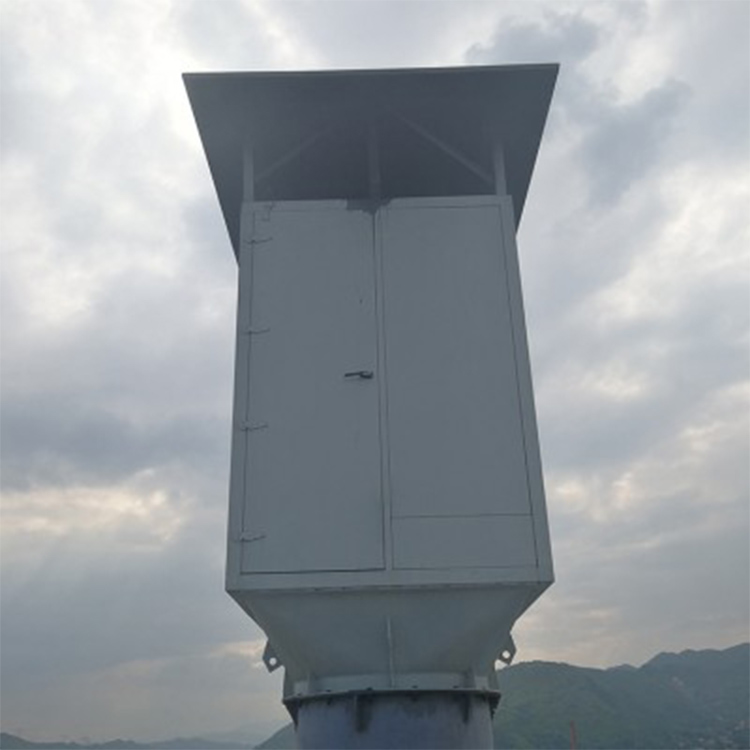









Xizhen Professional Highway Noise Barrier, Elevated Bridge Sound Barrier Construction and Installation Plan.
1. Construction of column foundations and vertical diagonal bracing foundations
Pile foundation excavation is 1200mm deep, with a length and width of 500mm each. The steel cage size is 350mm x 350mm.
The vertical bracing foundation is excavated to a depth of 500mm, with a length and width of 350mm each. The steel cage size is 200mm x 200mm.
The column foundation is connected to the longitudinal diagonal brace foundation. The specific construction method is as follows:
(1) Staking out construction lines. Align piles at control points and record the positions of pile holes.
(2) Piling Foundation Boring

1) Excavation for foundations is typically carried out using a helical drill method or manual digging, with the excavated soil transported to the designated location.
2) During construction, when encountering geotextile membranes or geogrids, use manual cutting to prevent tearing or stretching damage to adjacent geosynthetic materials; for CFG piles or cement mixing piles, excavation is required to ensure the designed pile length; when groundwater is encountered at the bottom of the hole, a dewatering well can be dug on one side of the hole, while pumping and excavating simultaneously.
3) Fabrication and Installation of Reinforcement Cages
1) Reinforcement cages are processed and formed at the reinforcement processing site before being transported to the site for inspection and hoisting into place.
2) The installation of steel cage can be done using an all-terrain crane. The protective layer thickness should be no less than 50mm, and C25 precast concrete roller pads are used for control. The pads are welded to the home tie rods, with 4 pads symmetrically set on each section.
3) The bending dimensions of the rebars should comply with the design and spacing specifications. Cut the rebars according to the design drawings and relevant specifications, and categorize and store the bent rebars with identification signs to prevent misuse.
(4) Install precast components. The precast components are factory-processed by welding the precast bolt rods with the precast steel plates, securing the threads, and then transported to the site for installation. During installation, ensure the precast components are firmly welded to the reinforcement bars of the pile.
(5) Install the upper formwork of the pile body and align the embedded bolts. The 0.3-0.5m section below the continuous beam uses wooden molds and is secured with diagonal supports. After the formwork is installed, a professional surveyor checks and aligns the positions of the embedded components. The formwork must be positioned accurately and securely to prevent construction accidents such as formwork expansion, which could prevent the installation of other embedded components.
Sound barrier project installation steps are mainly divided into foundation construction and installation, support structure construction and installation, and screen body construction and installation.

Base Construction and Installation Process for Sound Barrier Solutions:
1. Construction Staking
2. Drilled pile hole
3. Install steel cage
4. Install and align embedded components
5. Installation of hole template for bored pile holes
6. Cast-in-place concrete piles
7. Install continuous beam bottom formwork
8. Bonded Continuous Beam Reinforcement
9. Continuous Beam Side Formwork Installation
10. Cast continuous beam concrete
11. Sprinkler Maintenance
12. Dismantle Templates

Acoustic Barrier Scheme Support Structure Construction and Installation Process:
Material incoming inspection
2. Pattern making, material cutting
3. Straightening, Cleaning
4. Sample Inspection
5. Steel column drilling
6. Reinforcement angle steel for bottom plate, cut-to-size
7. Welding Base Plate
9. Welded Reinforcement Angle Iron
10. Shot Blasting Rust Removal
11. Galvanized
12. Powder Coating

Acoustic Barrier Scheme: Screen Construction and Installation Process
1. Steel column installation
2. Steel column alignment adjustment
3. Screen Assembly
4. Roof Cap Installation
5. Overall Sound Barrier Commissioning
6. Bottom Seal Treatment