


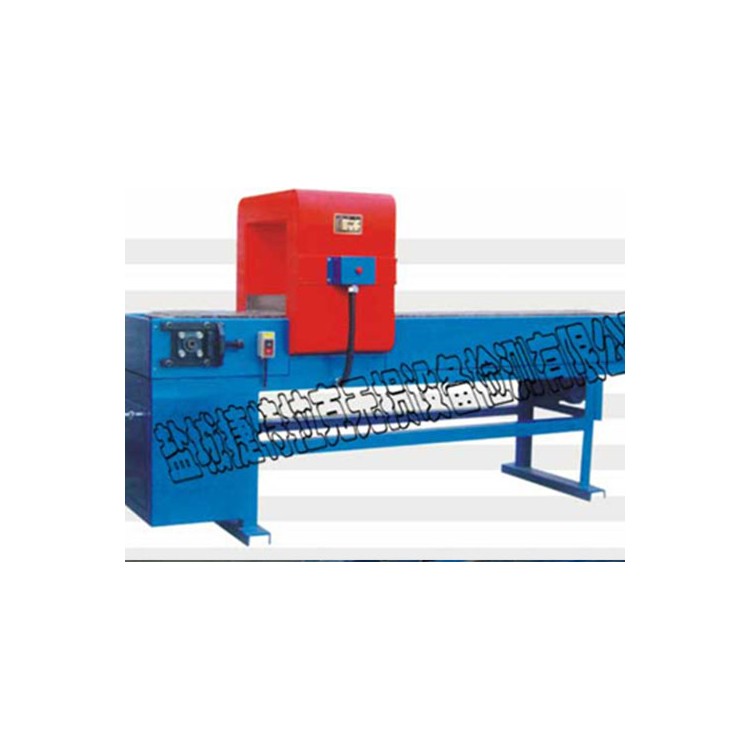
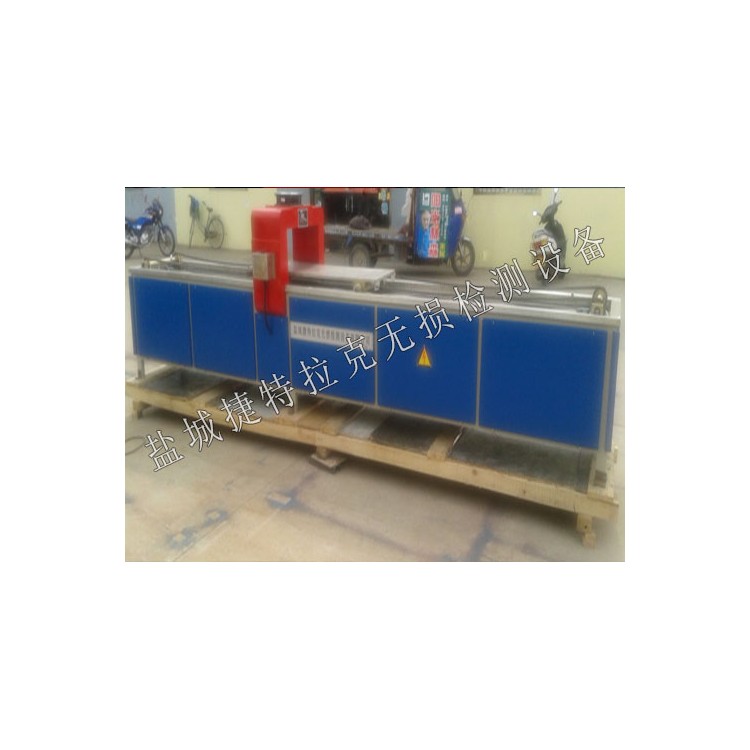







Wagon Wheel Inspection System (WIS)
Railways are a vital mode of transportation for goods and passenger travel, with the combined length of railway tracks worldwide exceeding one million kilometers. The integrity of train wheels is crucial for safe train operation. To accommodate different railway networks, wheels of varying shapes, diameters, and weights are manufactured. To prevent catastrophic railway accidents, the requirements and standards for the quality of train wheels have become increasingly stringent.
Rapidly complete compliance inspections
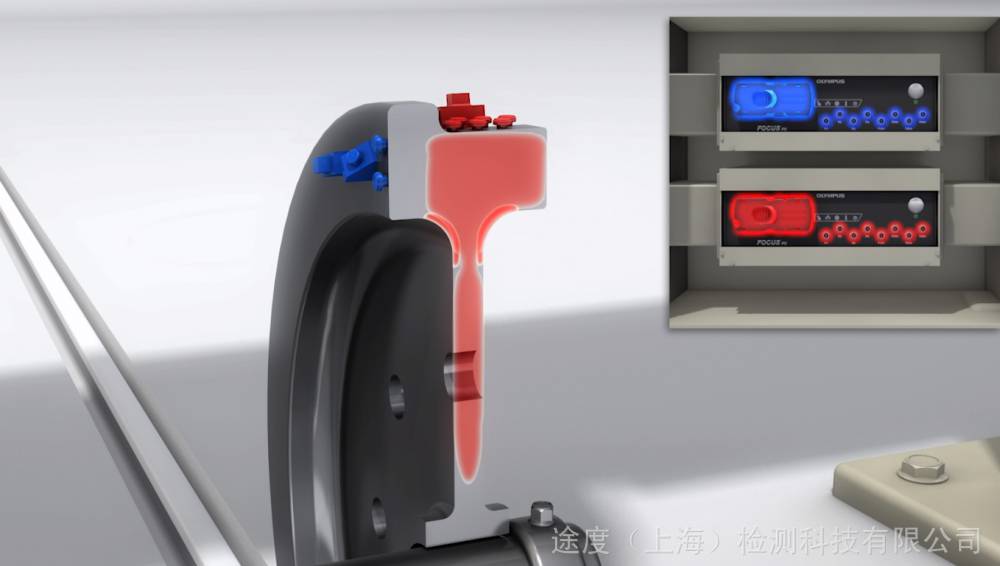
The phased array probe of the train wheel inspection system can not only detect the rim from the tread and a disc surface within a minute, but also from both sides of the hub.
 | The fully automatic train wheel inspection system can detect the following typical defects in train wheels:
Equivalent to flat-bottom holes (FBH) with diameters ranging from 1mm to 3.2mm, with near-surface resolution of 5mm to 6mm.
Equivalent to flat-bottom holes (FBH) with diameters ranging from 1mm to 3.2mm, with near-surface resolution of 5mm to 6mm.
Equivalent to a flat bottom hole (FBH) with a diameter of 2 millimeters, surface resolution of 5 to 6 millimeters. |
Optimized Mechanical Platform
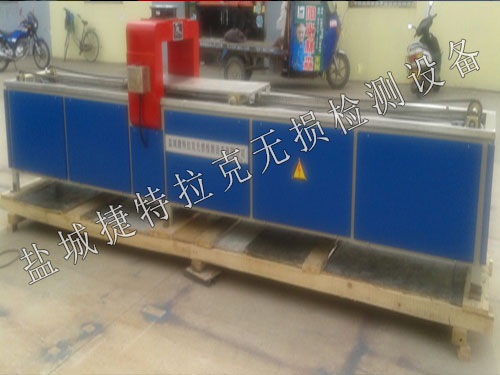
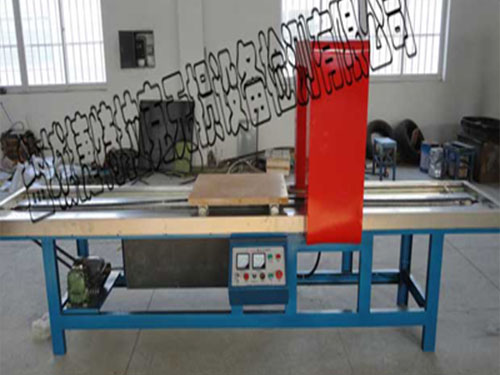
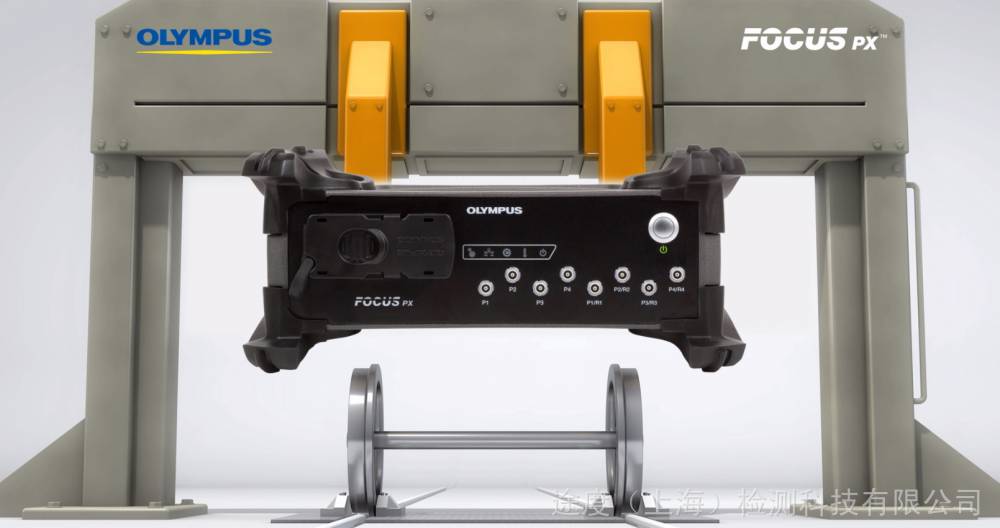
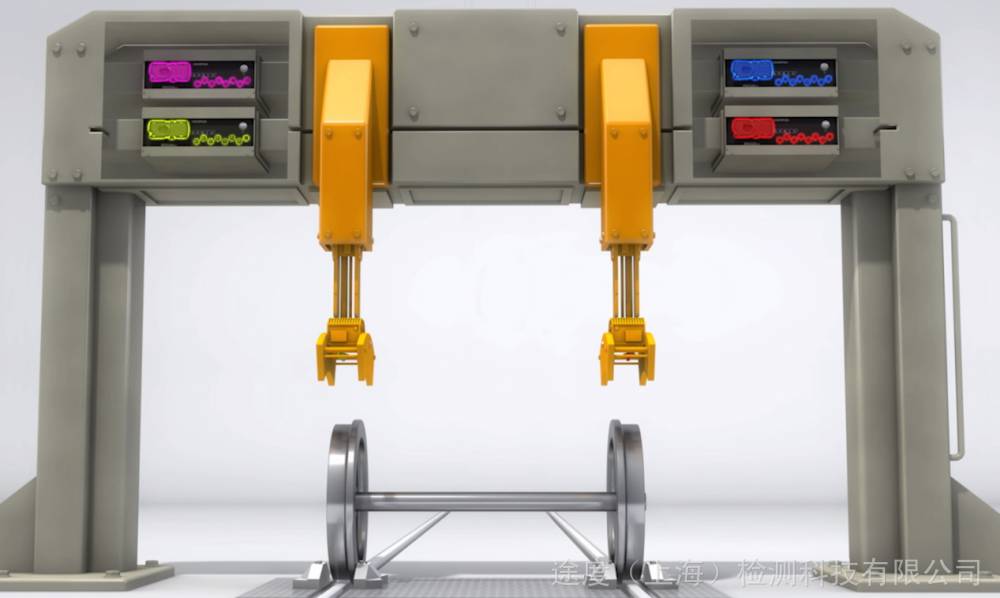
The Train Wheel Inspection System (WIS) is a fully-equipped turnkey inspection station that can be directly installed on the production line.
The train wheel is guided into the system horizontally, then, while rolling at low speed, it is thoroughly inspected by a phased array ultrasonic probe. After the inspection is complete, the train wheel is ejected from the system onto the track.
Main Components of the System:
|  |
Multi-functional, high-efficiency system
Advantages and Features
The feed roller is above the water level, which not only prevents wear but also simplifies maintenance operations.
Hydraulic units can accurately position height.
Full automation of train wheel control optimizes the detection cycle time.
The fixed arm prevents collisions with the conveying roller, thus eliminating misalignment and the need for frequent adjustments to the mechanical assembly.
Aboard electronic equipment reduces the length of probe cables
The dedicated software is very user-friendly.
The design of the user interface simplifies the workflow for train wheel inspection.
Open Platform Communications (OPC) specifications facilitate future system upgrades.
Inspection during the manufacturing process
In-service train wheels require regular reshaping repairs. During this process, the worn material on the wheel is removed and new material is added to restore the wheel to its original shape. After the reshaping work is completed, the wheel rim needs to be re-inspected using a linear phased array probe from the wheel tread, before the train wheel can be put back into service (Figure 3). Generally, a 5 MHz, 128-element phased array probe is used for linear scanning in such applications to cover the area that needs to be inspected (Figure 4).


Inspect wheel tread using linear phased array probe. Single linear scan.
Requirements
Radial defects:
1.0 mm flat bottom holes (FBH) for high-speed train wheels.
2.0 to 3.2mm flat bottom holes (FBH) for freight train wheels.
Different depths from the wheel tread surface.
Axial defect:
3.0mm or 5.0mm flat-bottom holes (FBH) located in the flange area.
No more than 3 defects at each different depth.
Performance
For freight train wheels, the inspection time for each wheel can be as low as 30 seconds.
- Fully covers the wheel tread and rim area.
For high-speed train wheels, the inspection time for each wheel can be as low as 3 minutes.
Thoroughly inspect the tread, rim, hub, and wheel rim areas.
Compliant with specifications
ESR 0331
EN 13262
AAR M107-84

RailView Software
PC-based RailView data collection and analysis software offers robust detection performance, advanced analysis tools, and fully customizable displays.

Data Collection and Analysis Software
RailView is a software specifically designed for inspecting train wheels, offering features to streamline the entire train wheel inspection process.
In designing our software, we pay special attention to ensuring the interface meets ergonomic standards. The Human-Machine Interface (HMI) provided by the system optimizes the workflow for train wheel inspections.
Software Features
The user interface design is designed to simplify the workflow for train wheel inspection.
Each probe features multiple beam groups
Assist with mechanical adjustment of the probe, including envelope readings and water layer measurement values
Cutting tools can optimize the probe's coverage range
Provide Calibration Assistance Tools
Time Correction Gain (TCG)
The system communicates with the 2nd-level software via OPC standards.
Offer multiple user levels
Automatically generated judgment results: Pass, Defective, or Retest
Primary Technical Specifications
System Performance
| Standard Product Range | Type | Cast Steel Wheel |
| Forged steel wheel | ||
| Dimensions | 30.5 cm to 124.5 cm wheel diameter | |
| Speed | Up to 100 mm/s to 200 mm/s | |
| Scope of Coverage | Inspect the rim from the tread and one face | |
The hubs are also inspected (wheel spokes can be inspected as per customer requirements). | ||
| 1mm diameter flat-bottomed hole | ||
| Near-surface resolution of 5 to 6 millimeters | ||
| Data View | Real-time detection results | C scan, A scan, B scan, strip chart, and alarm |
| Test Mode | Typical Testing Modes | Longitudinal wave |
| Typical defect detection capability for reference | Repeatability | Volume Defect: Flat Bottom Hole (FBH) with a diameter ranging from 1mm to 3.2mm, with a typical blind area of 5mm to 6mm. |
| Standard | EN13262、ISO5948、AAR M-107/M-208 | |
| Reports and Data Storage | Report Type | User-configurable testing, calibration, and calibration verification report |
| Storage | Real-time storage of test data into the database |