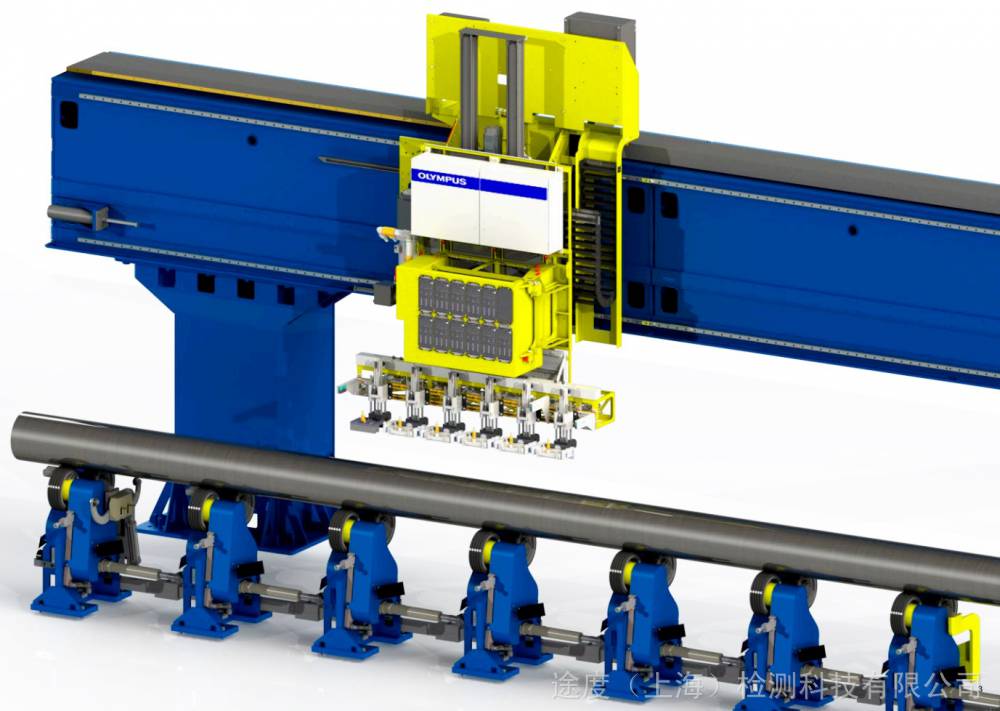










Rotary Tube Inspection System (RTIS) -- Phased Array Automatic Inspection System
The Rotating Tube Inspection System (RTIS) is a turnkey solution that integrates phased array probes into an automatic inspection system, meeting clients' very stringent requirements for volume and surface inspection of tubes. Its main advantages include:
Automatic calibration feature reduces reliance on operator skills
Calibration checks allow for defects to be detected at production speed.
Major oil companies are all familiar with this testing system.
Detection of oblique defects meets existing and pending industrial standards.
Utilizing 2D imaging and tube-end inspection capabilities, the system's detection performance is fully leveraged.

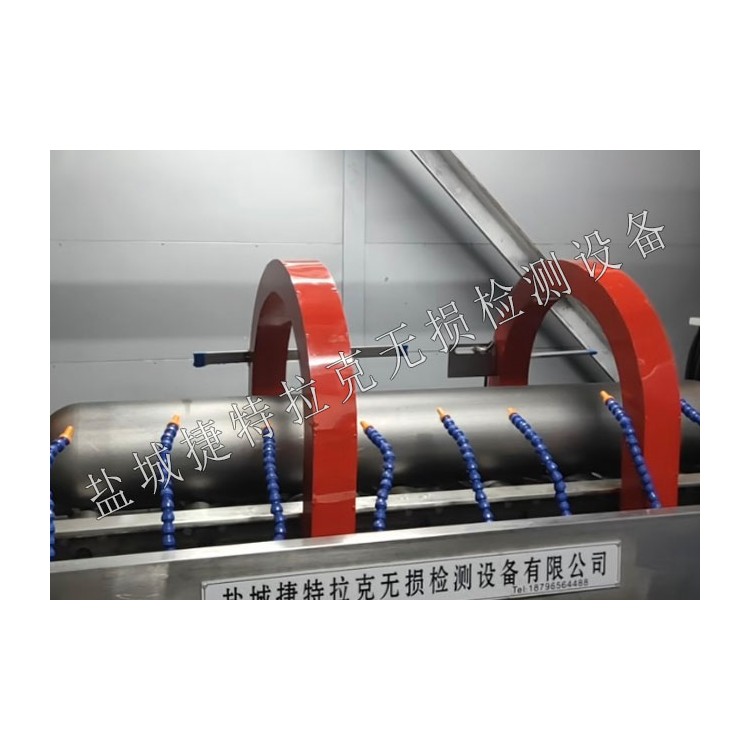
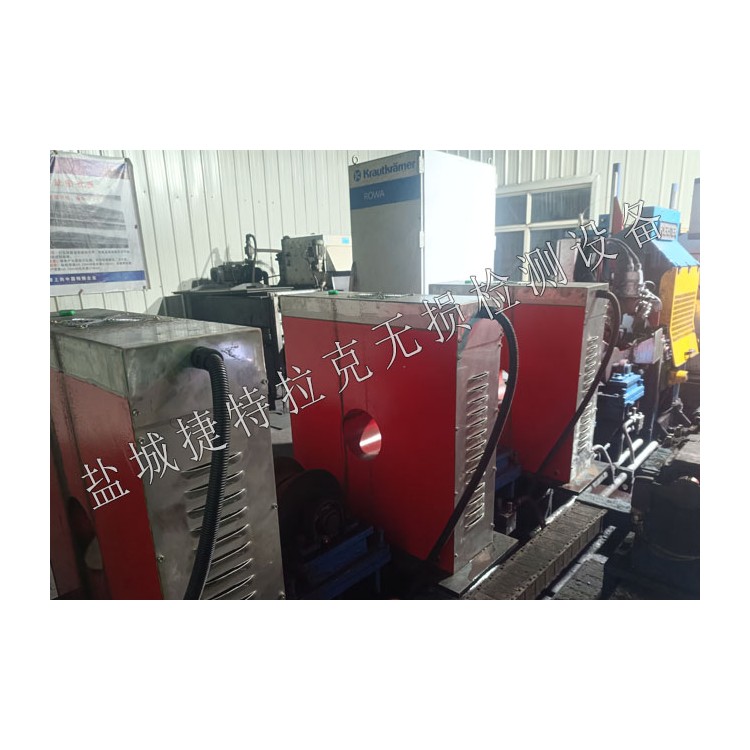
The design of the RTIS testing system aims to provide a user-friendly solution to ensure the quality of seamless pipe and resistance-welded pipe materials meets the required standards. The RTIS system includes the following components:
Specialized Project Management
Instruments, probes, and mechanical equipment
Water Management System
Software
Adjustment, Training, and After-Sales Support
Full tube body inspection
Inspect longitudinal, lateral, diagonal, and layered defects, and measure the wall thickness of the pipe.
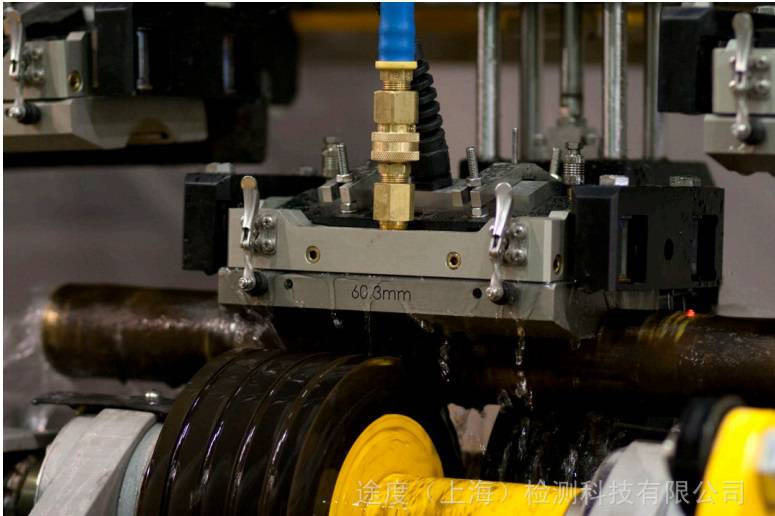
The innovative and unique water wedge can rotate freely at various angles with the movement of the pipe, thereby providing an excellent coupling effect.
Only a very small untested area (blind spot) is left at the ends of the piping.
After automatic calibration, highly reproducible results can be achieved.
For minor reference defects, it offers high sensitivity, with a signal-to-noise ratio greater than 12 dB.
Meets the requirements specified in the inspection specifications (API-5CT and API-5L)


Vertical Horizontal Diagonal
Enhance productivity
The RTIS system boasts strong adaptability and can be configured for various types of inspections.
The quantity of inspection heads and electronic equipment can be adjusted to achieve the desired production capacity level.
Can trigger up to 4 apertures simultaneously on each phased array probe.
Larger mechanical scan overlap area, up to 120mm overlap per rotation
Automatic Calibration
To comprehensively inspect piping, it is necessary to calibrate each phased array (PA) probe. During the calibration process, each probe's apertures must scan a known defect, after which the probe's gain level is automatically adjusted. The automatic calibration feature allows for convenient precise calibration of each focusing rule, and verification of the calibration, thereby saving a great deal of time and not requiring reliance on the operator's skill level.
All probes can be calibrated in an automated sequence.
Calibrate and verify under normal production conditions
Each reference defect must be verified to ensure that all defects exceeding the alarm level are detected.
Test results are displayed in easily interpretable strip charts and weld imaging views.

Multiple phased array probes, powerful collection equipment, and advanced software are combined to create a high-performance and user-friendly detection system.
Phased Array Acquisition Equipment
QuickScan PA 32:256 module meets IP55 rating standards and can be easily integrated into industrial environments.

Convenient settings
QuickView software allows for easy system setup, data collection, and management.
The software wizard simplifies the process of setting up configurations for detecting pipes of various sizes. Each pipe diameter's detection settings and calibration parameters are saved and can be easily retrieved and accessed. The final detection results are consolidated and displayed on the screen, clearly distinguishing between qualified and unqualified pipes.
Quick Access to Predefined Test Settings
The wizard in the software assists in easily creating new settings.
The software features permission management capabilities, helping to minimize operator errors to the fullest extent.
Calibration and testing information is stored for traceability purposes.
The software generates collection files for each inspected pipe material, which can then be stored locally on a computer or remotely.
Customizable report features and advanced processing control tools
Clear results
After testing, the results are merged and displayed on the screen, clearly distinguishing between qualified and unqualified pipe materials.
Real-time strip chart display aids in easily interpreting test results
When testing tubes of various sizes, the system can be quickly reconfigured.
Create detailed reports on alarms and data
Supervisor software can merge and archive data within the same database, consolidating results and views into a single work station.
Easily connect two production line systems

Key Technical Specifications