












OmniScan MX - Field-verified, reliable instrument
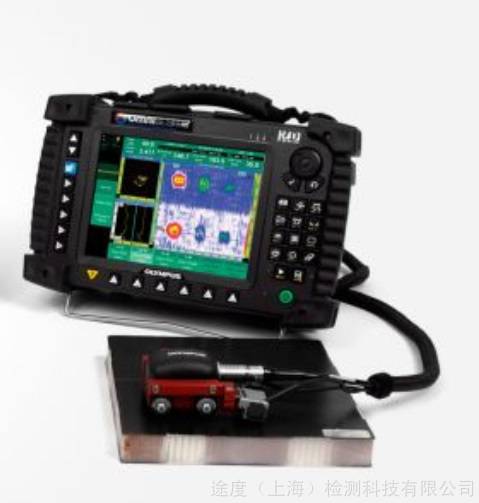
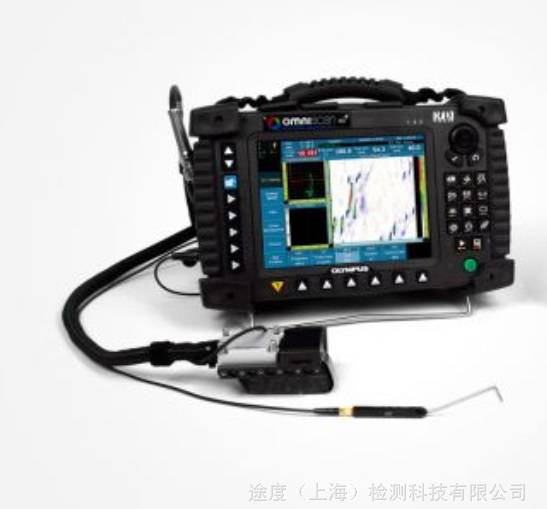
OmniScan MX is a field-verified, reliable instrument with a robust and durable design, capable of operating normally in harsh and severe testing environments; there are thousands of OmniScan MX instruments in use worldwide. Compact and lightweight, this unit operates on two lithium-ion batteries, allowing for up to 6 hours of manual or semi-automatic testing on a full charge.
The 8.4-inch display of the OmniScan MX instrument can show high-definition color images in real-time, allowing operators to view defects and their minute details under most lighting conditions. Users can easily navigate the instrument's simple and intuitive interface using the flywheel knob and function keys, or connect a USB mouse to the instrument for convenient analysis of the test data.

One platform, two modules, three technologies: Enhanced flexibility and applicability
To meet a wider range of application requirements, both modules offer Eddy Current Testing (ECT), Eddy Current Array (ECA), and Bond Testing (BT) C-Scan technology. Both modules are compatible with MXE (ECT/ECA) and MXB (BT C-Scan) software; this is achieved with a simple switch between technologies and minimal training for operators.


Standard ECT Eddy Current Array Bonding Inspection C-Scan
√ 不被支持 √
√ √ √
Supports most Nortec probes; supports 32 airborne channels; requires an external multi-adapter and scanner
When converting to a road converter, it supports up to 64 channels.

ECT4 Module
ECA4-32 Module
The OmniScan MX AeroECA is identical to the ECT.
Wide coverage, fast scanning speed, high detection probability
ECA (eddy current array) technology integrates multiple traditional bridge or reflective (transmitter-receiver) probe coil configurations to cover a wider range in a single scan. Additionally, each ECA probe model is meticulously designed to maintain a high detection rate within the target defect range along the probe's length. Users can manually move the ECA probe at a very fast pace for inspection using the OmniScan MX ECA flaw detector, and with the aid of color imaging and archiving capabilities, they can complete powerful and efficient inspections.


Single coil: Grating Scan
Array probe: Single-line Scan
Inspect through a thin coating
Eddy Current Testing (ECT) technology operates on the following magnetic coupling principle: A probe sensor (coil) close to the workpiece being tested (ferromagnetic or non-ferromagnetic conductive material) generates eddy currents within the workpiece, which are then displayed as signals on the instrument's impedance graph. When using eddy current technology, defects within the material can be detected through thin coatings (such as paint layers) as long as the probe maintains a reasonable close distance to the metal, typically between 0.5 mm and 2.0 mm.

ECA (eddy current array) and ECT (eddy current testing) technologies are based on the same fundamental principles (and physics theories), allowing for detection through paint layers. ECA technology also boasts the following advantages: broad coverage, fast scanning speed, high detection probability, and the capability for color imaging.

Inspect through a thin coating
The probe used for eddy current detection is a coil made of copper wire. The coil shape can be varied to better suit specific applications.
AC current flows through the coil at the selected frequency, generating a magnetic field around it.
As the coil approaches conductive material, induced eddy currents are generated within the material.
If defects in the conductive material interfere with the flow of eddy currents, the probe's magnetic coupling effect will change. Impedance changes in the coil can be used to interpret defect signals.