






This not only re-hardens the old concrete surface to compensate for the insufficient strength of the original concrete, but more importantly, it transforms the interface between old and new concrete into a single entity, significantly enhancing the bonding strength.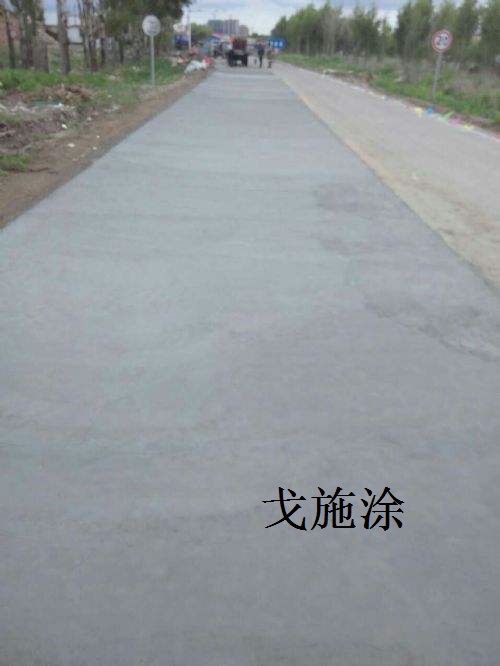
Polypropylene Emulsion Mortar is a short name for acrylic copolymer emulsion cement mortar, which is a modified cement mortar with high polymer emulsion. The cement should be of 32.5R grade or higher ordinary silicate cement; the sand should be local river sand with particle size less than 2.5, a fineness modulus of 1.6, fine sand, and should be sieved. The solid content of the polymer polypropylene emulsion is 39~48%, and the total water content of the mortar should consider the water content in the polypropylene emulsion.
The positioning of the reinforced mesh and the thickness of the mortar layer should be carefully aligned according to the design to prevent cracking.
Reinforced concrete structures, with the enhancement of construction standards and the impact of corrosive environments, demand higher durability from bridge structures. High-performance composite mortar mesh, as a repair composite material, boasts numerous superior properties that cannot be matched by conventional cement mortar, and has a vast scope of engineering applications.
Polypropylene Emulsion Mortar Construction Technique
Polypropylene mortar is easy to apply, with simple mixing, and can be applied using both manual troweling and mechanical spraying methods. As long as the key construction and maintenance requirements are mastered, the construction quality is easily ensured. Below, we only introduce the main construction process requirements for the manual troweling method.
WeChat Official Account

Scan to follow Official Account