










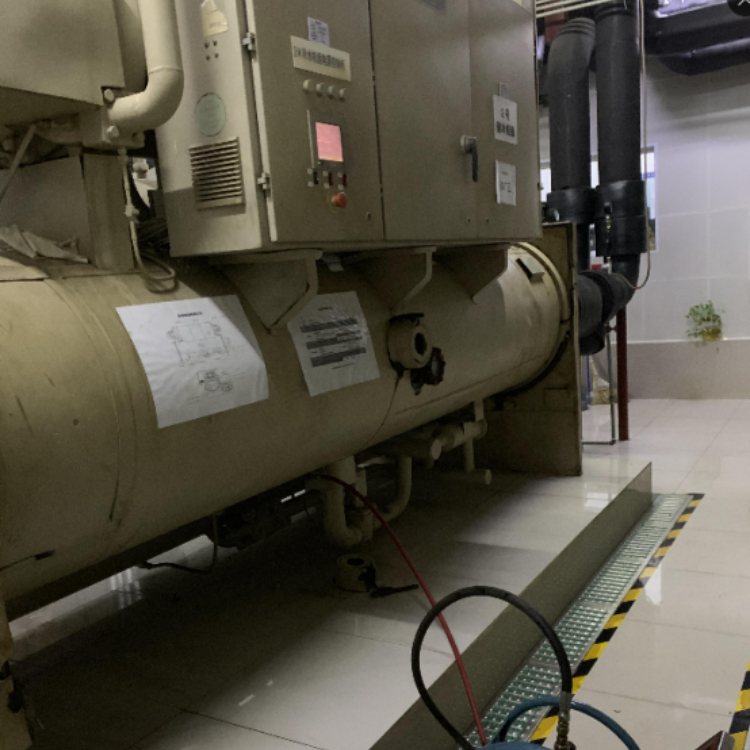
Failure Analysis of Screw Compressors
1Oil deficiency: The oil film inside the compressor is thin or absent, causing the lubricating function to disappear. Dry friction occurs between mechanical components, resulting in severe wear. The debris worn off becomes abrasive sand, leading to even more severe wear. This恶性循环 causes100%Final bearing housing.
2The refrigeration system is dirty: The dirt itself causes wear between the compressor components, with a single particle equivalent to a sharp knife, leading to an increasing number of particles being scraped off and ultimately causing the shaft to seize.
3Oil filter clog: Causes return oil issues, leading to poor lubrication and accelerated wear, resulting in shaft seizure
4Bearings Wear: The wear of the bearings causes the screw shaft to deviate from its original center, leading to an axis skew. This results in a reduced gap on one side between the screw shaft and the bearing housing, disrupting the lubricating effect of the oil film.;Additionally, the wear of the bearings causes the screw to have reduced axial and radial positioning effects, leading to screw movement. This results in wear on the compressor's compression chamber and high-pressure end face, and may also cause the shaft to seize or scrape.
5Oil aging: As the oil fails to provide lubrication and dissipate heat, and the temperature greatly affects the oil's performance, this leads to the degradation of the oil's properties, causing increased friction.100%Ultimately lead to bearing failure
6System Low on Refrigerant: Once the refrigerant is depleted, heat accumulates in the compressor, causing the temperature to rise, which in turn reduces the oil's viscosity, impairing its lubricating function and leading to wear.
7High condensation temperature: Affects oil viscosity, leading to wear.
8Overheated load: Affects oil viscosity, leading to wear.