
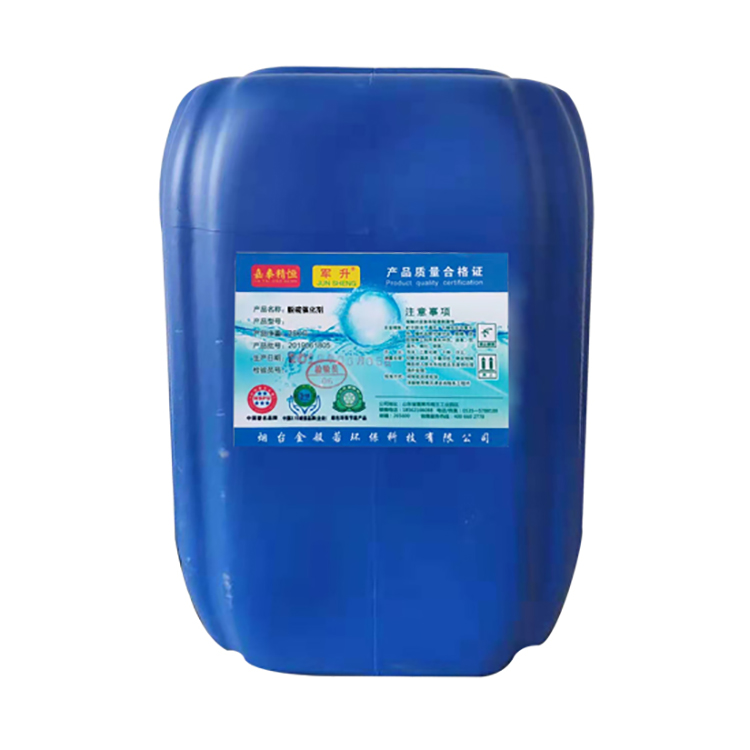
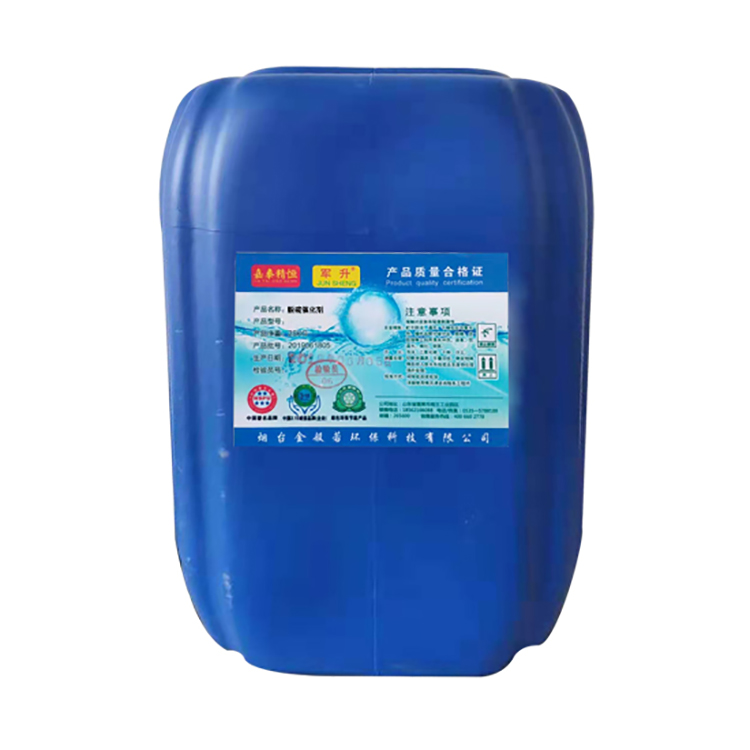
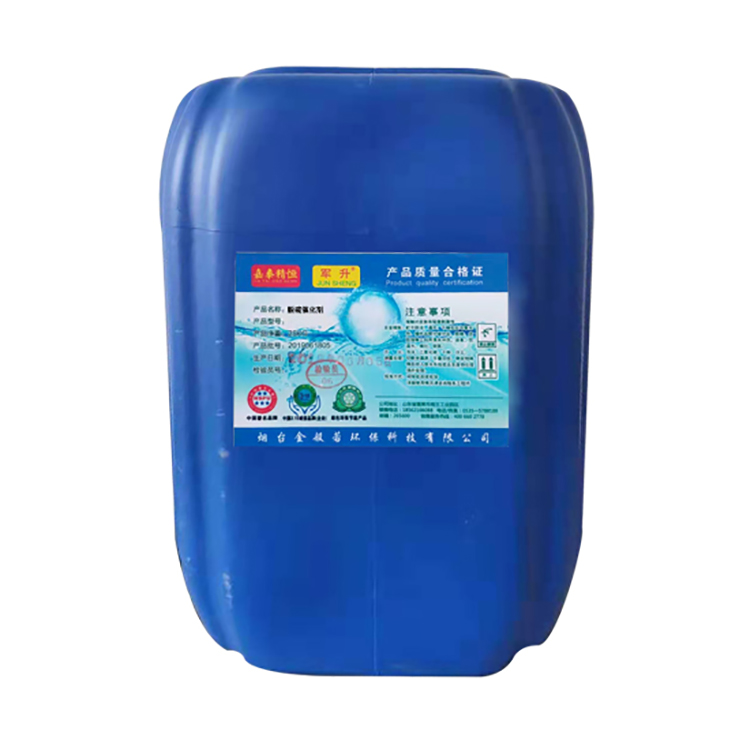










JS- 902 Desulfurization Catalyst
Section 1: Application Background of Desulfurization Catalyst
Among various flue gas desulfurization technologies, wet flue gas desulfurization has always held a dominant position. Currently, wet desulfurization units account for about 80% of the desulfurization facilities built worldwide. Although the wet desulfurization technology is mature with high desulfurization efficiency, it also has drawbacks such as high initial investment, high operating costs, and equipment prone to scaling and clogging. Some desulfurization facilities in China, due to the low solubility of limestone, affect mass transfer efficiency, resulting in a higher liquid-gas ratio in the system design. The actual Ca/S ratio is generally higher, increasing system investment and operating energy consumption and reducing the utilization rate of limestone, thereby increasing the desulfurization cost of power plants. Moreover, the system is unstable; once the limestone slurry supply system fails, the desulfurization rate drops rapidly after entering the low pH stage, severely affecting environmental protection standards for emissions. Additionally, with significant fluctuations in domestic coal supply in recent years, the actual sulfur content of coal arriving at the plant is much higher than the design value, which can greatly impact the desulfurization system. Not only does the desulfurization efficiency fail to meet the design value, but also due to the excessive system load, the material balance of the desulfurization system cannot be maintained at a basic level, forcing the bypass damper to be opened, leading to a large amount of flue gas being emitted without desulfurization, which does not meet environmental protection requirements. Therefore, the research on expanding the capacity of existing desulfurization systems has become a very urgent issue for power plants. In wet desulfurization technology, by adding an appropriate amount of desulfurization additive or efficiency catalyst, the chemical reaction and mass transfer processes can be significantly improved. It promotes the dissolution of CaCO3, buffers the decrease in slurry pH, promotes the dissolution of SO2, and accelerates the chemical absorption of SO2. It can significantly reduce the vapor pressure of water vapor, decrease the evaporation rate, and extend the desulfurization efficiency. This can increase desulfurization efficiency, improve the utilization rate of desulfurizing agents, thereby reducing operating costs. Additionally, it can slow down the scaling and clogging rate of calcium, thus improving the reliability of the system.
In response to the aforementioned situation, Yantai Jinbanruo Environmental Protection Technology Co., Ltd. has introduced a series of desulfurization catalysts from a U.S. energy company to enhance the desulfurization operation efficiency and strengthen the desulfurization process. Without modifying or upgrading the existing desulfurization equipment, the company employs desulfurization additives to increase the desulfurization rate of the equipment, improve the utilization rate of limestone, reduce the consumption of limestone, achieve energy conservation and efficiency, and bring about favorable economic and social benefits to the enterprise.
◆Section 2: Desulfurization Catalyst Working Principle
In terms of chemical concepts, the wet desulfurization reaction process is limited by two pH values: (1) a low pH at the gas-liquid interface, which reduces the dissolution and absorption rate of sulfur dioxide; (2) a high pH at the solid-liquid interface, which dissolves and dissociates CaCO3.
When using desulfurization agents, adjusting the pH can enhance mass transfer and diffusion. Due to the limited solubility of SO2 and the solid CaCO3, the addition of desulfurization agents introduces basic groups, strengthening the mass transfer factor of the liquid film. This not only promotes the dissolution of CaCO3 and increases its dissociation rate, reduces phase resistance, but also facilitates the dissolution of sulfur dioxide, decreasing gas phase resistance. The addition of desulfurization catalysts enhances the dissociation of various compounds. Additionally, the presence of desulfurization catalysts is beneficial for the precipitation of CaCO3, enabling the limestone slurry to recycle and absorb SO2, thereby repeating the desulfurization reaction. The desulfurization catalyst plays a role similar to that of a catalyst in the preparation process.
◆ Section 3: Desulfurization Additive - Benefits and Functions of Efficiency Catalyst● Enhance desulfurization efficiency without the need for equipment expansion or modification; increase the gas-liquid mass transfer rate of sulfur dioxide to strengthen absorption and improve desulfurization rate. At the gas-liquid interface, the catalyst can combine with the large amount of H+ ions produced by the dissolution of SO2, transferring the H+ ions from the liquid film to the bulk liquid phase, preventing a rapid decrease in the pH of the slurry due to the dissolution of SO2. At the same time, the gas phase resistance is reduced, promoting the absorption of SO2.
Energy-saving and consumption reduction (savings in factory electricity)
With the sulfur dioxide concentration at the inlet of the desulfurization unit within the design range, first, the circulating pump of part of the absorption tower slurry can be shut down, which relatively reduces the liquid-gas ratio required by the system, lowering the factory's electricity consumption rate for desulfurization, thereby effectively reducing both the operation and maintenance costs of the desulfurization system; secondly, it can save energy consumption of the ball mill in the pulp-making system, effectively improving the utilization rate of coarse-grained limestone (250 mesh), and basically achieve the same desulfurization efficiency as that of limestone with a particle size of 325 mesh.
Reduce limestone usage
Enhance the utilization of desulfurizing agents to reduce their consumption. Catalysts can increase the solubility of limestone in the liquid phase, enhancing its dissolution. At the solid-liquid interface, catalysts provide an acidic environment conducive to the dissolution of CaCO3, reduce the resistance in the liquid phase, and promote the dissolution of limestone.
Enhance the flexibility of coal-fired adjustment and desulfurization operations, as well as backup systems.
Due to the limited solubility of SO2 and solid CaCO3, the addition of desulfurization catalysts provides basic groups, enhancing the mass transfer factor of the liquid film. This not only promotes the dissolution of CaCO3 and increases its dissociation rate, reducing the liquid phase resistance, but also prevents the slurry pH from dropping too quickly due to the dissolution of SO2. When using desulfurization catalysts, the desulfurization system can operate at lower pH levels, increasing the flexibility and stability of the main engine coal adjustment and desulfurization system operations; it also improves the dispersibility of limestone, reducing scaling on equipment.
Active ingredients in the catalyst can enhance the surface activity of limestone, improve its dispersibility, reduce sedimentation speed, and minimize scaling and clogging in equipment. It extends the effective period and desulfurization time of desulfurizing additives, boosts oxidation efficiency, decreases the content of sulfite, and improves the dehydration efficiency of the vacuum belt machine.
◆Product Line
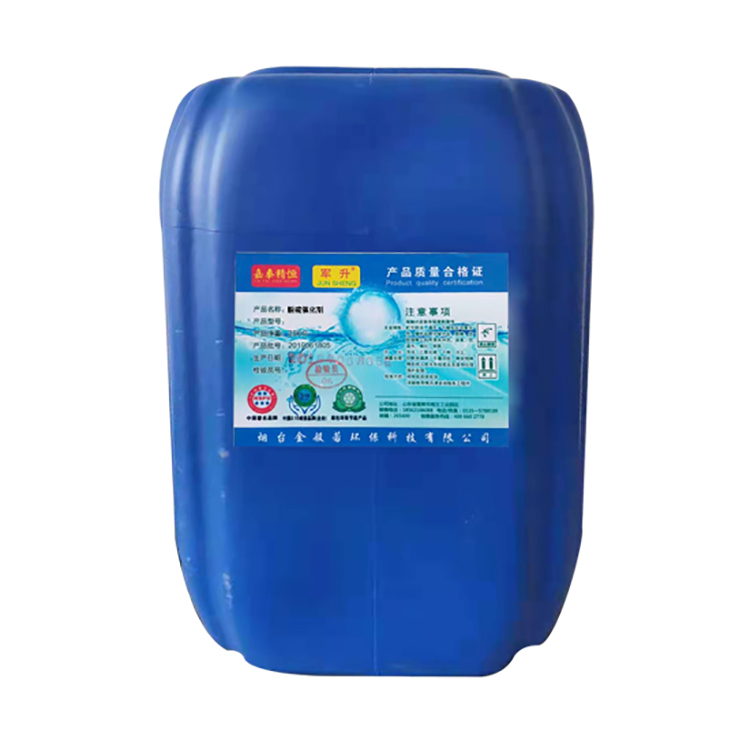
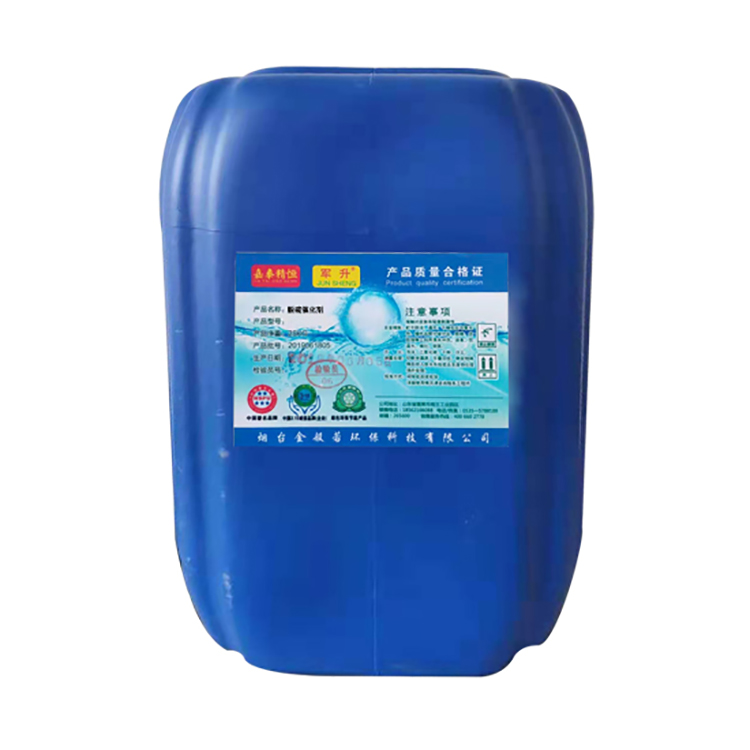
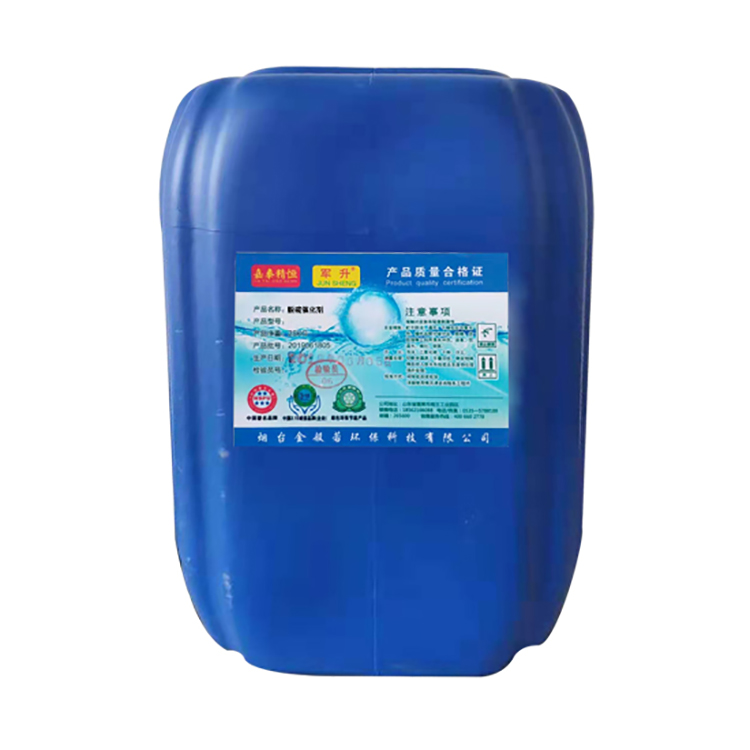
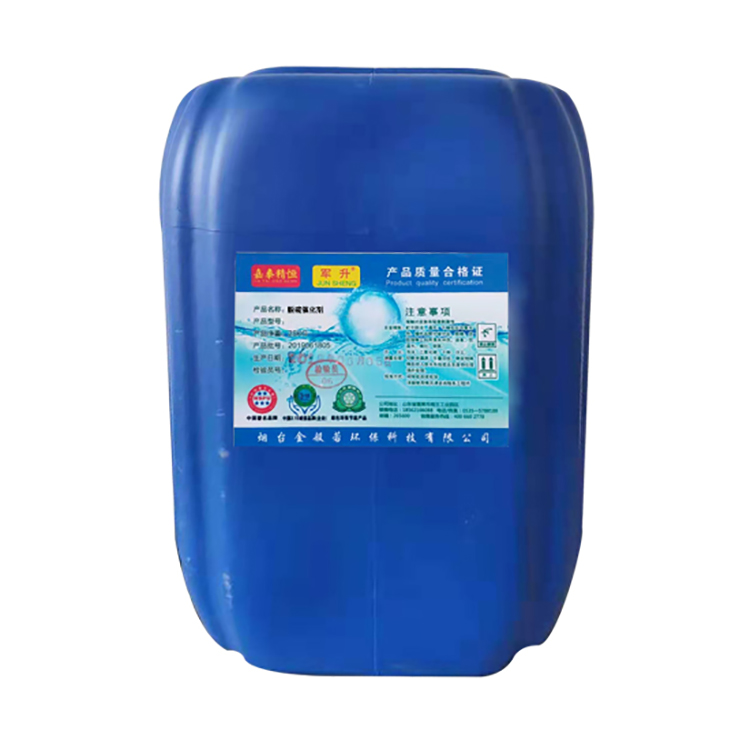
Yantai Jinbanruo Environmental Protection Technology Co., Ltd. offers three product series based on varying effective component content and addition methods: JS-902A, 902B, and 902C liquids, as well as -Flue Gas Desulfurization Additive- and -Efficiency Catalyst-.
◆Composition: The desulfurization efficiency catalyst is a complex mixture composed of related catalysts of similar families imported from the United States, high molecular weight hydroxide salts, and activators.
◆ Physical and Chemical Specifications
Project | JS-902A | JS-902B | JS-902C |
Active Ingredient | ≥98 | ≥98 | ≥98 |
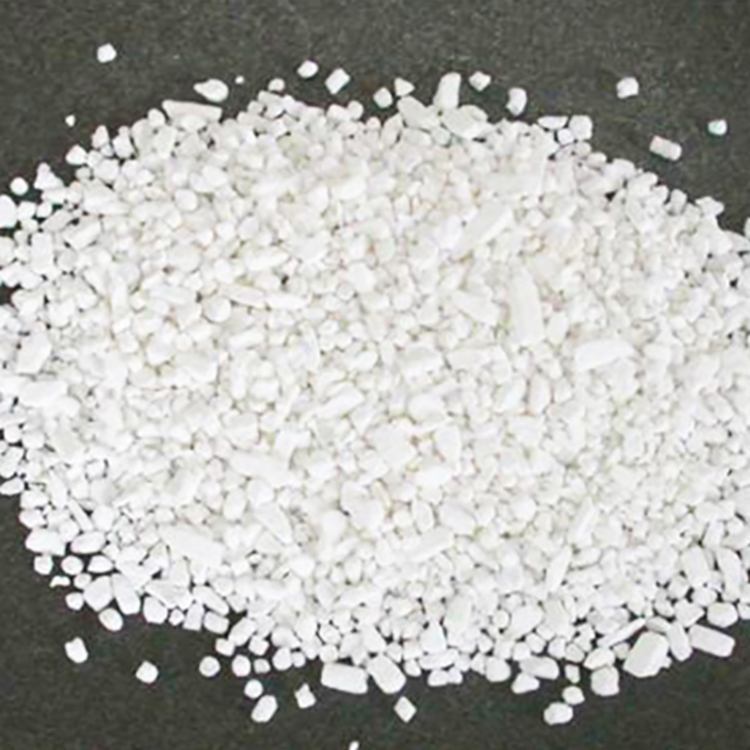
Properties | Colorless or amber liquid | Colorless or amber liquid | Colorless or amber liquid |
Density:(P20℃) | 1.0-1.18 | 1.0-1.05 | 1.0-1.18 |
pH level | ≥10 | ≥10 | ≥2.0 |
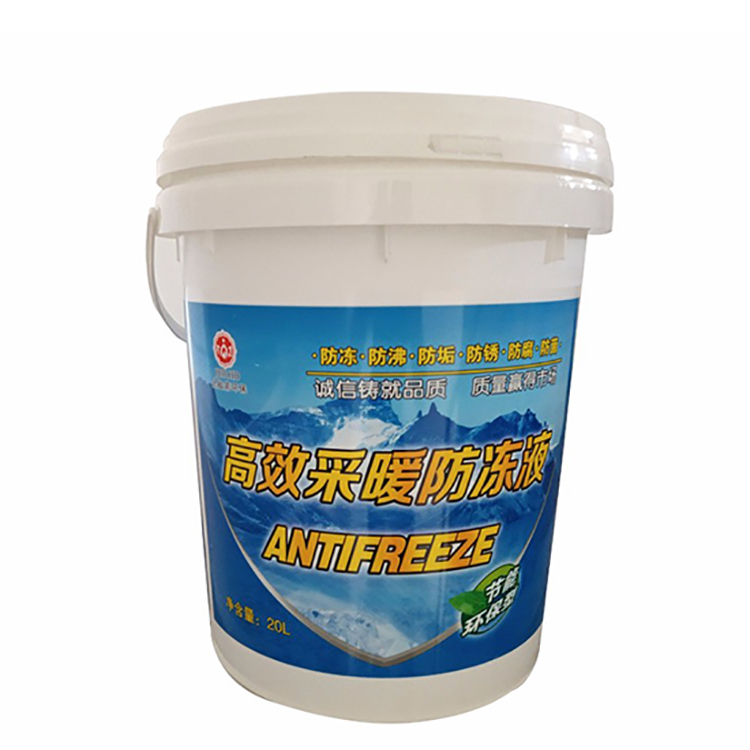
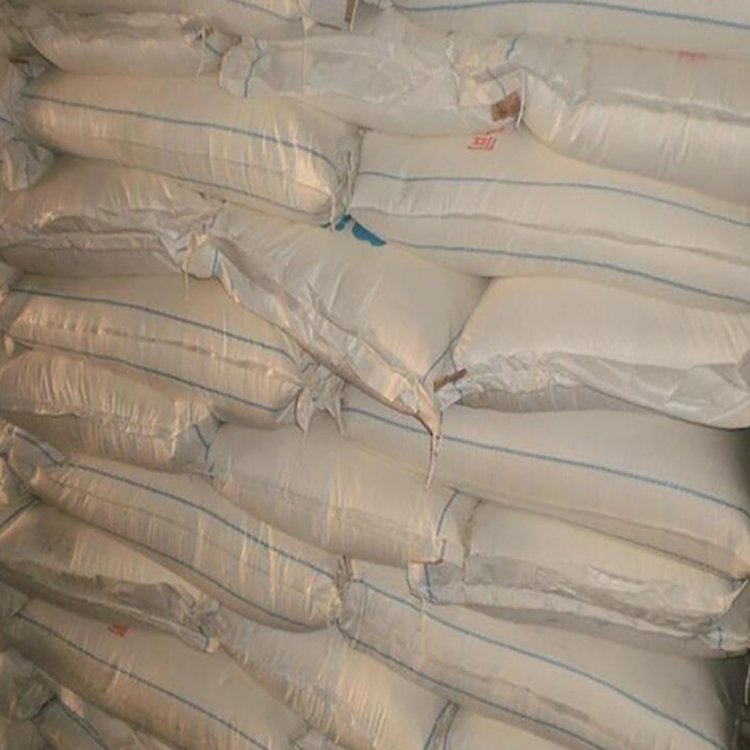
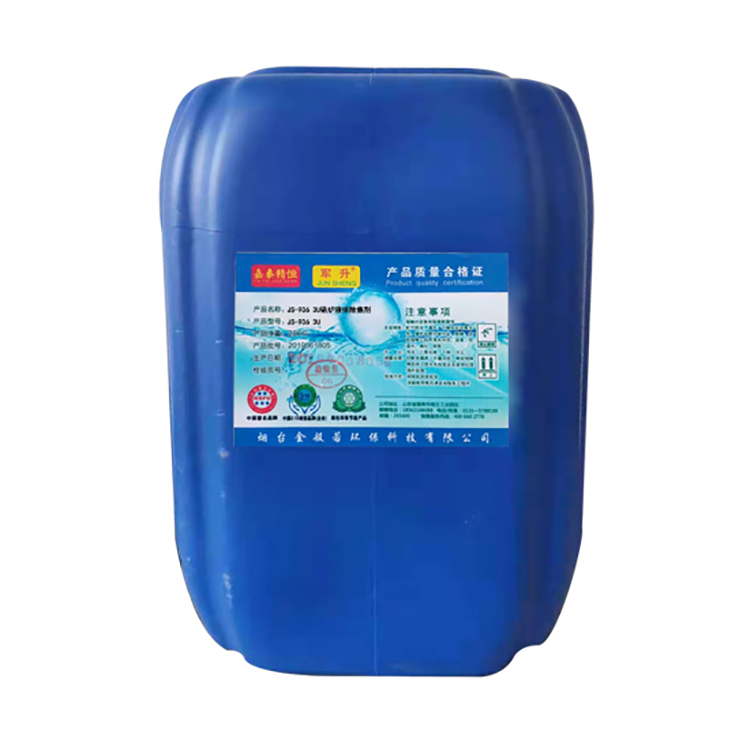
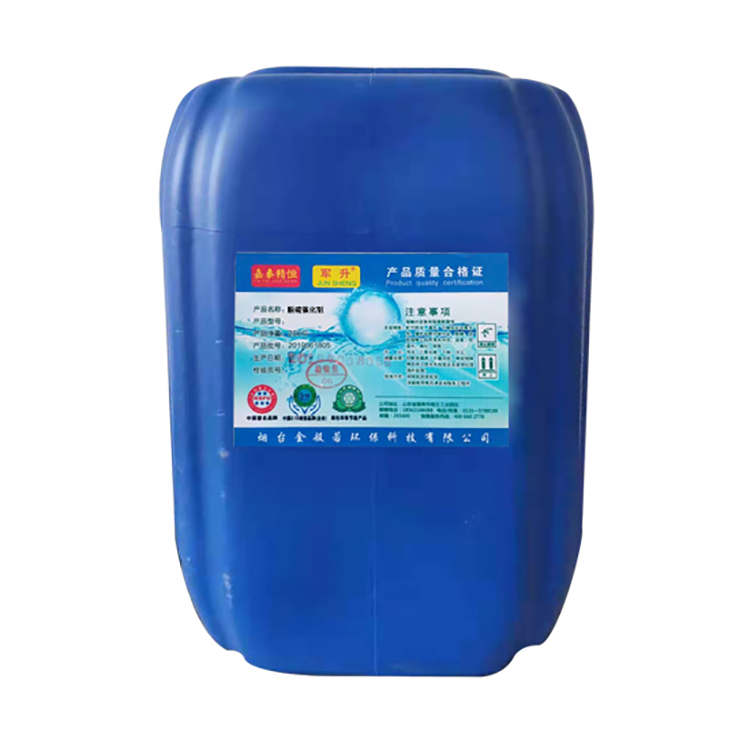
◆ Packaging: 200kg/bucket, 25kg/bucket (custom packaging available upon customer request).
◆Storage and Transportation: Store in a cool, dry, well-ventilated warehouse, away from heat sources.
◆ Instructions for Use:
JS-902A Desulfurization Catalyst is primarily used as an auxiliary desulfurization additive. It enhances the effectiveness of the desulfurization additive, extends its service life and effectiveness in the desulfurization slurry pond, and addresses the shortcomings of the desulfurization additive, ensuring its full potential is realized. Added to the lime slurry pond and ground pit at a rate of 100-500 PPM based on the lime slurry volume.
The JS-902B desulfurization catalyst is primarily used as an auxiliary desulfurization additive, and can also be used independently as a desulfurization additive. It enhances the effectiveness of the desulfurization additive, extending its service life and effectiveness in the desulfurization slurry pond. It addresses the shortcomings of the desulfurization additive, ensuring that its full effectiveness is realized. It is added at a rate of 100-500 PPM based on the lime slurry volume and in the pit. When used independently as a desulfurization additive, the dosage is 300-600 PPM.
The JS-902C desulfurization catalyst is primarily used as an auxiliary desulfurizing additive and can also be used alone as a desulfurizing additive. It enhances the effectiveness of desulfurizing additives, extending their lifespan and performance in the desulfurization slurry pond. It addresses the shortcomings of desulfurizing additives, ensuring that the desulfurization rate is fully utilized. It is added to the lime slurry pond and ground pit at a rate of 100-500 PPM based on the lime slurry volume. When used alone as a desulfurizing additive, the dosage is 300-600 PPM.