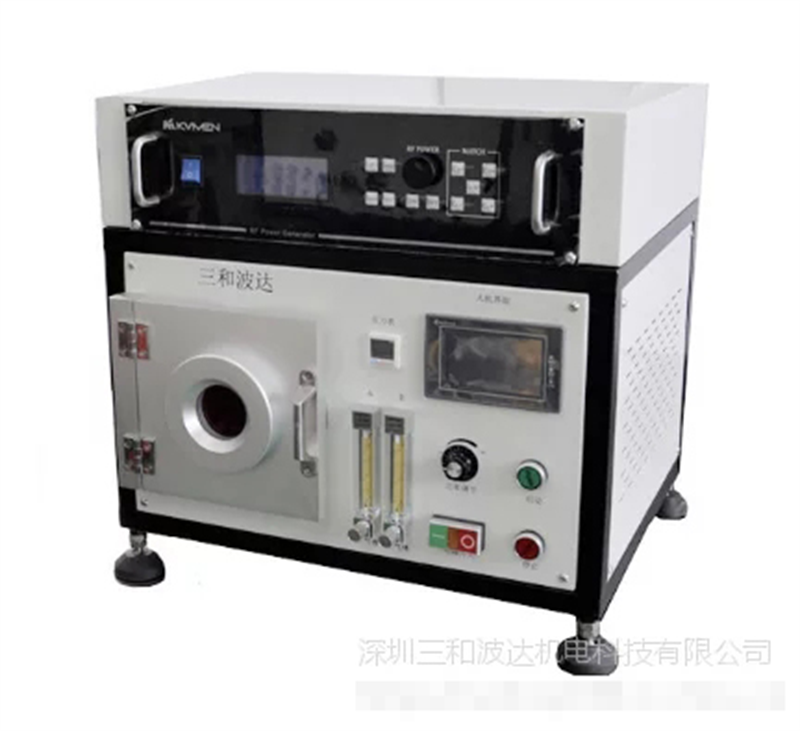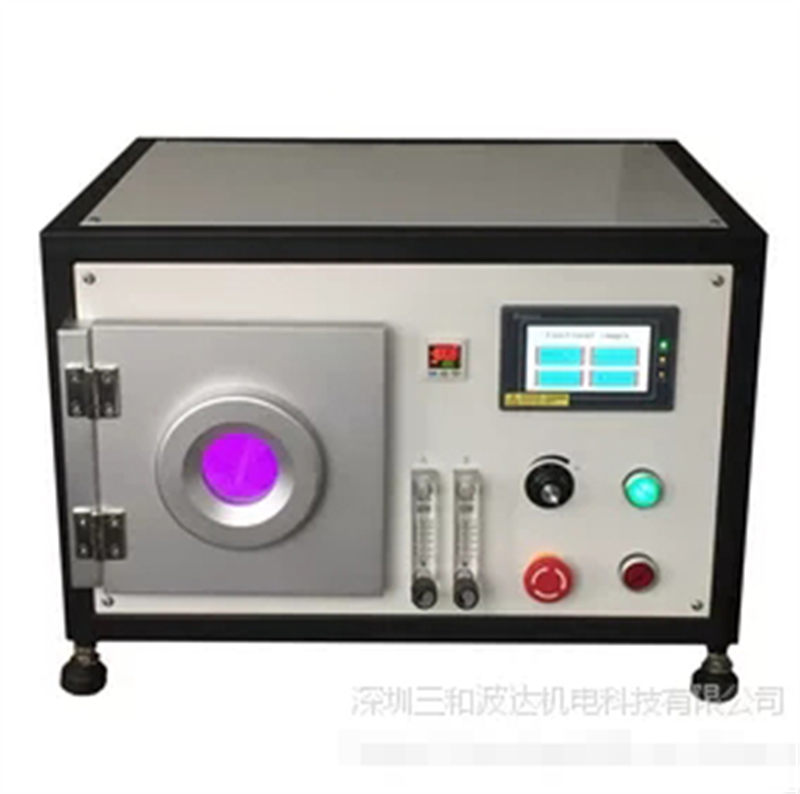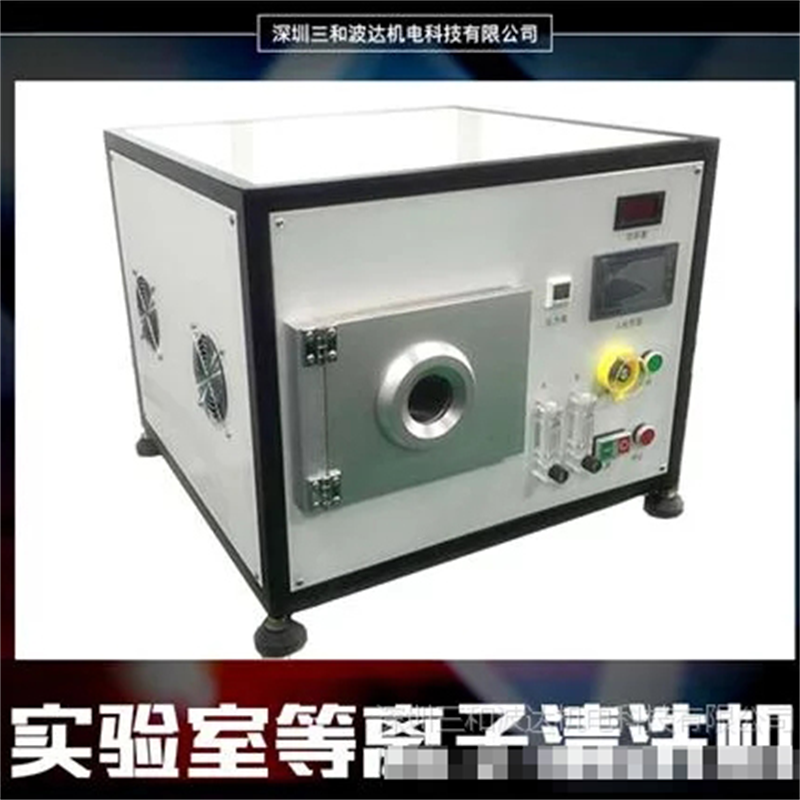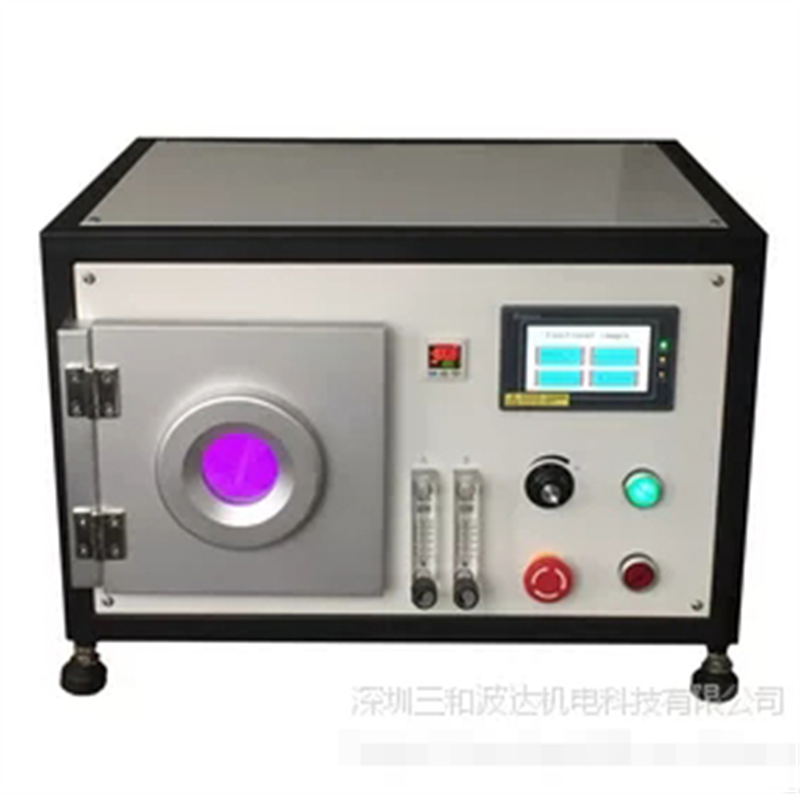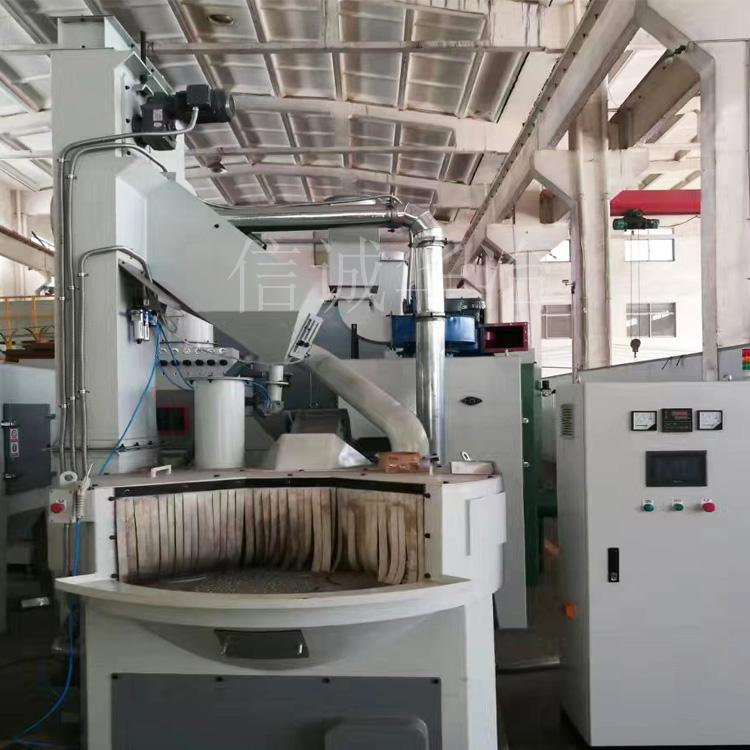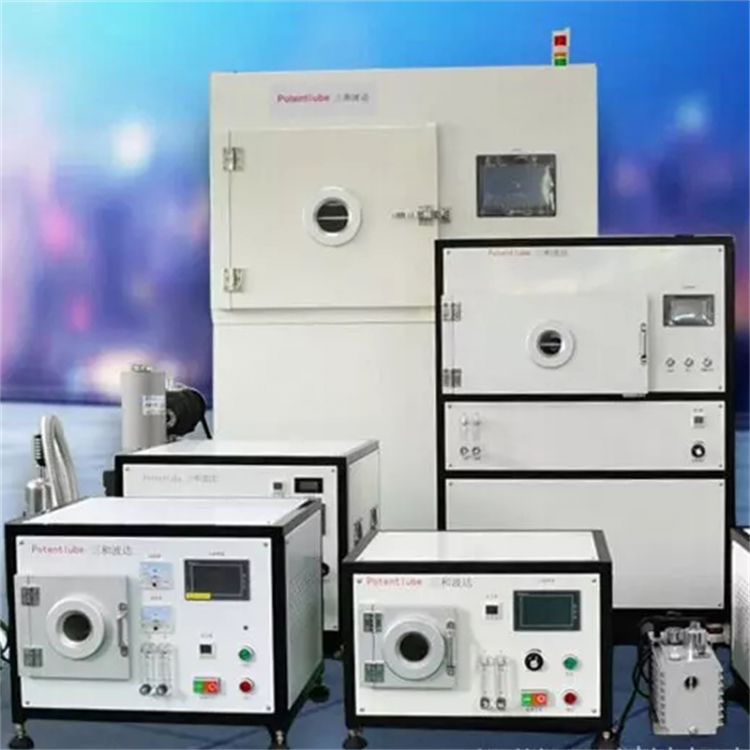

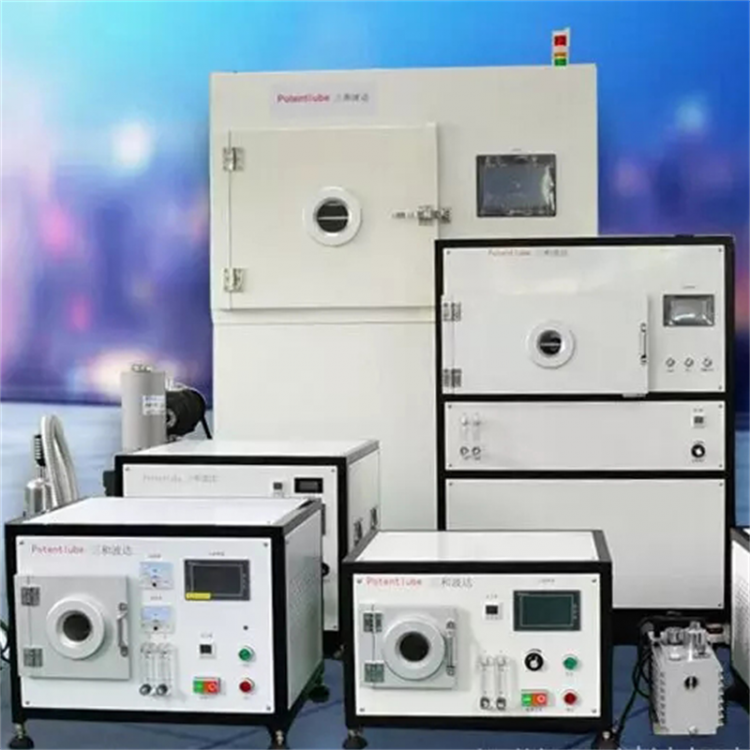
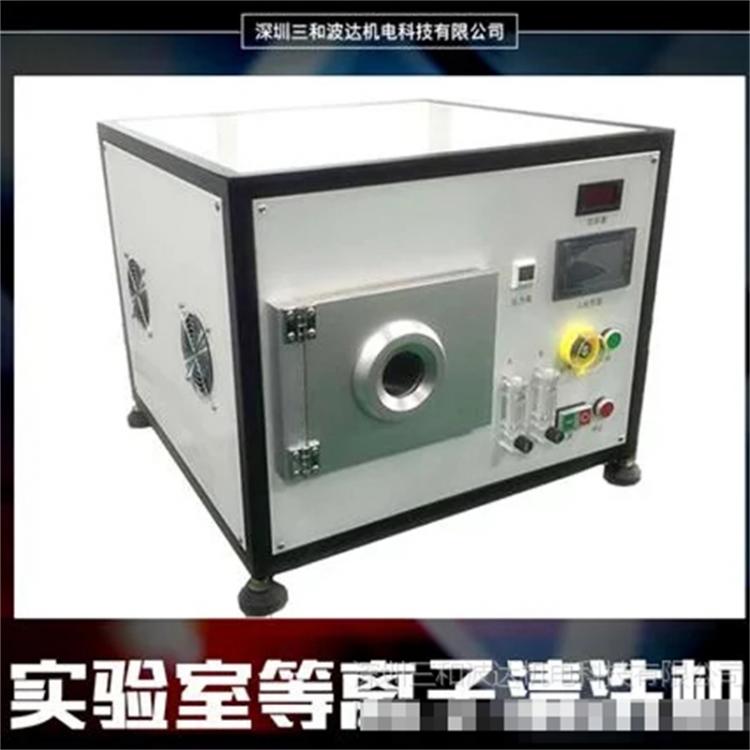
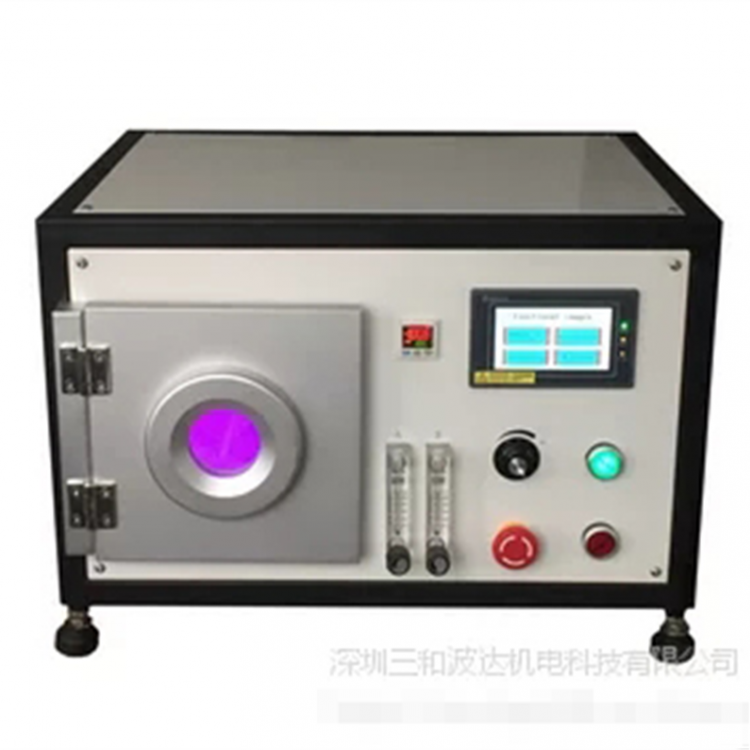







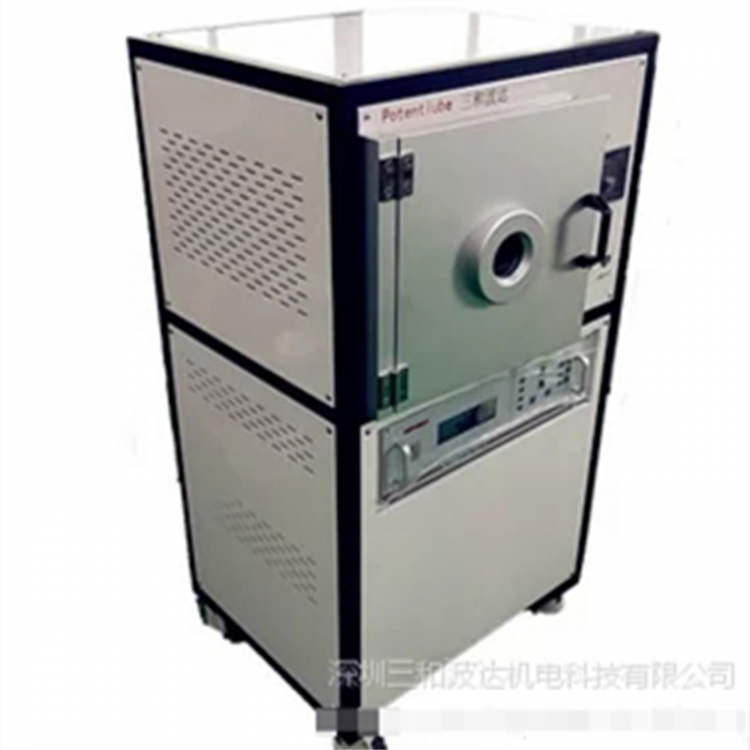
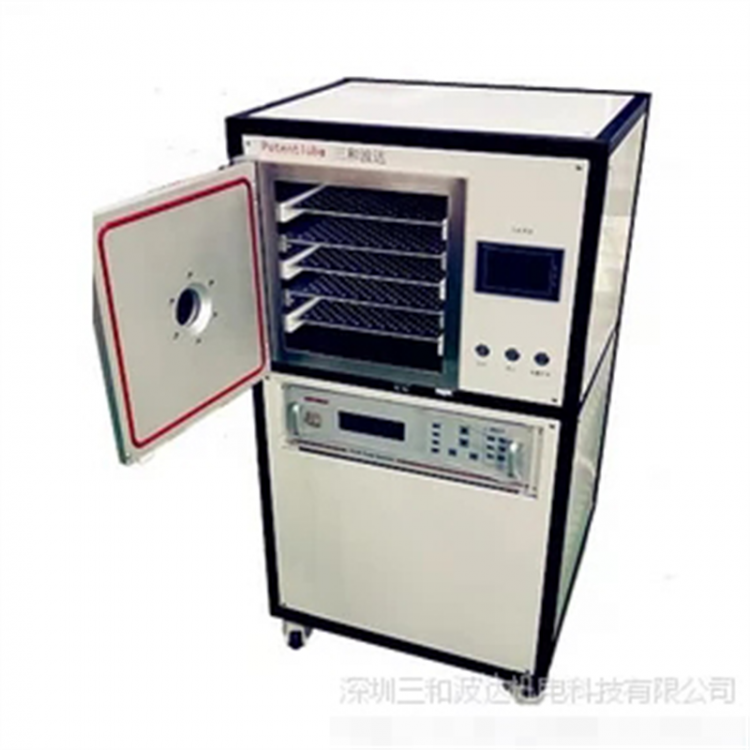
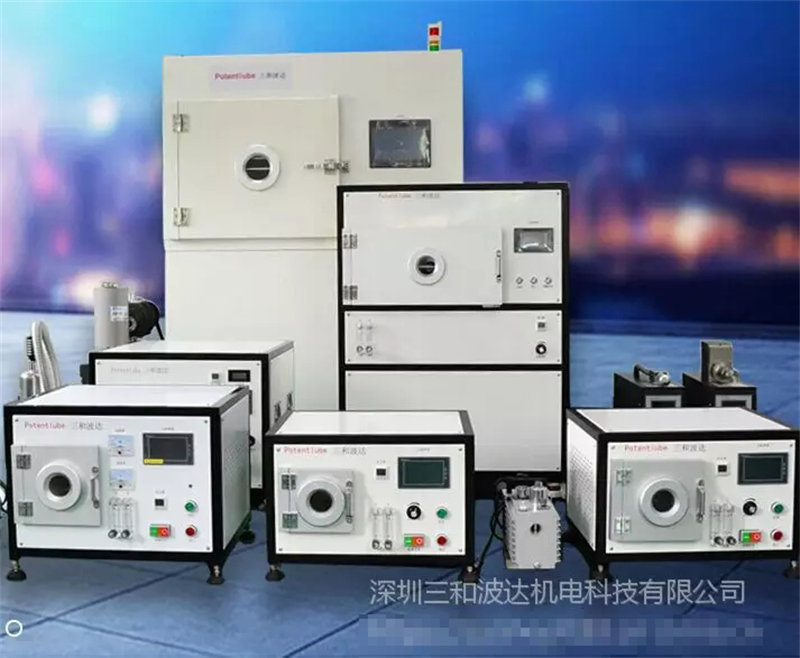
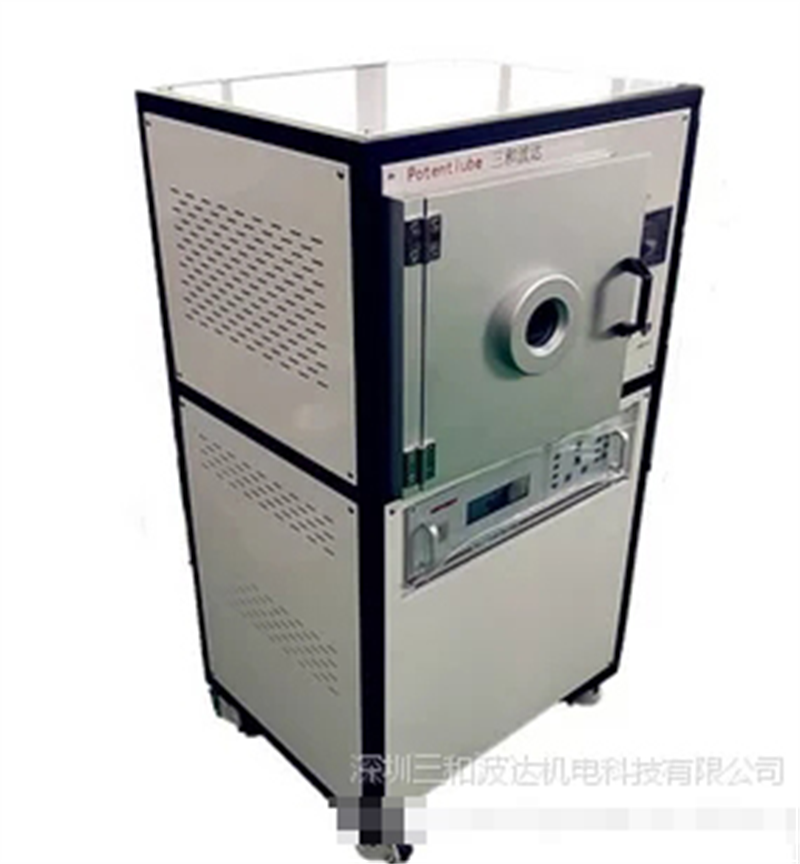
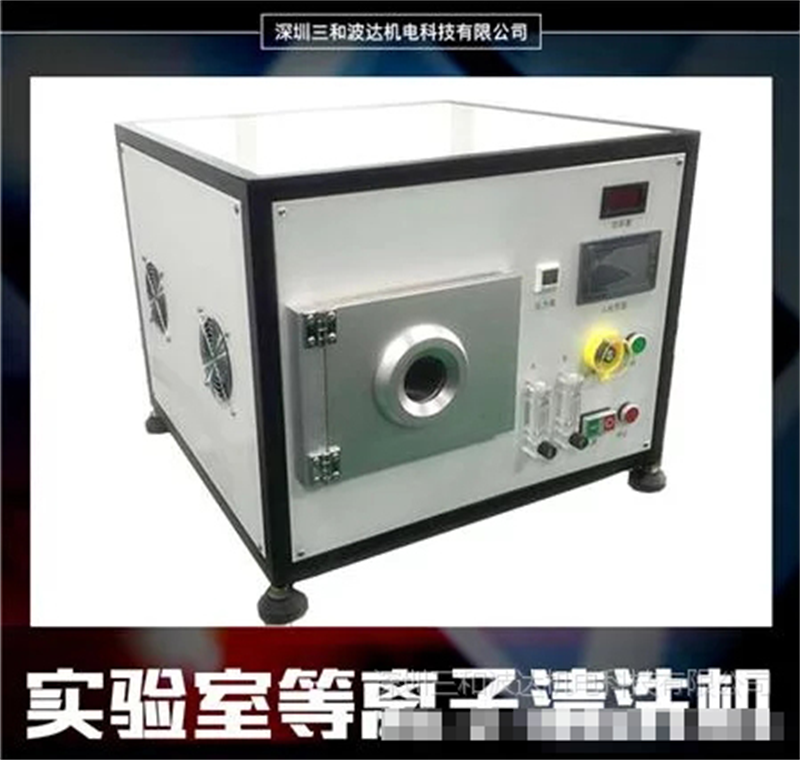
San He Bo Da and other machine washers, Glow Cleaning Machine PT-5ST
PT-5ST
Cavity Material: Stainless Steel Surface Treatment
Power Supply: AC 220V
Operating Current: Total machine operating current not exceeding 1.2A (excluding vacuum pump)
RF Power Supply: 0-300W adjustable (RF matching integrated)
RF Frequency: 13.56 MHz
Frequency Offset: Less than 0.2 KHz
Characteristic Impedance: 50 Ohms, Auto-matching
Vacuum Level: 1Pa-30Pa
Gas Lines: Dual Gas Input (High Precision Float Flow Meter)
Gas Flow: 10-300ml/min (adjustable)
Process Control: PLC Human-Machine Interface - Automatic & Manual Modes
Washing Time: adjustable from 1 to 99999 seconds
Power adjustable from 10% to ***
Internal腔尺寸 150×270Lmm 5L
Dimensions: 560×540×550mm (L×W×H)
Vacuum Pump: 2XZ-4 (Flow Rate 2 L/S)
Vacuum chamber temperature: Less than 30°C
Cooling Method: Forced Air Cooling
Plasma Cleaning
· Conventional cleaning methods cannot completely remove the surface film of the material, leaving a thin layer of impurities instead, and solvent cleaning is a typical example of this.
The plasma cleaner operates by bombarding the material surface with plasma, gently and thoroughly cleaning the surface.
· Plasma cleaning removes invisible oil films, microscopic rust, and other contaminants formed on the surface due to outdoor exposure and user contact, etc. Moreover, plasma cleaning leaves no residue on the surface.
· Plasma cleaners are capable of handling a variety of materials, including plastics, metals, ceramics, and surfaces with different geometries.
The advantages of the plasma cleaner lie in its ability not only to remove surface contaminants but also to enhance the adhesion properties of the material surface.
Polymer Cleaning
Surface Cleaning of Polymers
· The plasma ablation process mechanically removes the contaminant layer by bombarding the material surface with high-energy electrons and ions.
Plasma surface cleaning can remove the dirt layer that may be present on certain processed polymers, unnecessary polymer surface coatings, and weak boundary layers.
② Polymer Surface Reconstruction
In the plasma ablation process, the inert gas used breaks the chemical bonds on the polymer surface, leading to the formation of surface functional groups.
Functional groups on the polymer surface are re-linked to form the original polymer structure, and can also bond with neighboring functional groups on the same polymer chain, or form chains with functional groups near them on different polymer chains.
Polymer surface restructuring can enhance surface hardness and chemical resistance.
③ Polymer Surface Modification
· The plasma ablation disrupts the chemical bonds on the polymer surface, leading to the formation of functional groups on the polymer surface.
Based on the chemical properties of the plasma process gas, these surface functional groups form new polymer functional groups connected to the atoms or chemical species in the plasma, replacing the old surface polymer functional groups.
Polymer surface modification can alter the chemical properties of the material's surface without changing the overall material properties.
④ Polymer Surface Coating
Plasma coating is a process that forms a thin plasma coating on the base surface of the material through the aggregation of process gases.
· If the production gas used is composed of complex molecules such as methane, tetrafluoride, and carbon, they will break down into functional monomers in the plasma state, which will bond and recombine on the polymer surface to form a coating.
This polymer surface coating significantly alters the surface's permeability and friction.
Biological Materials
Disinfection and sterilization:
· Plasma disinfection processing has gained a lot of recognition in equipment sterilization.
Plasma treatment holds great potential for simultaneous cleaning and sterilization of equipment.
Plasma sterilization and disinfection is particularly suitable for cleaning items that are sensitive to high temperatures, chemicals, radiation, allergies, or transplants and equipment.
② Enhanced Adhesion
· Many biomaterials have low surface energy, making it difficult to effectively adhere and coat.
· Plasma surface activation leads to the formation of surface functional groups, which increase the surface energy of biomaterials and enhance the adhesion force at the interface.
③. Penetration
Most untreated biomaterials have very weak wettability (hydrophilicity).
· Plasma surface treatment can increase or decrease the hydrophilicity of various biological materials.
· Plasmabased activation makes the surface hydrophilic, while plasma coating can render the surface hydrophobic.
④. Low friction and anti-blocking layer
Some materials have a high coefficient of friction on ester and polymer surfaces, such as polyurethane.
· The plasma coating features a low coefficient of friction, making the surface of biomaterials smoother.
Plasma coating can also form a dense barrier layer to reduce the permeability of liquids or gases into biomaterials.

.png)