

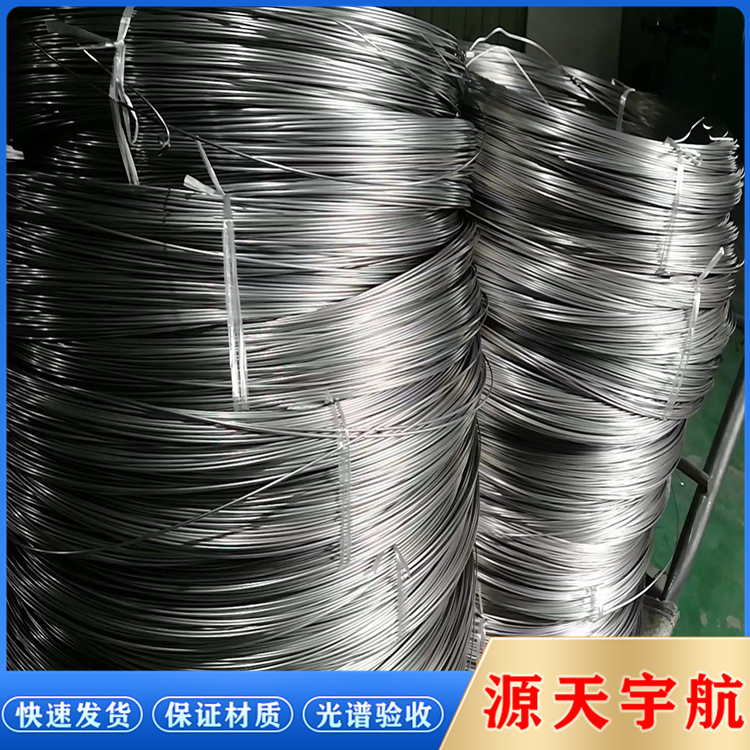
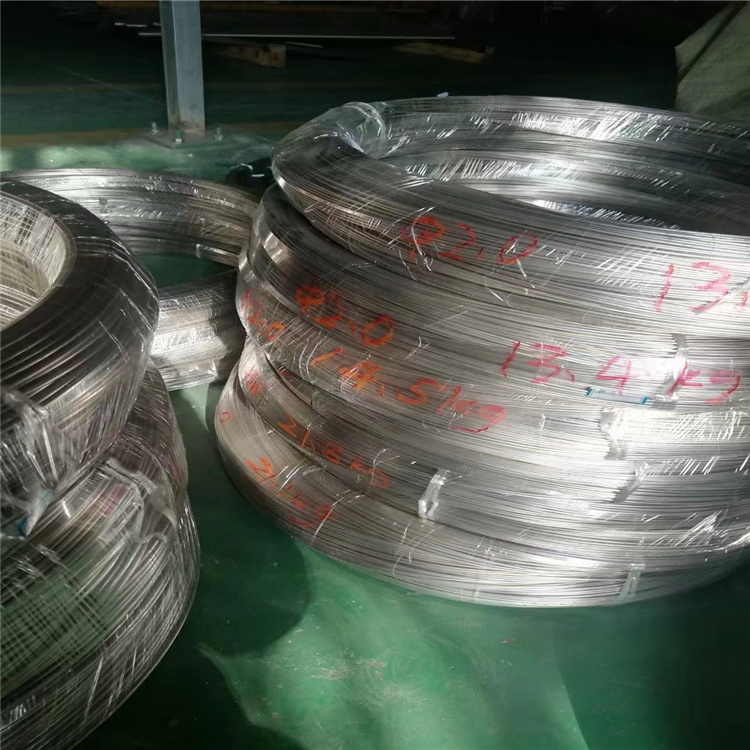













Titanium nickel copper shape memory alloy, composed of a memory alloy with an atomic percentage of 48% to 55% titanium, 35% to 47% nickel, and 5% to 10% copper. The addition of copper to the titanium nickel alloy narrows the temperature difference between the martensite transformation point Ms and the inverse martensite transformation point As, reducing the phase transformation lag to as low as 4°C, known as "narrow phase transformation lag shape memory alloy."
Nickel-titanium shape memory materials are a special type of material that combines sensing and actuation, and nickel-titanium shape memory alloys are a crucial part of these materials. Nickel-titanium shape memory alloys refer to a class of alloys that, in a certain initial state, undergo low-temperature plastic deformation to become another shape, and then, upon heating or other means to increase their temperature, return to their original shape.

Section 1: Characteristics of Nickel-Titanium Shape Memory Alloys
Shape Memory Properties
Nickel-titanium shape-memory alloys automatically return to their original shape after a certain heat treatment, which is the shape-memory characteristic of these alloys. Shape-memory can be categorized into one-way, two-way, and full-range shape-memory, depending on the extent of recovery.
(II) Super Elasticity
Nickel-titanium shape-memory alloys deform under external forces but return to their original shape once the force is removed, showcasing their superelastic characteristic. After experiencing superelastic deformation, nickel-titanium shape-memory alloys undergo a martensitic phase transformation, and removing the external force leads to the reverse martensitic phase transformation.

(Damping)
Nickel-titanium shape-memory alloys, due to their self-adjustment during phase transformation and the interfaces and movements generated during the phase change, exhibit excellent damping properties.
(4) Resistive
Martensitic nickel-titanium shape memory alloys exhibit a linear relationship between resistance and strain during the deformation process. After phase transformation occurs, the slope of the curve decreases accordingly, yet maintains a linear relationship before and after the martensitic phase.

Section 2: The Function of Nickel-Titanium Shape Memory Alloys
Nickel-titanium shape memory alloys, in addition to their unique shape memory properties, offer superior elasticity, wear resistance, and corrosion resistance. As a result, they are widely used across various fields.