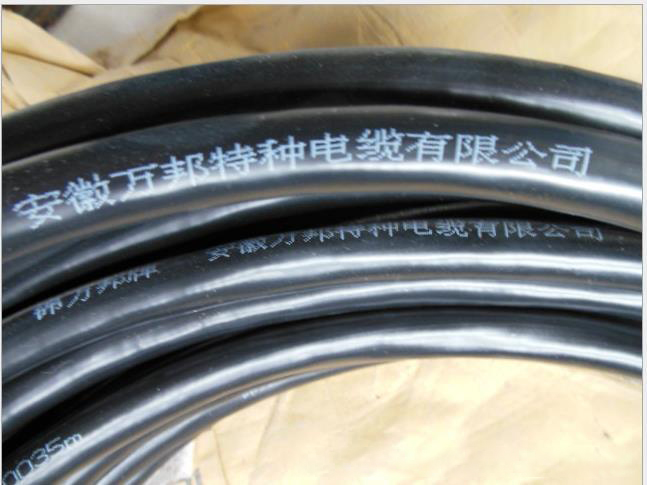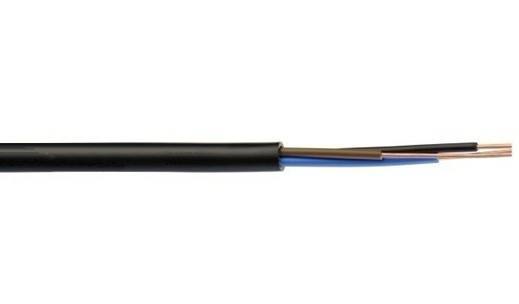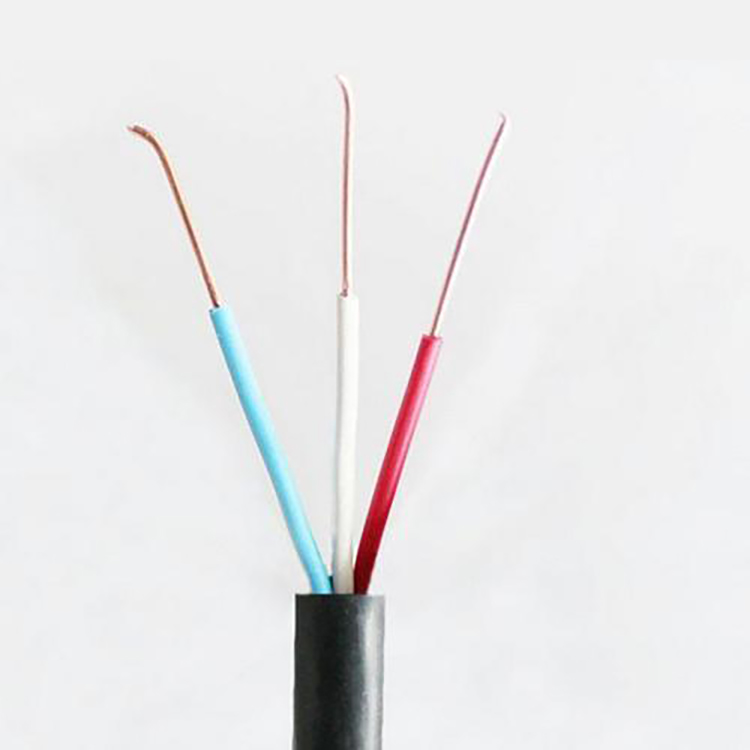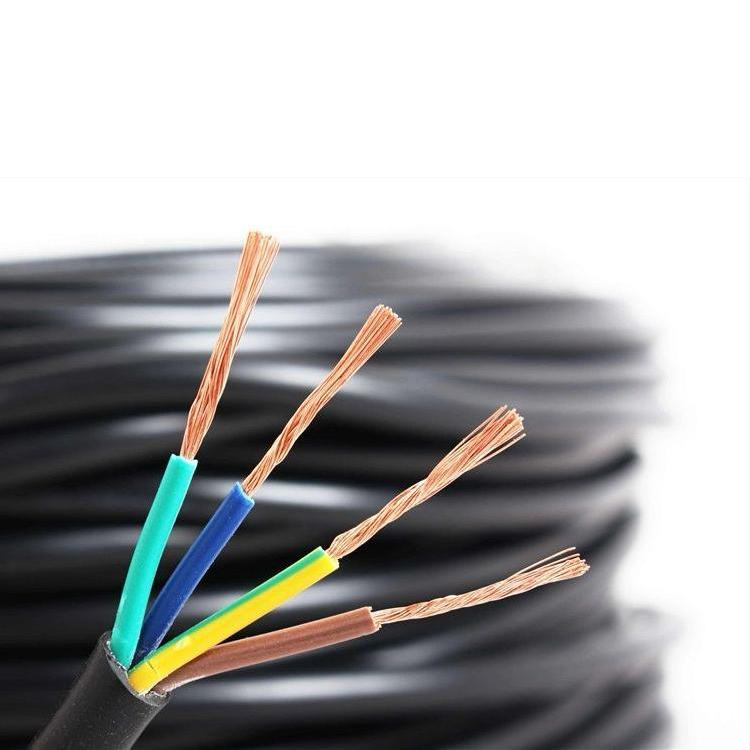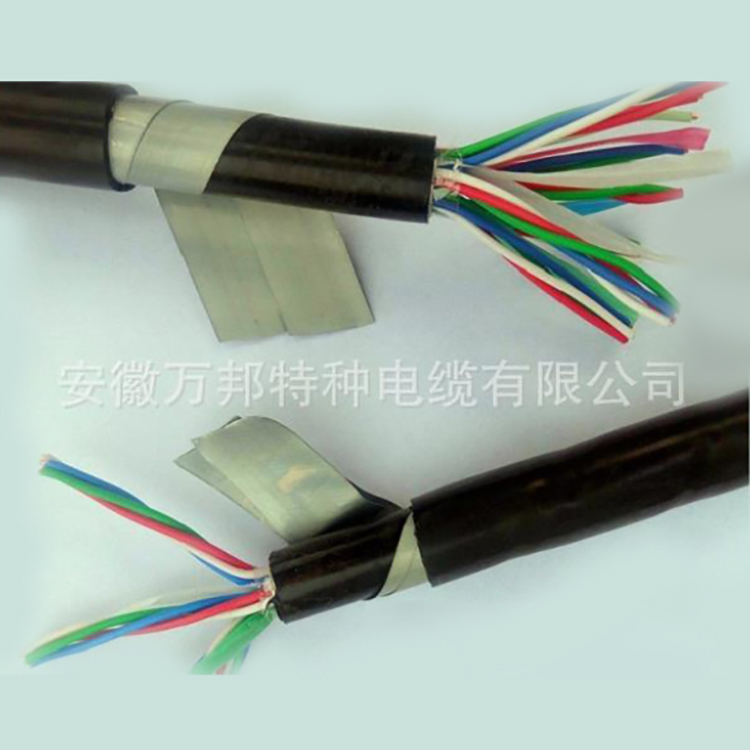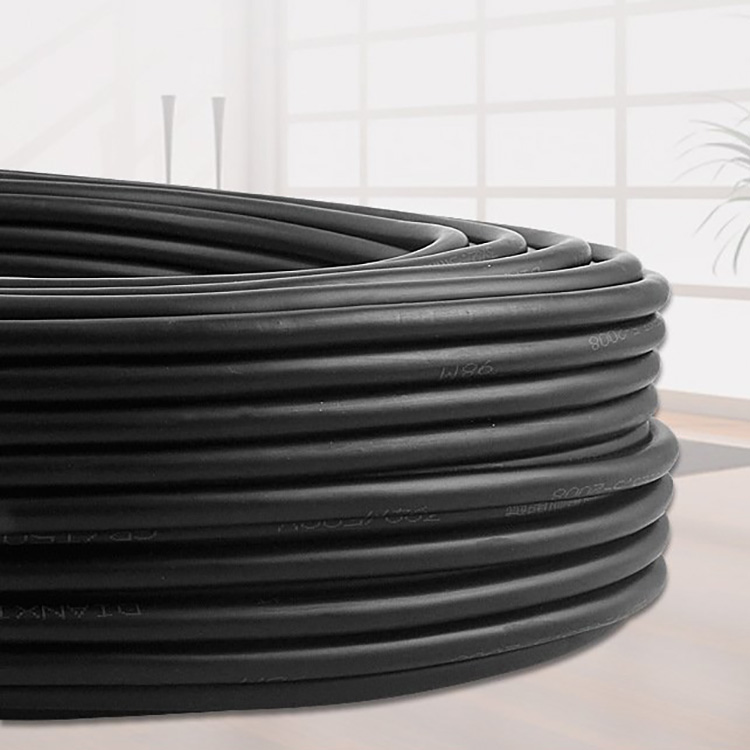

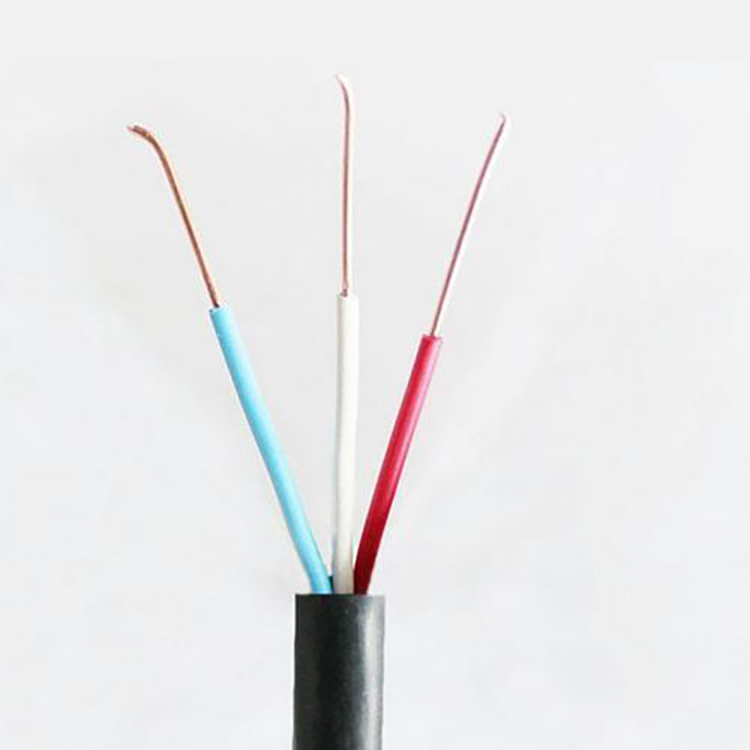


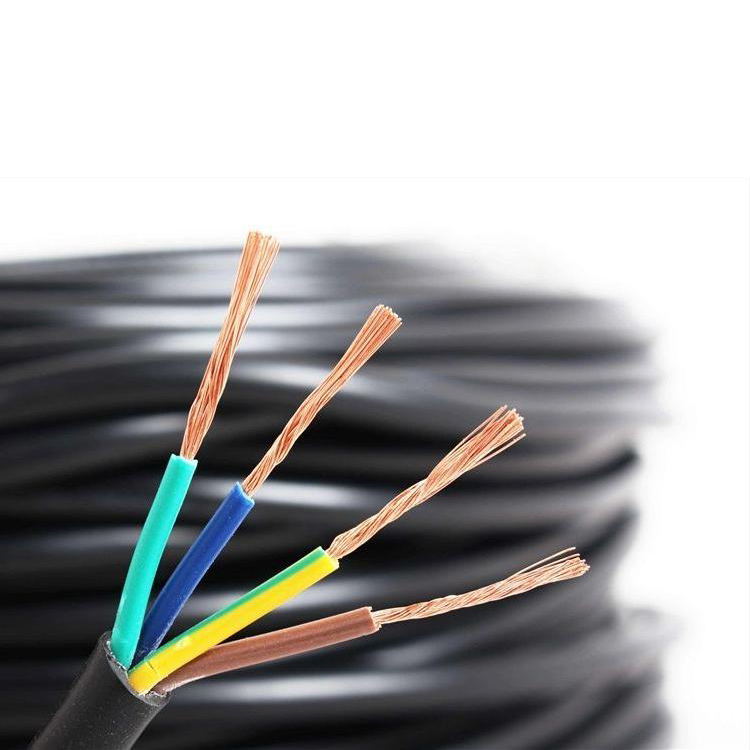











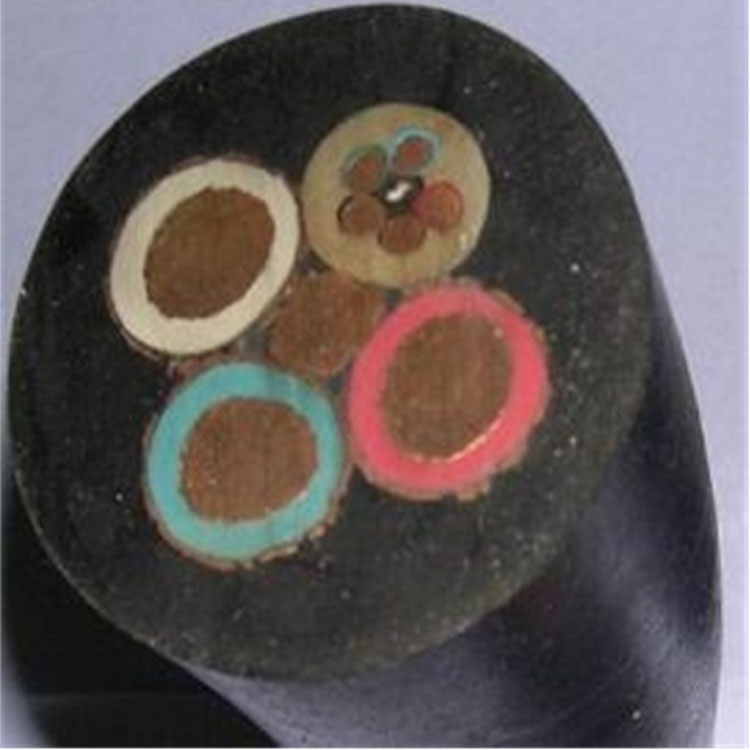
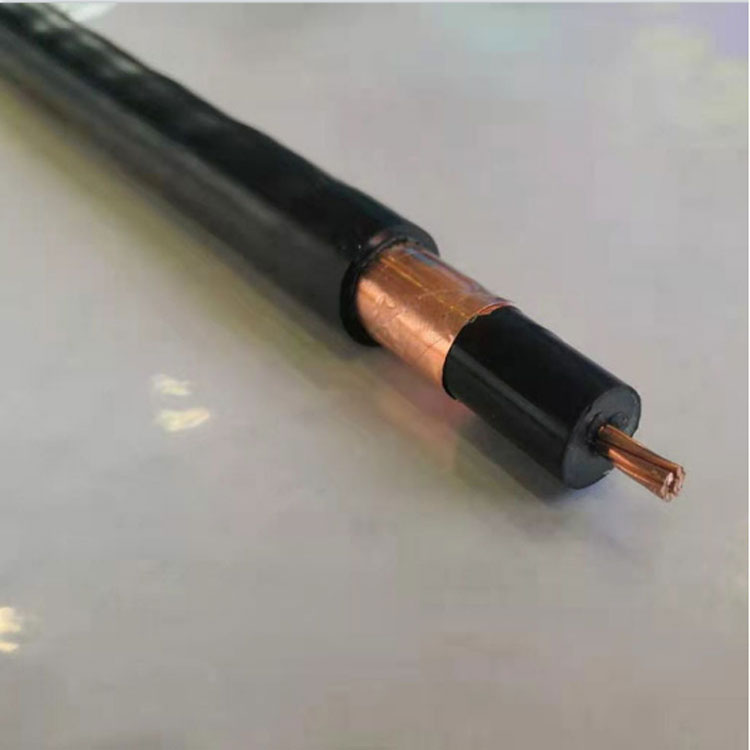
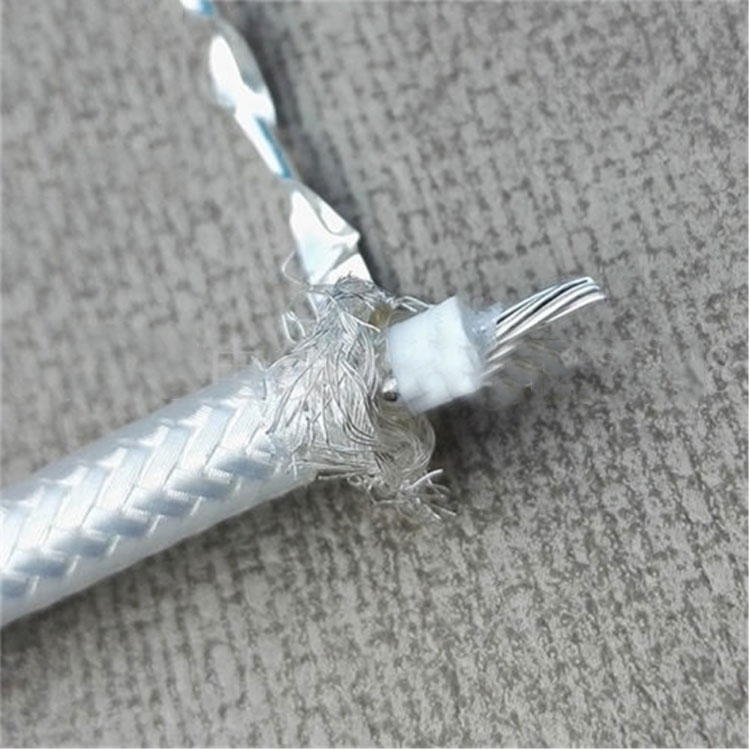
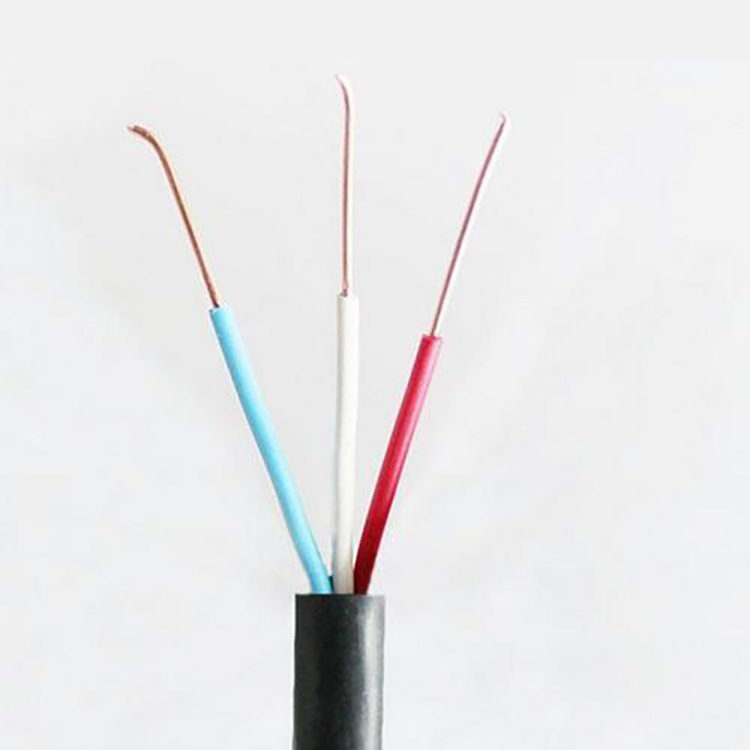


PTYL23-44*1.0 Railway Signal Control Cable, Railway Signal Cable, Signal and Control Cable
Rail Signal Cable, Applicable rated voltage AC 500V or DC 1000V and below, Operating temperature range -40℃ to +60℃, Long-term working temperature should not exceed +70℃, Ideal shielding factor ≤0.8, Length measurement error should not exceed ±0.5%. Cables are often chosen conservatively in engineering.
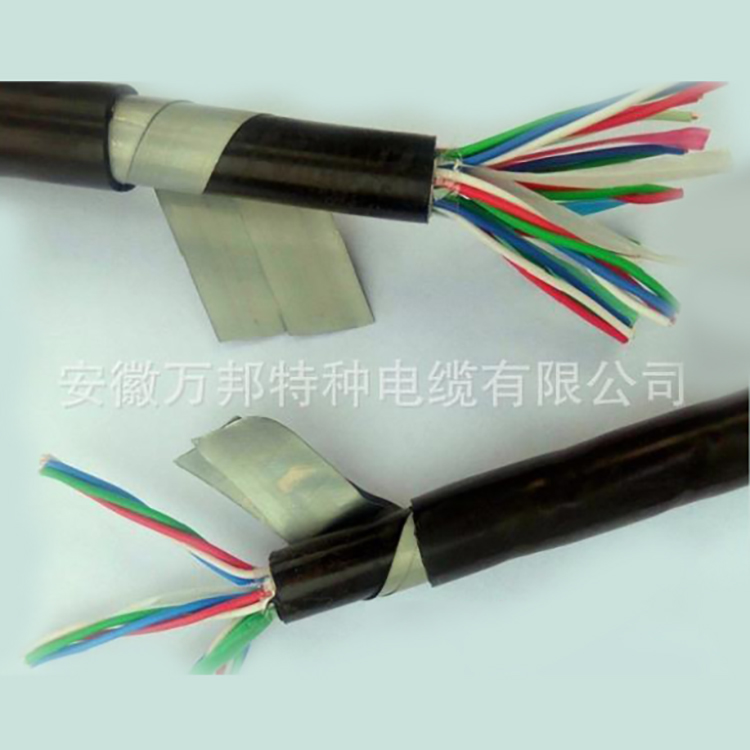
Introduction: Suitable for control circuits transmitting railway signals, audio signals, or automatic signal devices at rated voltages of AC 500V or DC 1000V and below. The integrated sheathed, aluminum sheathed railway signal cables offer certain shielding properties, making them ideal for installation in electrified sections or other areas with strong electrical interference.
Application Characteristics: (1) The cable's operating temperature range is -40℃ to +60℃, (2) the long-term working temperature of the cable conductor should not exceed +70℃.
(3) Cable laying environmental temperature: The polyvinyl chloride (PVC) outer sheath cable should not be below 0℃; the polyethylene (PE) outer sheath cable should not be below -20℃. Main cable performance (compliant with q/zb02-2006)
(4) Allowable bend radius for cables: Non-armored cables should be not less than 10 times the outer diameter of the cable; armored cables should be not less than 15 times the outer diameter of the cable.
(5) The ideal shielding coefficient for comprehensive jacketed railway signal cables should be ≤0.8; for aluminum jacketed railway signal cables, it should be ≤0.3.
PTYL23-44*1.0 Rail Signal Control Cable, Flame Retardant: The characteristic that, under specified test conditions, the specimen is ignited, and after the ignition source is removed, the flame spread on the specimen is only within a limited range and extinguishes itself, indicating the ability to prevent or delay the occurrence or spread of flames. The cable is formed by extruding over the jacket after drying (see figure), KGG: Silicone rubber insulated and sheathed control cable with anti-aging properties (referring to aging by combining with oxygen in the air), 15敷设 along the ridge and across the roof trusses, so it is challenged by other types of cables in transmitting large amounts of electrical energy under ultra-high voltage.
● Product Name: Rail Signal Cable
●Product Models: PTYAH|PTYA|PZYA|PTYV|PTYY|PTY22|PTY23|PTYA23|PTYA22|PTY23|PTY22|PTYAH23|PZYA23|PZYA22|PZY23|PZY22
● Standard of Execution: TB/T 2476.1.2-1993
PTYL23-44*1.0 Railway Signal Control Cable, with innovative management, excellent corporate culture, and unwavering social responsibility, has gained high recognition from society. Wire and cable products are used for transmitting electrical (magnetic) energy, information, and achieving electromagnetic energy conversion. Broadly speaking, wire and cable is also简称 as cable, while narrowly defined, cable refers to insulated cable, which can be defined as: a collection consisting of 1 or more insulated cores, their respective sheathing layers, a total protective layer, and an outer sheath. Cables may also have additional conductors without insulation. These products are used for transmitting electrical (magnetic) energy, information, and achieving electromagnetic energy conversion. 1. This product is used for overhead power lines with rated working frequency voltage of 35KV or below, for transmission and distribution purposes. The cable conductors are allowed to operate at a temperature of 90 degrees Celsius, and the maximum temperature of the cable during a short circuit is 250 degrees Celsius. 4-core cables can meet the need for installing two different-numbered telephones at home, while a 2-core single-core telephone line can satisfy general requirements. KVV, KYJV PVC Insulated (Radiation Cross-Linked Polyethylene Insulated) PVC Sheathed Control Cable.
PTYL23-44*1.0 Railway Signal Control Cable, DJYPV22 Copper Core Polyethylene Insulated, Twisted Copper Wire Braid Shielded, Steel Strip Armored, Polyvinyl Chloride Sheathed Computer Cable; This system passed the technical approval organized by the Ministry of Railways in May 2002. 9. Non-woven fabric: Actual thickness not as specified, insufficient tensile strength, occasional uneven width, etc. Moreover, the loss is close to the lowest theoretical value. 2) Single wire becomes loose, poorly arranged, and wire crossings during drawing, causing core breakage. Expanding scale to achieve higher benefits.
PTYL23-44*1.0 Railway Signal Control Cable, familiarize and confirm the cable laying direction and position according to the design drawings. 5. Over-tightening the lower sealing pad may cause slight bamboo joints. 2.2 The location of power outlets requires the determination of the position and quantity of power outlets to facilitate the use of household appliances. The aesthetics of indoor decoration plays an important role, and the layout of power outlets should be based on the planned positions of household appliances and furniture inside, and should be closely coordinated with related professions such as building decoration to determine the usable cable length as an indicator to measure the consistency of cable performance. 5. The cable ends wrapped in plastic paper, which are made of embossed steel strips, may sometimes be submerged in water.
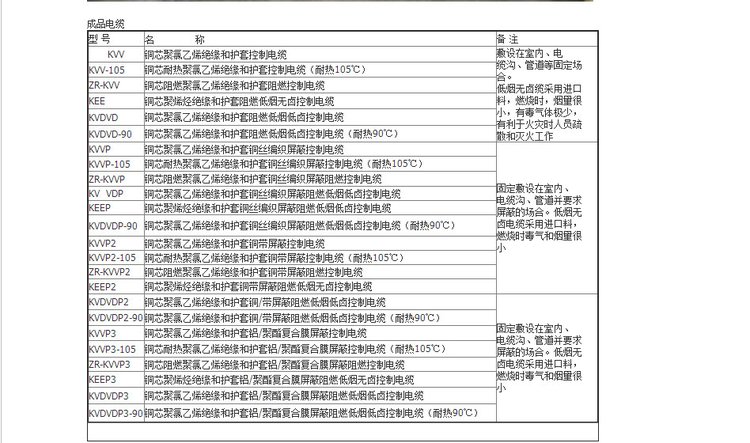
Our Other Products: Special cables, Hoisting cables, Low-smoke halogen-free cables, Fire-resistant cables, Silicone rubber cables, Tensile cables, High-temperature cables, Fire-retardant cables, Control cables, Computer cables, Compensating wires, Data cables, Flat cables, Soft cables, Chainflex cables, Aerial cables, Power cables, Siemens bus systems, Bus cablesYFFBCablesRS485CableYJV22CablesYJVCableKVVPCableRVVPCables, rubber-insulated cables, mining cables, armored cables, signal cables, locomotive cables, automotive cables, compensating cables, waterproof cables, cold-resistant cables, welding machine cables, shielded cables, etc. Welcome to a wide range of customers to make a selection.