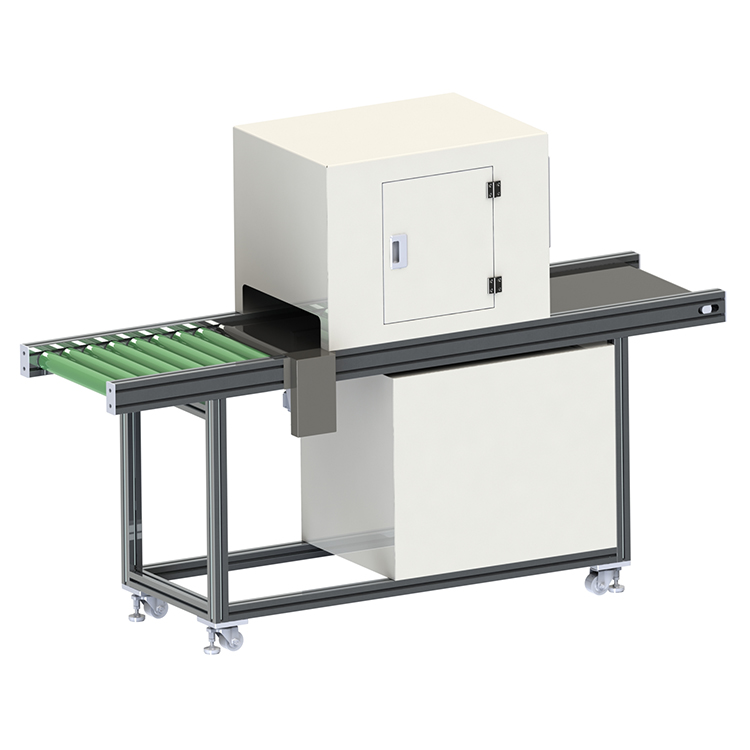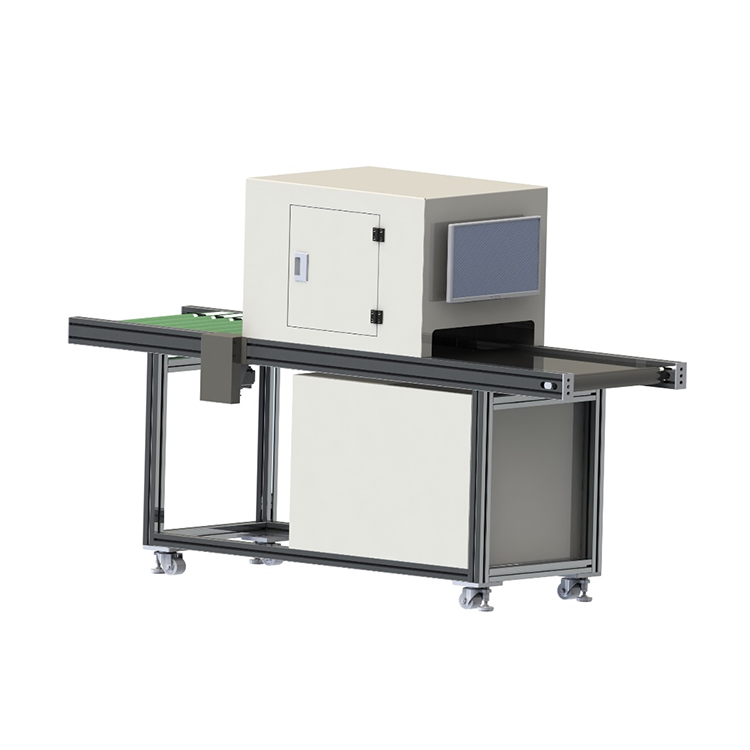


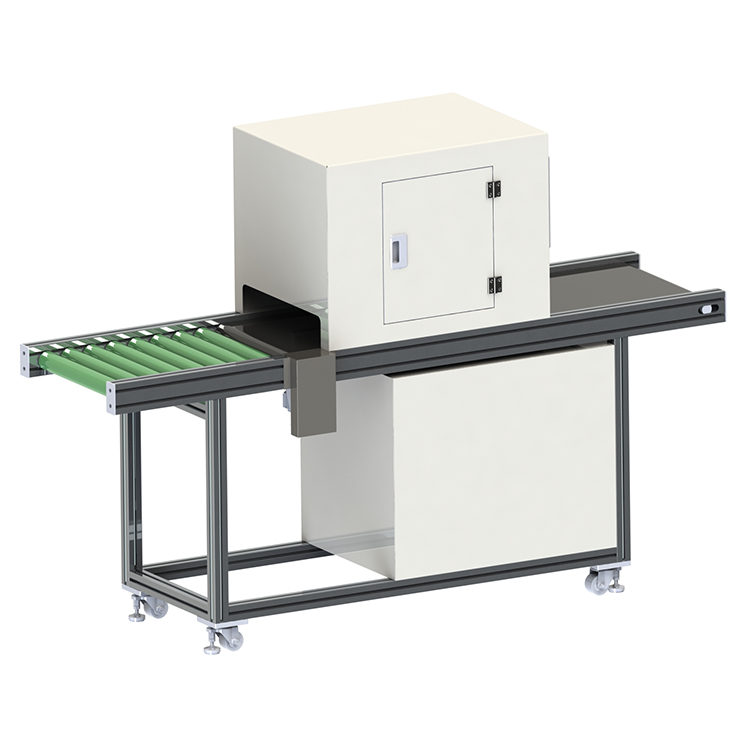







Production line flying inspection machine
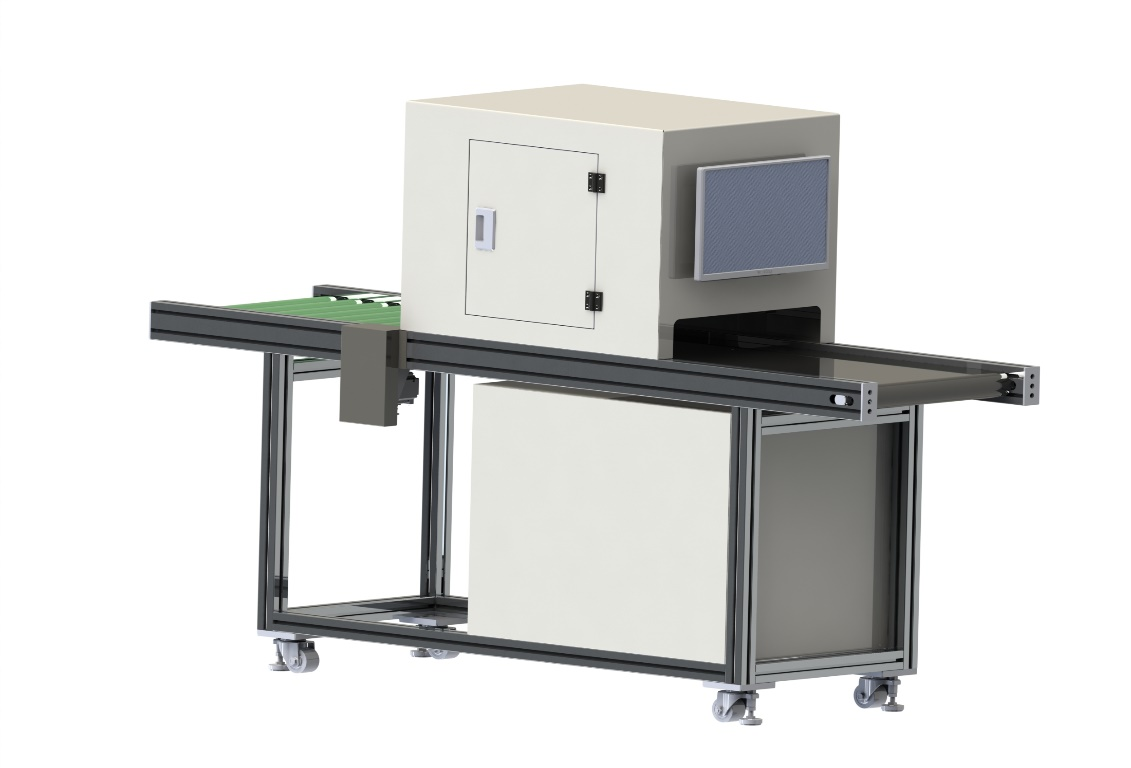
Product Introduction: The main function of this machine is to use machine vision to simulate the functions of human vision. It replaces the human eye with a CCD industrial camera and captures every detail of the object for image acquisition and processing. Through calculation and comparison, the final actual detection, control, and application are carried out.
The advantages of the machine are as follows:
1. During the transportation of objects on the assembly line, the camera takes photos and the objects do not need to stay;
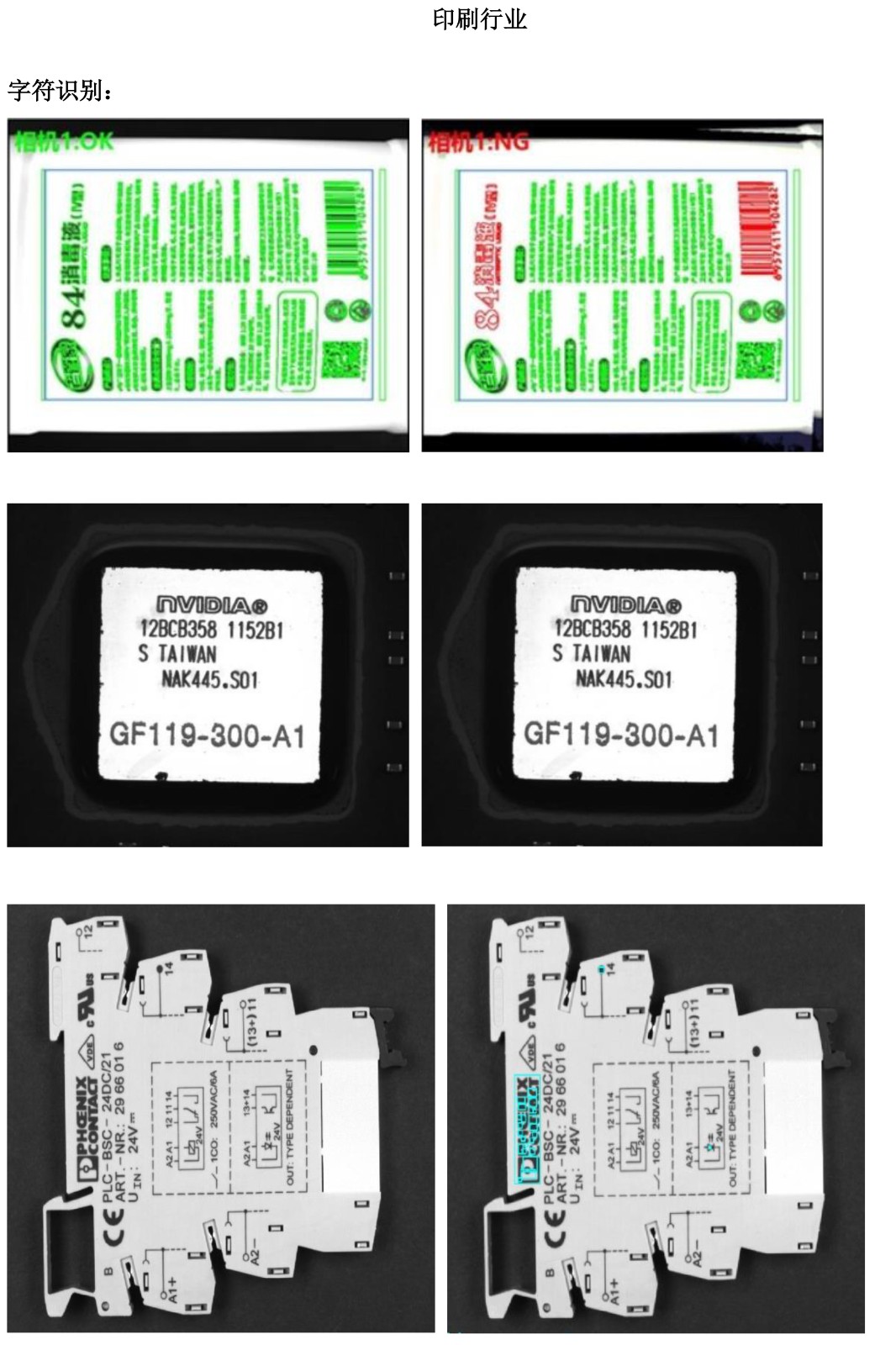
2. Visual calculation of object position, mixing, missing items, poor printing, incorrect labeling, etc
3. Visual inspection of product size information, providing product size structure;
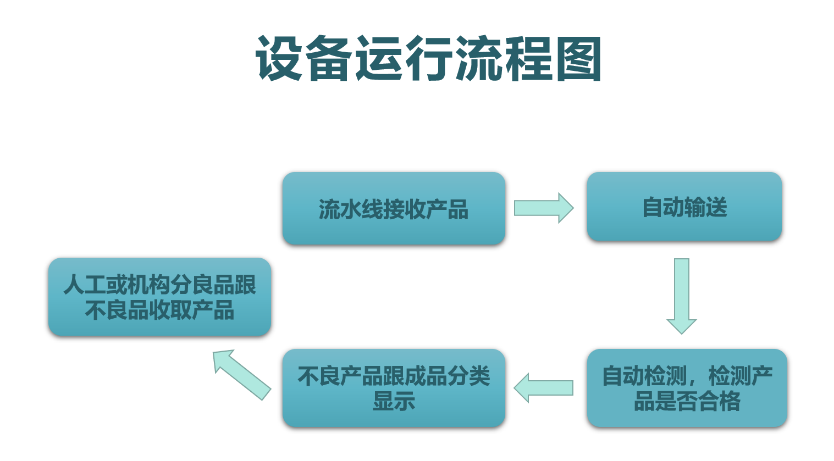
4. Visual provides problem information for the product, and the backend selects non-conforming products or arranges them in an orderly manner based on their location information through communication between visual and execution mechanisms;
5. The machine vision aerial photography technology installed on the assembly line can significantly improve production efficiency;
6. High efficiency can process one image in 0.1 seconds;
7. Machine size can be customized according to product requirements;
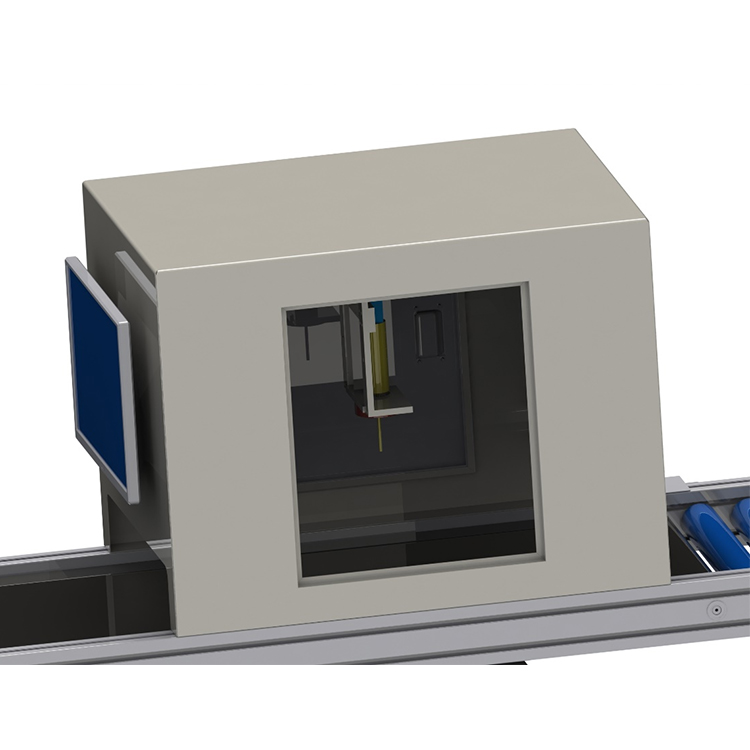
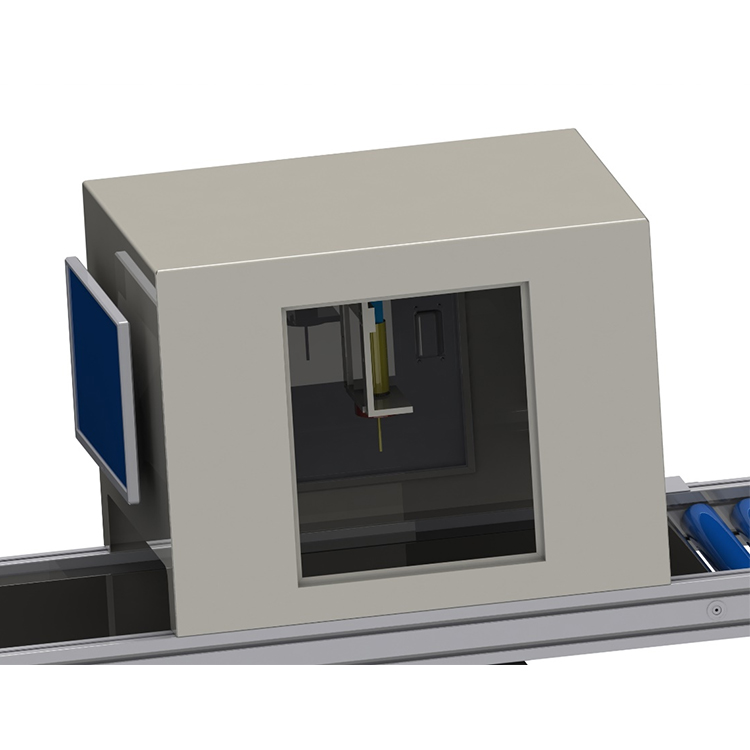
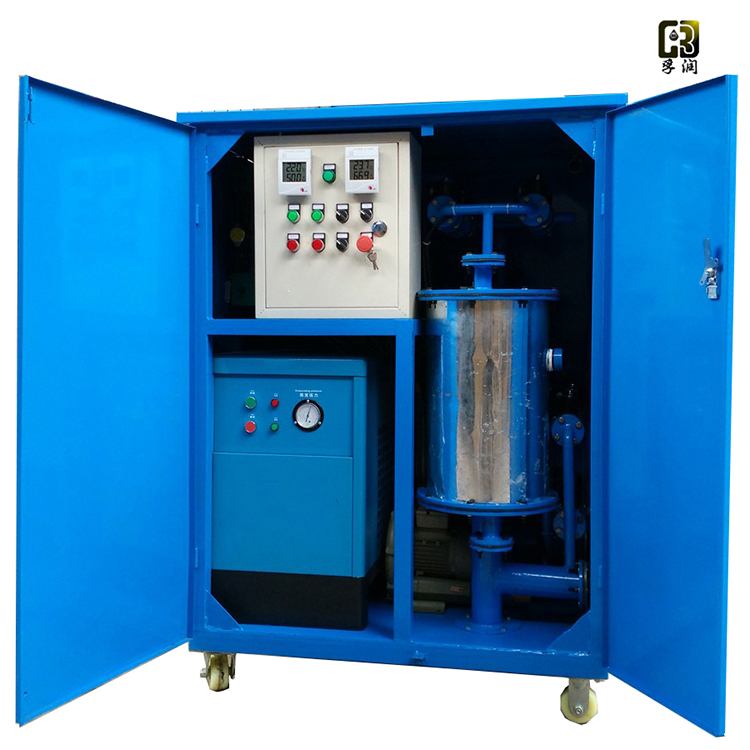
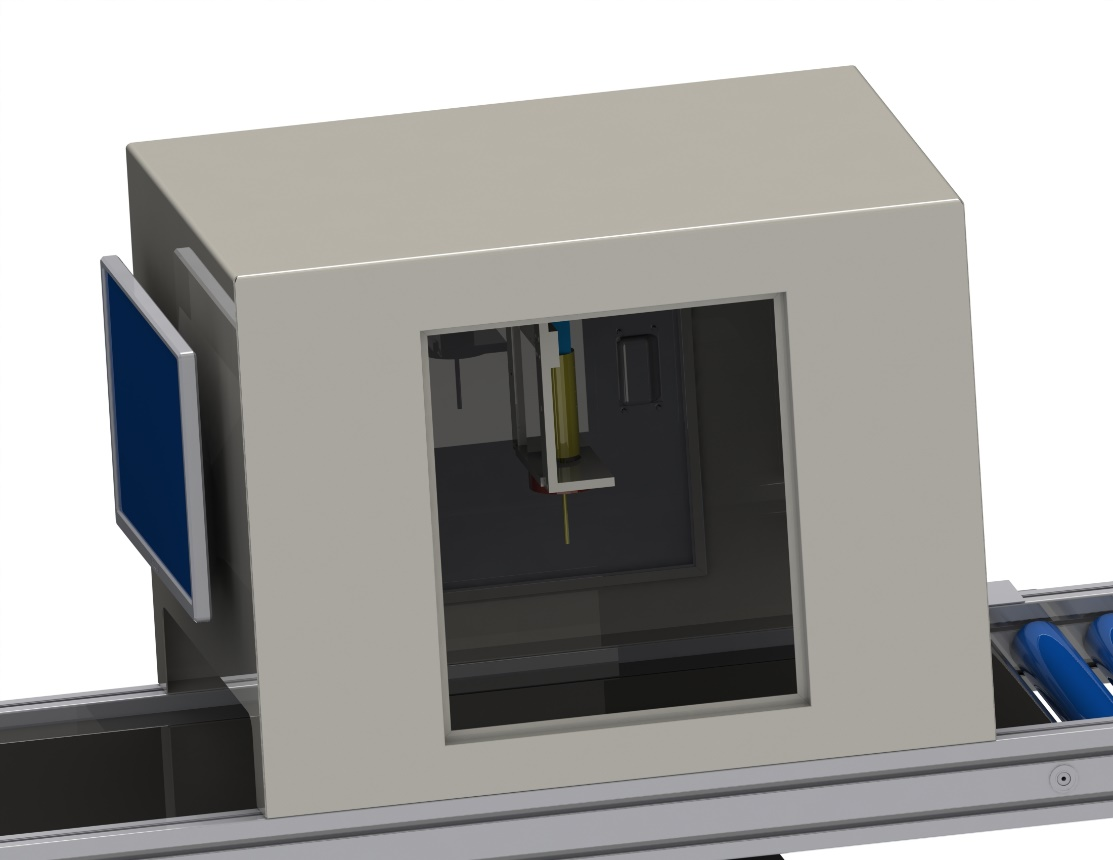
Internal display of the machine
Performance parameters of the equipment:
1. Equipped with automatic sorting and labeling function for defective products;
2. Real time monitoring of product appearance quality can be achieved;
3. High detection accuracy can reach 0.01mm;
4. Capable of automatically identifying surface defect features ranging from 0.1mm to 1mm;
Detection Type
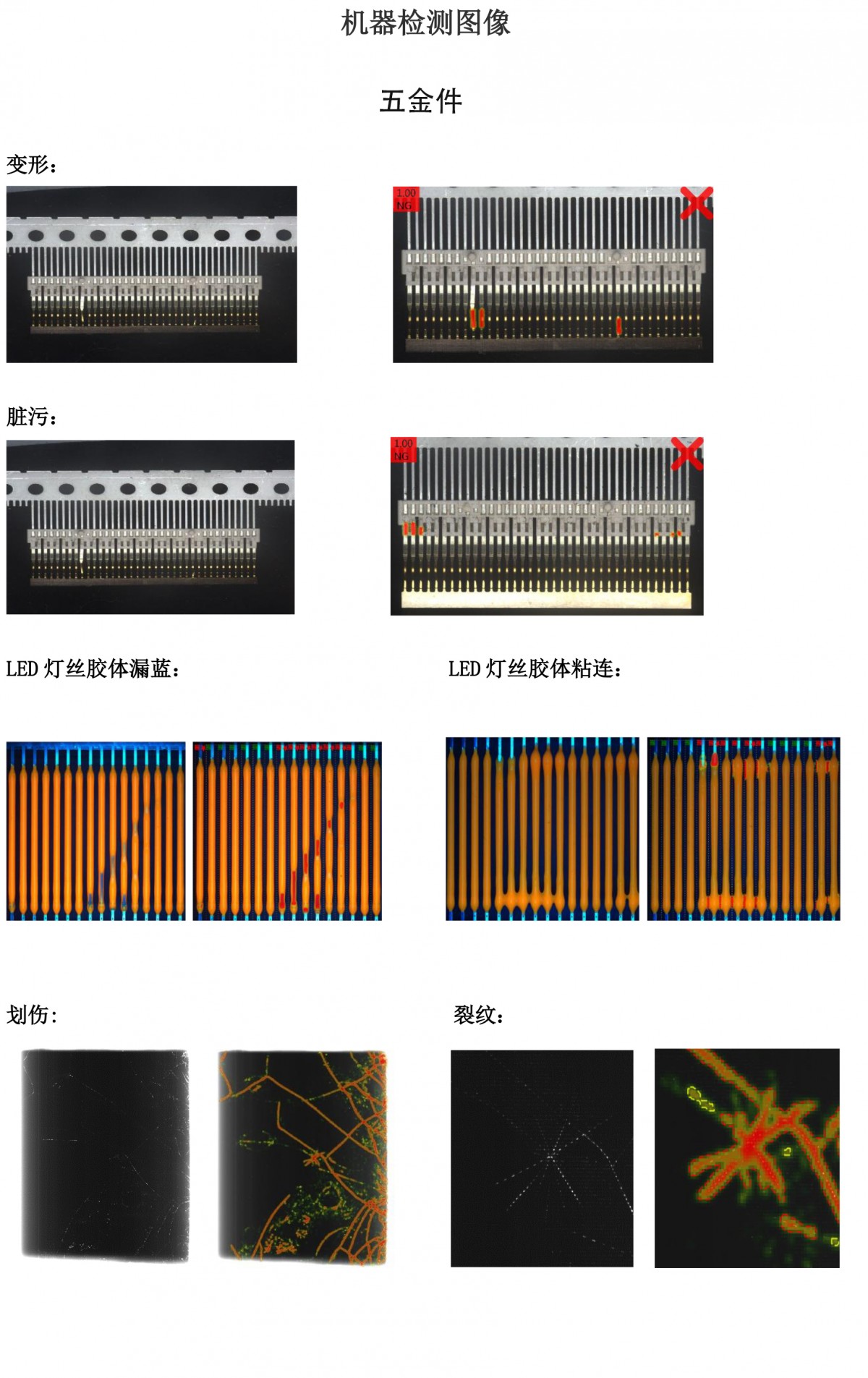
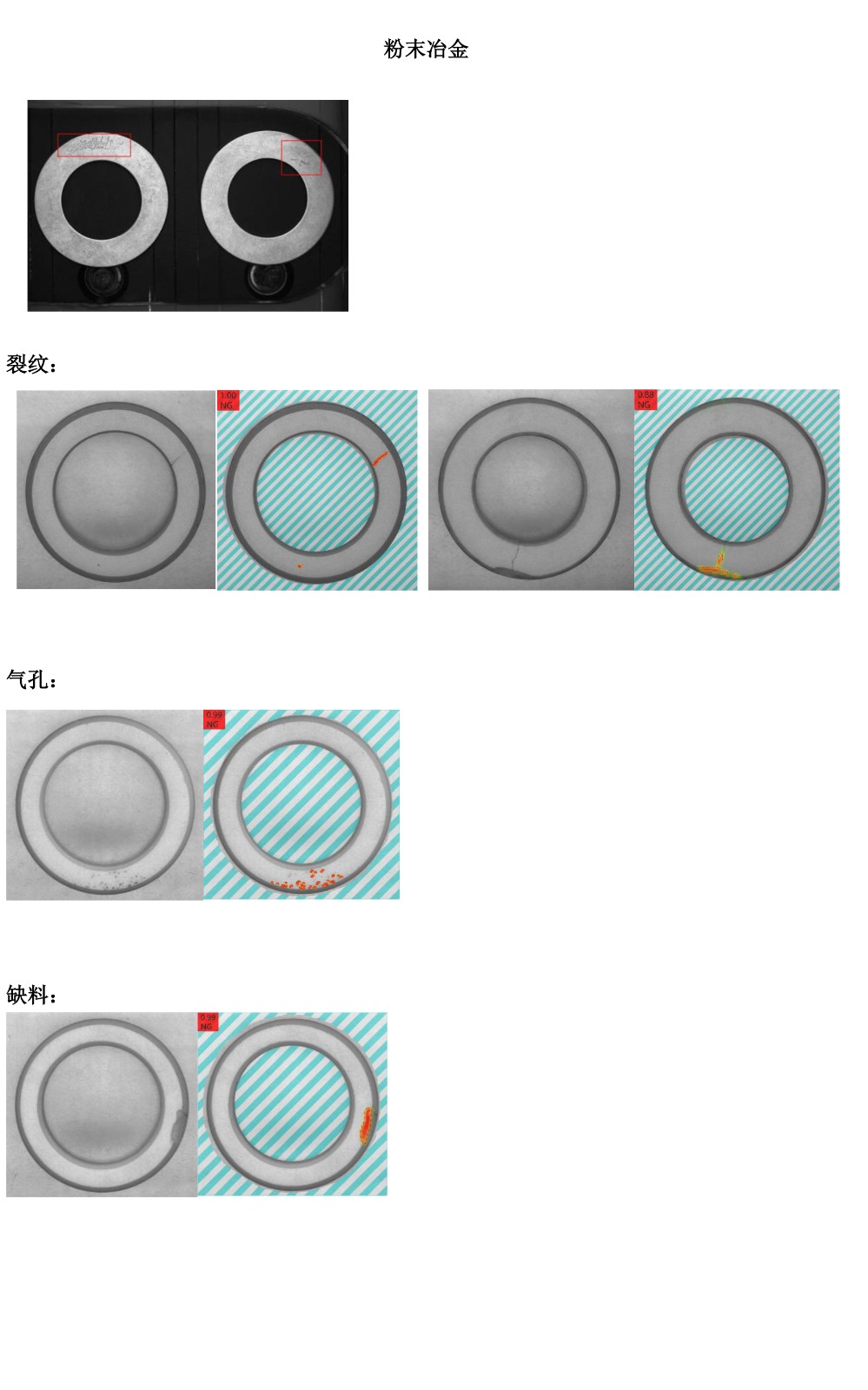
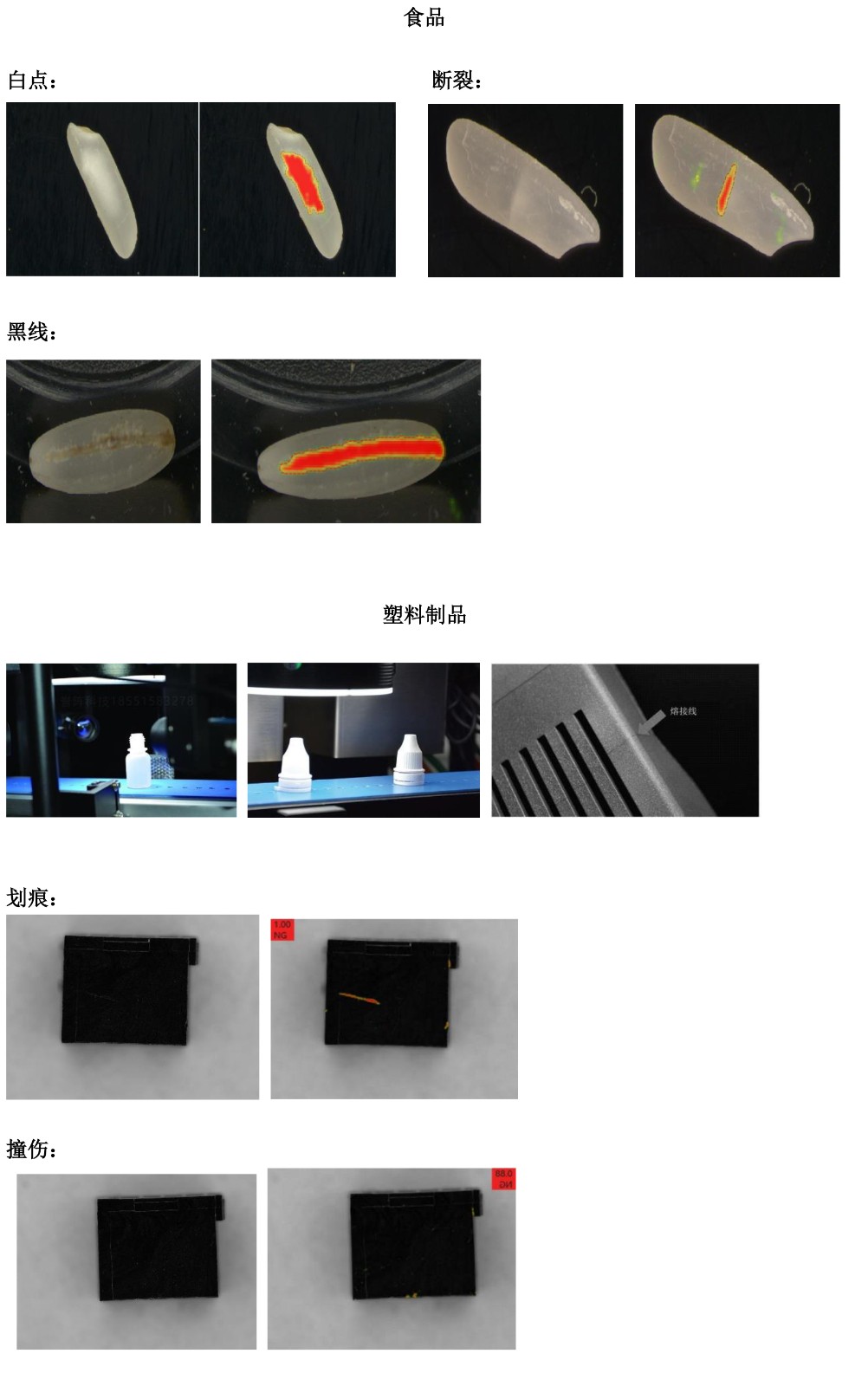
The appearance defect detection of products is generally as follows:
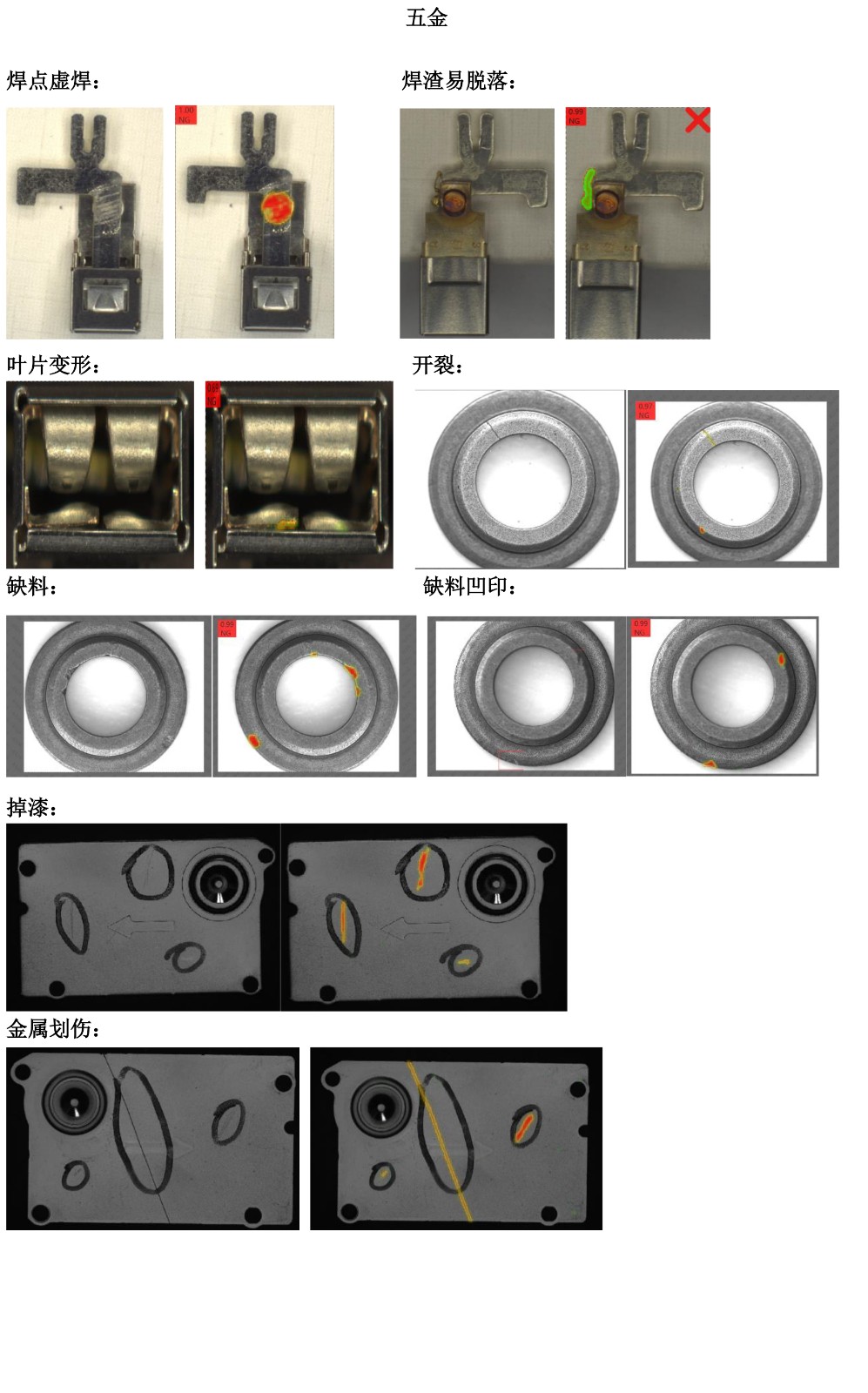
Surface defects generally include scratches, holes, and spots on metal surfaces, inclusions, damages, and stains on non-metal surfaces, color differences and indentations on paper surfaces, chipping, scratches, bubbles, impurities on glass surfaces, etc. Generally speaking, appearance defects are uneven physical or chemical unreasonable changes in the surface area of the product.
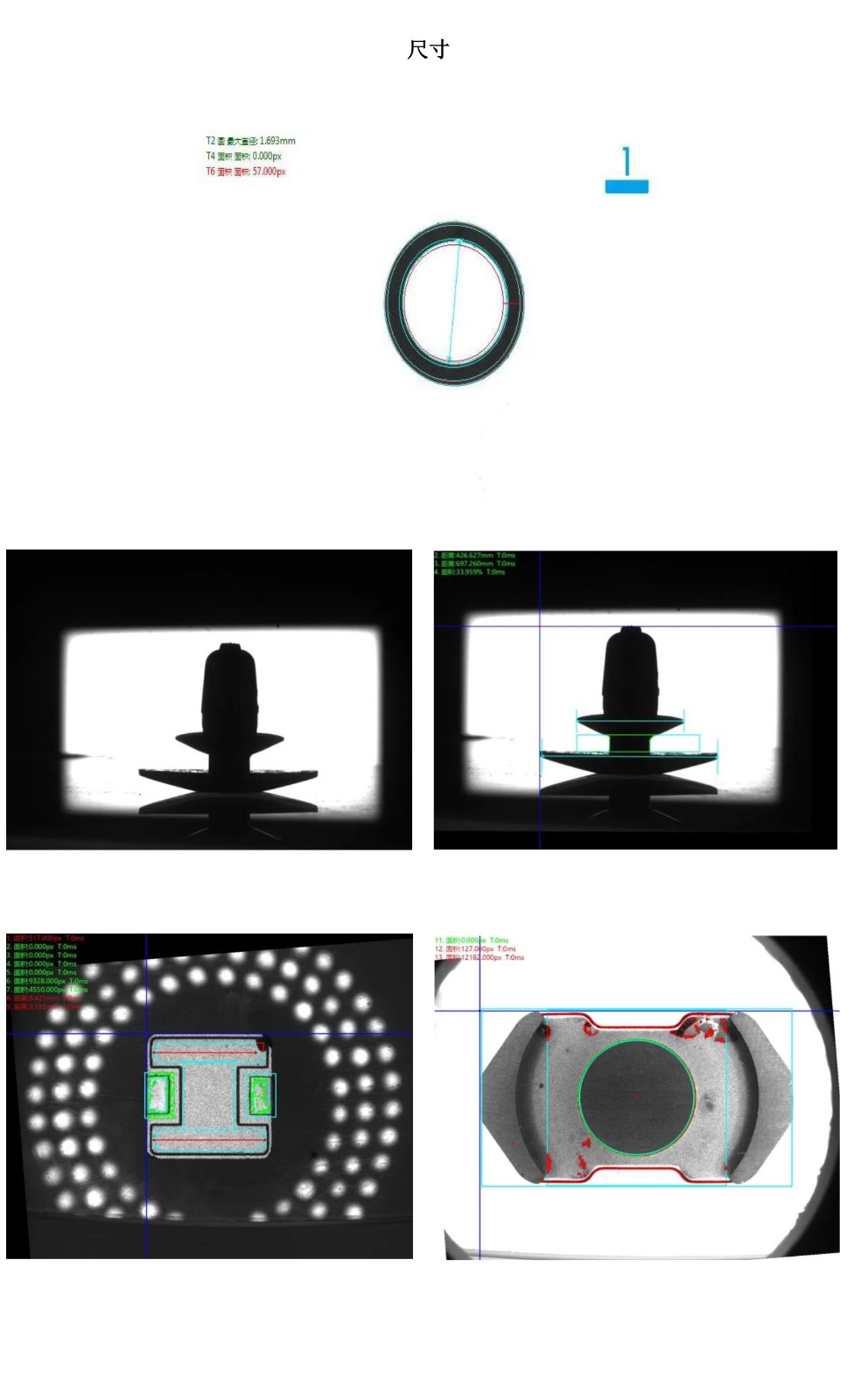
The size inspection of products is generally as follows:
Surface size generally refers to whether the external dimensions of the product meet the required requirements, such as hole size, hole position, external dimensions, concentricity, inner and outer diameters, angles, chamfer dimensions, shape dimensions, etc.
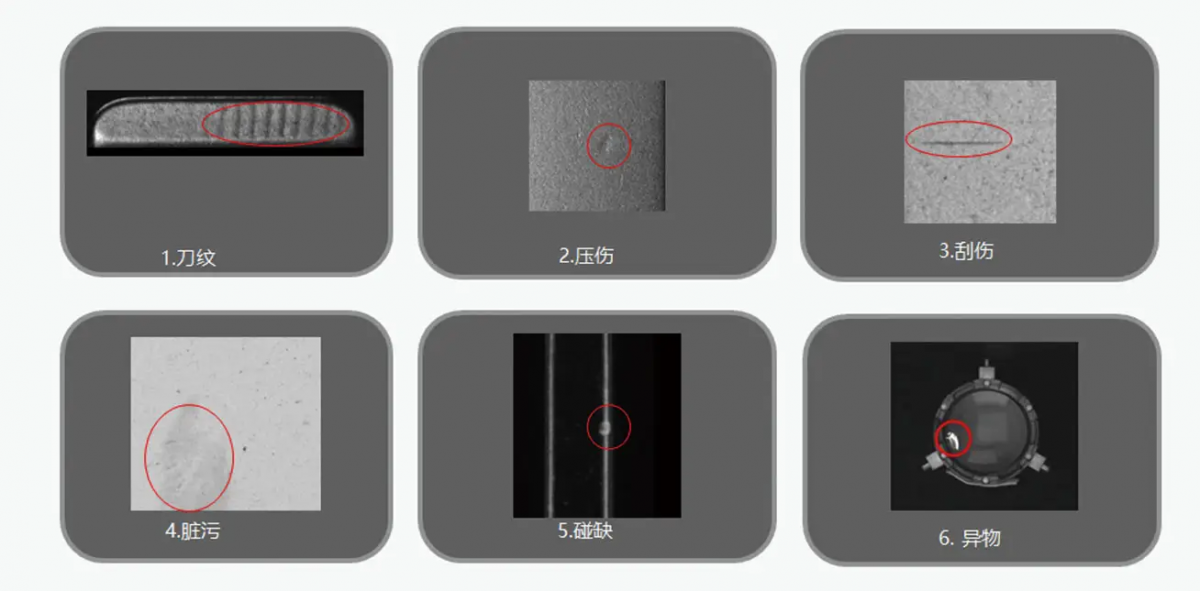
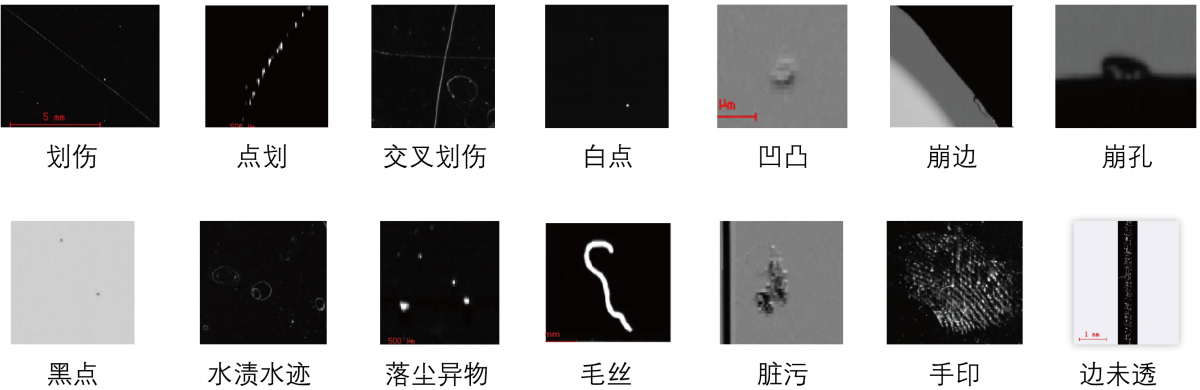
Machine detects images