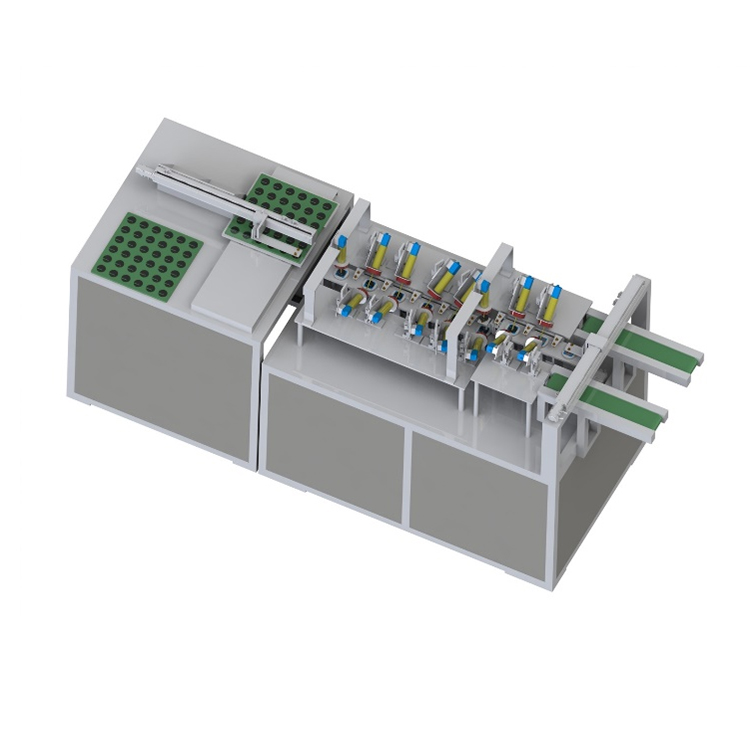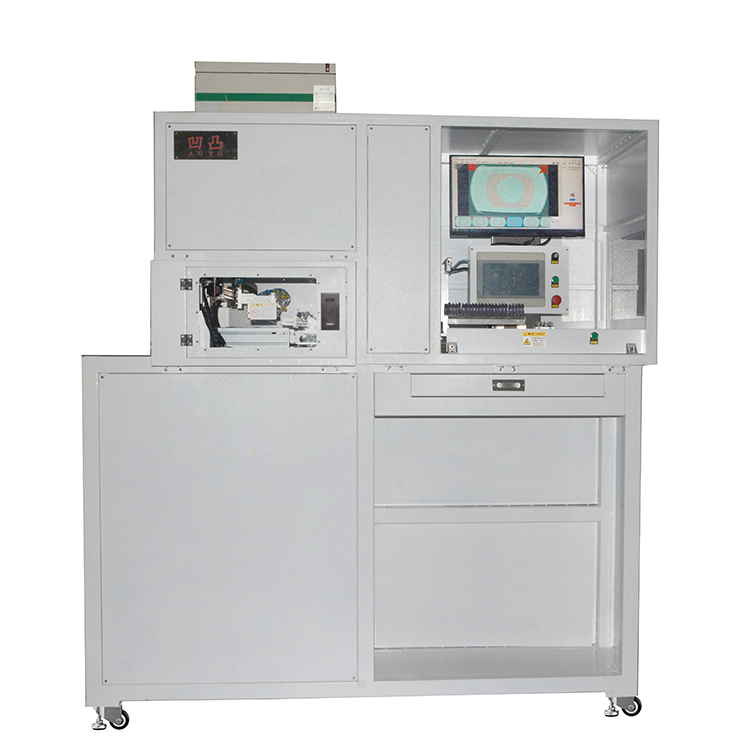









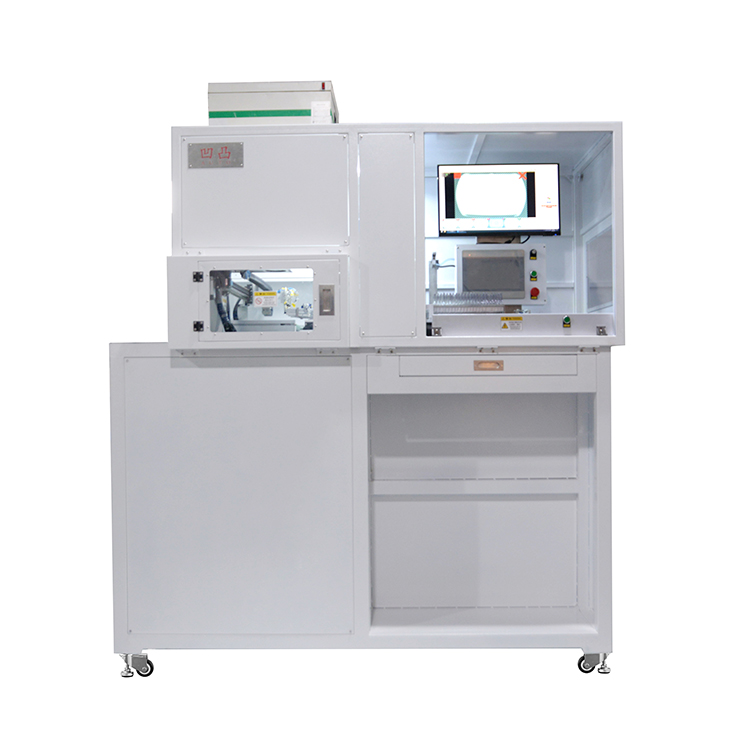
Lens testing equipment
The traditional defect detection method is the manual visual inspection method, which needs to be carried out under strong lighting conditions. This method not only causes great eye damage to the inspectors, but also has disadvantages such as strong subjectivity, limited spatial and temporal resolution of the human eye, high detection uncertainty, easy ambiguity, and low efficiency. It is difficult to meet the high-speed and high-resolution detection requirements of modern industry.
With the rapid development of electronic technology, image sensing technology, and computer technology, the use of automatic optical (visual) detection technology based on optical image sensing to replace manual visual detection of surface defects has gradually become an important means of surface defect detection. This method has the advantages of automation, non-contact, fast speed, high accuracy, and high stability
Purpose: To detect defects such as stains, scratches, ripples, bubbles, etc. on the surface of glasses
Standard: According to defects, they are classified as excellent, good, and qualified
Premium grade: Part A within Φ 35, Part B between Φ 35 and Φ 55, Part C outside AB zone
Good products: Part A within Φ 30, Part B between Φ 30 and Φ 50, Part C outside AB area
Qualified products: Part A within Φ 30, Part B within Φ 30- Φ 50, Part C outside AB area
The advantages of the machine are as follows:
1. Can detect appearance defects and dimensions, etc;
2. Quick changeover and disc loading;
3. Can improve the accuracy and efficiency of detection;
4. The equipment operation is simple,
5. Low failure rate;
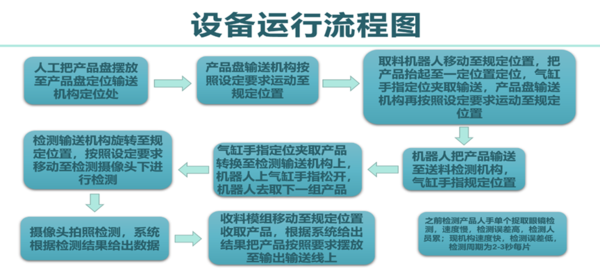
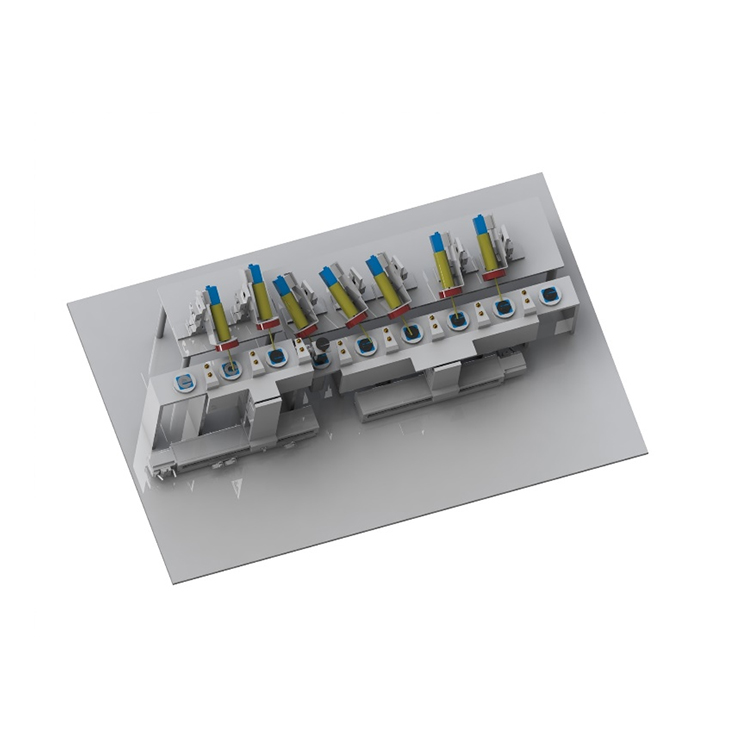
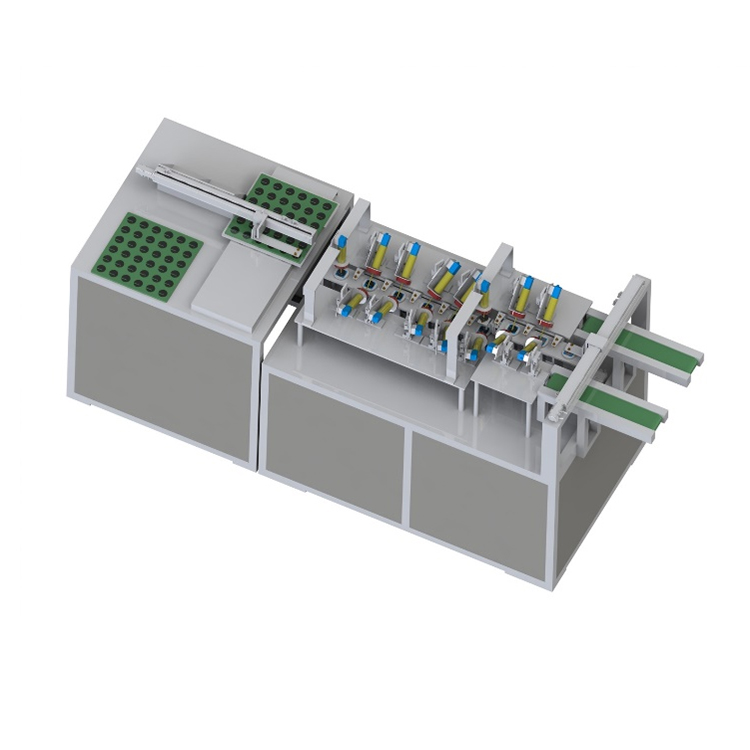
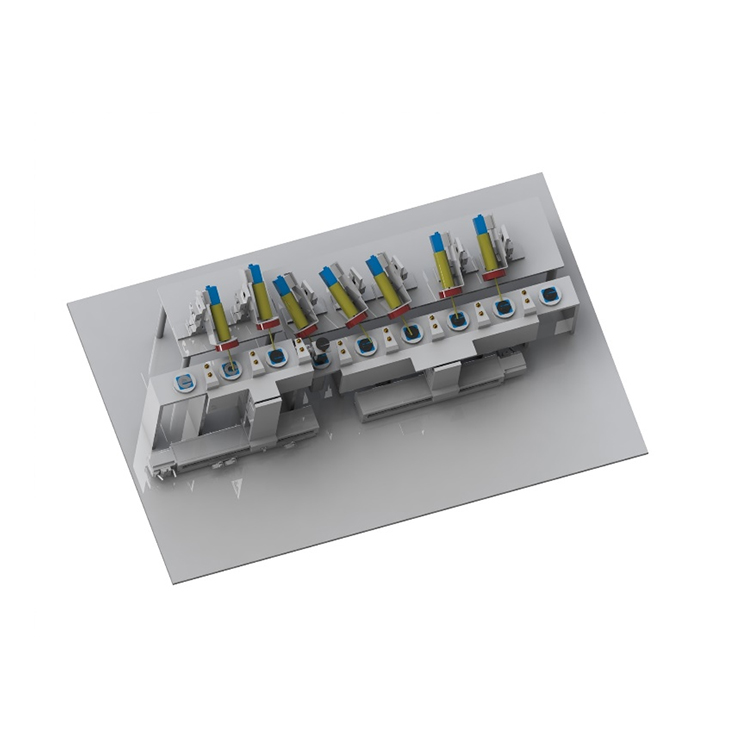
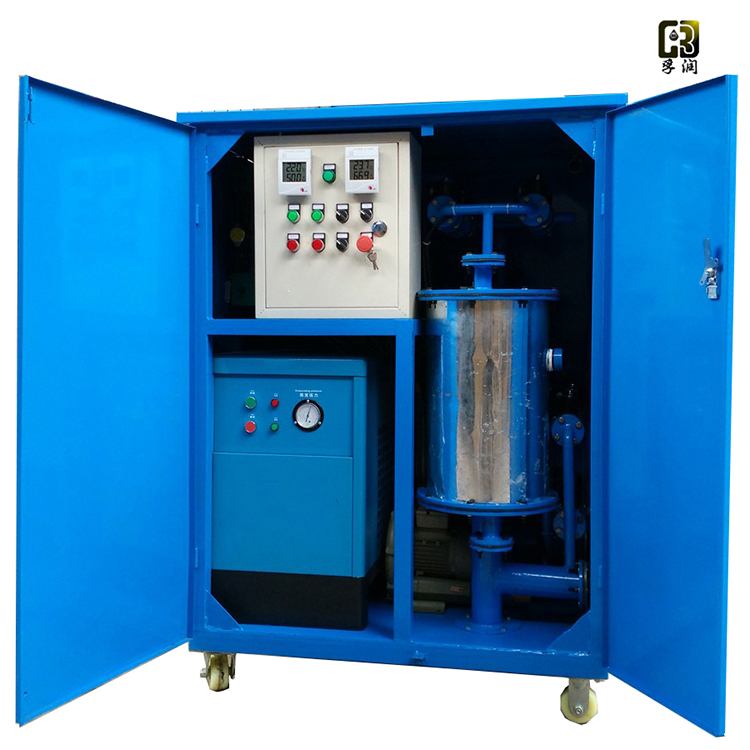
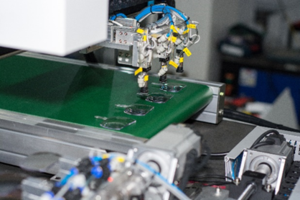
Internal display of the machine
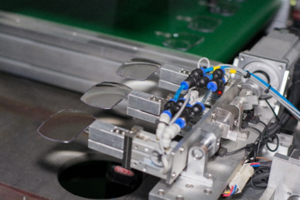
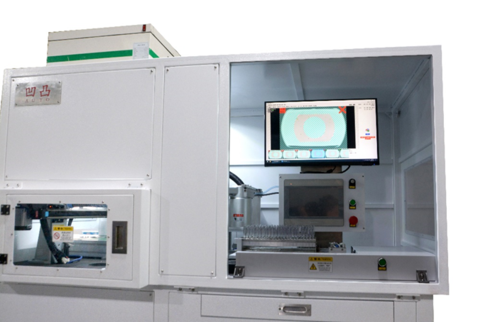
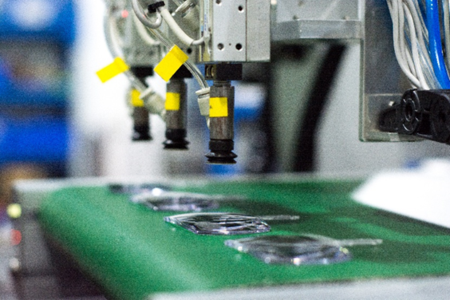
Performance parameters of the equipment:
1. Equipped with automatic sorting and labeling function for defective products;
2. Real time monitoring of product appearance quality can be achieved;
3. The detection accuracy is as high as 0.01mm;
4. Capable of automatically identifying surface defect features ranging from 0.1mm to 1mm;
Equipment system functions:
1. Automatic correction function, automatically correcting tilted products to achieve stable detection;
2. Automatic statistics (good products, defective products, and total quantity);
3. The system has automatic learning function, and the learning process is easy to complete;
4. Design the tolerance range independently, and the system will determine whether the product is qualified based on the tolerance;
5. Are there any skewness, missing parts, or poor dimensions;
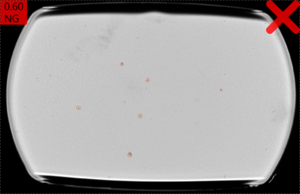
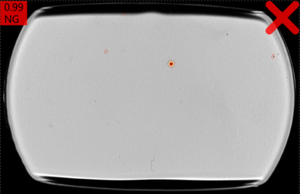
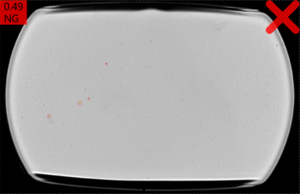
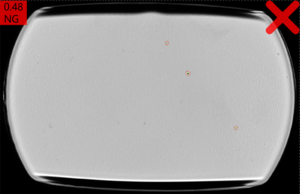
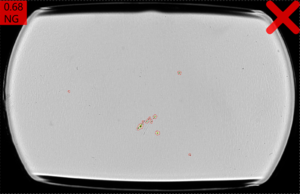
Detection effect image
Defects: scratches, holes, spots, inclusions, damages, stains, chipping, scratches, bubbles, impurities, etc