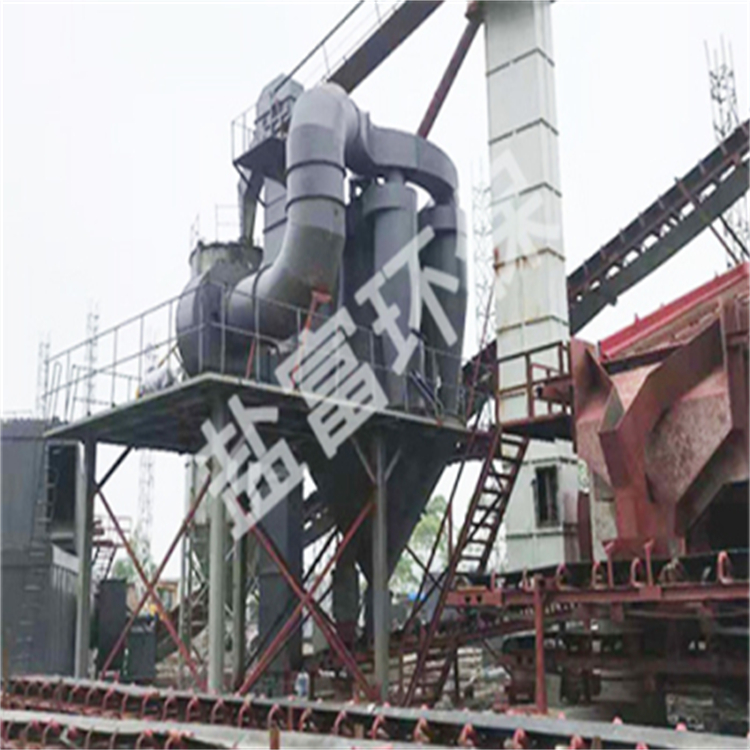
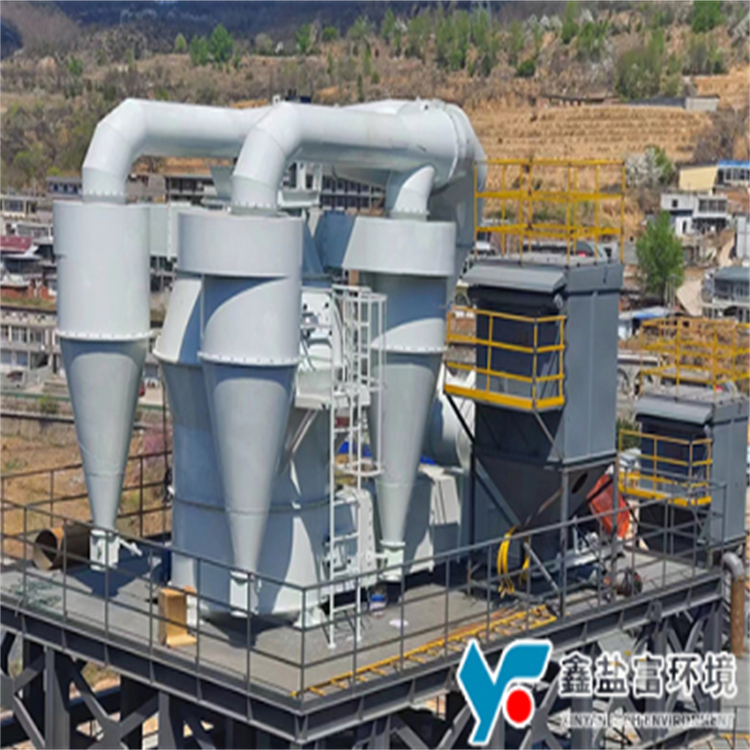
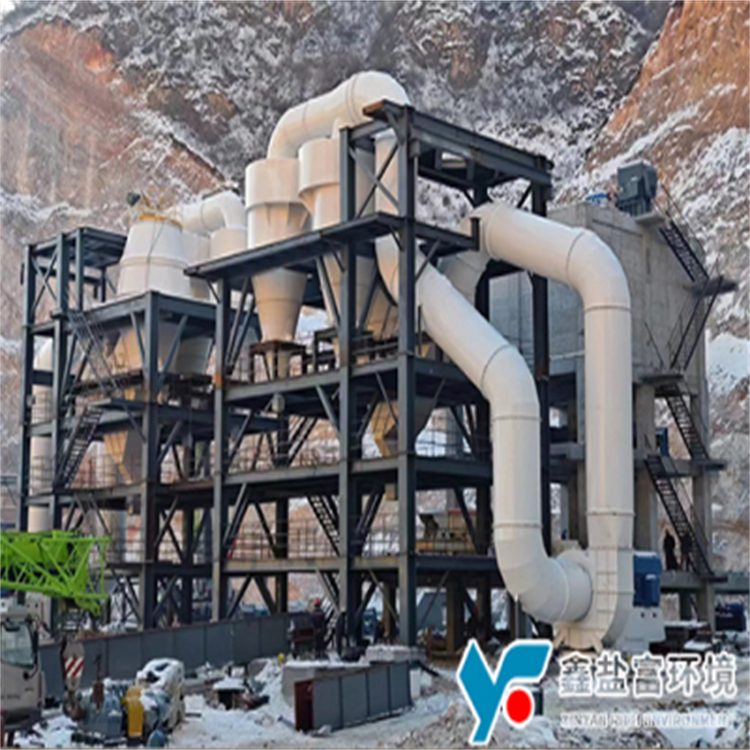
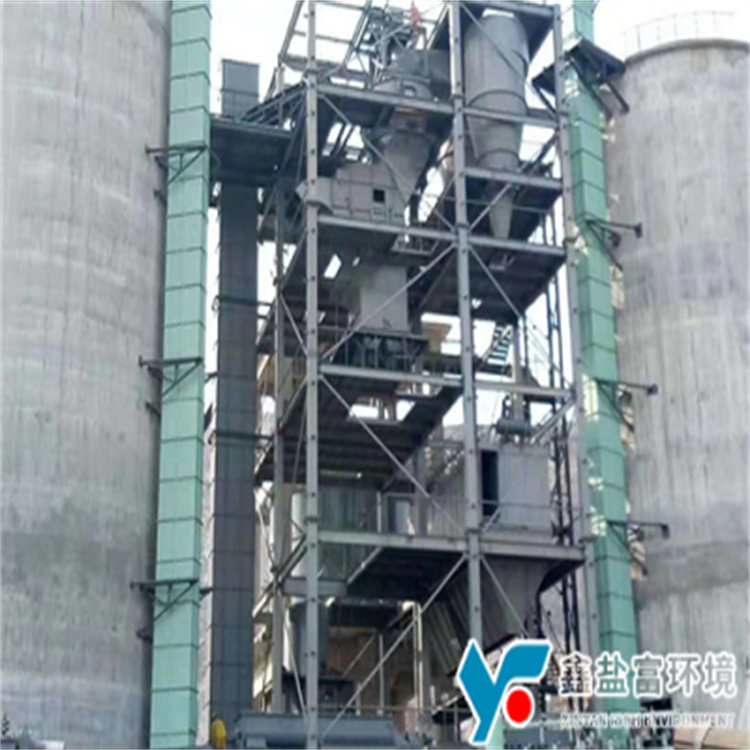
Specializing in a variety of powder selection equipment, dust removal equipment, drying equipment, and other environmental protection machinery and equipment.
15061665767
Fly Ash SeparatorTechnology Development and System Optimization Report
Introduction: Background and Significance of Sorting Technology
Fly ash, as the main solid waste from coal-fired power plants, its classified utilization has become a key link in the comprehensive utilization of resources. With the continuous increase in China's requirements for building materials quality and the growing demand for Grade I ash (45μm sieve residue ≤12%) and ultra-fine ash (45μm sieve residue ≤5%), traditional sorting techniques are no longer able to meet the demand for refined classification. This report systematically analyzes the technical principles, system design innovations, performance optimization plans, and engineering application practices of fly ash sorting machines. By integrating advanced technologies such as vacuum closed-loop circulation and multi-level series sorting, it explores the key technical paths to improve sorting efficiency to over 85%. This provides technical support for the resource utilization of fly ash.
Technical Principle: Centrifugal Separation and Gas-Solid Dynamics
The core technology of the fly ash separator is based on gas-solids two-phase fluid dynamics and centrifugal separation principles, achieving coarse and fine ash separation by controlling the forces acting on the particles. The system is mainly composed of a lock-gas feeding device, a sorting main unit, a cyclone separator, and a fan system, forming a closed-loop working circuit of 14.
Centrifugal Separation Mechanism: The ash-laden gas enters the separator's spiral casing at a speed of 18-25 m/s, where the particles are simultaneously subjected to centrifugal force (Fc ∝ d³) and air drag force (Fd ∝ d) in the forced vortex field. Coarse particles, due to Fc > Fd, are ejected towards the wall and fall into the coarse ash storage; fine particles are carried by the air into the cyclone separator 18. The separation accuracy can be controlled within a range of 3%-25% of the 45 μm sieve residue by adjusting the intensity of the vortex.
The Granularity Adjustment Mechanism: The graded particle size (dc) is determined by the system air volume (Q), the diameter of the vortex plate (Dk), and the structural constant (k), with the relationship: dc ∝ k·Q·Dk. In practice, four main adjustment methods are primarily used: (1) regulating the air volume by adjusting the air inlet door of the fan; (2) adjusting the secondary air volume of the separator; (3) adjusting the position of the guide plate; (4) replacing the vortex plate 38. This allows the system to flexibly adapt to fluctuations in the original ash characteristics and changes in product specifications.
3 System Types and Core Equipment
The current mainstream sorting systems can be divided into three categories based on their airway design and sorting levels, each with its own technical features and applicable scenarios.
3.1 Negative Pressure Closed Loop System
Basic Configuration: The system utilizes a single-point feeding and a fully enclosed air circuit loop. The raw ash enters the vacuum pipeline through a variable-frequency electric lock-gas valve, achieving initial separation in a forced turbo-separator (such as the WFX series). The coarse ash falls directly into the coarse ash storage; the fine ash is collected by a cyclone separator (efficiency ≥95%), with the exhaust gas mostly returned to the original ash conveying pipeline through a wear-resistant high-pressure centrifugal fan, and a small amount of excess gas is discharged from the top of the storage.Dust CollectorPurification emissions: 14.
Technical Advantages:
Environmentally Friendly: Full system operates under negative pressure (-1.5 to -2.5 kPa), effectively preventing dust leakage.
Energy-saving: Closed-loop system reduces fan energy consumption, with the system's power consumption per unit only 3.9-4.5 kWh/t (220 kW power consumption at the WFX-50 model processing 50t/h).
Wear-Resistant Design: The wear-prone areas are lined with alumina linings or abrasion-resistant ceramic tiles (e.g., tongue plate gas lock valves), with a lifespan exceeding 40,000 hours.
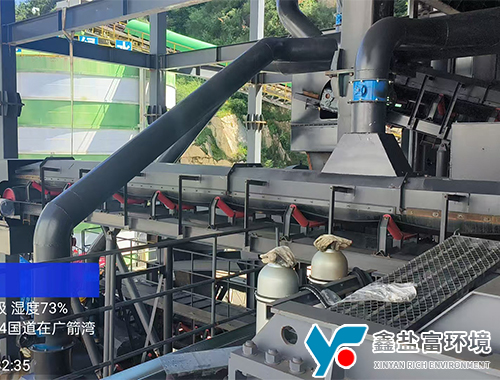
3.2 Multi-level Sorting Equipment
New Three-Tier Sorting System Successfully Integrates Passive/Active SortingSifterAchieve precise tiered classification:
Pre-separation:Passive Sifting MachineIsolate coarse ash particles >45μm (comprising 15-30% of the original ash).
Featured: Bypass Cyclone (Gas-Solid Separator) collects secondary fly ash (45μm sieve residue of 20-30%).
Fine division: The Dynamic Turbine Separator (such as the WFD series) combined with the cyclone separator produces Class I fly ash (screen residue ≤ 12% at 45μm) and ultra-fine fly ash (screen residue ≤ 5% at 45μm).
This system can increase the types of powder from the traditional two to four, with a resource utilization rate improvement of over 25%. Industrial tests by Shaanxi Building Materials Science & Technology Group show that the three-level system boosts the comprehensive yield of fine ash from a single sorting of 65% to 82%.
3.3 Positive Pressure Sorting System
The FX air flow helical casing system,引进 American technology, utilizes positive pressure conveying with features including:
Low-speed Dense Phase Separation: Import wind speed < 18m/s, reduces equipment wear by 37%.
Modular Design: The separator and XFQ-type two-stage separator both have no rotating parts, reducing maintenance costs by 40%.
Smart Control: Electric actuators installed on the fan import valve enable real-time wind volume adjustment in the control room.
Performance Metrics: Efficiency and Energy Consumption Analysis
The core performance indicators of the sorting system include sorting efficiency, energy consumption, and processing capacity, which are interdependent and can be balanced through optimization.
4.1 Quantitative Evaluation of Sorting Efficiency
Fly ash sorting efficiency (η) is defined as the percentage of fines effectively separated from the original ash, with its scientific calculation requiring two prerequisites: (1) no particle breakage during the sorting process; (2) simultaneous sampling and testing. The calculation formula is:
η = [ (α - β) / α(1 - β/γ) ] × 100%
In the formula: α represents the original fineness of fly ash (screen residue), β represents the coarse fineness of fly ash, and γ represents the fine fineness of fly ash 8.
Advanced System Enhances Efficiency Through Three Key Optimizations:
Flow Field Stability: Employing cylindrical vortex flow technology, the relative velocity difference of the airflow is kept below 5%, with the grading precision K value ranging from 0.63 to 0.736.
Uniform撒料:The fluidized twin-spraying device creates a loose material curtain, overcoming the agglomeration issue of the traditional separator material curtain.
Tailpipe Washing: An upward airflow is introduced into the lower part of the coarse ash bin, which performs a secondary sorting of fine ash, enhancing efficiency by 3-5 percentage points.
Innovation Progress: Breakthroughs in Cutting-Edge Technology
5.1 Pre-dispersion and Flow Field Optimization Technology
Fluidized Pre-suspension Spraying: A patented technology developed by Yancheng Tengfei Environmental Protection, featuring the addition of fluidized air jet nozzles in the撒料盘 (sowing disk), which allows the powder to form an even material curtain in 0.2 seconds, increasing the dispersal efficiency by 40% compared to mechanical sowing.
Eddy Current Field Regulation: Optimizing the spiral casing structure through CFD simulation, installing "U" shaped guide vanes between the cage rotor and the casing to eliminate wall effects, reducing the coarse ash to fine ash content to below 5%.
5.2 Wear-Resistant and Longevity Technology
In response to the high abrasiveness of SiO2 in fly ash, technological innovation focuses on three aspects:
Material Innovation: The sorter entry features a green basalt concrete lining (thickness: 30mm), with internal baffles coated with tungsten carbide alloy through thermal spraying, with the overall machine lifespan exceeding 40,000 hours.
Structural Optimization: The areas prone to wear are designed with gas-solid streamline shapes to avoid localized wear caused by abrupt changes in airflow.
Online Repair: Develop ceramic inlay module, allowing for replacement of worn components within 8 hours of downtime, reducing production loss by 70%.
5.3 Smart Control System
Based on PLC, the control system achieves four major functions:
Parameter Linkage: Automatic matching of air volume, feeding speed, and sorting efficiency; automatically adjusts the secondary air gate to 18 when detecting excessive fineness.
Pipe Blockage Alert: Pressure Transmitter Monitors Pipeline Pressure Loss, Issues 30-Minute Early Warning for Blockage Risk 3
Remote Adjustment: Automatically adjusts fan frequency based on the pressure difference change in the dust collector at the storage top to maintain a constant negative pressure of 4 in the system.
6 Application Recommendations: System Selection and Optimization
6.1 Strategic Selection Strategy
Tailored selection solutions for various scenarios:
Construction of a new large-scale power plant: Opting for the WFX series negative pressure closed-loop system, the unit investment is less than 120 yuan per ton per year for treatment capacity over 40t/h, and it has strong site adaptability, supporting both top-of-reservoir and side-of-reservoir discrete arrangements.
Ultra-fine Grey Production: Utilizing a three-level sorting system in conjunction with a parallel cyclone separator (such as the Shaanxi Building Materials Technology solution), although energy consumption increases by 20%, the product added value is elevated by 40%.
Project Upgrade: The Positive Pressure Sorting System (FX Series) is suitable for installation on the side of the existing ash storage due to its non-requirement for sealed pipelines.
6.2 Key Abrasion-Resistant Design Points
Flow Rate Control: The separator inlet wind speed is controlled between 18-25 m/s, with large bend radius of 8 using an R/D ratio greater than 5.
Wear Monitoring: Set thickness detection points on areas such as the worm housing of the separator and the cone of the cyclone separator; initiate ceramic lining renovation when the wear rate exceeds 1mm/1000 hours.
6.3 Smart Control Upgrade
Recommendation to Install Three Types of Sensors:
Microwave Fineness Analyzer: Real-time monitoring of 45μm sieve residue for coarse ash/fine ash, accuracy ±1.5%.
Static sensor: Monitors pipeline ash concentration and automatically adjusts the lock-gas feeder speed to 5.
Vibration Monitor: Installed on fan and separator bearing mounts for predictive maintenance 1.
7 Conclusion: Outlook on Technological Prospects
Fly ash sorting technology is rapidly advancing towards ultra-fineness, low-energy consumption, and intelligence. With the widespread adoption of WFX and WFD sorting machines, sorting efficiency exceeding 90% has become the new benchmark in the industry. Future technological breakthroughs will focus on three dimensions:
Precision Granularity Control: Development of Online Adjustable Vortex Flow Plate Achieves Continuous Adjustment of 45μm Retained Quantity from 1% to 30%
Energy Recycling: Promoting closed-loop systems with waste heat recovery, reducing the energy consumption per unit to below 2.8 kWh/t.
AI-Optimized Control: A machine learning-based parameter adaptive system dynamically optimizes parameters such as air volume and speed by analyzing historical data.
Through continuous technological innovation and system optimization, fly ash sorting technology will provide stronger technical support for the resource utilization of coal-fired solid waste and the green transformation of the building materials industry, promoting the development of a circular economy under the "dual carbon" goals.
Contact us

Service Hotline
18962087178
Company Telephone
15061665767

WeChat Number
18962087178

Address
818 Central Road, High-tech Economic Zone of Jianhu County Hydraulic Technology Park
b2b.china9.net © Zhongshang 114 Hebei Network Technology Co., Ltd.Address: Room 6009, Oriental New World Center, No.118 East Zhongshan Road, Qiaoxi District, Shijiazhuang City, Hebei ProvincePlatform Service Hotline: 4006299930