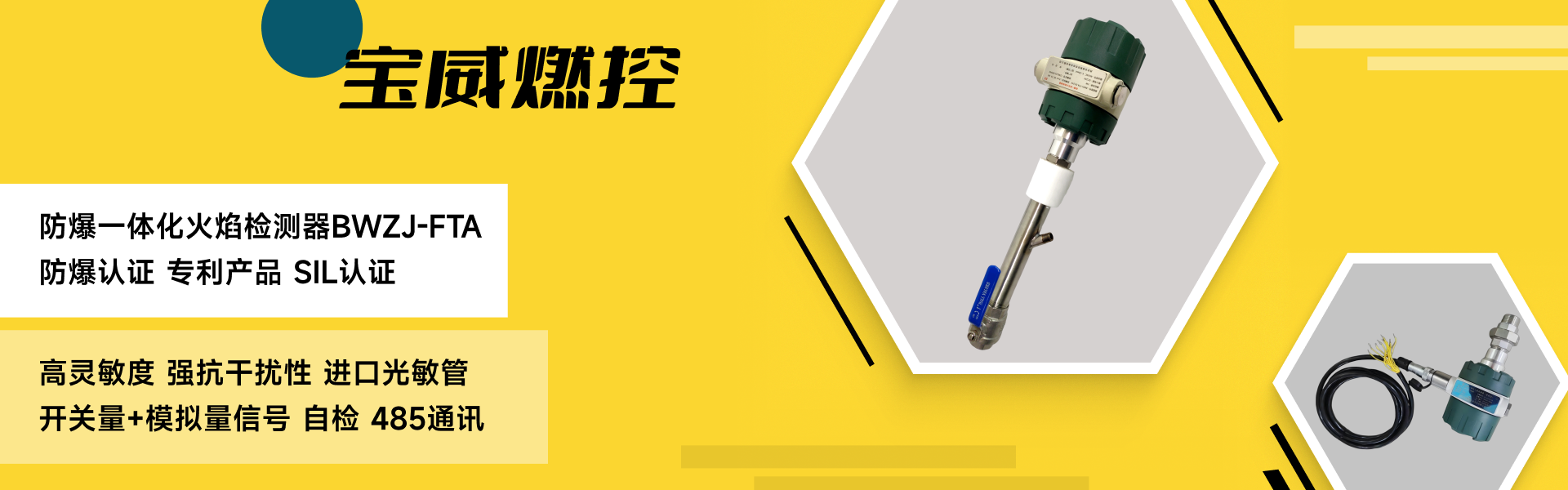
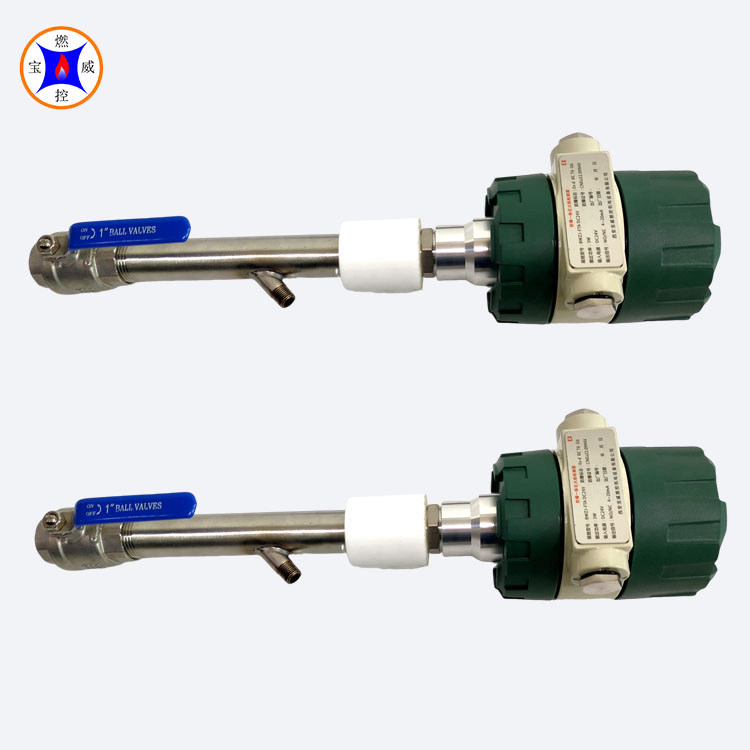
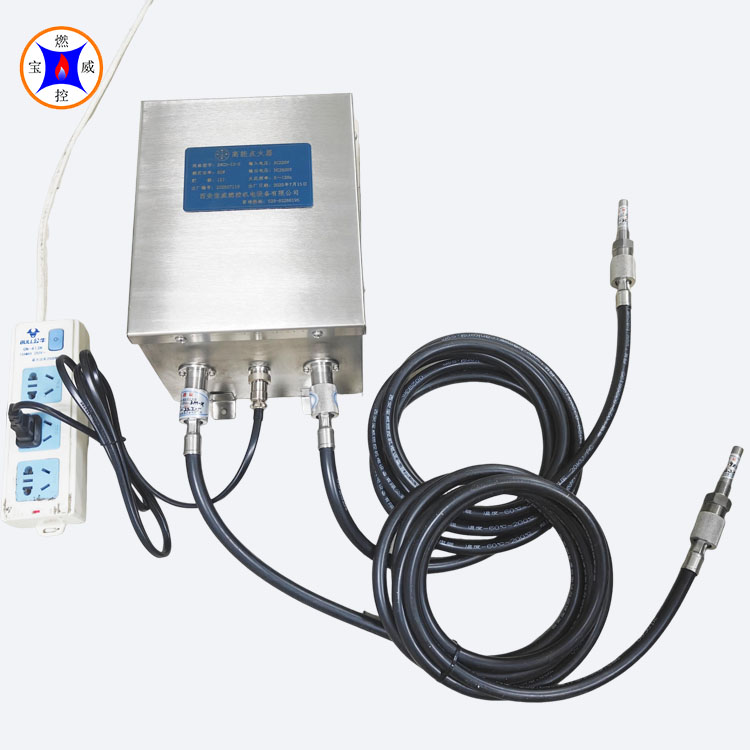
High-Energy Igniters, Flame Detectors, Extinguishing Dete...

Working Principle
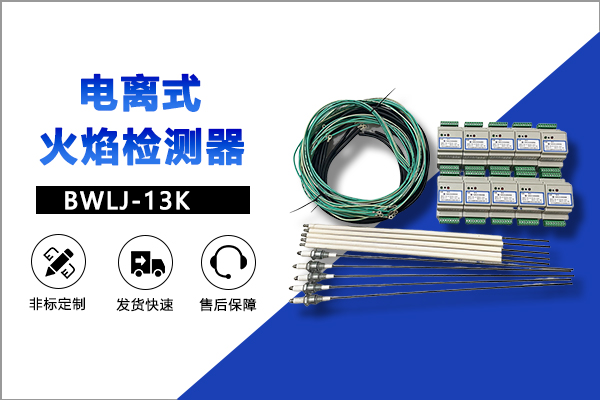
Ionization Flame Detectors: Primarily used for flame detection in gas-powered industrial burners, these detectors are developed based on the unidirectional conductivity of flames and the ionization reactions that occur during the combustion process. Due to the presence of positive and negative ions in flames, a weak current is generated in the external circuit when an electric field is applied to the flame. The detection circuit in the ionization flame detector is high when a flame signal is present; low when there is no flame signal, probe short-circuit, or severe leakage between the probe and the body, serving as a control signal. After appropriate amplification, it drives the corresponding actuator to achieve control or alarm output.
Ultraviolet Flame Detector: Utilizes the ultraviolet light emitted during flame combustion for detection. Employing a UV photoelectric sensor with a spectral range of 185-260nm, it is insensitive to UV light from other spectral ranges. By using this sensor, it can detect UV light during flame combustion to determine the presence and intensity of the flame.
• Method of Inspection
Ionization Flame Detectors: These are contact-type flame detection devices, where the detection electrodes must be inserted into the flame and come into direct contact with it for detection.
Ultraviolet Flame Detector: A non-contact flame detection device that requires only the probe to be aimed at the flame during installation. It detects the flame by receiving the ultraviolet radiation emitted by the flame, without direct contact.
Interference Resistance
Ionization Flame Detectors: Exhibit strong anti-interference capability for gas flames, sensitive only to flames, and no response to temperature.
Ultraviolet Flame Detector: Unresponsive to light beyond UV wavelengths and to radiation from lights and furnace high temperatures, highly resistant to interference.
Use Cases
Ionization Flame Detectors: Primarily used for flame detection in industrial gas burners and gas-powered industrial burners, such as gas burners, etc. However, they require strict grounding of the flame, and may not detect the flame in cases of flame-out. The design requirements for burners are also stringent, particularly common in small gas burners.
Ultraviolet Flame Detectors: Ideal for flame detection in gas and oil industrial burners, industrial furnaces, and industries such as petrochemicals, metallurgy, coal chemical engineering, and ceramics. Particularly accurate for flame detection involving fuel combustion.


b2b.china9.net © Zhongshang 114 Hebei Network Technology Co., Ltd.Address: Room 6009, Oriental New World Center, No.118 East Zhongshan Road, Qiaoxi District, Shijiazhuang City, Hebei ProvincePlatform Service Hotline: 4006299930