Stainless Steel EP Tube, Stainless Steel BA Tube, Stainless Steel Clean Tube, Sanitary Grade Stainless Steel Pipe
13362755567
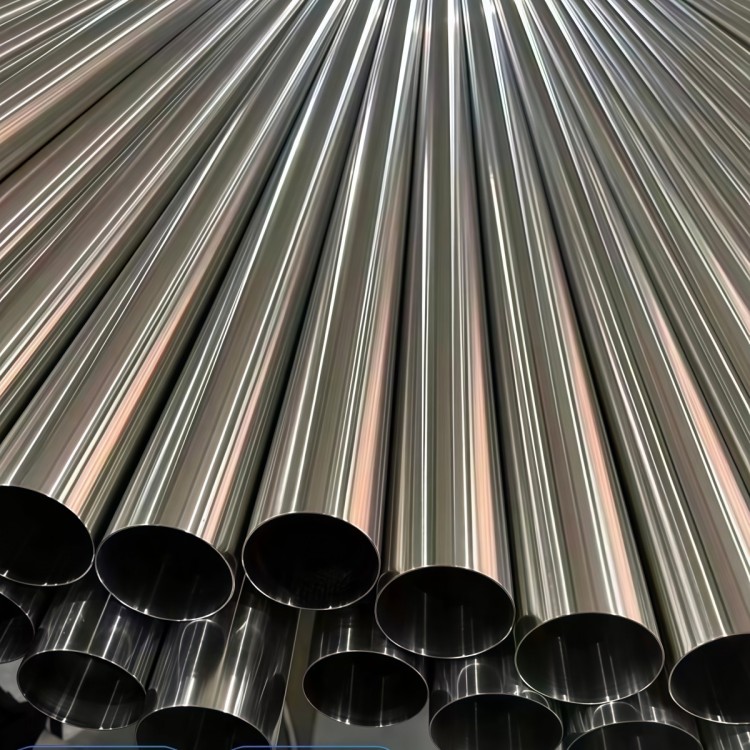
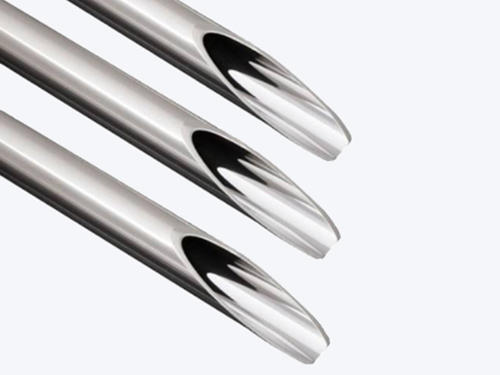 The core advantages of stainless steel EP (Electrolytic Polishing) tubes are their ultra-smooth inner walls (Ra≤0.2μm), high cleanliness, strong corrosion resistance, and minimal residue and bacterial growth. Additionally, they lack an oxide layer and exhibit low fluid resistance, making them ideal for industries with stringent requirements for cleanliness, corrosion resistance, and fluid purity. The following outlines their key application areas and specific scenarios, illustrating the combination of material properties and industry needs:
Semiconductor and Microelectronics Industry (Core Application Field)
Key Requirements:
Ultra-pure water (UPW) transportation, chemical reagents (acids, bases, organic solvents) transportation, high-purity gases (N₂, O₂, Ar, specialty gases) transportation, requiring piping to be free of particulate matter shedding, microbial contamination, and resistant to chemical corrosion.
Specific Applications:
Ultra-Pure Water System: The supply pipeline for ultra-pure water (resistivity 18.2MΩ・cm) in wafer cleaning, lithography, and etching processes features EP tube inner walls that are smooth to prevent ion/grain residue, meeting SEMICON standards (e.g., SEMI F20, F30).
Chemical Mechanical Polishing (CMP): Delivers polishing fluids and cleaners (such as HF, H₂SO₄) while being resistant to acidic and alkaline corrosion, preventing pipeline corrosion and the resultant contamination of wafers.
Gas Transmission: Pipelines for high-purity process gases (such as ArF for lithography) feature non-adhesive inner walls, ensuring a purity of ≥99.9999%.
Material Requirements:
Typically employing 316L/316Ti EP tubes, titanium alloy EP tubes are used for extreme corrosion conditions and meet the "zero metal ion precipitation" requirement.
Pharmaceutical and Biomedical Industry (Highly Cleanroom Environments)
Critical Requirements:
Our pharmaceuticals and liquid formulations are non-polluted, compliant with GMP (Good Manufacturing Practices) and FDA certified. The pipelines are steam-sterilizable (SIP), feature clean-in-place (CIP) systems, and are resistant to disinfectant corrosion.
Specific Applications:
In pharmaceutical liquid transfer: during the production of biological preparations (vaccines, monoclonal antibodies, insulin), antibiotics, the transfer pipelines for raw materials, intermediates, and finished products, the EP tube inner wall is free from bacterial growth and can be sterilized repeatedly (at 121℃ high-temperature steam).
Pure Water / Water for Injection (WFI) System: Preparation and distribution of pharmaceutical water, compliant with USP (United States Pharmacopeia) and EP (European Pharmacopoeia) standards, with inner wall roughness Ra≤0.1μm to prevent microbial adhesion.
Medical Devices: Washing channels for endoscopes and surgical instruments (such as laparoscopic instruments post-sterilization), as well as fluid pipelines for hemodialysis equipment, are resistant to disinfectant (ethanol) corrosion and ensure biocompatibility.
Material Requirements:
316L EP tubes (carbon content ≤0.03%, reducing intergranular corrosion), with Hastelloy EP tubes used in certain applications (e.g., for strong oxidizing fluids).
Section 3: Food and Beverage, as well as Dairy Industry (Cleanliness and Sanitation)
Key Requirements:
Food-grade clean, free of odor residue, acid and alkali-resistant, high-temperature sterilizable, compliant with FDA and EHEDG (European Hygienic Engineering & Design Group) standards.
Specific Applications:
High-end Beverage Solutions: Delivery and filling pipelines for pure water, juices, tea drinks, and alcoholic beverages (such as Baijiu and beer), with EP pipe inner walls free of residue to prevent impacting the taste and shelf life of the drinks.
Dairy Products: Production pipelines for milk, yogurt, and infant formula奶粉, capable of steam sterilization (135°C), resistant to lactic acid corrosion, and effective in preventing bacterial growth (such as Escherichia coli).
Food Additives: Delivery of high-purity additives (such as citric acid) to avoid contamination of additives by pipeline impurities, in compliance with food contact material safety standards (such as GB 4806.9).
Advantage Comparison:
Compared to standard stainless steel pipes, the EP pipe boasts a higher inner wall smoothness, resulting in a CIP cleaning efficiency increase of over 30%, while reducing the amount of cleaning agent and cleaning time.
Chemical and Fine Chemical Industry (Corrosion-Resistant Applications)
Key Requirements:
Transportation of highly corrosive media (acids, bases, salt solutions, organic solvents), preventing pipeline corrosion and leakage, and ensuring fluid purity (e.g., fine chemical products free from impurities).
Specific Applications:
Fine Chemicals: Production and transportation of dyes, pigments, catalysts, and pharmaceutical intermediates, with EP pipes resistant to organic solvents (such as DMF) and corrosive acid-base solutions (such as concentrated HNO₃, NaOH), without precipitation of metallic ions.
Chlor-alkali Industry: The transport of (NaOH) and (Cl₂) can be effectively managed with 316L EP piping, which resists pitting and stress corrosion cracking (SCC) in chlor-alkali environments.
Battery Materials: Production and transportation of lithium battery electrolytes (such as LiPF₆ solution) and cathode materials (trivalent materials), with resistance to electrolyte corrosion and avoidance of metal impurities affecting battery performance.
Special Scenario:
High-temperature and high-pressure corrosive environments (such as discharge pipelines from reactors), utilizing IncoNel Alloy EP Pipes, offering both corrosion resistance and high-temperature stability.
V. New Energy Industry (Emerging Core Field)
Key Requirements:
High-purity fluid transmission, resistant to electrolyte/coolant corrosion, ensures the stability of battery/pv product performance.
Specific Applications:
Battery Manufacturing:
Electrolyte Transfer: Transfer lines for LiPF₆ and carbonate-based electrolytes, featuring EP tube inner walls with no residue to prevent contamination of the electrolyte and battery capacity degradation.
Cooling System: The cooling pipes of the power battery module (such as ethylene glycol coolant) are resistant to coolant corrosion, have low fluid resistance, and high heat dissipation efficiency.
Photovoltaic Industry:
Silicon Wafer Cleaning: The transportation of high-purity HF/HNO₃ mixed acid, EP tube resistance to acid and alkali corrosion, to prevent pipeline corrosion and resultant contamination of the silicon wafer.
Photovoltaic Module Encapsulation: The transportation of organic solvents during the production of EVA film and backsheet materials.
Material Trends:
As the new energy industry demands higher purity, 316L EP pipes are gradually replacing regular stainless steel pipes, with some high-end applications opting for 2205 duplex steel EP pipes (offering higher strength and corrosion resistance).
Section VI: Aerospace and Precision Manufacturing Industry
Key Requirements:
Precision fluid transfer, withstanding extreme temperatures, high pressure resistance, lightweight piping with no debris shedding, meeting aerospace-grade reliability standards.
Specific Applications:
Aviation Hydraulic System: Hydraulic fluid supply pipelines, EP pipes withstand high pressure (working pressure ≥ 30MPa) and extreme temperatures (-55℃~120℃), with a smooth inner wall to reduce hydraulic fluid resistance, enhancing the system's response speed.
Rocket Propulsion Systems: Fuel (such as liquid oxygen) supply pipelines for rocket engines feature EP tubes that withstand low-temperature corrosion, leaving no residue, ensuring the stability of the propulsion system.
Precision Instruments: Mass spectrometers and gas chromatographs feature non-adhesive inner piping for gas transport, ensuring accurate detection.
Section 7: Other High-End Application Fields
Water Treatment Industry (High-End Scenarios)
Reverse osmosis (RO) systems for ultra-pure water production (such as electronic and pharmaceutical-grade pure water) post-processing, as well as high-end water supply pipelines for seawater desalination (salt corrosion-resistant).
Automotive Industry (High-End New Energy Vehicles)
Hydrogen fuel cell car delivery pipelines, 316L EP pipe resists hydrogen embrittlement corrosion, with a smooth inner wall to prevent leaks and blockages from impurities.
Nuclear Industry:
The cooling agent transmission pipelines of nuclear power plants (such as boric acid solution) exhibit resistance to radiation medium corrosion, thereby reducing the adsorption of radioactive impurities.
Summary of Core Logic for the Application of Stainless Steel EP Pipes
Core Performance, Tailored to Industry Needs, Typical Application Scenarios
Inner surface ultra-smooth (Ra ≤ 0.2μm), no impurities left, low fluid resistance - ultra-pure water transfer, medication fluid transfer, hydraulic oil transfer
High purity (no oxide layer), high fluid purity, free of microbial contamination - Semiconductor wafer cleaning, biopharmaceutical production
High corrosion resistance; resistant to acids, alkalis, organic solvents, and salt corrosion; for chemical medium conveyance, chlorine alkali industry, and battery electrolyte conveyance.
Sterilizable/ Washable (CIP/SIP) Compliant with GMP/FDA Standards | Pharmaceutical Industry, Dairy Production
Selection Considerations
Material Grades: Select 316L EP Tube for standard conditions, 316Ti / Hastelloy EP Tube for harsh corrosion conditions, and Duplex Steel (2205) EP Tube for high temperature and high pressure conditions.
Surface Standard: Inner wall roughness Ra≤0.1μm (Semiconductor/Pharmaceutical), Ra≤0.2μm (Food/Chemical), a third-party inspection report (e.g., SGS, TÜV) is required.
Connection Methods: Prioritize welding (automatic TIG welding) or clamp connections (such as Swagelok) to avoid dead corners and residual deposits caused by threaded connections.
In summary, the core application of stainless steel EP pipes revolves around "high cleanliness + corrosion resistance + low residue." They primarily serve the high-end manufacturing and precision industries, acting as a key material to replace common stainless steel pipes and plastic pipelines. They are indispensable in scenarios where product purity and reliability are of the utmost importance.
Contact us

Service Hotline
13362755567
Company Telephone
13362755567

Address
Zhejiang Province, Longwan District, Wenzhou City
b2b.china9.net © Zhongshang 114 Hebei Network Technology Co., Ltd.Address: Room 6009, Oriental New World Center, No.118 East Zhongshan Road, Qiaoxi District, Shijiazhuang City, Hebei ProvincePlatform Service Hotline: 4006299930