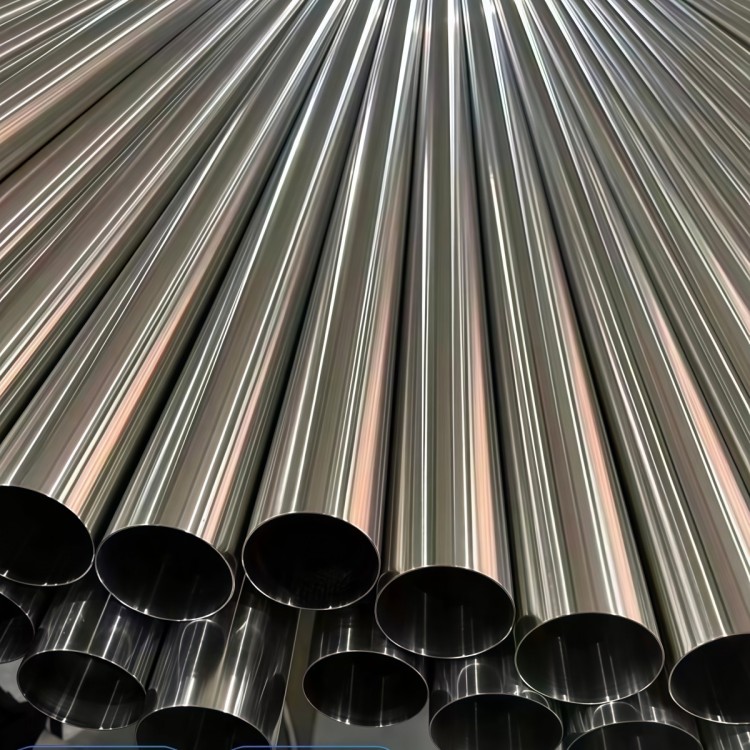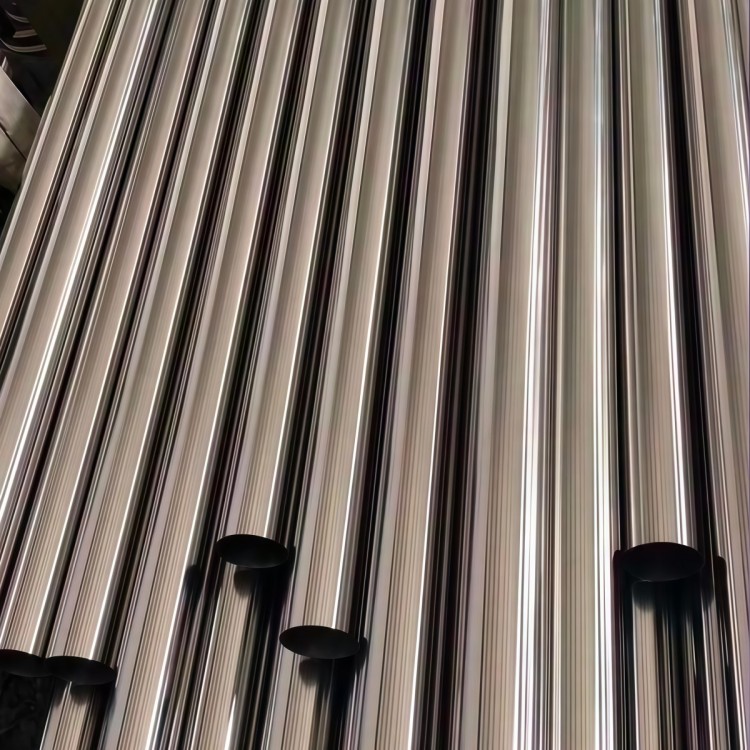
Stainless Steel EP Tube, Stainless Steel BA Tube, Stainless Steel Clean Tube, Sanitary Grade Stainless Steel Pipe
13362755567
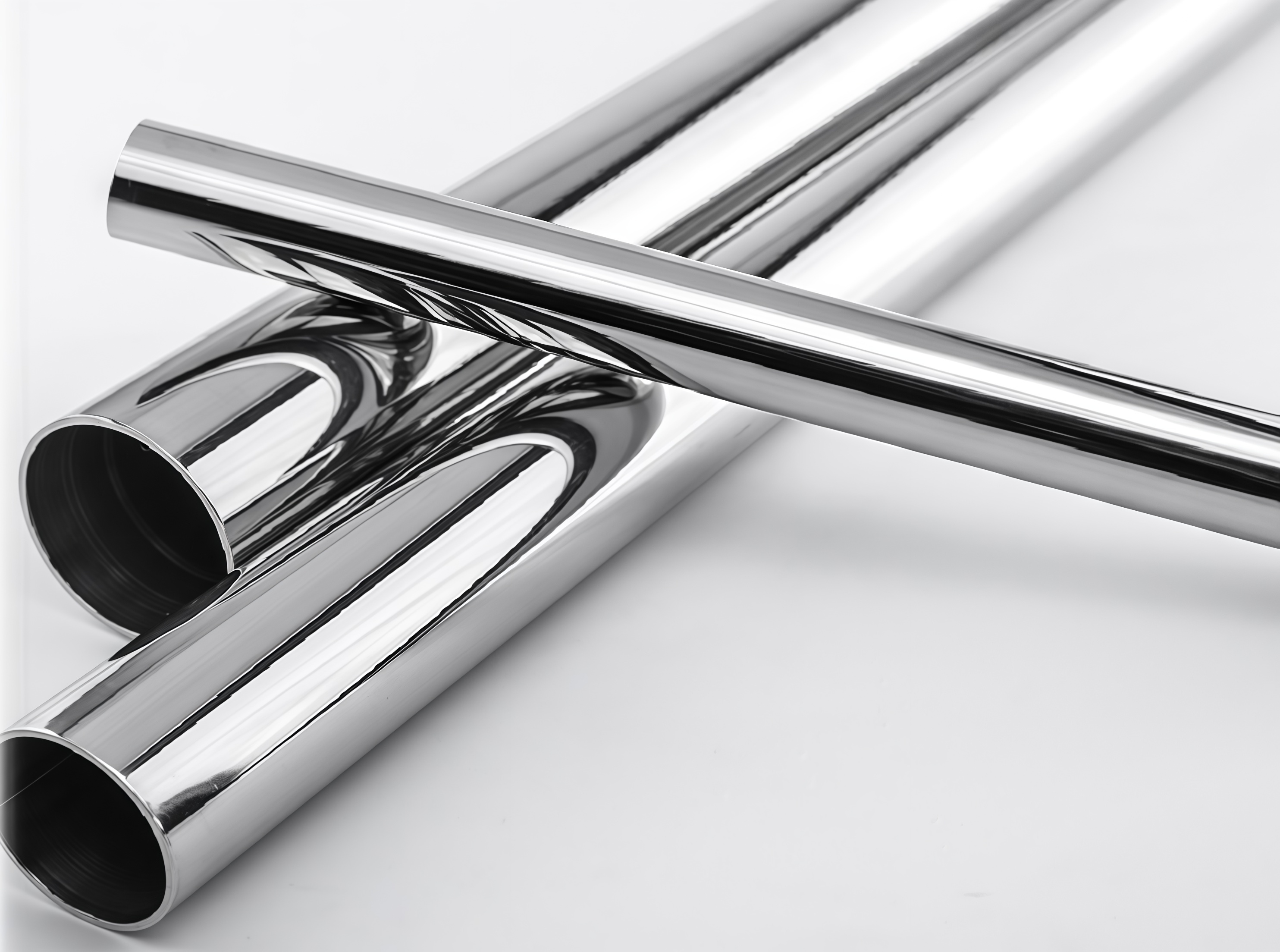
The core factors affecting the electrolytic polishing quality of stainless steel EP tubes (electropolished stainless steel tubes) can be categorized into five major groups: material characteristics, electrolyte system, process parameters, pretreatment/post-treatment, equipment, and environment. These factors are interrelated and directly determine the final surface finish (Ra value), brightness, uniformity, and corrosion resistance. Below is a detailed breakdown and analysis of the impact:
I. Key Influencing Factors and Their Mechanisms
Material Characteristics: Determine the Feasibility of Polishing and Basic Quality
The material of the stainless steel EP tube itself is a prerequisite for electro-polishing, and its composition, microstructure, and initial surface condition directly affect the upper limit of the polishing effect.
Alloy Composition and Purity:
Chromium (Cr≥16%) and nickel (Ni≥8%) content are crucial: Chromium forms a passivation film, while nickel enhances toughness and polishing brightness. For instance, 316L, containing molybdenum (Mo), is more prone to achieve a uniform and bright surface compared to 304, and it also boasts superior corrosion resistance.
Impurity content (such as carbon, sulfur, and phosphorus) must be controlled: impurities can lead to uneven electrolysis reactions, resulting in "blotches" or "black streaks." Therefore, EP pipe raw materials should be selected with low carbon (C≤0.03%) and high-purity stainless steel (such as 316L UHP grade, ultra-low carbon ultra-pure).
Original Surface Condition:
Cold working residues, such as rolling scratches, stretching marks, and burrs, are difficult to completely remove by simple electrolytic polishing if their depth exceeds 0.02mm. Pre-treatment with mechanical polishing (e.g., 800-1200 grit sandpaper) is required.
Uniformity of metallographic structure: Inadequate annealing can lead to uneven grain size and stress concentration, causing variations in dissolution rate during the electrolysis process, resulting in surface "irregular coloration" and "color discrepancies."
Geometric Structure:
Outer Diameter/ Wall Thickness: Thin-walled pipes (e.g., φ6×1mm, length > 3m) are prone to uneven polishing at the ends and center (due to uneven current distribution).
Complex Structure: Optimize electrode arrangement for bent tubes and EP pipes with joints to avoid "shadow zones" (areas where current cannot reach), ensuring sufficient polishing.
2. Electrolyte System: The "Core Reaction Medium" of Electrolytic Polishing
Electrolytes are crucial for electrolytic polishing, as their composition, concentration, and temperature directly determine the polishing speed, surface brightness, and corrosion control.
Core Ingredients and Ratios (Classic Formula - Sulfuric Acid System):
(H₃PO₄): accounts for 60%-80% of the composition, primarily serving the function of "dissolving oxide scale and leveling the surface." High concentrations can slow down the polishing process and result in a darker surface, while low concentrations can cause rapid dissolution and pitting.
Sulfuric Acid (H₂SO₄): 10%-20% concentration enhances the electrolysis reaction and improves polishing efficiency; however, excessive concentration can lead to over-corrosion (rough surface), while insufficient concentration results in inadequate brightness.
Additives: (CrO₃), citric acid, surfactants. CrO₃ enhances passivation effectiveness, preventing pitting; surfactants reduce bubble adhesion (bubbles can lead to unpolished areas, forming "pockmarks").
Electrolyte Temperature:
Optimal Range: 50-70℃ (-sulfuric acid system); at lower temperatures, the electrolyte has high viscosity, ion migration is slow, and polishing is insufficient (resulting in a foggy surface).
High temperatures (>80℃): accelerate the evaporation and decomposition of the electrolyte, leading to concentration imbalance and triggering excessive corrosion (surface defects such as "burn spots" and "orange peel" appearance).
Electrolyte Condition:
Impurity Content: Over time, electrolytes accumulate metal ions like Fe³⁺ and Cr³⁺. When the concentration exceeds 50g/L, the polishing effectiveness significantly declines (surface darkening, reduced flattening ability), necessitating regular filtration or replenishment of fresh liquid.
Uniformity: Ensure the electrolyte concentration and temperature are uniform by stirring (either air stirring or mechanical stirring), to avoid uneven polishing due to excessively high local concentration.
Process Parameters: Precise control is the key to polishing quality.
The core of electrolytic polishing is the "selective dissolution of the anode" (preferably dissolving surface microscopic protrusions), which requires precise control of the dissolution rate and uniformity through parameters.
Current Density (J):
Definition: The current (A/dm²) passing through the unit area of the anode (EP tube surface) is the most core parameter affecting the polishing effect.
Appropriate Range: 10-30 A/dm² (304/316L material), adjustments required based on pipe diameter and wall thickness.
Low current density (<8 A/dm²): Slow dissolution rate, insufficient surface leveling, Ra value cannot be reduced (typically EP tubes require Ra≤0.2μm).
High current density (>35 A/dm²): excessive anode polarization, resulting in "burning" and "pitting" on the surface, and even excessive thinning of the EP tube wall (loss of thickness after polishing should be controlled to ≤5%).
Electrolysis Time:
Match Current Density: Reduce time when current density is high (e.g., 2-5 minutes); extend time when current density is low (e.g., 5-10 minutes).
Overdissolved: leads to a rough surface and decreased luster; undersolved: microscopic protrusions not fully removed, surface still has scratches.
Electrode Parameters:
Electrode Material: Cathodes should be selected from materials resistant to electrolyte corrosion (such as lead, titanium alloys, and 316L stainless steel) to prevent cathode dissolution and contamination of the electrolyte.
Anode Arrangement: The distance between the cathode and the EP tube should be uniform (recommended 50-100mm), with the shape matching the EP tube (e.g., tubular cathode for round tube EP tube), ensuring even current distribution and avoiding localized current concentration.
Power Source: A direct current (DC) power source with a ripple factor ≤ 5% must be selected. Unstable power sources can cause current fluctuations, leading to "striped" surface defects.
4. Pretreatment and Post-treatment: Determining Surface Cleanliness and Quality Stability
The effectiveness of electrolytic polishing relies on "a clean, uniform original surface," while the post-treatment determines the retention of polishing quality.
Pre-treatment (core: removal of surface contaminants and oxidation film):
De-greasing: It is necessary to thoroughly remove rolling oil and cutting fluid from the surface of the EP tube (commonly using alkaline degreasing agents such as sodium carbonate system, at a temperature of 60-80°C, for 5-10 minutes). Residual oil污 will hinder the electrolytic reaction, leading to localized "non-polished areas".
Pickling: Removes oxidation scale and rust (5:1 volume ratio, room temperature, 3-5 minutes); overpickling can cause a rough surface, so strict control of time is required.
Washing: After degreasing and acid washing, the parts must be thoroughly rinsed with deionized water (conductivity ≤10μS/cm) to prevent any residual acidic or alkaline liquids from entering the electrolyte, which could cause localized corrosion.
Post-treatment (Focus: Maintain shine and corrosion resistance):
Washing: Immediately rinse with deionized water after electrolysis (high-pressure spray + ultrasonic cleaning), residual electrolyte can cause surface “whitening” and “corrosion spots.”
Passivation: Treat with a 5%-10% (room temperature, 5-10 minutes) or citric acid passivation solution to enhance the stability of the surface passivation film and prevent oxidation and discoloration.
Dry: Use clean compressed air to blow dry or an oven to dry (temperature 60-80℃), to avoid water stains and maintain a glossy surface.
Equipment and Environment: Ensuring Process Stability
Electrolytic Cells and Mixing Systems:
Electrolytic cell material: Select materials like PP, PVDF, etc. that are resistant to sulfuric acid corrosion to prevent cell dissolution and contamination of the electrolyte.
Agitation Method: It is recommended to use air agitation (by introducing clean compressed air) or mechanical agitation to ensure uniformity in electrolyte concentration and temperature, while reducing bubble adhesion.
Power Stability: Utilizing high-precision DC regulated power supplies, supporting dual current/voltage adjustment, real-time monitoring of current density to prevent fluctuations.
Environmental Cleanliness: The polishing workshop requires dust and moisture prevention to avoid contaminants (such as dust and oil) entering the electrolyte or adhering to the EP tube surface, which may affect the polishing effect.
Section II: Common Quality Defects and Their Influencing Factors (Practical Reference)
Quality Defects, Typical Manifestations, Major Influencing Factors, Solutions
Surface foggy, lack luster, no mirror-like finish, appearing grayish-white; low current density, insufficient electrolyte temperature, low concentration; increase current density to 15-25 A/dm², raise temperature to 60-70°C.
Surface pitting and pinholes appear as tiny indentations; impurities in the electrolyte, unremoved surface oil, and excessive current density. Filter the electrolyte, enhance degreasing pretreatment, and reduce current density.
Partial areas not polished, rough and lack luster; uneven electrode arrangement, EP tube obscured, pre-treatment incomplete; adjust electrode spacing, clear obstructions, re-wash with degreaser.
Surface streaks, color variation; distinct light and dark stripes along the length; current fluctuations, uneven electrolyte concentration, insufficient stirring; replace with a stable power source, enhance stirring, replenish new electrolyte.
Over-thin wall thickness; polished wall thickness deviation exceeds allowable limit; excessive electrolysis time, high current density; shorten polishing time, reduce current density, real-time wall thickness monitoring
III. Key Control Points (Industrial Production Reference)
Material Matching: Electrolyte of 65%-75%+ sulfuric acid 15%-25%+CrO₃ 2%-5% for 304/304L EP pipes; for 316L EP pipes, containing molybdenum, the sulfuric acid ratio can be appropriately increased to 20%-28% to enhance dissolution uniformity.
Parameter Precision: For φ8×1mm 316L EP tubes, recommended parameters: current density 18-22 A/dm², electrolysis time 4-6 minutes, electrolyte temperature 60-65℃.
Pre-treatment priority: Degreasing > Pickling > Washing, to ensure a continuous water film on the EP pipe surface (no water droplets on the surface after washing indicates thorough degreasing).
Electrolyte Maintenance: Filter electrolyte once for every 1000m of EP tube produced, regularly check the Fe³⁺ concentration, and replace some new fluid when it exceeds 50g/L.
Geometric Adaptation: For slender tubes (length > 3m), a "double cathode arrangement" (1 cathode inside and 1 outside the EP tube) is used. Curved tubes require section-wise polishing to avoid shadow areas.
By systematically controlling the aforementioned factors, the surface Ra value of the stainless steel EP tube can be stabilized at ≤0.1μm, achieving a mirror-like glossy finish. Simultaneously, it enhances the surface corrosion resistance, meeting the application requirements of high-precision clean fields such as semiconductor, pharmaceutical, and food industries.
Contact us

Service Hotline
13362755567
Company Telephone
13362755567

Address
Zhejiang Province, Longwan District, Wenzhou City
b2b.china9.net © Zhongshang 114 Hebei Network Technology Co., Ltd.Address: Room 6009, Oriental New World Center, No.118 East Zhongshan Road, Qiaoxi District, Shijiazhuang City, Hebei ProvincePlatform Service Hotline: 4006299930