Manufacturer of drying equipment, granulation equipment, ...


Product Recommendation
I. Overview
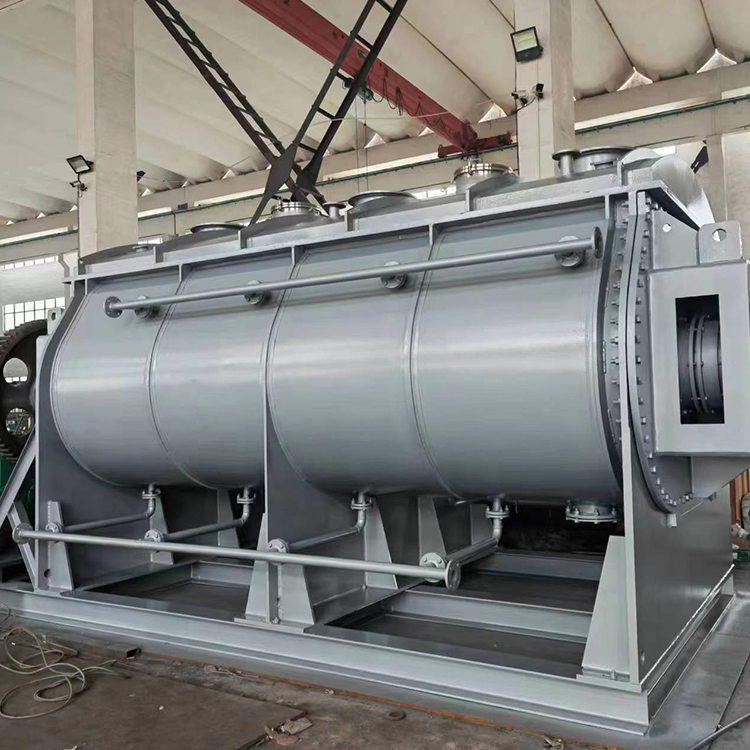
The FG type fluidized bed dryer is a particle drying unit that is currently paired with the YK swing-type granulator and the GHL high-speed granulating mixer in GMP engineering designs. It boasts a wider fluidization range than the traditional horizontal XF fluidized bed dryer and is easy to clean.
Materials are agitated at a low speed while fluidized, thus preventing caking. This application is particularly advantageous for materials with high moisture content and粘性.
Section II: Technical Specifications
Model Project | FG-60 | FG-100 | FG-120 | FG-150 | FG-200 | FG-250 | FG-300 | FG-500 | ||
Belt Conveyor Hopper Capacity | L | 200 | 300 | 400 | 500 | 650 | 800 | 1000 | 1600 | |
Production Capacity | Kg per batch | 30~60 | 50~100 | 60~120 | 70~150 | 100~200 | 120~250 | 150~300 | 300~400 | |
Inlet Air Temperature | ℃ | 50~100 | ||||||||
Fan | Airflow | M3/h | 2576 | 3488 | 3619 | 5114 | 6032 | 7185 | 7766 | 9000 |
Wind pressure | Pa | 5639 | 5080 | 7109 | 5869 | 7610 | 7400 | 7218 | 8518 | |
Motor Power | KW | 7.5 | 11 | 15 | 15 | 22 | 30 | 37 | 45 | |
Mixing Machine | RPM | r/min | 11 | 11 | 11 | 11 | 11 | 11 | 11 | 11 |
Motor Power | KW | 0.55 | 1.1 | 1.1 | 1.1 | 1.5 | 1.5 | 2.2 | 2.2 | |
Steam | Pressure | MPa | 0.4 | 0.4 | 0.4 | 0.4 | 0.6 | 0.6 | 0.6 | 0.6 |
Consumption Volume | Kg/h | 140 | 170 | 210 | 240 | 230 | 280 | 280 | 400 | |
Compressed Air | Pressure | MPa | 0.5 | 0.5 | 0.5 | 0.5 | 0.5 | 0.5 | 0.5 | 0.5 |
Consumption Volume | M3/h | 0.6 | 0.6 | 0.6 | 0.9 | 0.9 | 0.9 | 0.9 | 1.0 | |
Note: Production capacity varies depending on the density of the material and the moisture content of the material.
III. Usage
Capsules, Tablets, and Suspensions Granules
Bulk and fine powders for food, chemical, and other industries
* Particles or powders that are overly moist, sticky, or have a broad particle size distribution
Section 4: Working Principle
Dried materials (either granules or fine powder) are introduced into the dryer's hopper. After the air passes through a medium-efficiency filter to remove dust, it is heated by a heater to the temperature required for drying. The air then enters the main tower, where it flows through a perforated plate at the bottom of the hopper, causing the material inside to fluidize and remove moisture, thereby drying it. The evaporated moisture is carried away with the exhaust air, filtered through a bag filter, and then exhausted by a fan. Fine particles that rise with the air are collected by the bag filter and returned to the fluidized bed through a dust cleaning device.
V. Equipment Features
This equipment features a round hopper design with no blind spots, ensuring uniform moisture content in the finished product and easy, thorough cleaning.
The hopper (沸腾床层) is sealed with an O-type pneumatic bladder for ease of loading and unloading. The hopper is equipped with a blender, ensuring material boiling with no blind spots. It achieves even drying, rapid and efficient. The top is fitted with a filter bag and includes a pulse automatic shake bag device, effectively preventing material loss.
* Utilizing anti-static special fiber fabric for dust removal, offering excellent performance and safety.
The bed is equipped with an agitator to prevent channeling or agglomeration, offering a broad fluidization range.
Six: Equipment Installation
Location:
The site should have a 1:100 slope to prevent the accumulation of wastewater during equipment cleaning.
2. Installation:
The complete equipment should be manufactured with a maintenance space of 800mm behind the equipment during installation, and sufficient operating space should be left in front.
The fan produces significant noise, so it is recommended that users install it in an isolated area and connect the power, steam, and compressed air to the corresponding pipeline positions on the main unit.
Section 7: Operations
1. Preparation Phase:
Adjust compressed air to 0.35~0.4 Mpa, inspect the fan's rotation direction, and follow the instructions in the corresponding manual for operation.
2. Action:
Insert the hopper with the wet material, then position the material cart into the corresponding slot of the main machine.
The "Lifting Cylinder" ensures the top and bottom flanges of the hopper are sealed.
Set the air intake temperature for drying to the required value.
Start the blower — start the mixer motor.
Set the switch to manual, close the left air door, left dust cleaner, right air door, and right dust cleaner respectively, and check if each action is smooth.
After material dries, shut off the agitator motor—turn off the exhaust fan—manually clean the dust several times—lower the hopper and discharge.
3. The mixer should strictly avoid dead bed start-up. Generally, when the fluidization is good, the mixer should be turned off to enhance gear longevity.
4. Section 8: Electrical Schematic
See electrical schematics.
Maintain and inspect
All equipment must be regularly inspected and maintained to ensure optimal performance and normal operation. Instruments and meters should be kept dry, and the surrounding equipment should be kept clean. The operation area should be cleaned frequently to maintain cleanliness.
Air Compressor Filter: Clean all parts with a soft brush every 6-12 months, and ensure the lower section is free of water before each operation.
2.雾化器 should be refilled with edible vegetable oil every 15 days to ensure the solenoid valve receives timely lubrication.
After each shift, clean the condensate water from the air compressor tank.
4. Bags - Check for breathability regularly; clean immediately if clogged. Clean as needed during shutdowns or when changing bag types.
5. Orifice Plates - If orifice plates become clogged, a channeling phenomenon occurs during the fluidization of powdered materials, leading to poor fluidization. It is essential to clean them promptly.
6. Inlet Air Filter - Once the filter becomes clogged, it can severely reduce the inflow of air, leading to poor fluidization. Therefore, it should be cleaned or replaced every 2 to 3 months.
Ten: Common Faults and Solutions
Common Faults | Causes | Exclusion Method |
1. Poor沸腾condition | (1). The filter hasn't shaken for a long time, with too much powder absorbed onto the bag. | Inspecting the vibration cylinder of the bag filter |
(2) The boiling height is too high, the condition is剧烈, and the bed layer vacuum is high, with powder adhering to the bag filter. | (2) Reduce the opening degree of the wind gate, shake the bag filter | |
2. Eliminate fine air powder | (1) The bag filter's bag has破裂. | Inspect the filter bags of the bag filter for any tears; if there are any small holes, they are unusable and must be repaired or replaced. |
Layered vacuum pressure is high, removing fine powder. | (2) Adjusting the air gate opening degree |


b2b.china9.net © Zhongshang 114 Hebei Network Technology Co., Ltd.Address: Room 6009, Oriental New World Center, No.118 East Zhongshan Road, Qiaoxi District, Shijiazhuang City, Hebei ProvincePlatform Service Hotline: 4006299930