Chemical Industry Machinery & Equipment

From raw material intake to reaction and final output, the process can be completed with a high degree of automation, ensuring strict control over critical parameters such as temperature, pressure, mechanical control (mixing, aeration, etc.), and concentrations of reactants and products.
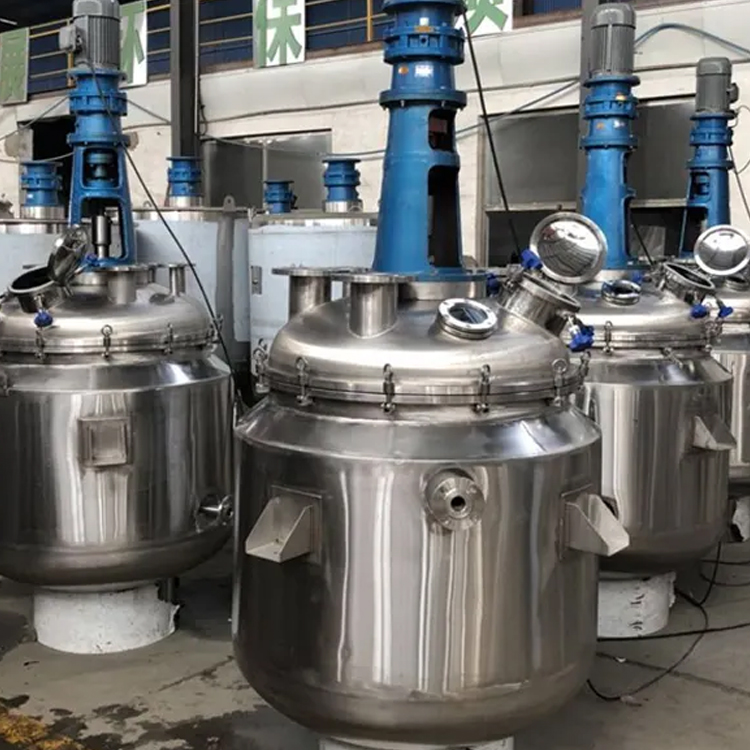
Electrically heated reaction vessels are containers designed for physical or chemical reactions, achieving the required heating, evaporation, cooling, and low-speed mixing functions through structural design and parameter configuration. Many companies require the use of electrically heated reaction vessels during the production process of materials. The chemical reactions within the vessel take place at a relatively stable temperature. Otherwise, it may reduce product quality and production efficiency, and even lead to production failure, resulting in significant losses for the enterprise.
Maintaining a relatively stable and reasonable temperature within the electric heating reaction kettle's material is crucial. Providing low-temperature chilled water to the kettle hinges on selecting the appropriate cooling temperature control and chilled water circulation systems. To reduce the temperature, it's essential to choose the right cooling and temperature control systems that automatically provide a stable, constant-temperature chilled water supply based on load changes, ensuring product quality and efficiency.
Simply calculate the cooling capacity needed for the fermentation process and select an appropriate cooler. Since the cooling demand varies significantly during fermentation, it is recommended not to choose a single large-capacity refrigeration unit, but rather opt for two or more units, which will save on operational costs.
Simultaneously, various issues that arise in the design of the electrically heated reaction kettle system should not be overlooked. A dual-circulation water system design is adopted, featuring high and low-temperature zone insulation water tanks. Water pumped from the high-temperature zone is cooled by a low-temperature chilled water unit and then returned to the low-temperature tank. Process pumps extract water from the low-temperature zone of the tank until the water level rises, at which point it returns to the high-temperature zone.


b2b.china9.net © Zhongshang 114 Hebei Network Technology Co., Ltd.Address: Room 6009, Oriental New World Center, No.118 East Zhongshan Road, Qiaoxi District, Shijiazhuang City, Hebei ProvincePlatform Service Hotline: 4006299930