


- AllProduct Category
-
Light curtain target
Technical Articles
Industry News
News & Information
Light-Gas Gun System
Impact Tester
Security Management Platform
Impact/Overshoot Dynamic Checker
Ultra-Dynamic Testing Equipment
Ultra-Dynamic Signal Conditioning/Data Acquisition
Impulse Fire Device
Self-Organizing Network
FlexiBots Industrial Software
Automated Production Line
FlexiBots Assembly Robots
FlexiBots Inspection Robots
Flexible Hazardous Area Electrical Equipment
FlexiBots Industrial Robots



详情描述
I. Basic Information
A superdynamic strain measurement system is a high-precision, high-speed system used to measure the strain and its changes on the surface of an object. This system is typically employed for strain analysis of materials, structures, or equipment under dynamic loads, to understand their performance and behavior under actual operating conditions.
This measurement system typically includes the following key components:
II. Components and Features
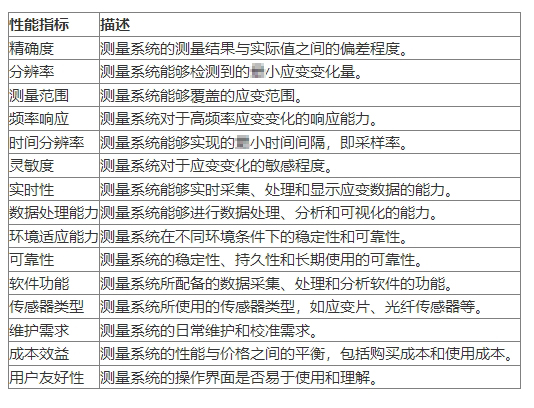
1. Sensors: High-sensitivity sensors, such as strain gauges, fiber Bragg grating sensors, and resistive strain gauges, are commonly used in ultra-dynamic strain measurement systems. These sensors can capture minute strain changes in a very short time.
2. Data Collection System: This system includes a data collection card and related software, designed to convert signals from sensors into digital signals and to record and store strain data in real-time.
3. High sampling rate: Ultra-dynamic strain measurement systems typically feature a high sampling rate, allowing for the collection of a large number of data points in a very short time to capture strain changes under transient loads.
4. High Precision: This measurement system typically boasts high-precision measurement capabilities, accurately detecting minute strain changes, usually at the micron or nanometer level.
5. Real-time Monitoring: The ultra-dynamic strain measurement system can monitor and record strain data in real-time, providing immediate feedback and analysis results during the testing process.
6. Stress Field Visualization: By processing and analyzing the collected strain data, the ultra-dynamic strain measurement system can generate strain field images or animations, aiding users in a more intuitive understanding of the strain distribution and trend of an object.
This measurement system is commonly widely used in fields such as engineering, materials science, aerospace, and automotive industries, for evaluating material and structural performance, optimizing designs, and diagnosing faults. It plays a crucial role in research and engineering practice, aiding in a better understanding and utilization of strain information under dynamic loads.