




- AllProduct Category
-
Light curtain target
Technical Articles
Industry News
News & Information
Light-Gas Gun System
Impact Tester
Security Management Platform
Impact/Overshoot Dynamic Checker
Ultra-Dynamic Testing Equipment
Ultra-Dynamic Signal Conditioning/Data Acquisition
Impulse Fire Device
Self-Organizing Network
FlexiBots Industrial Software
Automated Production Line
FlexiBots Assembly Robots
FlexiBots Inspection Robots
Flexible Hazardous Area Electrical Equipment
FlexiBots Industrial Robots






详情描述
I. Basic Information
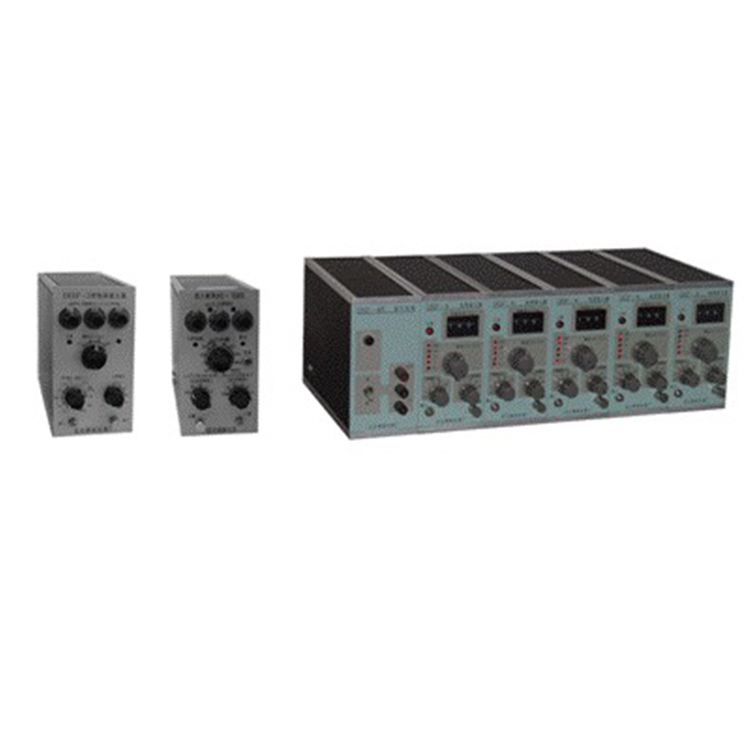
A charge amplifier is an electronic device used to amplify charge signals, not voltage signals. It is primarily used in applications where charge is measured rather than voltage, such as measuring tiny charges, particle detection, and sensor outputs. Unlike traditional voltage amplifiers, a charge amplifier converts the input charge signal into a corresponding voltage signal, thereby enabling amplification, processing, and measurement of the charge signal.
Section II: Features and Functions
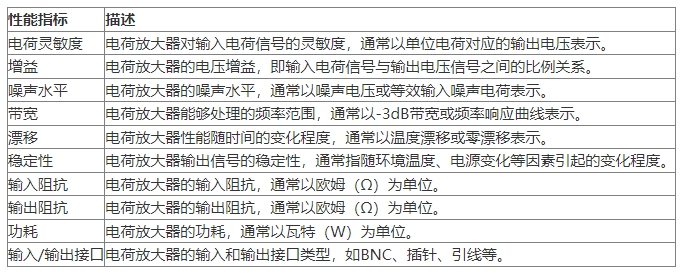
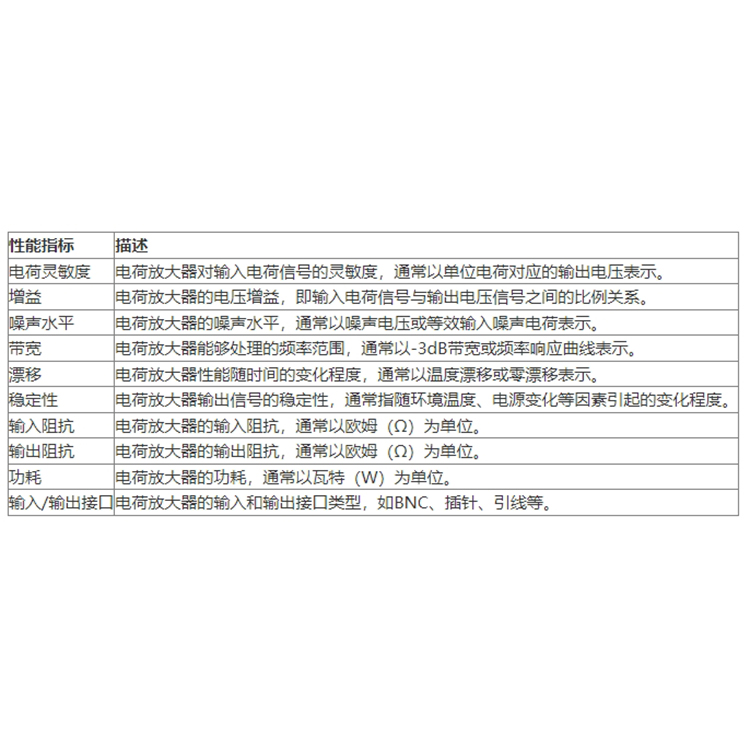
Charge to Voltage Conversion: A charge amplifier can convert input charge signals into corresponding voltage signals, indirectly measuring the charge by measuring and amplifying these voltage signals.
2. High Sensitivity: The charge amplifier features high sensitivity, capable of measuring tiny charge signals, suitable for applications requiring high signal sensitivity.
3. Low Noise: To enhance the accuracy of signal measurement, charge amplifiers are typically designed to be low noise, reducing interference from both the environment and the circuit itself.
4. High Gain: To amplify the input charge signal, charge amplifiers typically have high gain, which can boost tiny charge signals to a measurable range.
5. Wide bandwidth: Some charge amplifiers feature a wide bandwidth, capable of handling high-frequency charge signals, suitable for applications requiring fast response.
6. Low Drift: Charge Amplifiers are typically designed for low drift, ensuring stable performance over time and minimizing measurement errors.
7. Flexibility: Some charge amplifiers feature versatile input and output interfaces, compatible with various types of sensors and measuring equipment.
In summary, charge amplifiers play a crucial role in measuring and amplifying small charge signals, meeting the high demands of applications requiring high signal sensitivity, accuracy, and stability.