

- AllProduct Category
-
Light curtain target
Technical Articles
Industry News
News & Information
Light-Gas Gun System
Impact Tester
Security Management Platform
Impact/Overshoot Dynamic Checker
Ultra-Dynamic Testing Equipment
Ultra-Dynamic Signal Conditioning/Data Acquisition
Impulse Fire Device
Self-Organizing Network
FlexiBots Industrial Software
Automated Production Line
FlexiBots Assembly Robots
FlexiBots Inspection Robots
Flexible Hazardous Area Electrical Equipment
FlexiBots Industrial Robots




详情描述
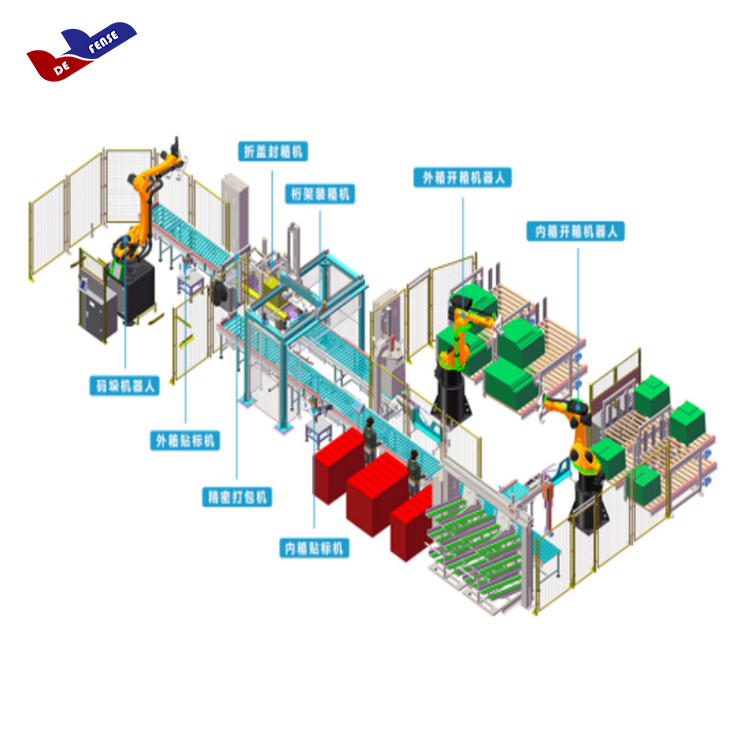
Our soft recovery system addresses the issue of collecting test pieces after wide pulses are generated by gunpowder cannons, hydrogen-oxygen combustion cannons, and electromagnetic cannons. Typically, shock test devices are used to produce shock forces, and they come in many types, mainly including shock test machines, Hopkinson bars, Makhnovskiy hammers, light gas guns, gunpowder cannons, hydrogen-oxygen combustion cannons, and electromagnetic cannons.
I. Product Introduction
1. The primary lightweight gas cannon can generate a peak overload of over 10g, with a pulse width typically narrow and ranging from several tens to several hundreds of microseconds. The secondary and tertiary lightweight gas cannons can produce even higher peak overloads.
The Hopkinson bar can generate acceleration peaks up to tens of thousands or even up to two hundred thousand g's, with loading pulses typically ranging from several tens to several hundreds of microseconds.
3. The Mahit hammer can generate acceleration pulse amplitudes below 50,000g, with pulse widths generally in the picosecond range.
4. The shock test bench can generate acceleration pulse amplitudes below 50,000g, with pulse widths typically reaching the millisecond level.
5. Gunpowder cannons, hydrogen-oxygen combustion cannons, and electromagnetic cannons can produce acceleration pulse amplitudes below 30,000g, with pulse widths typically reaching several tens of milliseconds. Test pieces experience excessively high speeds, making recovery issues prominent.
II. Structural Composition
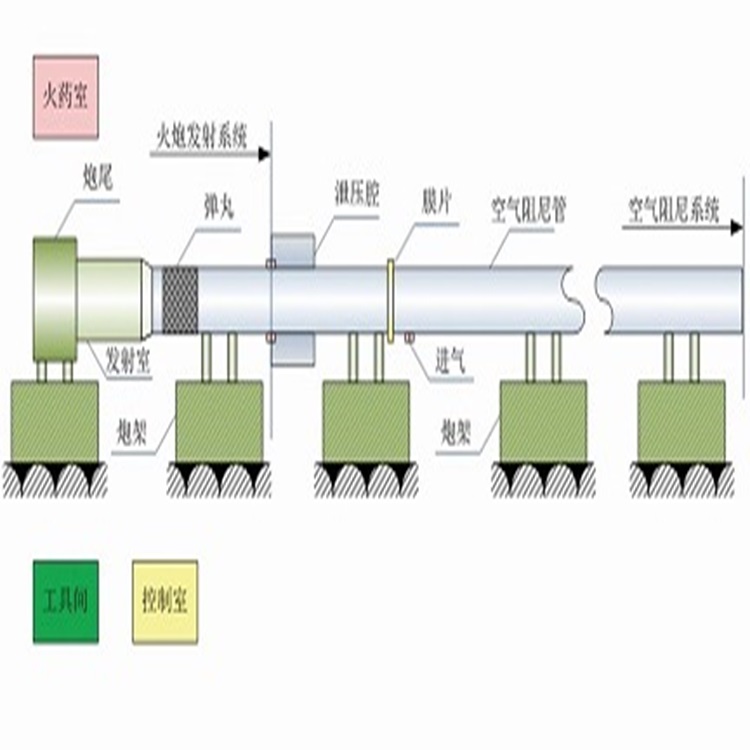
Artillery Firing System
Primarily发射projectiles, generating high overload, the muzzle is connected to the exhaust pressure relief chamber of the air damping recovery system.
2. Air Damping Recovery System
Utilizing high-pressure air to prevent the projectile from continuing its flight out of the cannon mouth, generating sufficient resistance at a certain distance to stop the projectile or reduce its speed to a sufficiently low level, which facilitates the removal of the accelerometer inside the projectile for evaluating the fuze's performance during the firing process.
3. Ballistic Acceleration Measurement System
Primarily embed accelerometers within the projectiles, recording the acceleration patterns during the launch and recovery process. After recovery, connect the accelerometer to a computer to obtain the recorded results.
1. Recycled shell weight: 0-60kg, can be heavier
2. Maximum launch overload: 0g - 30,000g
3. Overload Response Time: ≥3ms (the time interval from the overload rising to 70% of the maximum overload to descending back to 70%)
4. Inner Diameter of Emission Tube: 0-155mm, can be larger