

- AllProduct Category
-
Light curtain target
Technical Articles
Industry News
News & Information
Light-Gas Gun System
Impact Tester
Security Management Platform
Impact/Overshoot Dynamic Checker
Ultra-Dynamic Testing Equipment
Ultra-Dynamic Signal Conditioning/Data Acquisition
Impulse Fire Device
Self-Organizing Network
FlexiBots Industrial Software
Automated Production Line
FlexiBots Assembly Robots
FlexiBots Inspection Robots
Flexible Hazardous Area Electrical Equipment
FlexiBots Industrial Robots



详情描述
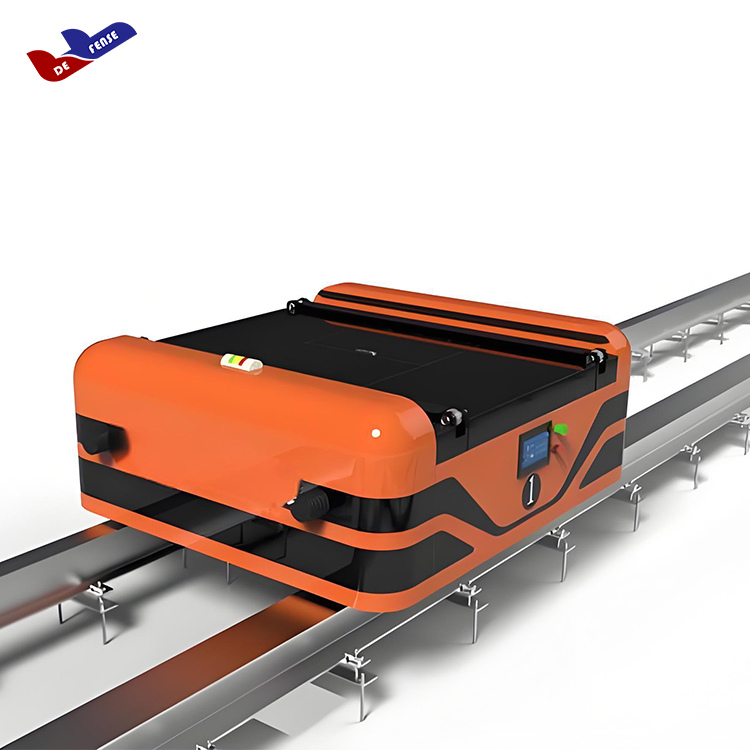
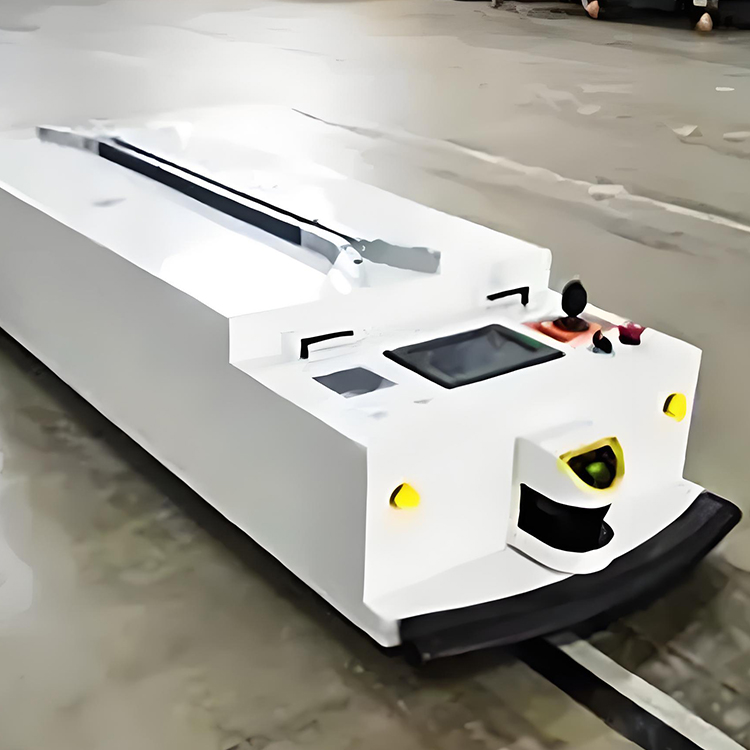
The RGV track robot is a common piece of equipment in automated logistics systems, typically used to move materials and goods within factories, warehouses, or sorting centers. These robots usually travel along pre-set tracks to perform various tasks, such as transporting cargo, moving shelves, or assembling products.
I. Application Scenarios
Manufacturing production line
Material, semi-finished, and finished goods handling: In manufacturing production lines, RGV is commonly used for quick and accurate transfer of materials, semi-finished, or finished goods between different workstations on the production line. Particularly in production lines that require handling heavy-duty workpieces, RGV's strong load-bearing capacity ensures stable and efficient material transportation.
Production Line Collaboration: The RGV can collaborate with other equipment on the production line to perform tasks such as material handling and part distribution, enhancing the overall efficiency and flexibility of the production line.
2. Warehouse Logistics
- Material Handling and Storage: In large warehouses and logistics centers, RGVs (Radio-Guided Vehicles) facilitate rapid intake, dispatch, and storage of goods. Integrated with WMS (Warehouse Management System), RGVs enable intelligent management, enhancing inventory turnover and storage efficiency.
High-Precision Positioning and Navigation: The RGV's high-precision positioning and navigation capabilities ensure accurate placement of goods at designated locations, enhancing warehouse storage density and management efficiency.
3. Operations in Special Environments
- High and Low Temperature, Clean Room, and Other Environments: In special environments such as high temperature, low temperature, and dust-free areas, RGV can replace manual handling, reducing work risks for personnel in these conditions while ensuring the stability and reliability of the handling operations.
- 4. Other Application Scenarios
- Container Terminal: RGVs are widely used in container terminals for fast handling and stacking of containers, enhancing the terminal's operational efficiency.
Steel, automotive manufacturing, heavy machinery industries: In these sectors, the RGV has emerged as an ideal choice for replacing manual heavy lifting with its stable handling capabilities. It not only reduces the physical strain of manual labor but also enhances work efficiency, ensuring the safety and reliability of the lifting operations.
II. Main Functions
Material Handling and Distribution
- Automated Material Handling: RGV can automatically transport materials along tracks from one work station to another, without any manual intervention.
- Precise Delivery: With high-precision positioning and navigation systems, the RGV ensures materials are accurately placed at designated locations, enhancing production efficiency.
2. Production Line Collaboration and Integration
- Production Line Integration: The RGV can seamlessly integrate with other equipment on the production line, facilitating material handling and distribution in the automated production process.
- Smart Scheduling: The RGV system intelligently schedules and allocates material handling tasks based on the actual needs of the production line, enhancing overall efficiency and flexibility.
3. High-Precision Positioning and Navigation
- Track Identification: The RGV accurately identifies and tracks predefined tracks, ensuring stability and reliability in the handling process.
- Autonomous Navigation: The RGV is equipped with advanced navigation technology, enabling autonomous navigation and obstacle avoidance in complex track environments.
4. Real-time Monitoring and Fault Alerts
- Status Monitoring: The RGV system can monitor the operational status of vehicles in real-time, including speed, location, and load, ensuring the safety and reliability of the handling process.
- Fault Alarm: When the RGV experiences a malfunction or abnormal condition, the system automatically emits an alarm signal, indicating the type of fault and the solution for prompt repair and handling.
5. Intelligent Management and Optimization
- Data Analysis: The RGV system is capable of collecting and analyzing data during the transportation process, providing support for production optimization and decision-making.
- Routing Planning: The RGV can intelligently plan transportation routes based on actual needs, enhancing efficiency and accuracy in material handling.
- Scheduling Optimization: The RGV system intelligently schedules and allocates material handling tasks based on the actual needs of the production line, preventing congestion and wait times, thereby enhancing overall production efficiency.
6. Flexibility and Scalability
- Modular Design: The RGV is designed with modularity, allowing for flexible configuration and expansion based on actual requirements.
- Easy Integration: The RGV system is easily integrated with other automation equipment and systems, enabling broader applications of automation.
In summary, the RGV track robot is equipped with key functions such as material handling and distribution, production line collaboration and integration, high-precision positioning and navigation, real-time monitoring and fault alerting, intelligent management and optimization, as well as flexibility and scalability. These features make the RGV highly applicable in the fields of industrial automation and logistics, with vast prospects and tremendous development potential.
III. Structural Composition
Frame
- The chassis is the main structure of the RGV track robot, requiring sufficient rigidity and toughness to ensure stable operation under various conditions. The design of the chassis is typically based on 150% of the rated load to avoid defects such as cracks, pores, and inclusions. The chassis not only supports the entire weight of the robot but also connects all functional components, forming an integrated whole.
2. Drive Wheel and Follow Wheel
- Drive Wheel: The drive wheel serves as the power source for the RGV track robot's movement, typically directly driven by a variable frequency braking reducer motor. To ensure smooth operation of the wheel on the track, the design of the drive wheel must consider factors such as wheel material, size, and rim structure.
Roller Wheel: The roller wheel primarily serves as a support and guide, rotating along with the drive wheel to ensure stable movement of the RGV on the track.
3. Wheel assembly and bearings
- Wheel sets typically consist of wheels with double flange structures and wheel structures without flanges to ensure smooth operation on tracks and to overcome the elastic deformation of the frame under both light and heavy loads. The bearing seats on both sides of the wheel pairs have clearance in the cover and blind cover, allowing the bearings to minutely move axially within the bearing seat, further enhancing operational stability.
4. Conductive devices and power supply systems
RGV track robots typically use low-voltage track power supply. Their ground power supply system reduces the AC380V power to a three-phase AC36V safe voltage through a step-down transformer, which is then transmitted to the insulated walking conductive rail. The RGV acquires power through the contact of the power collector with the conductive rail, and then the voltage is boosted to three-phase AC380V by a step-up transformer on the vehicle, serving as the driving power supply.
5. Communication System & Electrical System
- Communication System: The RGV track robot interacts with the ground control station or other RGVs through the communication system, including task allocation, status feedback, and fault alarms.
Electrical System: The electrical system encompasses components such as vehicle-mounted control systems and remote automatic control systems, which collectively enable the automation of RGV control, status monitoring, and fault diagnosis.
6. Additional Functional Parts
- Front and rear bumpers: Used to protect the RGV from damage in collisions.
Chain Conveyors: In certain types of RGVs, chain conveyors are used to transport materials from one end to the other.
Track Cleaner: Used to clear debris from the track, ensuring smooth operation of the RGV.
- All protective panels: Designed to safeguard the internal structure and functional components of the RGV, preventing damage from external factors such as dust and water.
In summary, the structure of the RGV track robot is relatively simple yet efficient, with all components working together to ensure stable operation and automated control on the track. This structural design offers the RGV broad application prospects and significant development potential in industrial automation and logistics.
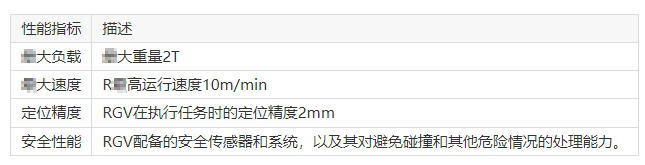
The following will describe some performance indicators of the RGV track robot.