


- AllProduct Category
-
Light curtain target
Technical Articles
Industry News
News & Information
Light-Gas Gun System
Impact Tester
Security Management Platform
Impact/Overshoot Dynamic Checker
Ultra-Dynamic Testing Equipment
Ultra-Dynamic Signal Conditioning/Data Acquisition
Impulse Fire Device
Self-Organizing Network
FlexiBots Industrial Software
Automated Production Line
FlexiBots Assembly Robots
FlexiBots Inspection Robots
Flexible Hazardous Area Electrical Equipment
FlexiBots Industrial Robots



详情描述
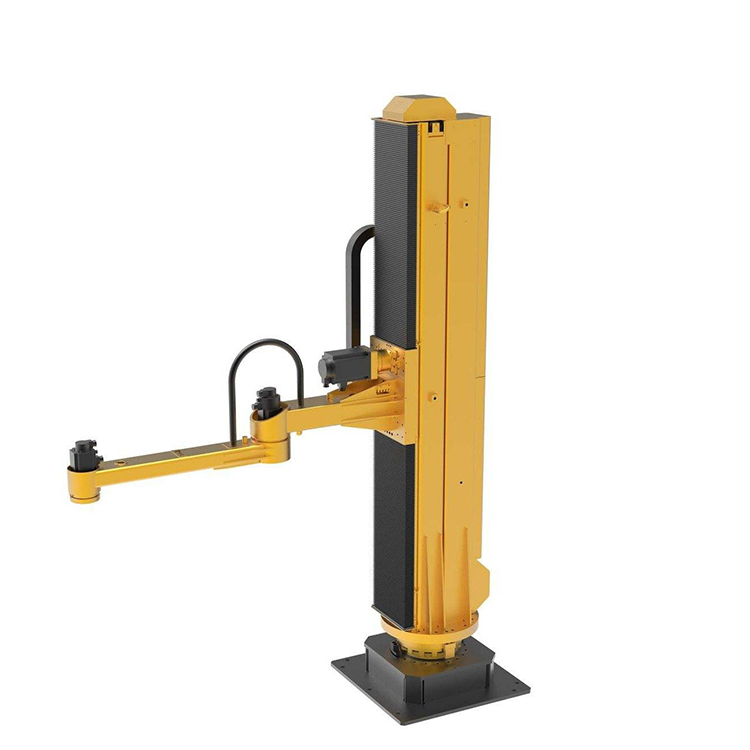
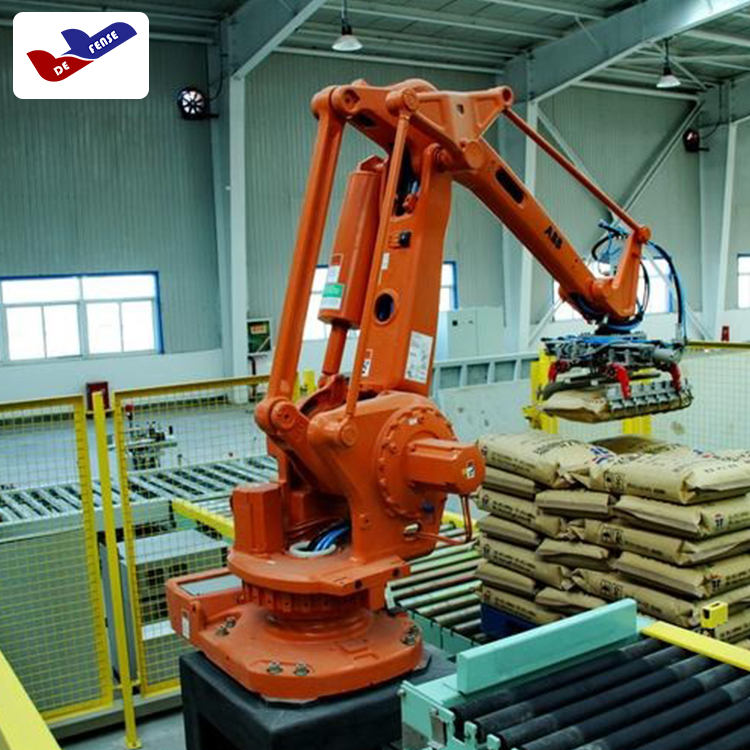
Pillar robots are a type of robotic system where the main axis of the robotic arm typically moves vertically rather than horizontally. They are usually supported by one or more pillars, allowing the arm to move up and down along these pillars, thereby enabling vertical motion. With the advancement of automated material handling technology, pillar robots are increasingly being applied across various industries, particularly in scenarios that require efficient and precise material handling.
I. Application Scenarios
Building Materials Industry
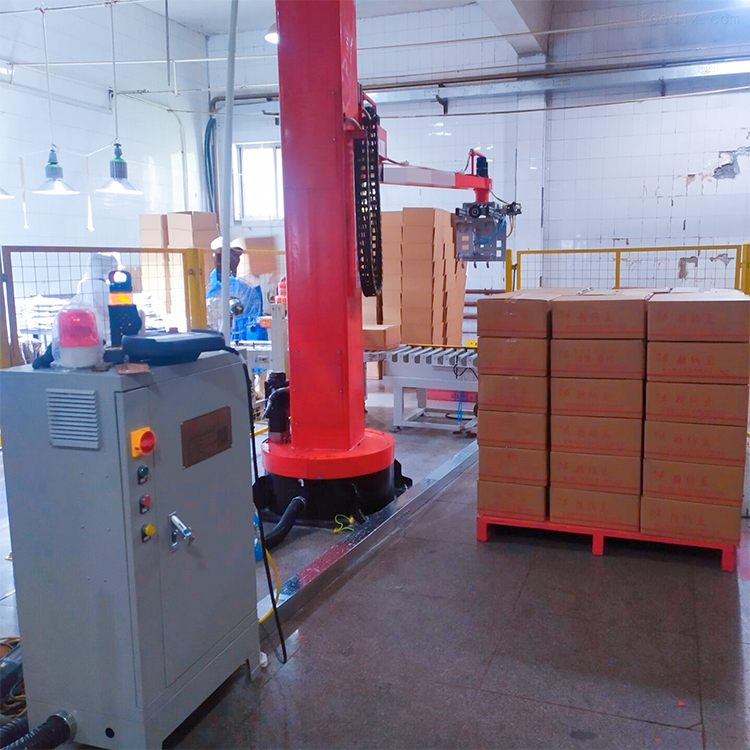
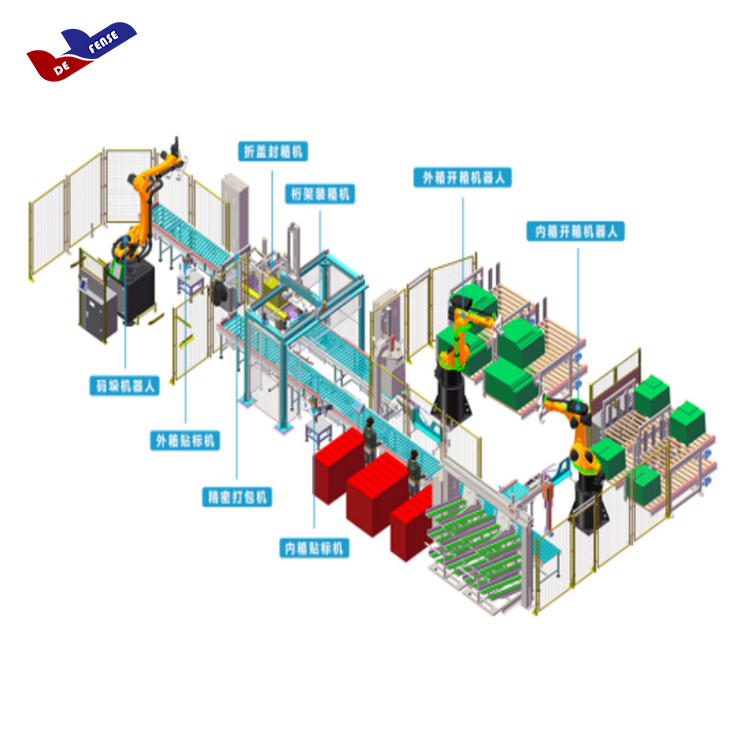
In the construction materials industry, vertical robots are widely used in automation processes such as material handling, palletizing, and unpacking. For instance, in the palletizing of powdery materials like mortar, putty powder, and tile adhesive, vertical robots can significantly enhance production efficiency, shorten cycles, and reduce labor costs. They ensure accuracy and stability in material handling, minimizing product damage and defect rates. Additionally, vertical robots can be integrated with fully automatic packaging machines and conveyors to form a complete production line, automatically handling bagging, opening, clamping, filling, conveying, and sealing. This highly automated production method not only boosts efficiency but also eases workers' labor intensity and improves working conditions.
2. Distiller's Grains Manufacturers
During the rice straw stacking process, packaged rice straw is transported to the stacking area via conveying equipment. Pillar robots, with their high-precision positioning capabilities and full servo drive systems, ensure stable and accurate stacking every time. The advantages of pillar robots in rice straw stacking include significantly improving production efficiency, reducing labor costs, alleviating physical strain on workers, and ensuring product quality. Their flexible adaptability allows them to handle materials of various specifications and shapes, saving a great deal of space for businesses, particularly in limited production environments. The vertical design of pillar robots helps manufacturers effectively utilize overhead space, enhancing the efficiency and flexibility of automated material handling.
3. Logistics field
In the logistics field, column robots are widely used in automated material handling, stacking, and sorting processes. They efficiently complete tasks such as item placement and sorting, enhancing the operational efficiency of warehousing and logistics. When used in conjunction with other logistics equipment like conveyors and automatic sorters, they enable comprehensive automation and intelligence in logistics operations. The integration of column robots makes the automated material handling process more efficient and accurate, significantly reducing human error and operational costs.
4. Other Industries
- In addition to the aforementioned industries, column robots are widely used in tasks such as welding and assembly. In the welding field, column robots can precisely control the position and movement speed of the welding gun, achieving high-quality welding operations. In the assembly field, column robots can accurately assemble various components according to pre-set programs and paths, enhancing assembly efficiency and product quality. In these scenarios, column robots not only handle heavy material handling tasks but also increase the overall level of production automation.
5. Special Environment Operations
- Due to their high precision and reliability, column robots excel in hazardous or harsh working environments. For instance, in environments with toxic substances, high temperatures, and pressures, column robots can take over heavy and dangerous tasks from humans, ensuring the safety of workers. Particularly in these special conditions, the automated material handling capabilities of column robots greatly enhance work efficiency and reduce safety risks.
In summary, pillar robots find extensive application scenarios across various industries. As technology advances and automation levels rise, pillar robots are poised to play a crucial role in even more fields, generating greater economic and social benefits for enterprises. Particularly in the area of automated material handling, the contributions of pillar robots will be even more pronounced.
II. Main Features
1. Automatic Palletizing and De-palletizing
Piling robots can automatically complete the stacking and unstacking of materials. During the stacking process, the robots can precisely place materials in designated positions, forming neat and stable stacks. During unstacking, the robots can accurately remove materials from the stacks for use in subsequent processes.
2. Material Handling
- The pillar robot boasts robust material handling capabilities, capable of transporting materials of various shapes, sizes, and weights. By adjusting the robot's parameters and configurations, it can accommodate the handling needs of different materials, achieving efficient and accurate material transportation.
3. Positioning and Navigation:
- Piling robots are equipped with advanced positioning and navigation systems, enabling precise determination of their own location and movement paths. This ensures stable and accurate execution of various tasks in complex environments.
4. Automated Control:
Column robots are typically equipped with an automated control system, capable of receiving commands from the upper-level computer and executing corresponding actions. This allows the robot to seamlessly integrate with other automated equipment or production lines, achieving automated production.
5. Adaptability and Flexibility:
Pole robots offer excellent adaptability and flexibility, capable of accommodating various working environments and task requirements. By adjusting the robot's parameters and configurations, its working method, speed, and scope can be easily altered to meet different customer needs.
6. Safety Protection:
The pillar robot is equipped with a comprehensive safety protection system, including an emergency stop button, safety fence, sensors, etc. These measures ensure that the robot will not cause harm to personnel during operation, while also protecting the robot's own safety.
7. Data Processing and Monitoring
Pole robots are typically equipped with data processing and monitoring systems, which can record the robot's working status and operating data in real-time. This aids in the timely detection and resolution of issues, enhancing the robot's reliability and stability.
8. Remote Operation and Maintenance:
Some advanced pillar robots also support remote operation and maintenance features. Through remote connections, technicians can monitor the robot's operation status in real-time, diagnose and resolve faults, significantly reducing maintenance costs and downtime.
Section 3: Structural Composition
Baseplate
- The base of the pillar robot serves as the supporting structure for the entire device, typically designed to be robust and durable to ensure the robot's stability and reliability.
2. Pillar:
- The column is a vertical support structure connecting the base and the robot arm. It typically features high rigidity and strength to bear the various forces and torques generated during the robot arm's movement.
3. Robotic Arms
Robot arms are the primary actuating mechanism of vertical robots, typically composed of multiple joints and links, allowing for flexible movement in multiple directions. The end of the arm usually features a gripper or claw, used for gripping and transporting materials.
Material Identification System
Material Identification Systems typically include sensors and image processing equipment for identifying, locating, and tracking materials. By precisely identifying the position, shape, and size of materials, robots can accurately perform tasks such as handling and stacking.
5. Drive System:
- The drive system typically includes motors, reducers, and transmission mechanisms, which power the robot arm and column. Precise control of the motor's speed and direction enables accurate movement and positioning of the robot arm.
6. Control System
The control system serves as the brain of the pillar robot, responsible for receiving commands from sensors and the upper computer, and controlling the robot's movement and operations accordingly. The control system typically employs advanced algorithms and control strategies to ensure the robot operates efficiently, accurately, and stably.
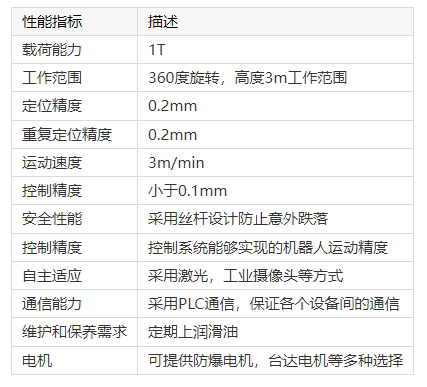
The following will describe some performance indicators of the pillar robot: