
 20T Vibration Aging Equipment, Automatic Vibration Aging Machine
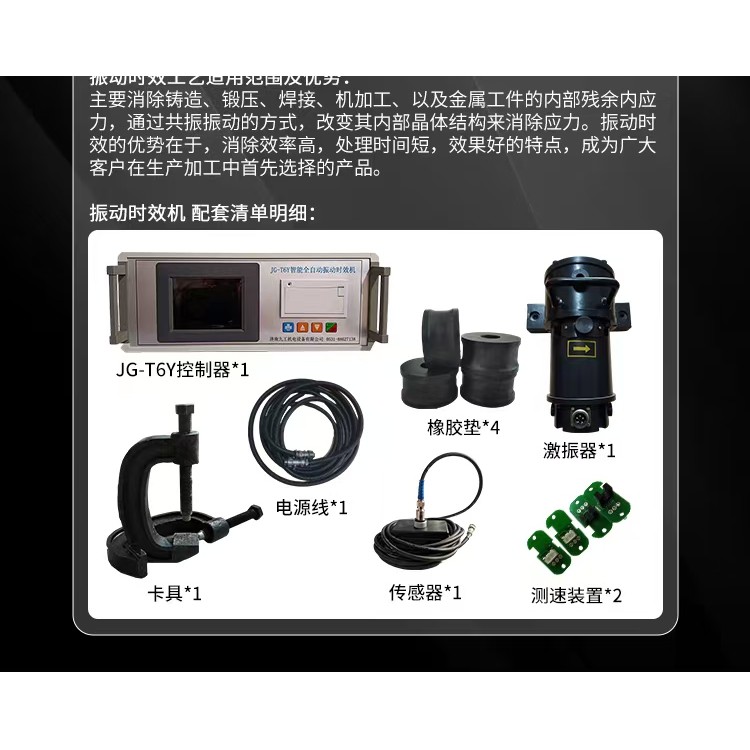 10T Vibration Aging Equipment - Large Stock Available
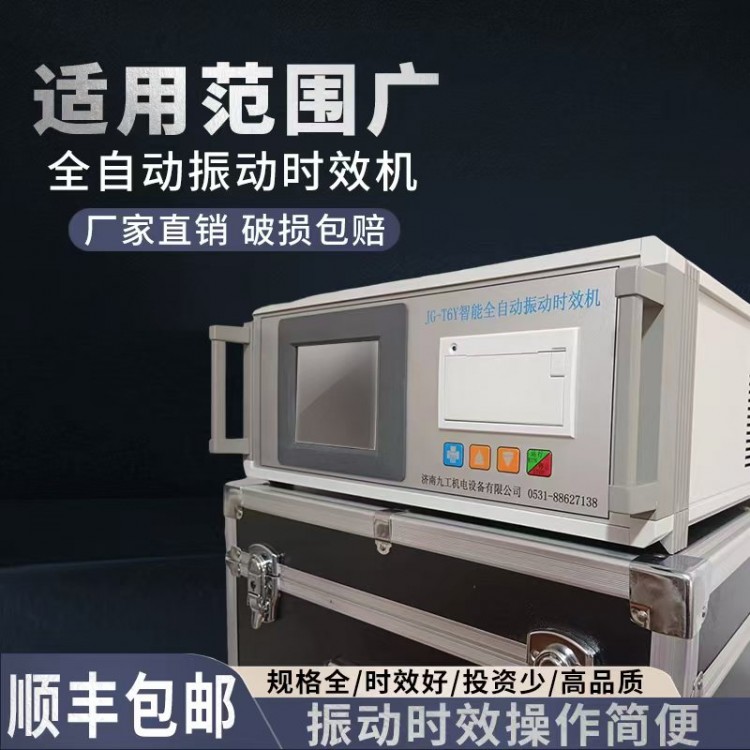 Timely Treatment Machine, Zhenjiang Welding Stress Relieving Vibration Treatment, Recruitment
Product Details

Superior Stress Relieving Series: Smart Operation Vibration Aging Equipment, ...
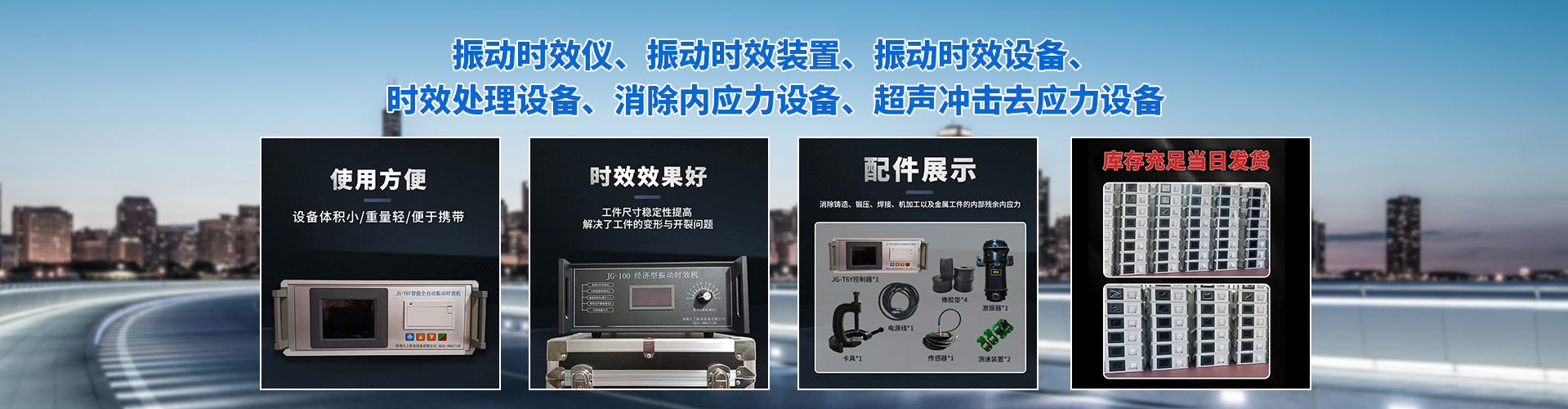
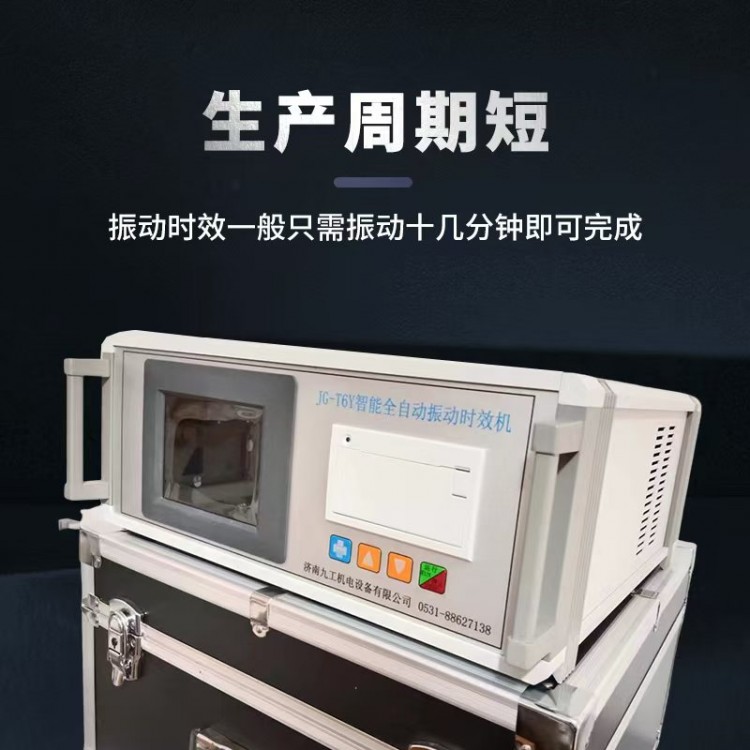


产品Price 1.15/Tai
最小起订Quantity:1 Tai 供货总Quantity: 8888 Tai


 Changzhou LCD Automatic Vibration Aging Machine 10T-100T Vibration Aging Treatment Equipment
¥9800.00
Changzhou LCD Automatic Vibration Aging Machine 10T-100T Vibration Aging Treatment Equipment
¥9800.00
 Huaizhou Automatic Vibration Aging, Huaizhou Automatic Vibration Aging Equipment Price
¥1.15
Huaizhou Automatic Vibration Aging, Huaizhou Automatic Vibration Aging Equipment Price
¥1.15
 JG-T6Y Vibration Aging to Eliminate Metal Residual Internal Stress and Welding Stress
¥1.15
JG-T6Y Vibration Aging to Eliminate Metal Residual Internal Stress and Welding Stress
¥1.15
Introduction to Vibration Aging Technology
Vibrating Stress Relief (VSR) technology, also known as "Vibrating Stress Relief" abroad, is designed to induce resonance in the workpiece being treated through a vibratory stress relief machine. This resonance transfers a certain amount of vibrational energy to all parts of the workpiece, causing microscopic plastic deformation – the distorted lattice gradually returns to a balanced state. Dislocations re-slip and become pinned, thereby eliminating and equalizing residual stresses within the workpiece, ultimately preventing deformation and cracking during processing and use, ensuring the stability of the workpiece's dimensional accuracy.
Vibration Aging Technology Application Range:
Vibratory aging is suitable for castings, forgings, and welded components made of carbon structural steel, low-alloy steel, stainless steel, cast iron, and non-ferrous metals (copper, aluminum, zinc, and their alloys), as well as machined parts thereof.
Vibration Aging Process
1. Pre-vibration Treatment: The equipment automatically identifies the resonance peak of the workpiece, stores the pre-vibration a-n process curve, and the analysis program determines the excitation frequency. The process and curve will be displayed on the LCD screen.
2. Time-sensitive Processing: The equipment automatically performs, determining the processing time based on different workpieces and storing the a-t process curve. The process and curve will be displayed on the LCD screen.
3. Post-Vibration Processing: The equipment automatically scans the processed workpiece after vibration and stores the post-vibration a-n curve, with the process and curve displayed on the LCD screen.
4. Printing Process: Print out the a-t, pre-vibration a-n, and post-vibration a-n curves for comparison, assessment, and record-keeping.
JG-T6Y Liquid Crystal Display Vibration Ageing Device - Brief Function Description:
Simple to use, operation requires only 4 buttons, easy to master the operation essentials in a short time.
★High-definition LCD screen display, keeping you updated with the dynamic curve of real-time stress changes.
★Features include: fully automatic, semi-automatic, and manual integrated operation programs, functions.
★Automatic frequency scanning, automatically confirm the effectiveness of time-sensitive processing, and provide revision plans.
★If the equipment exhibits abnormal operation, it can automatically detect and provide the correct usage method.
★ Utilizes mature pulse width modulation technology with strong anti-interference capabilities.
★Automatically select timing treatment points during timing processing, displaying the changes in curve data on a liquid crystal screen for real-time monitoring.
★ The time-sensitive processing results curve segments are merged for display, facilitating data observation.
★Fault Analysis features like current overload, voltage overload, speed frequency signal faults, and wiring issues. The LCD screen provides clear solutions to the problems for easy operation.
★High-speed thermal printers, capable of printing curve data for easy archiving.
★ Utilizes a high-power vibration-proof permanent magnet slotless DC motor; eccentricity is non-adjustable.
★ Compact in size, the equipment can be easily moved to any location for use, making it extremely convenient.
Vibration Aging Process Parameters
Key process parameters for vibration aging include: excitation frequency, excitation force, effective time, and the mounting positions of the exciter and vibration sensor. The equipment cannot predict the aging requirements of components, nor can it determine the effective vibration modes to establish reasonable aging parameters. Only operators, based on aging requirements, can observe the vibration modes of the components and select effective process parameters. Manual operation allows for a quick understanding of the component's characteristics, selection of appropriate excitation and vibration sensor positions, and determination of the excitation frequency and force. Additionally, to meet the aging requirements for batch and simple components, the system has been enhanced with a manual aging function, which can automatically plot aging curves and related data, providing a macroscopic basis for product inspection. The aging time can be adjusted online.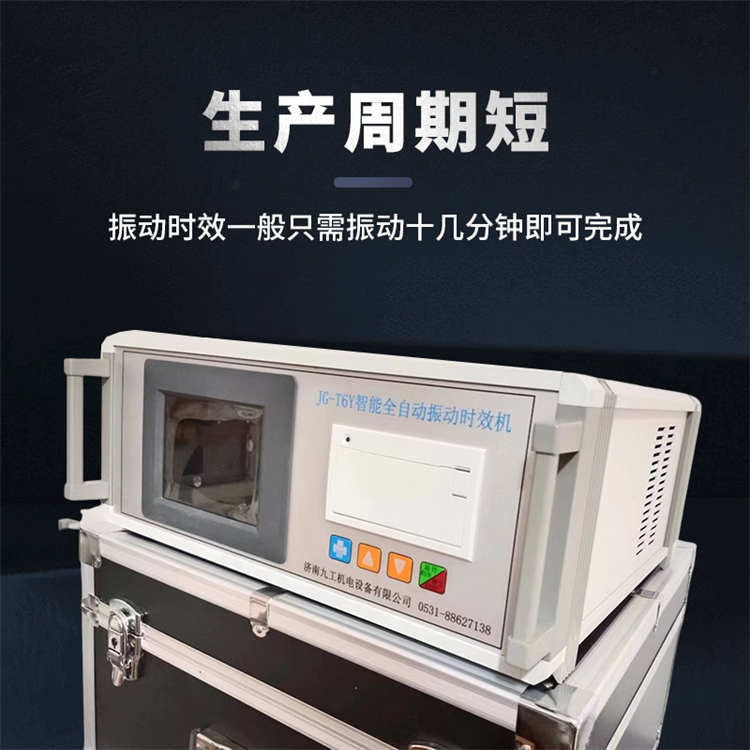 Comparison of Vibration Aging and Heat Aging Characteristics:
Project Heat Treatment Vibration Treatment
Stress Relief 30-80% 30-60%
High energy consumption, 95% thermal efficiency with time-saving.
Environmental Protection - Emission of smoke, dust, and waste residue - Pollution-free
Dimensional Stability - Good, 30%+ better than heat aging resistance
Production Cost: 150-300 yuan/ton; 4-10 yuan/ton
Lead Time: 20-60 hours / 20-50 minutes
Anti-deformation, Poor; Specific heat aging improved by 30-75%
Time-sensitive oxidation, significant, negligible.
Time-sensitive Deformation: Yes / No
Large workpieces - Not suitable for furnace processing - Can be processed on-site conveniently
Vibration Ageing Process Features
Vibration aging can partially replace heat aging due to its distinct characteristics. Key parameters of vibration aging include: "support points, vibration modes, excitation points, acceleration, natural frequency, and time." Among these, vibration acceleration, resonance frequency, and resonance time are the main parameters that determine the process effect.
1. Notable improvement in mechanical properties
Vibration-treated components can have their residual stresses reduced by approximately 20% to 80%, with higher stress areas seeing greater elimination than lower stress areas. Consequently, this can enhance the usage strength and fatigue life, as well as reduce stress corrosion.
Can prevent or reduce the occurrence of microcracks caused by processes such as heat treatment and welding.
Enhances component's resistance to deformation, maintains precision of components, and improves mechanical quality.
2. Versatile applicability
Due to its simplicity and ease of transportation, on-site processing is possible at the site. It is not restricted by the size of components or materials, and vibration aging technology can be applied to components ranging from dozens of kilograms to hundreds of tons. Particularly, vibration aging offers a significant advantage when thermal aging treatment is not feasible for large components.
3. Cost Savings
Vibration aging can be completed in just 30 minutes before moving on to the next process. In contrast, heat aging requires at least one to two days and consumes a substantial amount of energy, such as electricity. Therefore, vibration aging can save over 90% of energy and over 90% of costs compared to heat aging, especially in terms of saving the significant investment needed to build large fire kilns.

Phone Consultation