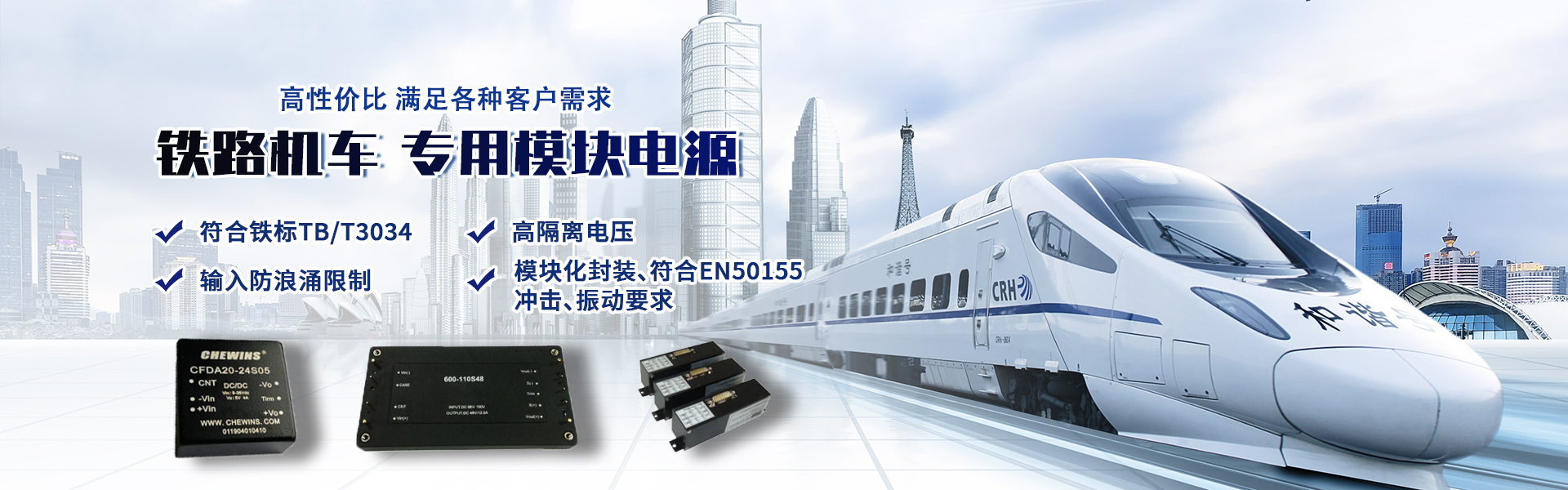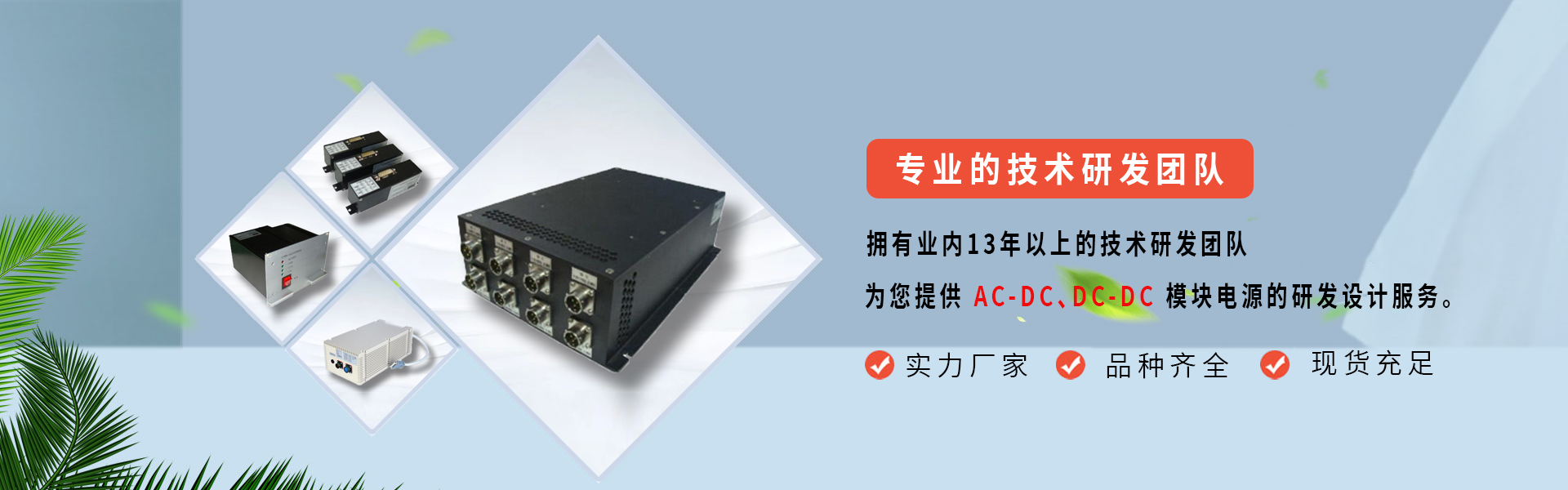
We specialize in the research, manufacturing, and sales of domestic module power supplies, railway power supplies, AC/DC, DC/DC, and DC/AC high-frequency switching power supplies.
15600309099
In high-power applications, it is often the case that a single module power supply is not sufficient to meet the requirements, and it is typically necessary to use them in parallel. However, many module power supplies cannot be used in parallel, and improper handling can lead to the failure of the entire system. Below, we analyze why module power supplies cannot be used in parallel.
Above is the internal equivalent and output load characteristic curve of the module power supply: VO=f(IO), R is the output impedance of the module (including wire resistance and contact resistance, etc.). Under no load, the module output voltage is at its maximum, VO(max). When the load current changes by ΔIO, the load voltage changes by ΔVO, ΔVO = R * ΔIO, and R * ΔIO also reveals the load regulation of the module. The relationship between load voltage VO and load current IO can be expressed as: VO = VO(max) - R * IO
As shown in the image above: When the two modules are connected in parallel, then:
VO1=VO1(max)-R1*IO1
VO2=VO2(max)-R2*IO2
IO=IO1+IO2
If the parameters of the two modules are completely identical, i.e., VO1(max) = VO2(max), R1 = R2, the two load characteristic curves will overlap, enabling an even distribution of load current. However, in real-world applications, it is impossible for two modules with the same capacity to have completely identical parameters such as VO1(max) and VO2(max), or R1 and R2. As shown in the diagram, due to the very low equivalent impedance R1 and R2 to the load RL, even a small difference in output voltage can cause a significant change in output current. For instance, when the load current of RL increases from IO = IO1 + IO2 to IO = IO1 + IO2, the module with a smaller load characteristic curve slope, Module 1, will bear most of the load current, operating at full or overloaded current limiting, which can affect the reliability of the module.
Ideally, the two module power supplies should be connected in parallel to supply power to the load, with both modules working together to evenly distribute the load power. However, in practical use, they cannot be simply paralleled in a single circuit. The main reason is that the output voltages of the two module power supplies cannot be perfectly matched. The module with a higher output voltage will provide the majority of the load current, which can lead to overloading and affect its lifespan during critical conditions.
Even if the output voltages of the two module power supplies can be adjusted to be completely matched, they will still experience unbalanced load currents due to different output impedances, which can lead to numerous issues when simply paralleling the module power supplies for output in practical operations.
For example, when paralleling two module power supplies, the primary duty is to control the high output power of each module to ensure stable operation after paralleling. It is imperative to prevent one module from overloading while another operates under light load. If such a situation occurs, it can lead to damage of the overloaded module, thereby causing severe issues with the entire system.
Based on the principle of switching power supplies, to ensure that the module power supply can correctly limit the output current of each module when used in parallel, an upper sampling current-limiting circuit can be utilized. Considering the output voltage of module power supplies in real mass production will inevitably have some discrepancies, when any two modules are paralleled, there is a possibility of both operating at full load or both at light load. However, since each output path is limited to a safe range, even under full load, it will not significantly affect the service life of a single path and will not impact the overall system design.
Designing parallel circuitry for modular power supplies is significantly more complex than designing series circuits. It necessitates considering issues such as output voltage differences, output impedance matching, and output current balancing. Common methods include the resistor parallel method, diode parallel method, and current balancing parallel method.
Contact us

Service Hotline
15901068673
Company Telephone
15600309099

Address
25 South Torch Street, Zhoushuizi Economic Development Zone, Baoding City, Hebei Province
b2b.china9.net © Zhongshang 114 Hebei Network Technology Co., Ltd.Address: Room 6009, Oriental New World Center, No.118 East Zhongshan Road, Qiaoxi District, Shijiazhuang City, Hebei ProvincePlatform Service Hotline: 4006299930