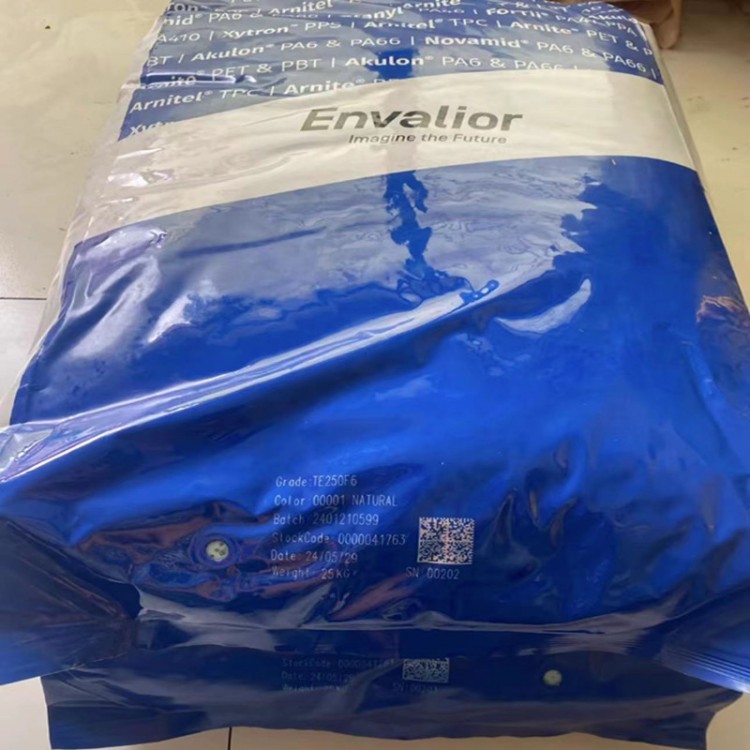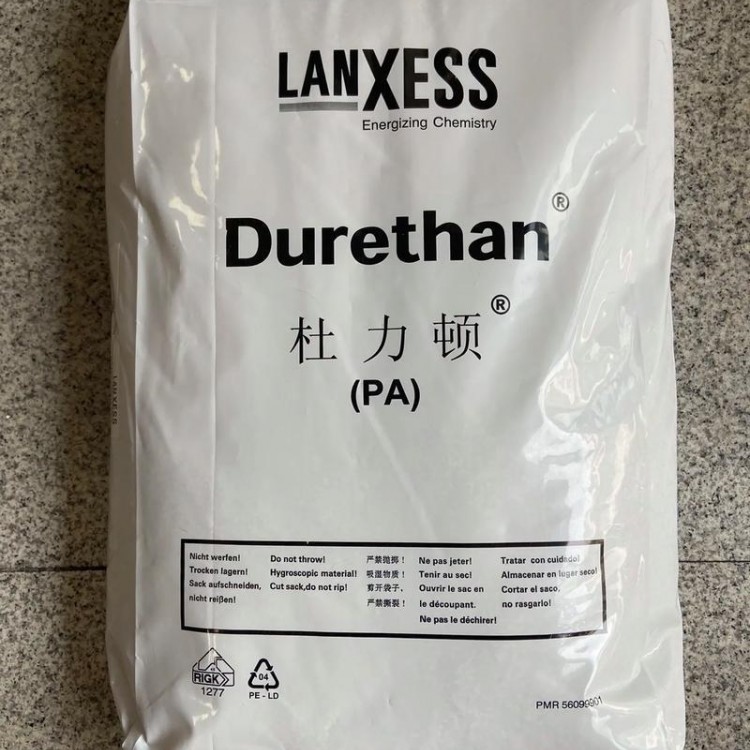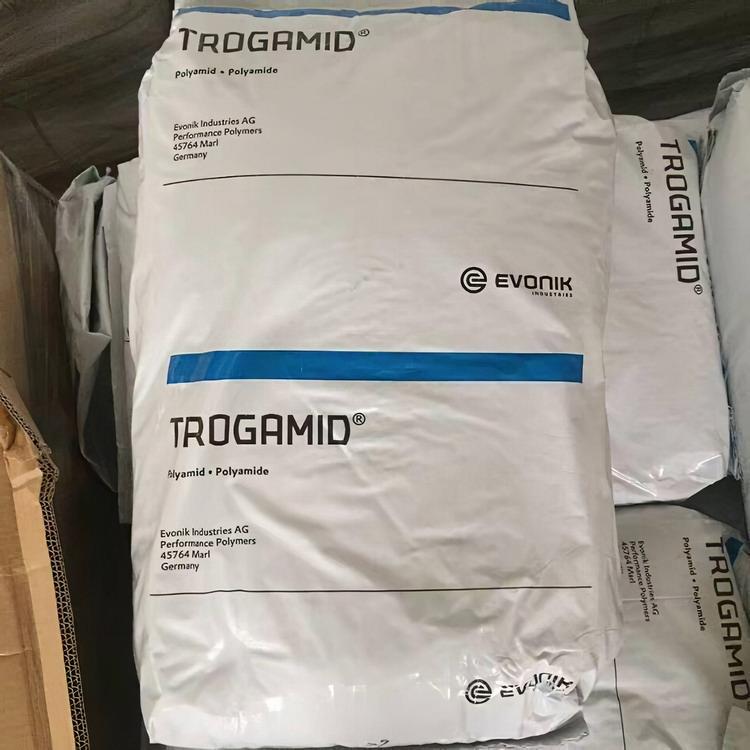
PA46-PA12-PBT-POM-PA66-PA6-PPA-POM-PA9T-TPEE-TPU-POE plas...


POE plastic is a thermoplastic elastomer that achieves in-situ polymerization of ethylene and octene using metallocene catalysts.
POE Plastic: A high polymer of ethylene and propylene.
POE is categorized into two types: one is a polymer of ethylene and propylene, and the other is a polymer of ethylene and octylene.
The features include:
The flexible chain coiling structure of octene and the crystalline ethylene chains act as physical cross-linking points, endowing it with excellent toughness and good processability.
(2) The POE plastic has no unsaturated double bonds in its molecular structure, offering excellent resistance to aging.
(3) POE plastic has a narrow molecular weight distribution and excellent compatibility with olefins.
(4) Good liquidity enhances the dispersibility of the filler and also improves the weld line strength of the product.
As the content of POE plastic increases, the system's impact strength and elongation at break are significantly improved. It is evident that POE plastic has excellent toughening effects on PP and exhibits good compatibility with PP and active calcium carbonate. This is due to the narrow molecular weight distribution of POE plastic, with longer side octyl groups than side ethyl groups, allowing for bonding points within the molecular structure. These bonding points act as connectors and buffers among the components, dispersing and buffering impact energy when the system is subjected to impact, reducing the chance of silver streaks developing into cracks, thereby enhancing the system's impact strength. When tension is applied, the network-like structure formed by these bonding points can undergo significant deformation, leading to a significant increase in the system's elongation at break. As the content of POE plastic increases, the system's tensile strength, flexural strength, and flexural modulus all decrease, which is determined by the inherent properties of POE plastic. Therefore, the content of POE plastic should be controlled below 20%.
The content of POE plastic is related to its melt index; adding POE plastic increases the melt index of the system. POE plastic itself has good fluidity, and its addition also improves the fluidity of the entire system. Once the content of POE plastic exceeds 15 parts, the melt index of the system remains relatively stable. To further enhance the system's fluidity, reliance on POE plastic alone is not sufficient.
POE Plastic Applications:
Primarily used in the automotive industry for the production of bumpers, mud flaps, steering wheels, pads, and more, with modified toughened PP, PE, and PA. High-temperature and environmental-resistant insulation layers and sheathes for the wire and cable industry. Also utilized in industrial products such as hoses, conveyor belts, tapes, and molded products. Used in medical devices, household appliances, stationery, toys, and packaging films, especially for low-smoke, halogen-free flame-retardant materials. Suitable for flexible tubes for cosmetics and food packaging; foam midsoles and outsoles for sports shoes; flame-retardant masterbatches; shrink films, stretch wraps, various保鲜膜; and also for industrial products like hoses, conveyor belts, tapes, and molded items.
POE application directions are as follows:
1. Polypropylene (PP) Modification
Blending with elastomeric POE to enhance the impact resistance of PP, the modified toughened PP can be used in automotive bumpers, door panels, home appliance casings, office stationery, plastic components for electric scooters and motorcycles, as well as PP jelly cups.
2. Enhance the performance of PP/PE recycled material
Recycled PP/PE material, blended with POE for granulation or direct injection molding, is suitable for use in plastic pallets, plastic bins, plastic toolboxes, plastic office furniture accessories, beach chairs, and more.
3. PA nylon and other engineering plastics toughening, compatibilizer
POE can readily and effectively undergo grafting reactions with monomers such as maleic anhydride (MAH), methyl bing烯ic anhydride (GMA), and bing烯ic acid AA, initiated by peroxides. The resulting graft polymers are widely used to toughen engineering plastics like PA, and can also serve as compatibilizers in plastic alloys.
4. Co-extruded with EVA foaming
POE offers superior flexibility and resilience compared to EVA, with even better effects when foamed, such as lighter product weight, improved compression and rebound, pleasant texture, uniformly fine bubbles, and high tear strength. Whether through molded foaming or granulated injection foaming, POE is extensively used in foam products such as sandals, slippers, sports shoe midsoles, mouse pads, seat cushions, Styrofoam materials, thermal insulation materials, shock-absorbing sheets, and luggage linings.
5. EVA extruded hose modification with POE
The blended use of EVA and POE in the inner layer of extruded hoses adds a seal with anti-contamination properties, resulting in lower heat-sealing temperatures and higher heat-seal strength. Widely applied in vacuum cleaner hoses, washing machine hoses, and drain pipes.
6. Color Masterbatch or Filler Masterbatch
POE can be used as a carrier or substitute for PE wax in masterbatches or filler masterbatches, enhancing the quality of the colorant or filler masterbatch.
7. Hot Melt Adhesive
POE can replace EVA in the production of hot melt adhesives, offering odorless, low-density properties, high flow coating characteristics, and good wettability, among others. It can also be used in conjunction with EVA.
Cable Material
POE can replace EVA, EEA, or EPDM for non-PVC cable jacket insulation; in addition, with its low hardness and strength variation rate, POE can replace EVA or be used in conjunction with EVA to produce halogen-free flame-retardant cable materials.
9. Film Products
Polyester Film, based on POE/LLDPE/CPP blends.
10. Nonwoven Fabric
To enhance the softness and drape of spunbond nonwoven fabrics, it is necessary to select appropriate olefin elastomers during the production process and add other functional additives. Through formulation design, adding a certain proportion of elastomers can significantly improve the usability of the nonwoven fabric and greatly reduce the product's gram weight. Its softness, static coefficient of friction, and dynamic coefficient of friction will be notably improved.
Primary Manufacturer of POE
Dow Chemical
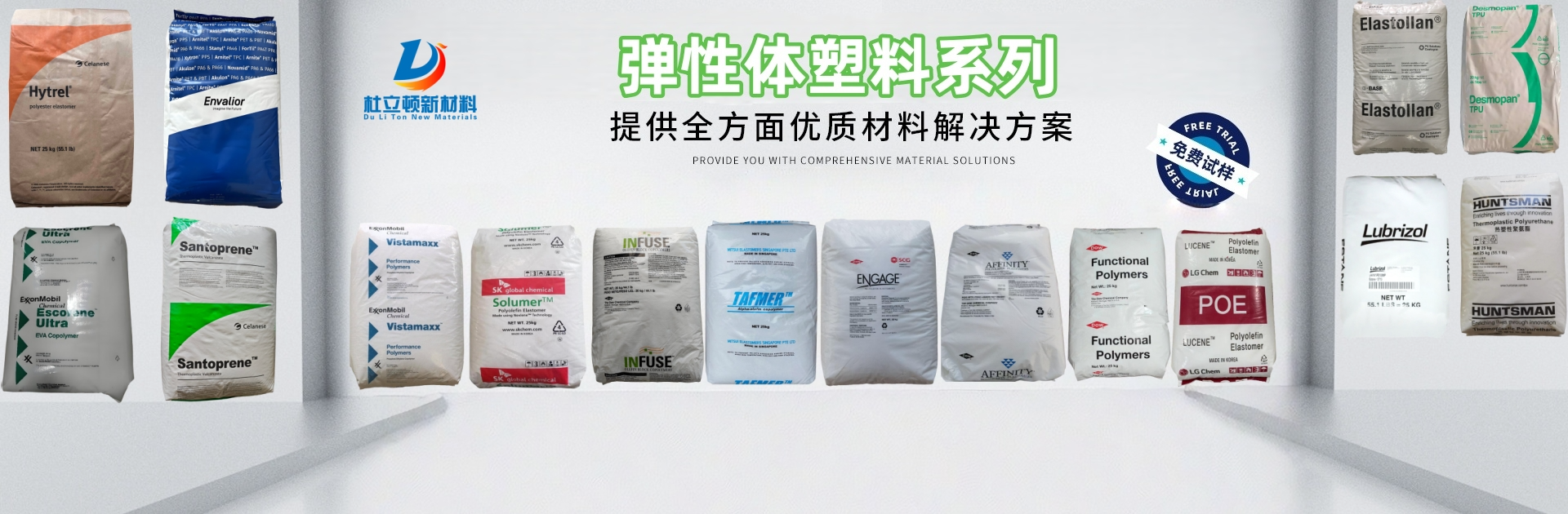
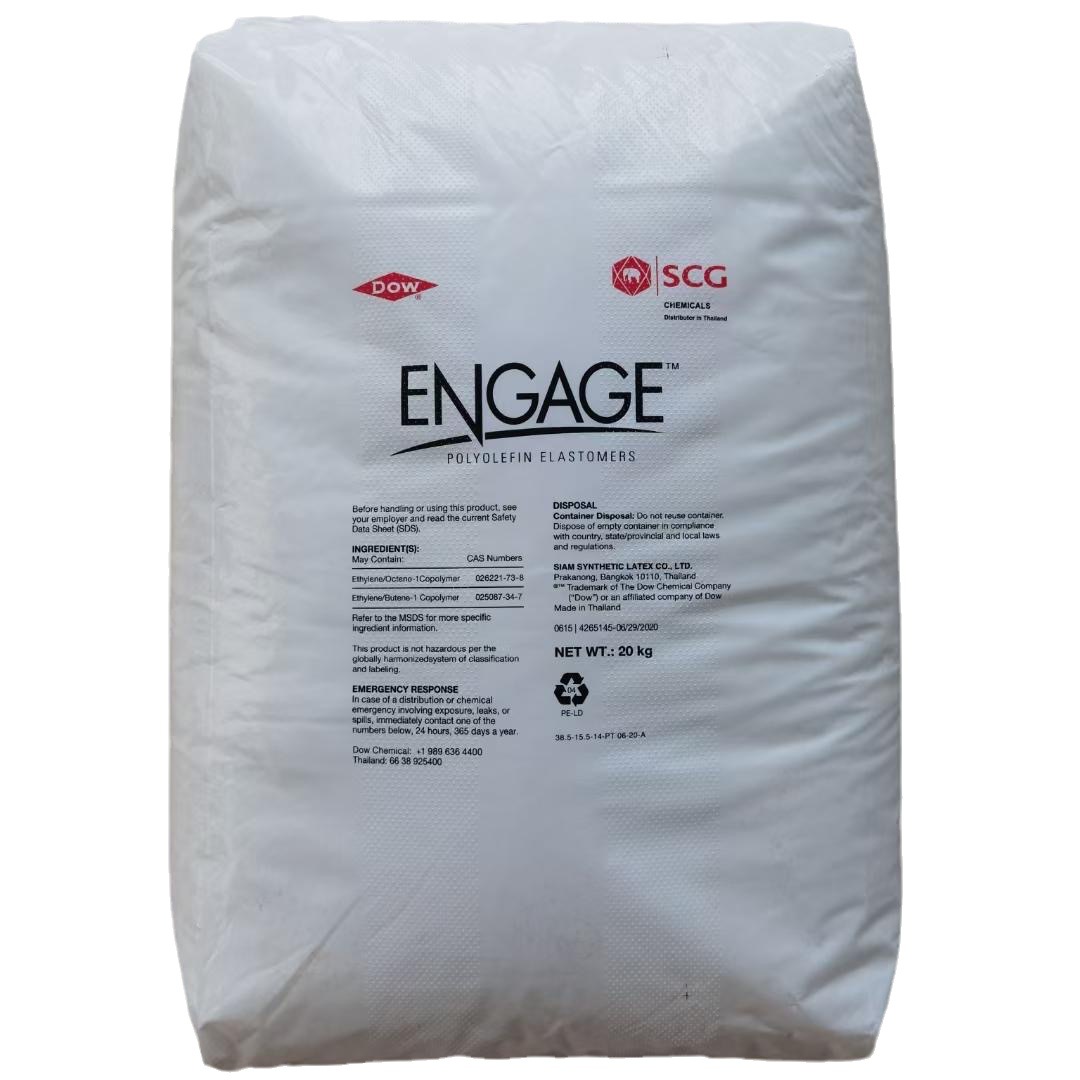
In 1993, Dow Chemical Company introduced a new type of polyolefin elastomer material, POE, utilizing Limited Geometry Conformation Catalytic Technology (CGCT) and the INSITE process. This product is a copolymer of ethylene and 1-octene, branded as Engage. Subsequently, Dow also developed POE elastomers with ethylene, propylene, and dingene copolymers, branded as Versify and Affinity, respectively. This process enables the production of products on EPDM equipment. In the photovoltaic field, Dow's primary brand is ENGAGE™ PV.
DOW's POE Elastomers:
U.S. Dow's 8-carbon Engage product line includes models 8150, 8100, 8200, 8003, 8137 (8130), 8842, 8480, 8180, 8402, and 8401, among others.
Dow's 4-carbon Engage product line: 7467, 7447, 7256, 7270, etc.
Dow's Engage Product Sub-line: 8999
The U.S. INFUSE product line includes models 9000, 9007, 9100, 9107, 9500, 9507, 9530, 9817, and 9807.
Exxon Mobil
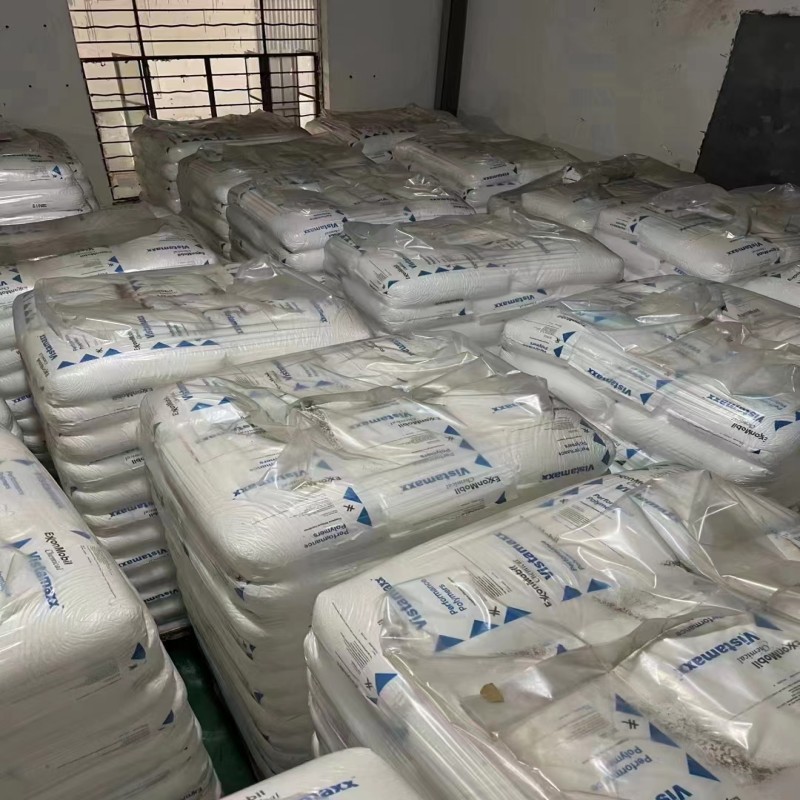
In 1991, ExxonMobil utilized the Exxpol process on their facilities producing ethylene propylene diene monomer (EPDM) to co-polymerize ethylene and dinene to create a new polyolefin elastomer material, branded Exact. Later, using this process, they also developed polyolefin elastomers by co-polymerizing ethylene, propylene, and hexene, branded Vistamaxx and Exceed.
Vistamaxx™ Performance Polymer 3000
Vistamaxx™ Performance Polymer 3020FL
Vistamaxx™ Performance Polymer 3020MED
Vistamaxx™ Performance Polymer 3588FL
Vistamaxx™ Performance Polymer 3588MED
Vistamaxx™ Performance Polymer 3980FL
Vistamaxx™ Performance Polymer 6000
Vistamaxx™ Performance Polymer 6102
Vistamaxx™ Performance Polymer 6102FL
Vistamaxx™ Performance Polymer 6202
Vistamaxx™ Performance Polymer 6202FL
Vistamaxx™ Performance Polymer 6502
Vistamaxx™ Performance Polymer 6902
Vistamaxx™ Performance Polymer 8380
Vistamaxx™ Performance Polymer 8780
Vistamaxx™ Performance Polymer 8880
Mitsui Chemicals
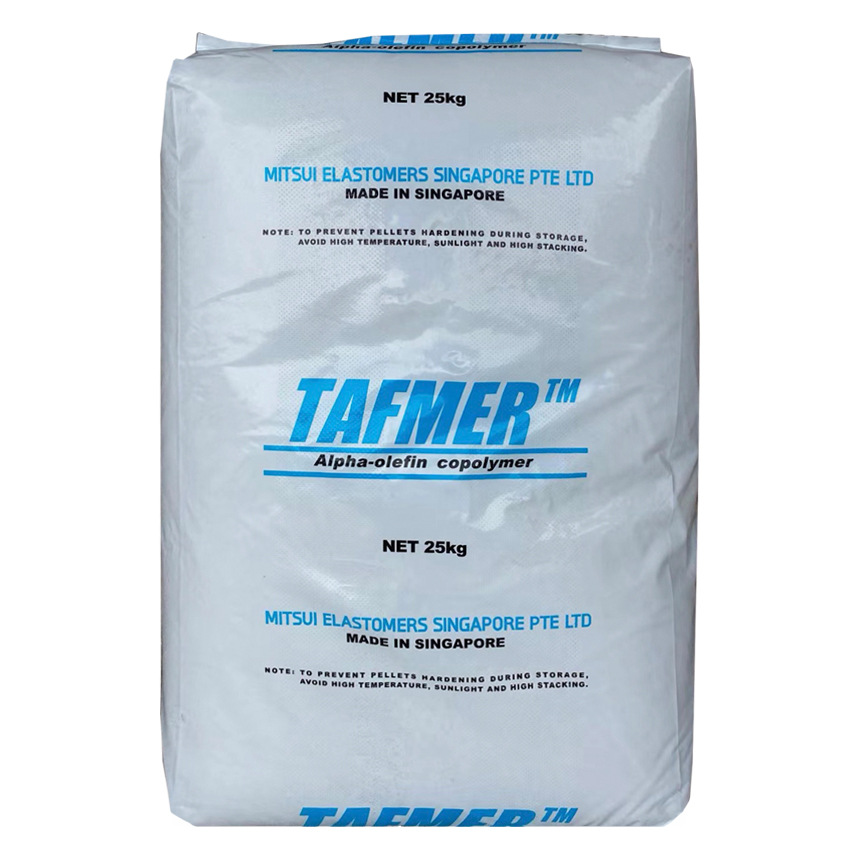
In 2005, Mitsui Chemicals constructed a 100,000 t/a POE production facility in Singapore. The technology for this facility was sourced from Dow Chemical, producing ethylene and 1-octene, dingene copolymer polyolefin elastomers POE, branded as Tafmer.
POE Japan and Singapore Mitsui Chemicals
DF Series: DF605-DF610-DF640-DF710-DF740-DF7350-DF810-DF840-DF8200-DF940-DF110
A Series: A-4070S/A-1085S/A-4085S/A-20085S/A-4090S/A-20090S
XM Series: XM-7070S/XM7080S/XM7090
PN Series: PN-2070/PN-3560/PN-2060/PN-20300
BL Series: BL2481M-BL2491M
M Series: MA8510 - MH7010 - MH7020 - MA9015 - MH5020C
LG Chemicals:
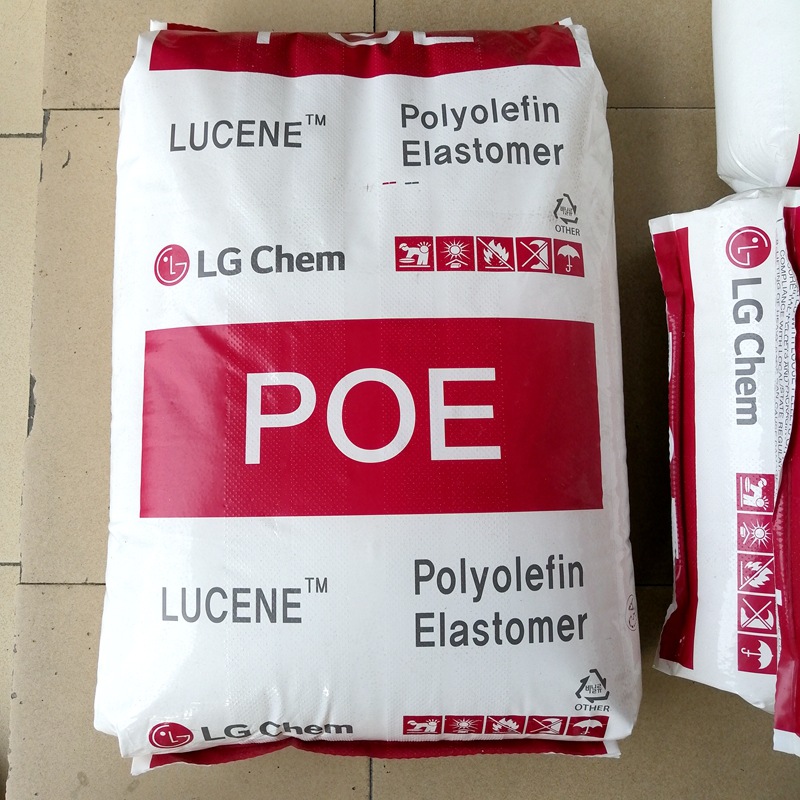
LG utilizes its independently developed metallocene catalysts to produce polyolefin elastomers (POE) using ethylene and 1-octene or 1-dodecene as raw materials, branded as Lucene.
LG Chem's LUCENE Series POE Applications
LC168 Ethylene-1-diene Copolymer, an excellent plastic impact modifier, is used for composite auto parts to enhance low-temperature impact strength.
LC175 ethylene-1-diene copolymer, an excellent plastic impact modifier, is used for composite automotive parts to enhance low-temperature impact strength.
LC565 Ethylene-1-diene Copolymer, an excellent plastic impact modifier, is used for composite automotive parts to enhance low-temperature impact strength.
LF575 Ethylene-1-diene Copolymer for Photovoltaic Sealant
LF675 Ethylene-1-diene Copolymer for Photovoltaic Sealants
LF100A Ethylene-1-octene Copolymer for Polyolefin Plastic Film
SABIC-SK:
SABIC and South Korea's SK Chemicals have established an equal joint venture, SABIC SK Nexlene Company (SSNC), which was founded in Singapore in July 2014. The company has been aggressively developing polyolefin elastomer (POE) using Nexlene™ solution polymerization technology, and began marketing the product, branded as Smart and Solumer, in 2015.
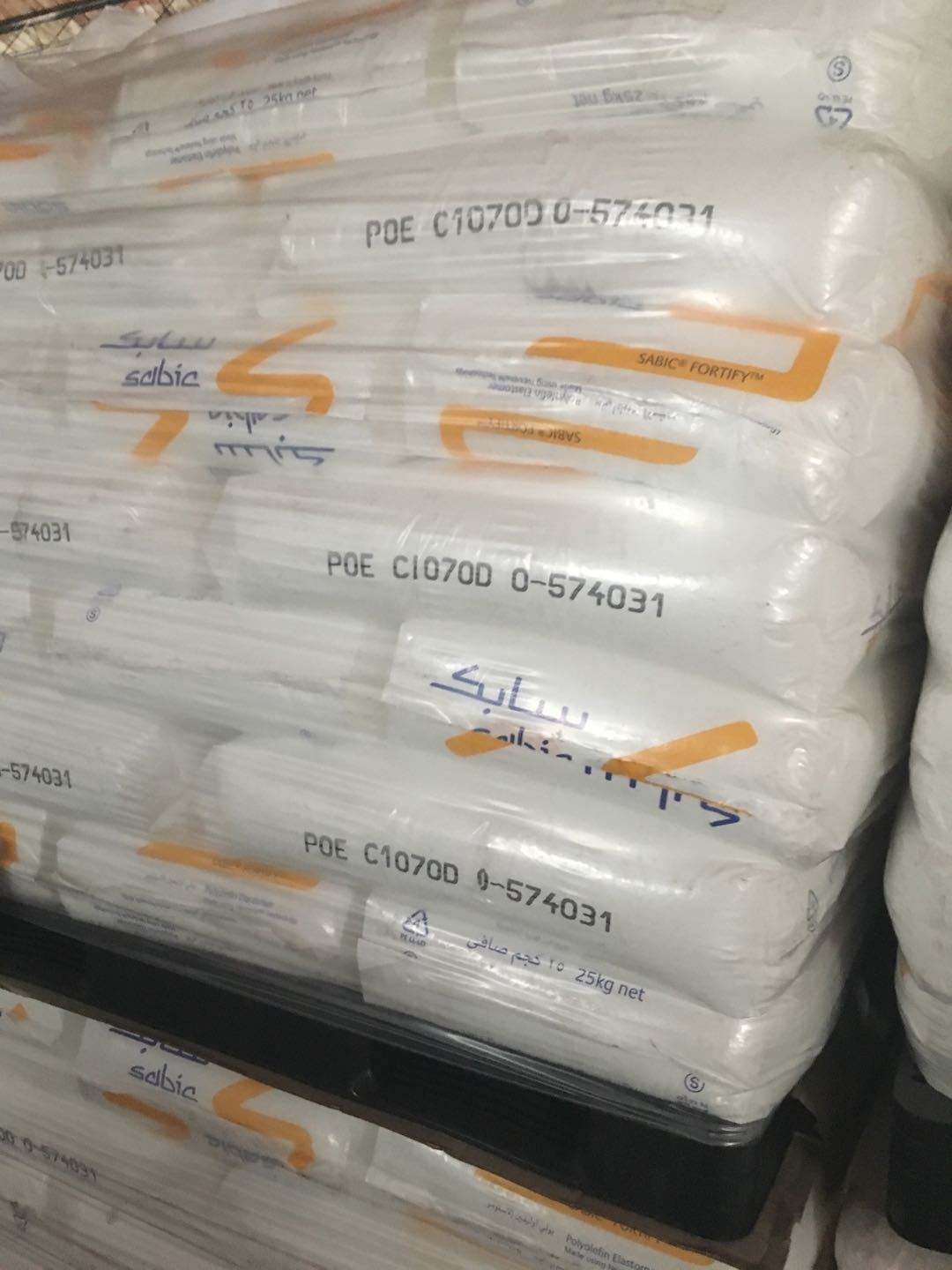
At the 2021 Rubber & Plastic Expo, SABIC showcased its POE resin FORTIFYTM C5075DP and C13075DP as encapsulation materials for photovoltaic components, providing exceptional protection and ensuring efficient and reliable energy output.
POE Sabic Grades: C0750D, C5070D, C1070D, C1080, C3080, C0560D, C3007D, C1085

South Korea's SK
The Solumer series POE is a representative polyolefin elastomer product of SKGeocentric.
POE Korea SK Models: 851L, 851L, 8605L, 8613L, 861L, 8705, 8705BL, 8705L, 8705T, 871, 871BL, 871L, 871T, 8730L, 875, 875L, 875T, 8813V, 883, 885V, 891
Applications: Automotive, Electrical & Electronics, Consumer Goods, Automotive Exterior Materials, Automotive Interior Materials, Wires & Cables, Sports Equipment.

b2b.china9.net © Zhongshang 114 Hebei Network Technology Co., Ltd.Address: Room 6009, Oriental New World Center, No.118 East Zhongshan Road, Qiaoxi District, Shijiazhuang City, Hebei ProvincePlatform Service Hotline: 4006299930