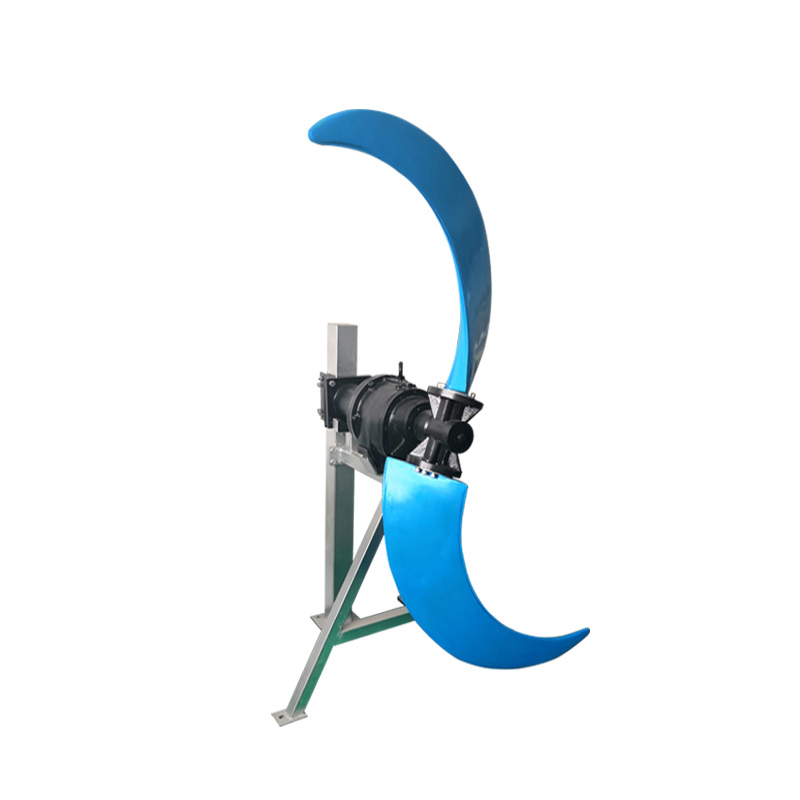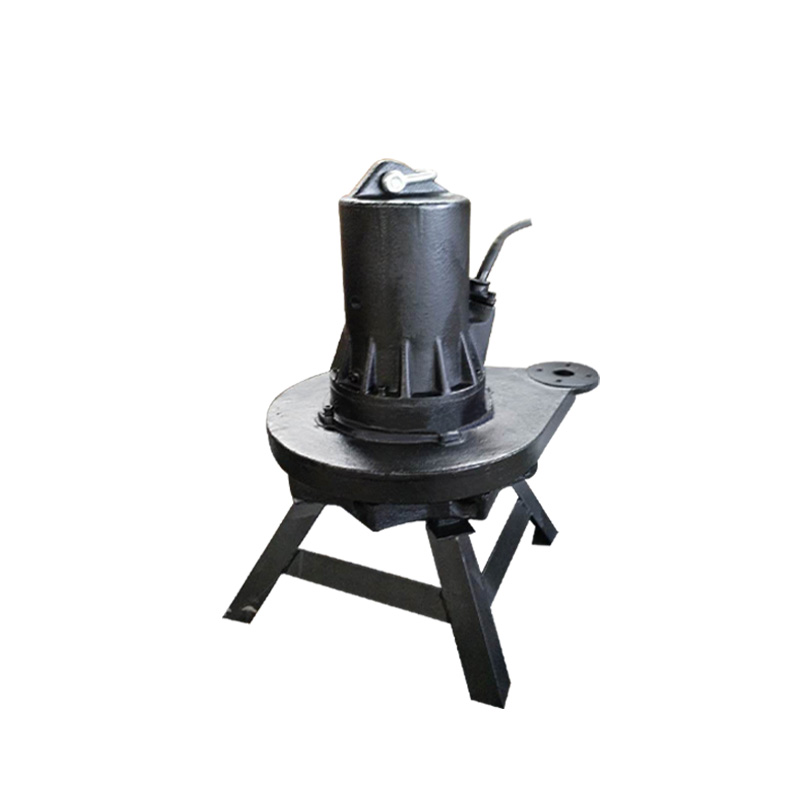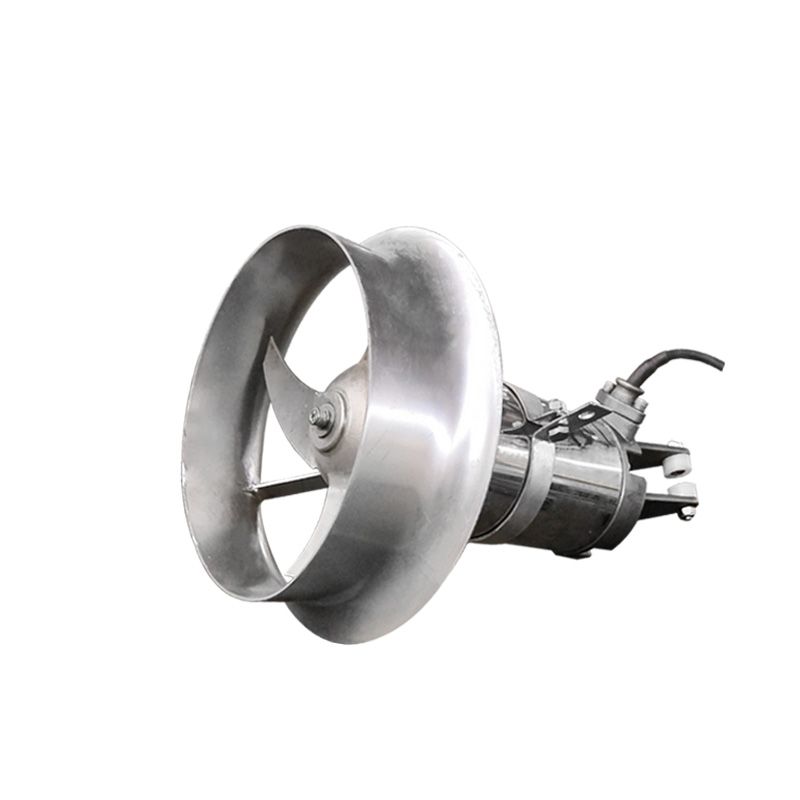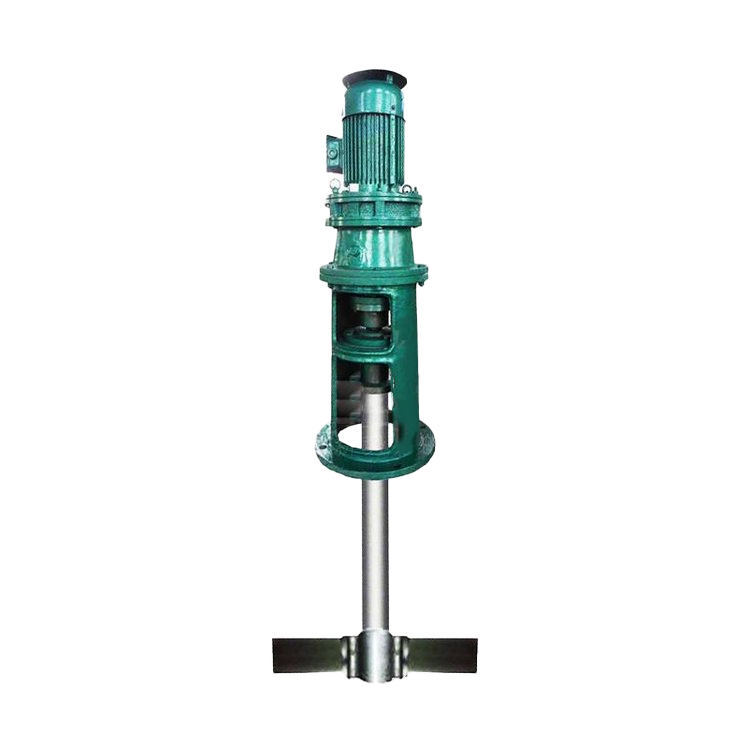

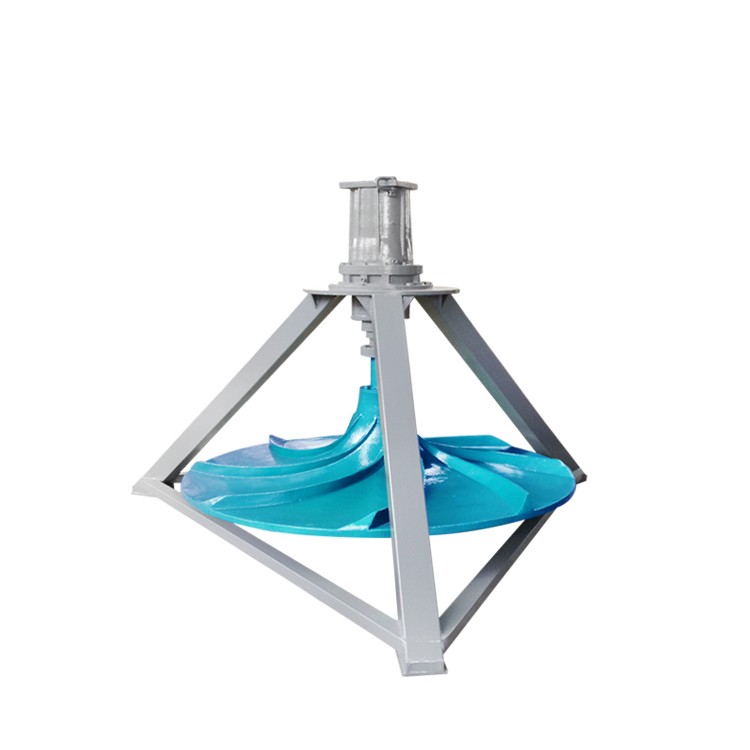



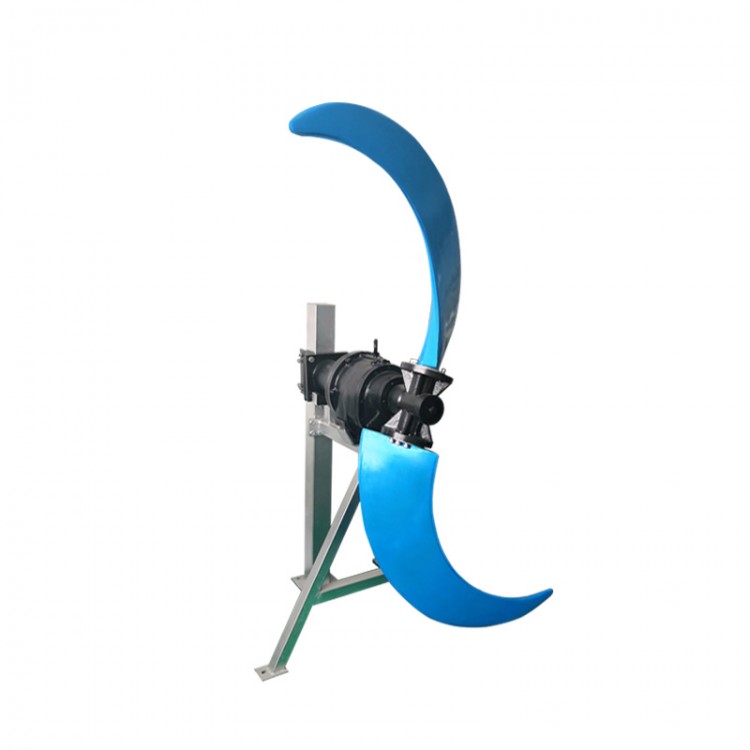





In municipal, chemical, papermaking, and various other water treatment processes, water body agitation and mixing is one of the key process steps. Traditional mixing equipment is commonly divided into two types: vertical-axle propeller and horizontal (submersible) styles. Due to the installation method and blade propeller design, their mixing patterns are not ideal in terms of energy consumption and mixing effectiveness. This not only unnecessarily increases the operation costs of wastewater treatment plants but also directly affects the final process treatment outcomes. To address these issues, after years of testing and leveraging the design experience of our peers, we have successfully developed a new curved impeller. After many years of practical application in multiple wastewater treatment plants, it has yielded excellent results, filled a domestic gap in this product category, and has become the preferred choice for replacing imported products.
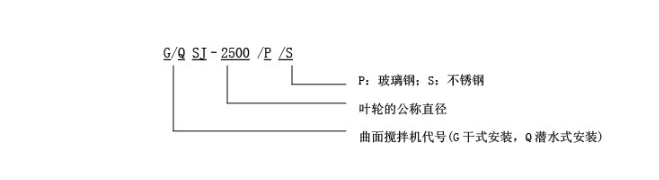
Model Representation Method:
Application Scope:
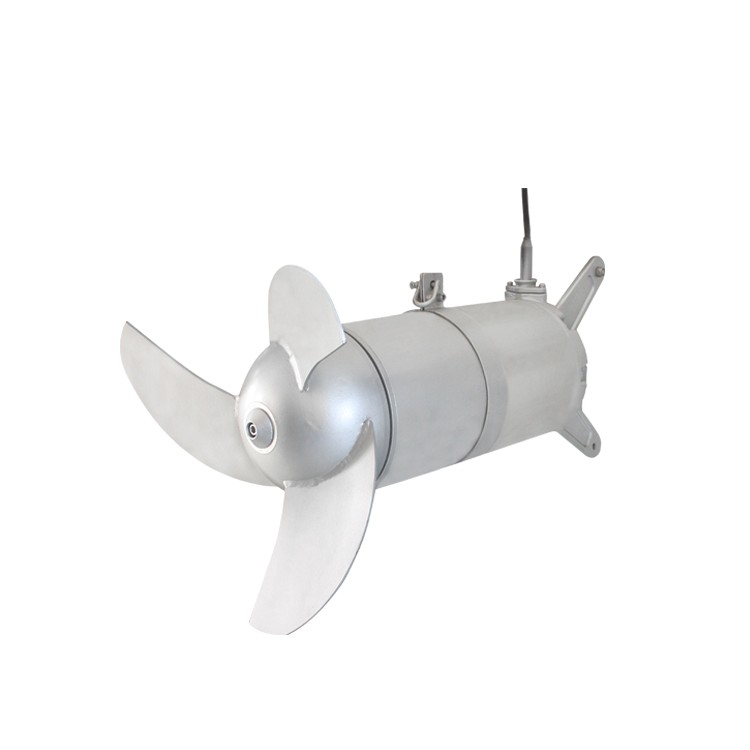
The G/QSJ series curved impeller mixers are one of the advanced, efficient, and highly recommended mixers developed by our company. They are widely used in industries such as environmental protection, chemicals, energy, and light industry, where liquid mixing with solid-liquid, gas, and air is required. Particularly suitable for coagulation tanks, regulating tanks, anaerobic tanks, nitrification, and denitrification tanks in wastewater treatment processes.
Operating Principle:
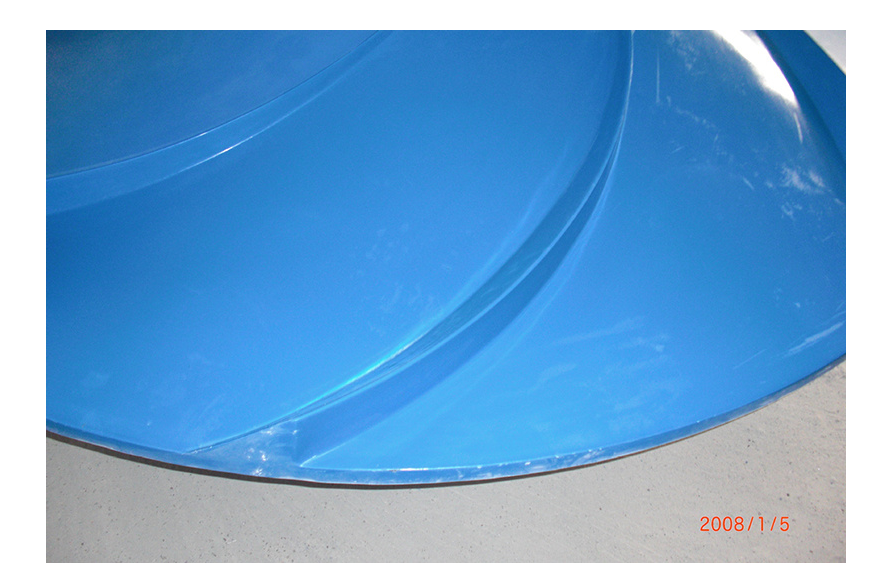
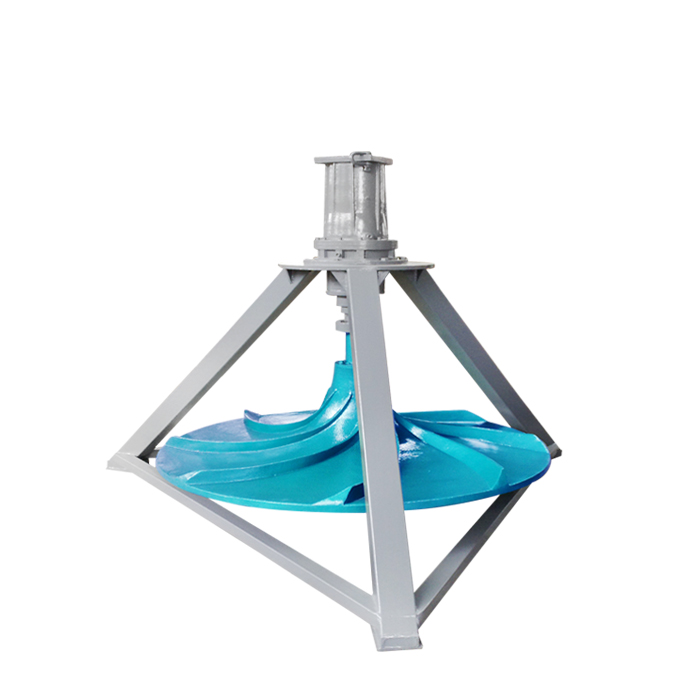
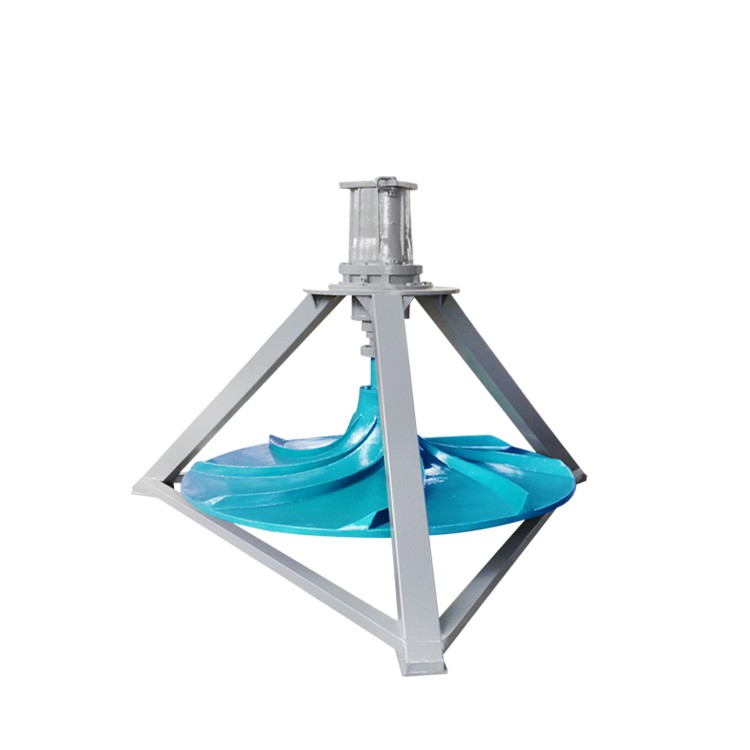
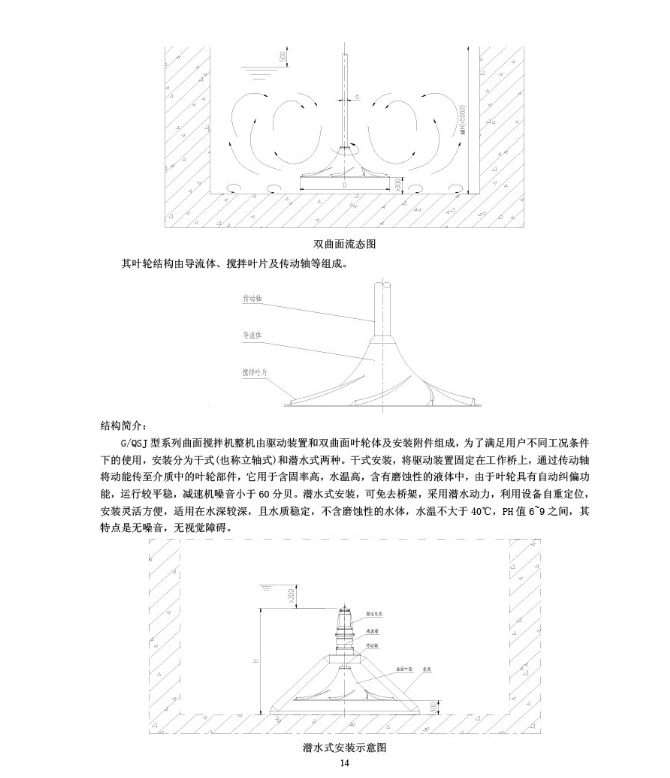
The G/QSJ series curved impeller mixers feature a double hyperbolic paraboloid structure on the surface of the curved impeller body, formed by the rotation of the hyperbolic involute along the axis of the impeller body. The unique design of the impeller structure maximizes the combination of fluid characteristics and mechanical motion. The equation of the hyperbola is xy=b, and the curved surface is formed by rotating the curve along the y-axis. To accommodate water flow, the design allows water to enter from the center of the impeller, reducing the entry turbulence and ensuring uniform pressure on the impeller surface, thereby maintaining the overall balance of the machine during operation. There are eight guide vanes evenly distributed on the involute double arcs, which, with the help of the potential energy obtained from the additional water entry due to the liquid's own weight pressure, form kinetic energy as the impeller rotates. Under the influence of gravity, the liquid moves tangentially along the circular path of the impeller due to the transition through the double curved structure, and with the reflection from the pool wall, it creates a circulating water flow from top to bottom, resulting in cross currents in both the axial (y) and radial (x) directions (as shown in the double curved flow state diagram). It is due to the structural characteristics of the impeller and the close-to-the-bottom installation of the G/QSJ series curved impeller mixers that their working position directly determines their anti-settling effect on suspended particles, achieving ideal mixing results during operation and effectively eliminating dead mixing spots. The larger specific surface area allows for a larger water exchange area.
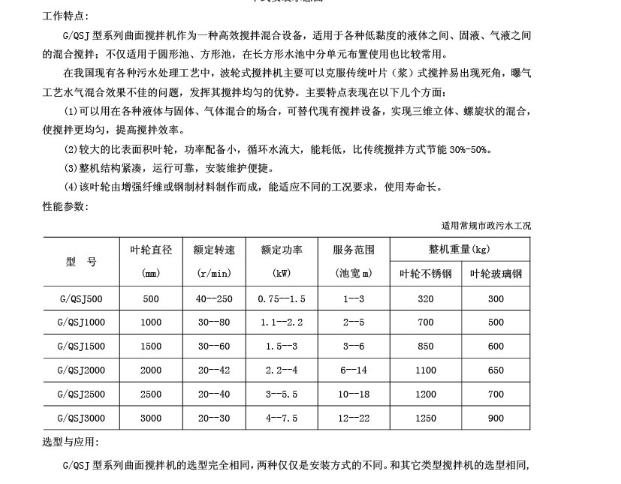
The selection of a curved impeller mixer is related to parameters such as the type of pool, volume, liquid depth, medium concentration, temperature, and pH level. The main criteria for selecting a curved impeller mixer are determined by the effective service area of each unit, with the length-to-width ratio of the pool not exceeding twice. This allows rectangular pools to be divided into several equal working units, thereby determining the number of mixers required. For pools with depths exceeding 5 meters or concentrations beyond the specified limit, increased power or higher operating speed of the mixer should be considered during selection to ensure effective mixing in large-volume and high-concentration media.
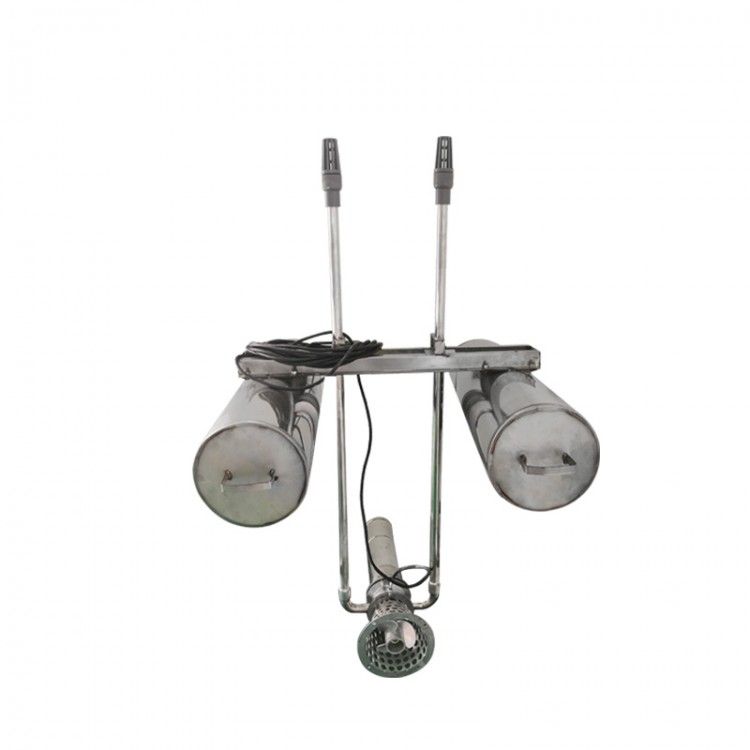
Under normal operating conditions, it is recommended to prioritize dry installation. For noise or visual requirements, submersible installation is suggested. Our company can assist customers in selecting the appropriate model for special environments.
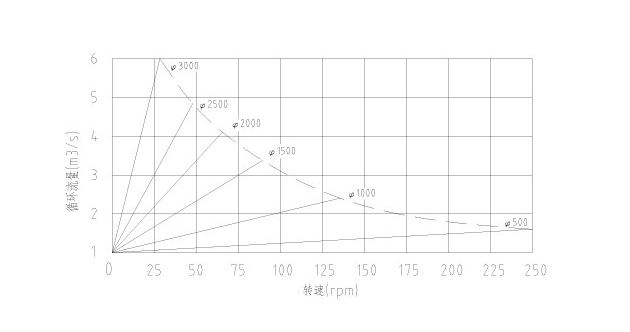
RPM and Circulation Flow Curve:
Installation:
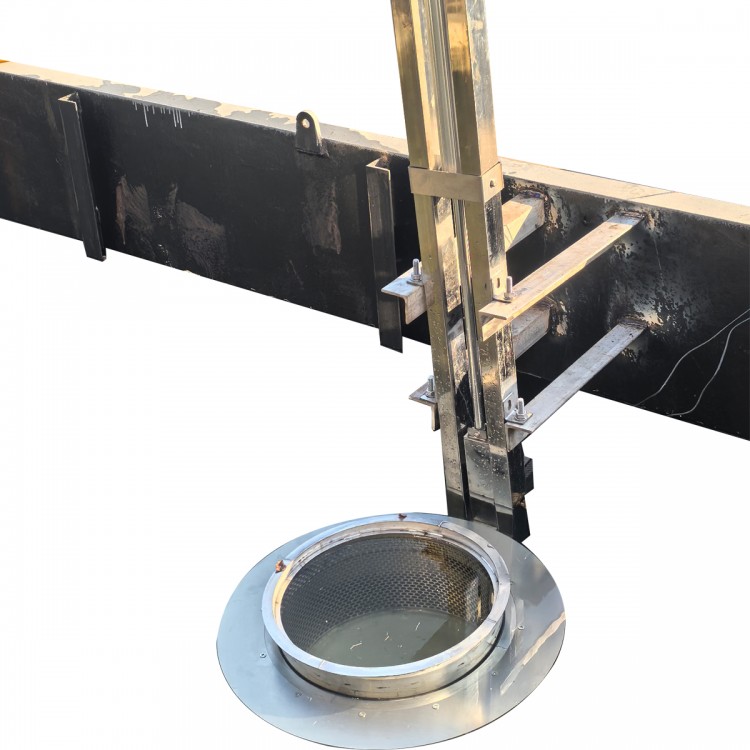
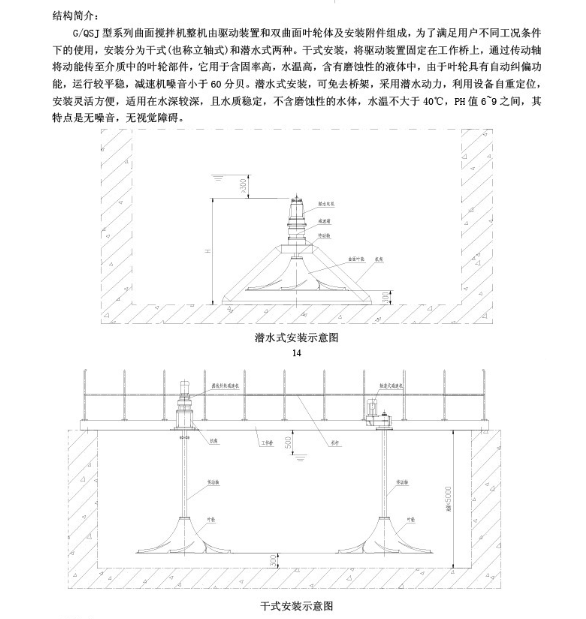
The installation of the curved mixer comes in two types: dry installation and wet installation, both of which are extremely simple.
The wet-installation mixer can be directly lifted into the designated position using a crane or lifting frame, relying on its own weight for positioning, and the cables are securely fastened.
Refer to the wet installation diagram.
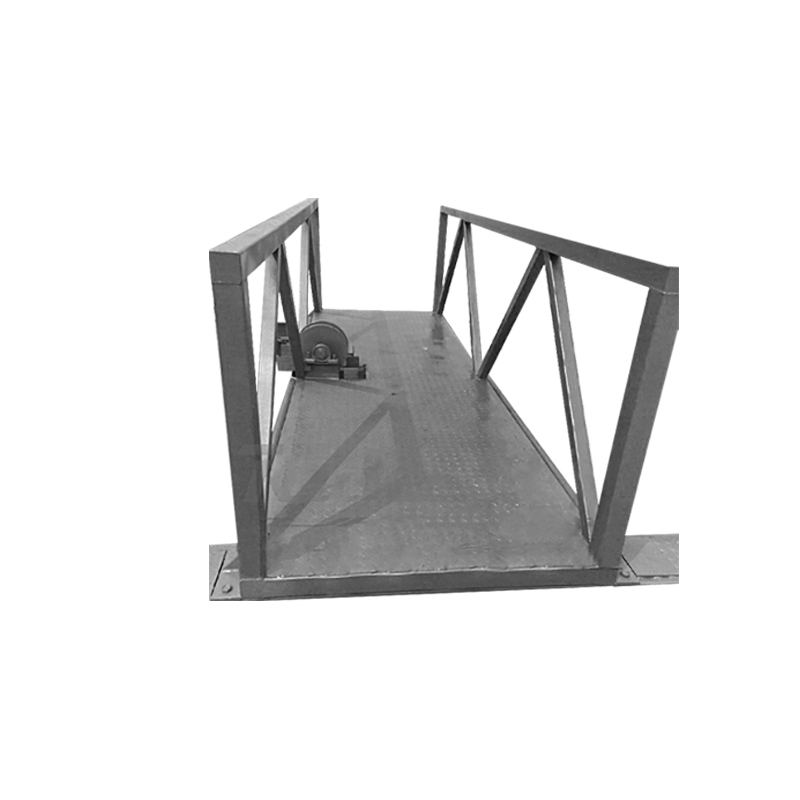
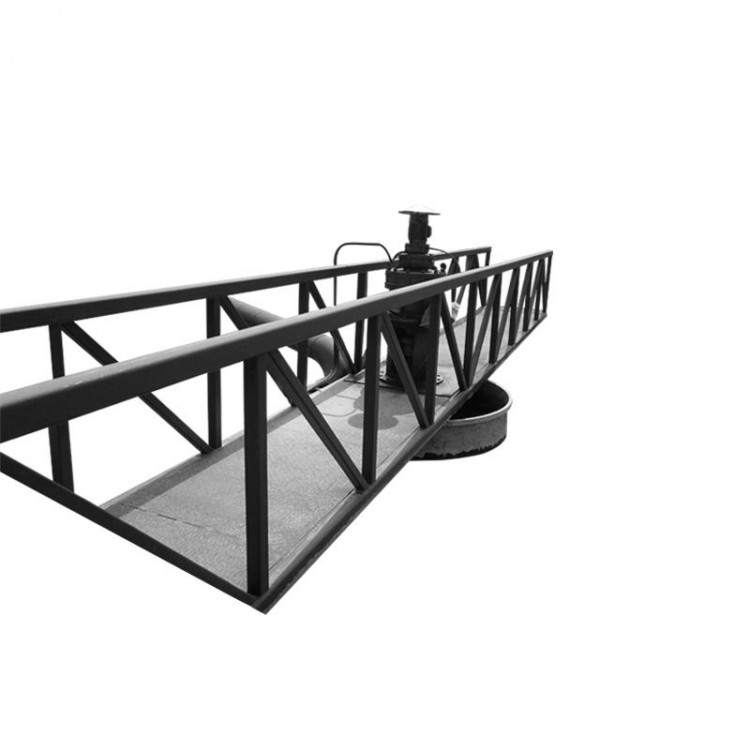
The mixer for dry installation first fixes the reducer frame to the work bridge, then simply install the drive shaft, impeller components in sequence, and securely fasten the cables, as shown in the dry installation illustration.
Propeller fiberglass
| Model | Impeller Diameter (mm) | Rated Speed (r/min) | Rated Power (kW) | Service Range (Pool Width in Meters) | Overall Weight (kg) | |
| G/QSJ500 | 500 | 40--250 | 0.75--1.5 | 1--3 | 320 | 300 |
| G/QSJ1000 | 1000 | 30--80 | 1.1--2.2 | 2--5 | 700 | 500 |
| G/QSJ1500 | 1500 | 30--60 | 1.5--3 | 3--6 | 850 | 600 |
| G/QSJ2000 | 2000 | 20--42 | 2.2--4 | 6--14 | 1100 | 650 |
| G/QSJ2500 | 2500 | 20--40 | 3--5.5 | 10--18 | 1200 | 700 |
| G/QSJ3000 | 3000 | 20--30 | 4--7.5 | 12--22 | 1250 | 900 |
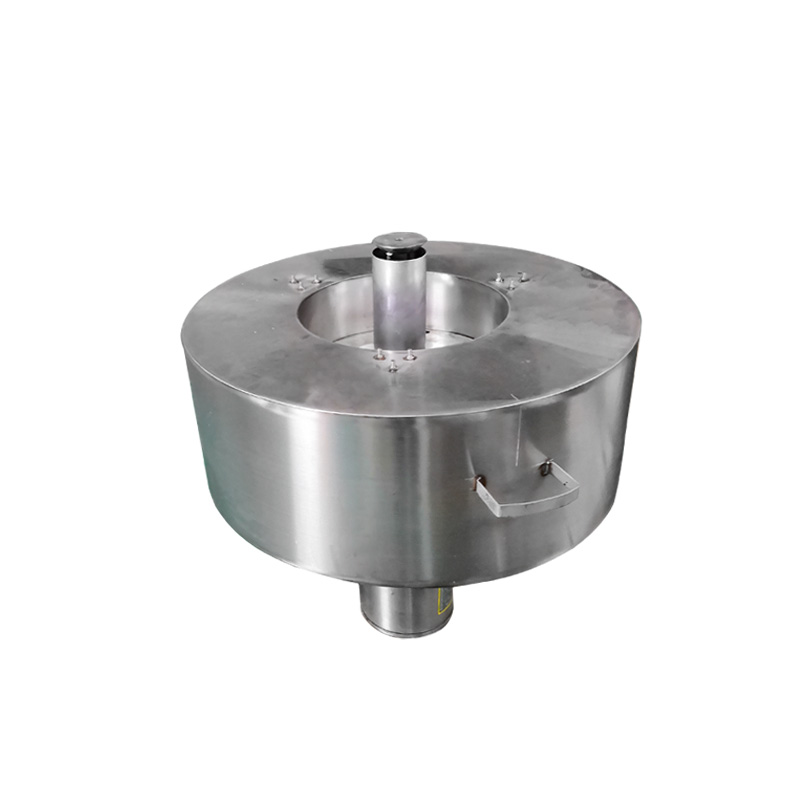
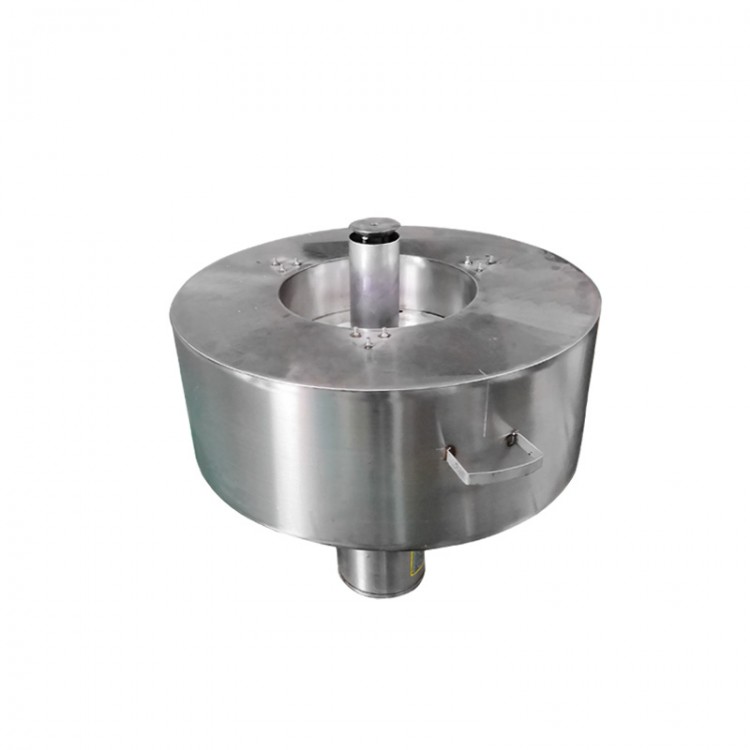
Stainless Steel Double Concave Blender
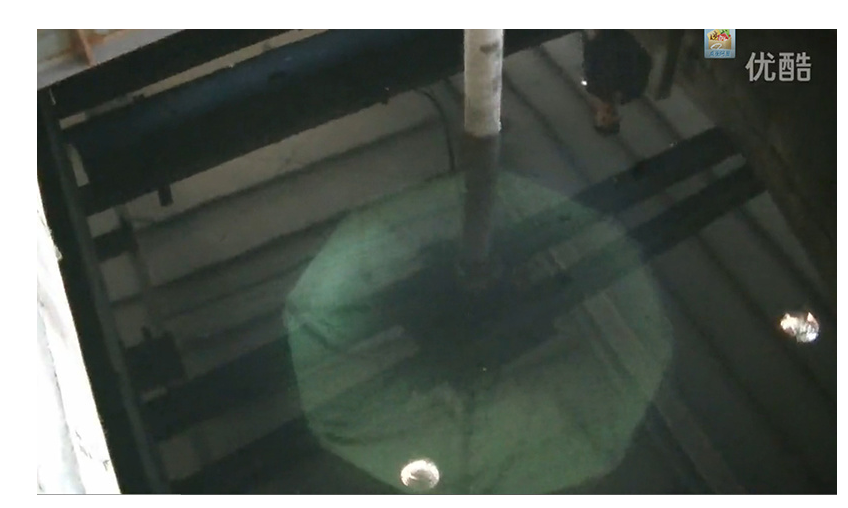
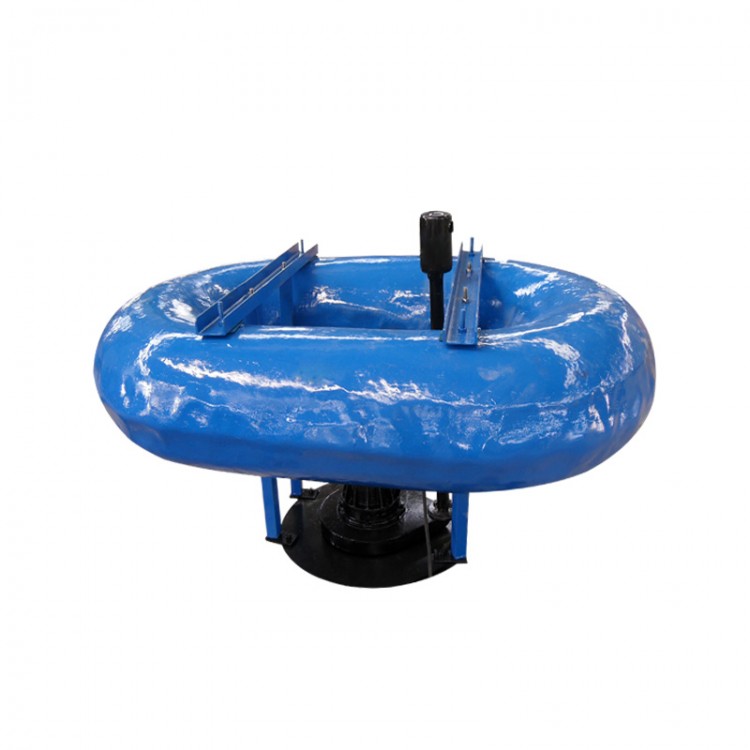
Glass fiber reinforced plastic double curved impeller