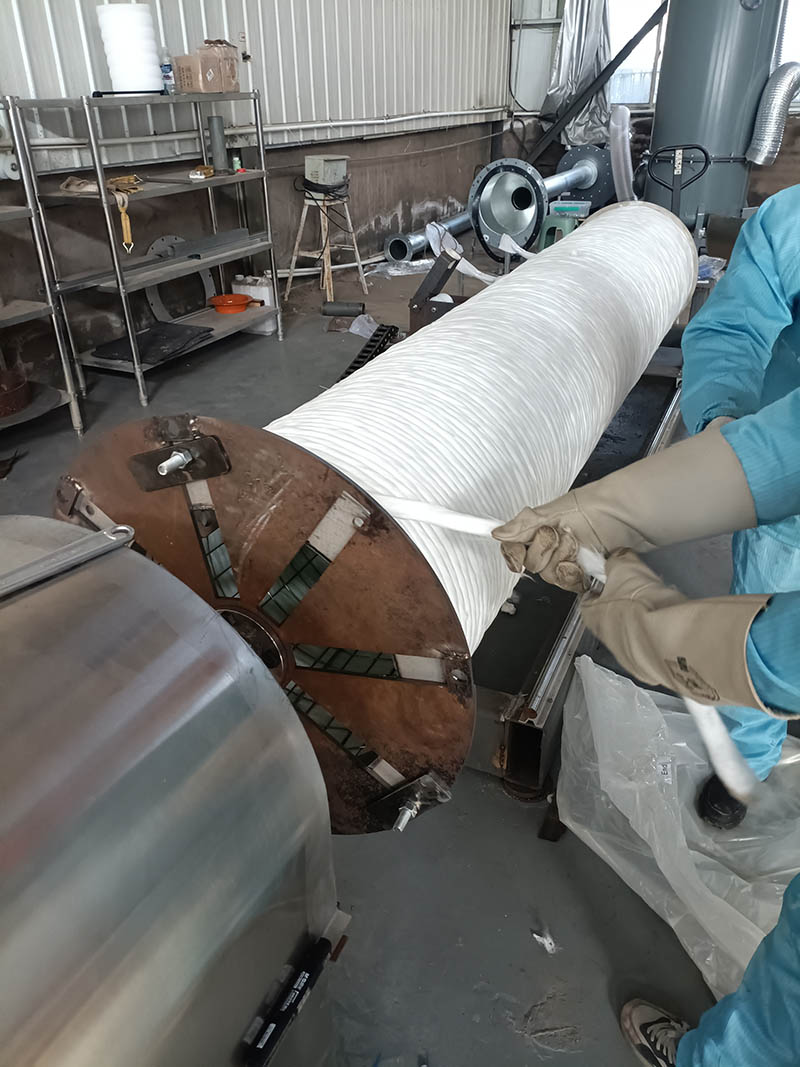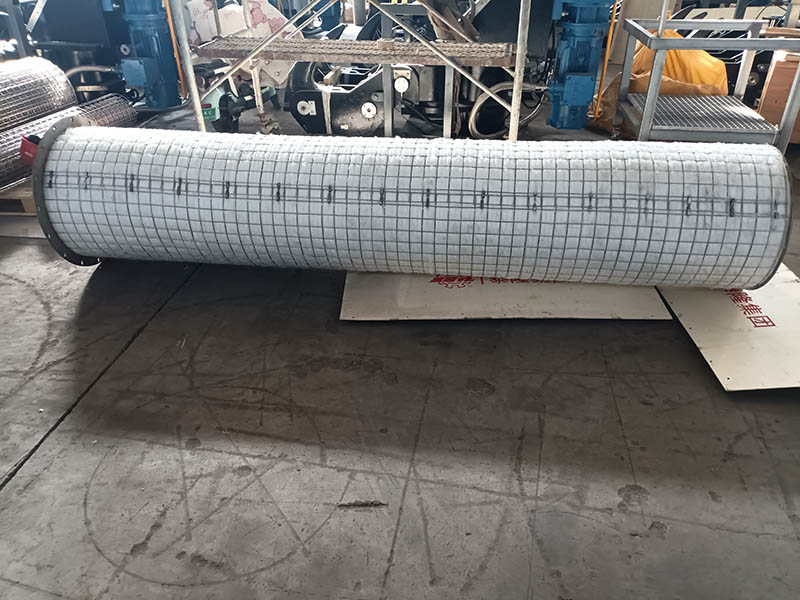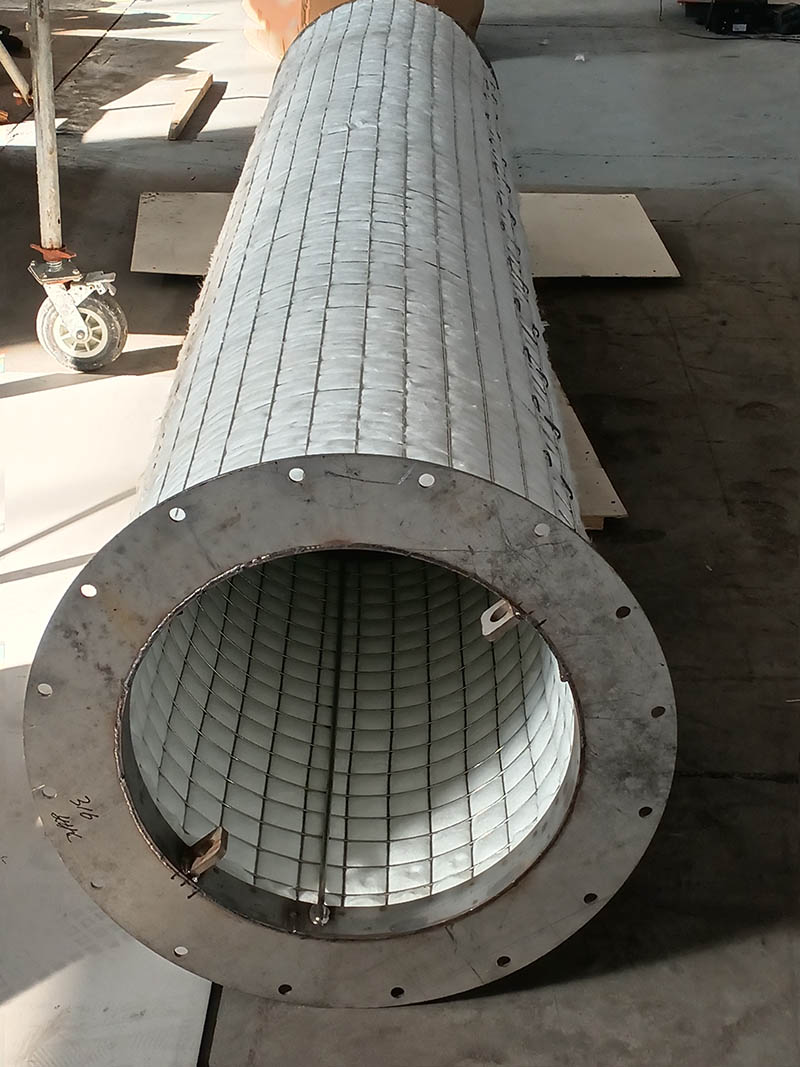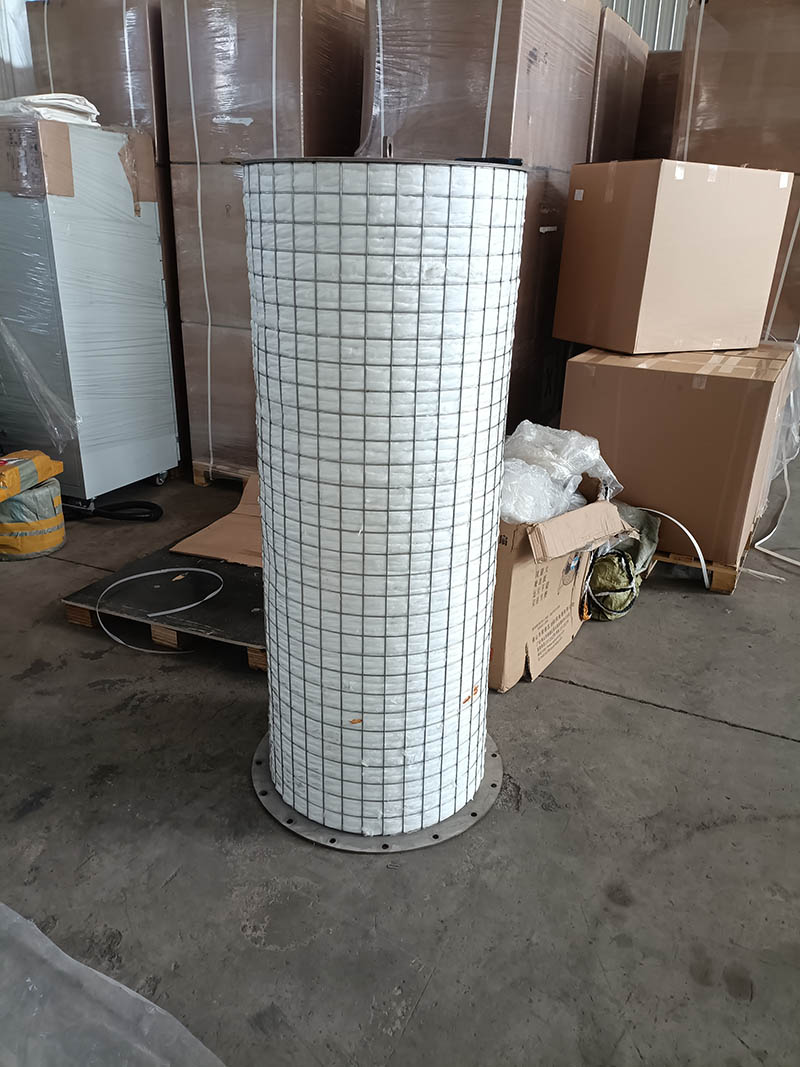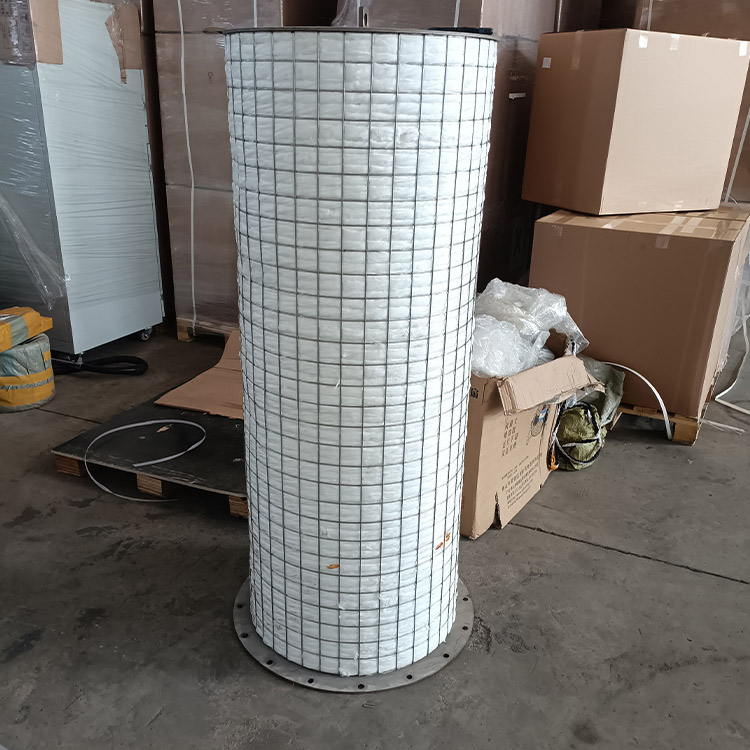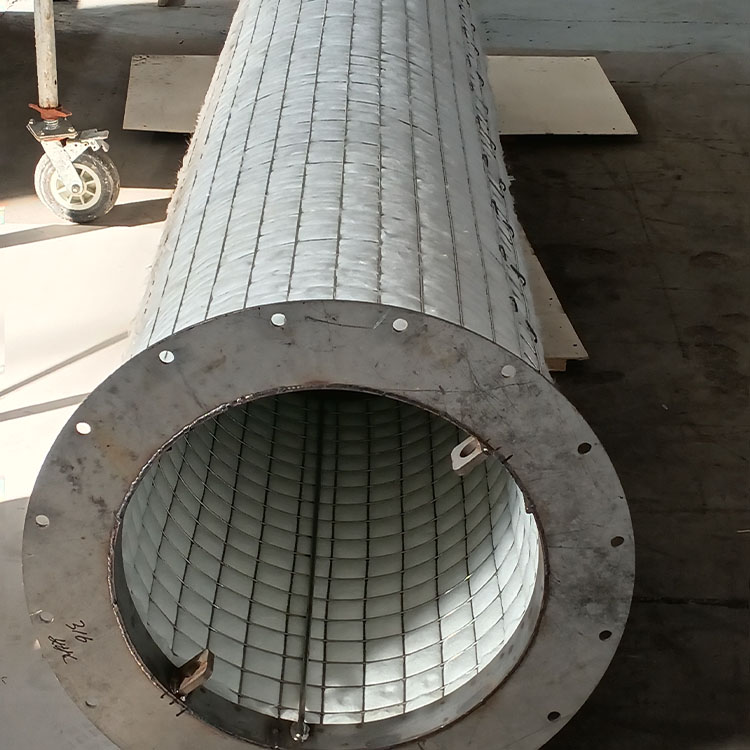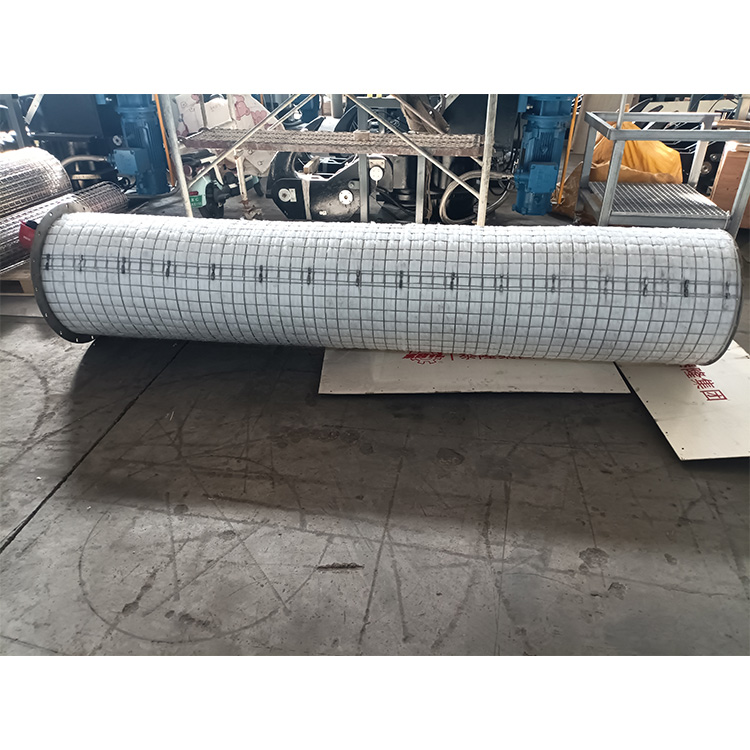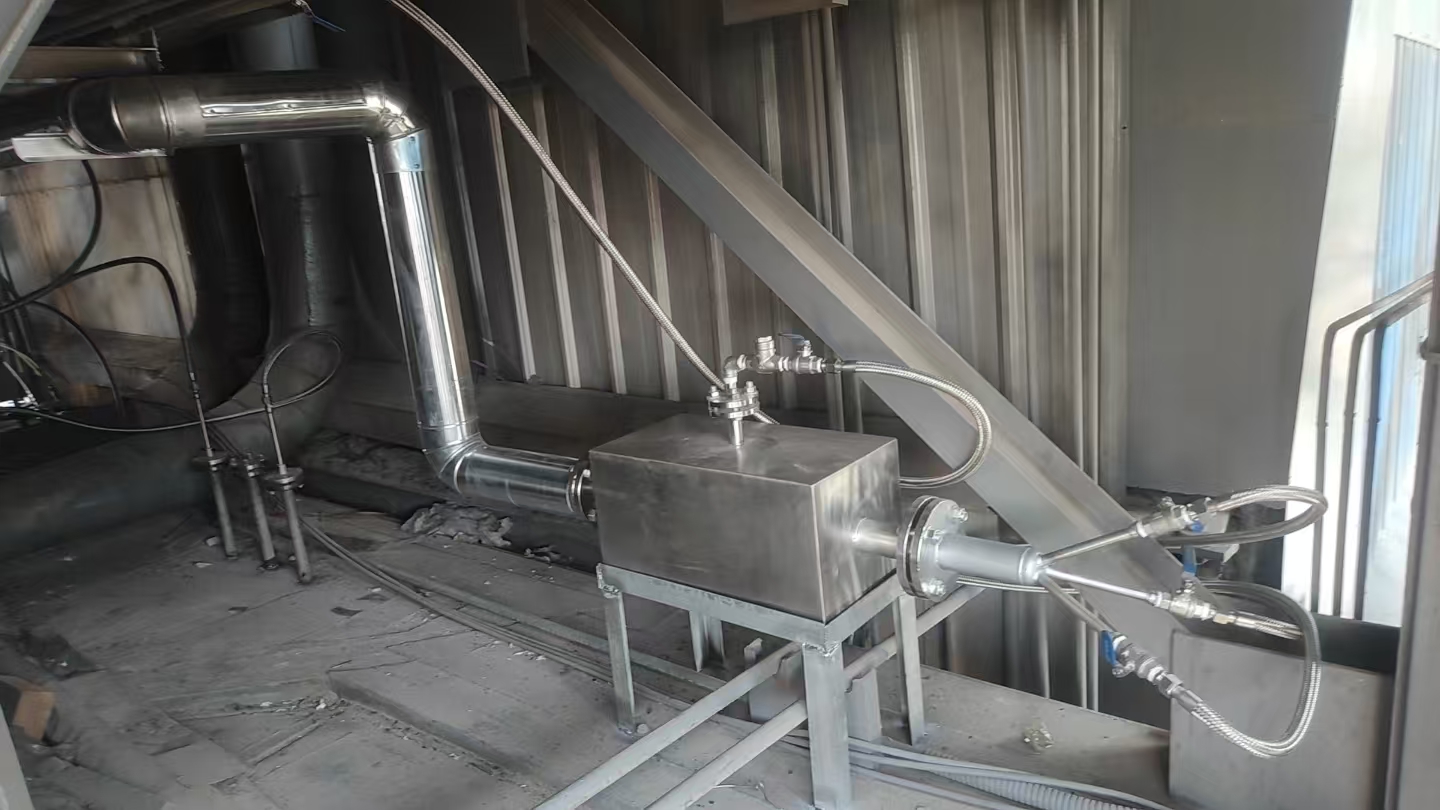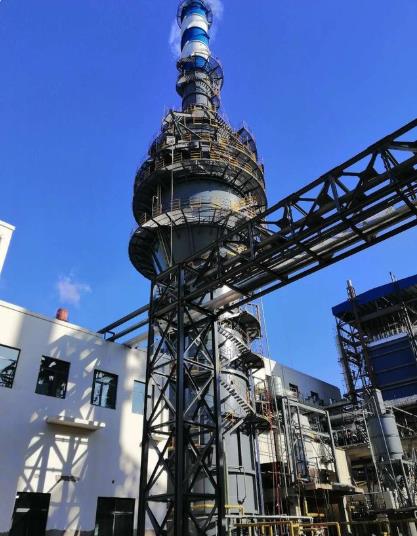








Fiber demister is a core separation equipment for efficiently removing tiny droplets, mist, and dust from industrial exhaust gases or process gases. Utilizing the composite actions of fiber filling material interception, inertial collision, Brownian diffusion, and electrostatic attraction, it achieves high-precision collection of mist droplets with a particle size of ≥0.1μm in the gas phase, with a removal efficiency of over 99%. It is widely used in industries such as petrochemicals, chemicals, environmental protection, metallurgy, and pharmaceuticals, solving issues like liquid carry-over in process exhaust gases, excessive emissions, and subsequent equipment corrosion. It is a standard equipment for gas-liquid separation and post-wet desulfurization/washing exhaust gas purification.
Its core advantages include high collection accuracy, low pressure loss, large air handling capacity, wide operational flexibility, and compatibility with various operating conditions such as atmospheric/low pressure, normal/medium temperature, corrosive/flammable explosive, etc. It fills the gap of low efficiency in removing tiny droplets by replacing mesh demisters and baffle demisters.
I. Core Working Principle
The defogging fiber separator's gas-liquid separation process is a continuous sequence of gas-phase penetration, droplet collection, liquid film convergence, and slurry discharge. It relies on the porous mesh structure of the fiber filling layer to achieve efficient collection of tiny droplets, divided into 4 key steps:
Airflow Distribution: The mist phase passes through an even flow inlet device, uniformly flowing through the fiber filling layer to avoid excessive local velocity that could decrease collection efficiency.
Drop Collection: Microscopic droplets in the gas phase are intercepted by fibers (large droplets), undergo inertial collision (medium-sized droplets), and Brownian diffusion (≤1μm microdroplets). If the medium is conductive, electrostatic adsorption also occurs, and the droplets are adhered and collected on the fiber surface.
Liquid Film Accumulation: Collected liquid droplets gradually accumulate on the fiber surface to form a liquid film. Under the action of gravity and air flow shear force, the film flows downward along the fibers, aggregating into larger droplets or slurry.
Liquor draining: After condensation, the liquid droplets are collected by the liquid collection device at the bottom of the packed bed and discharged through the drain outlet. The purified gas phase is then released from the outlet, completing the gas-liquid separation.
Core separation logic: The fiber filling material has a large specific surface area (up to hundreds of m²/m³) and a high porosity (85%~98%), providing ample collection interfaces for tiny droplets while ensuring low resistance gas phase flow, achieving the dual effect of efficient separation and low energy consumption.
Core Structure (Modular design, easy to install and maintain)
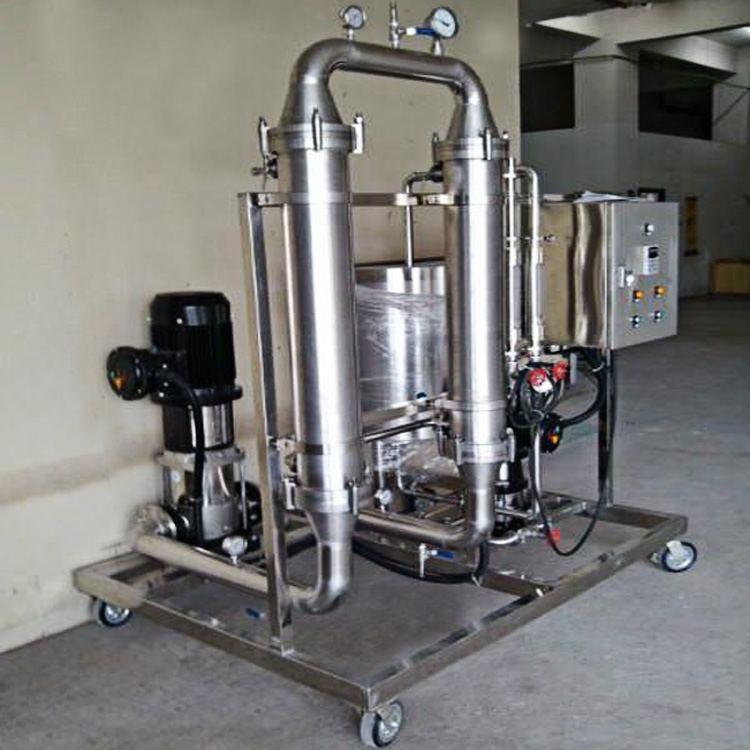
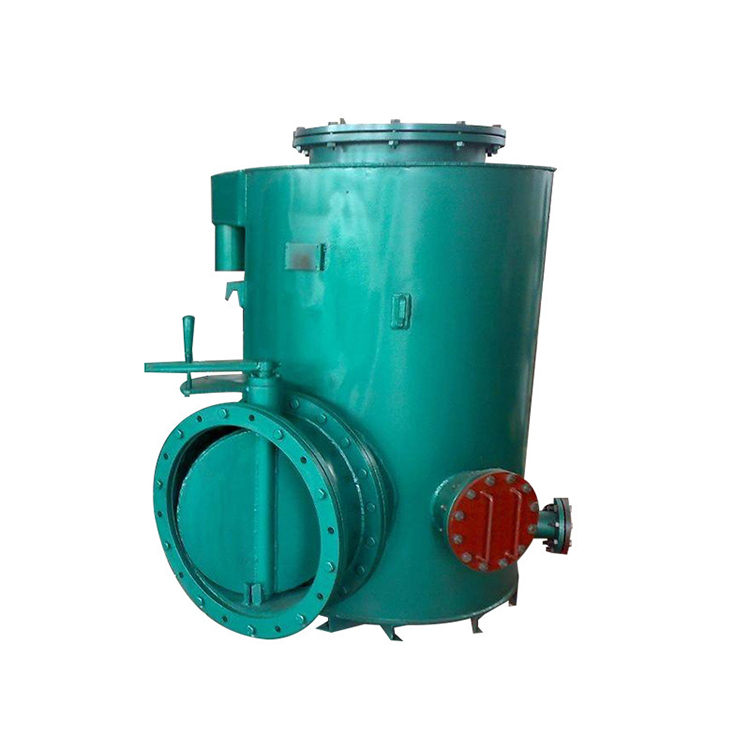
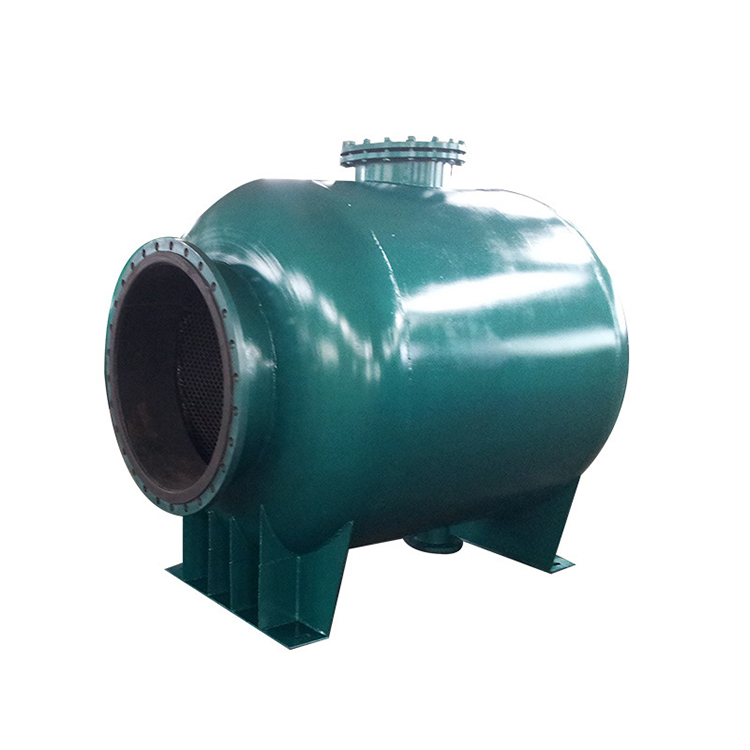
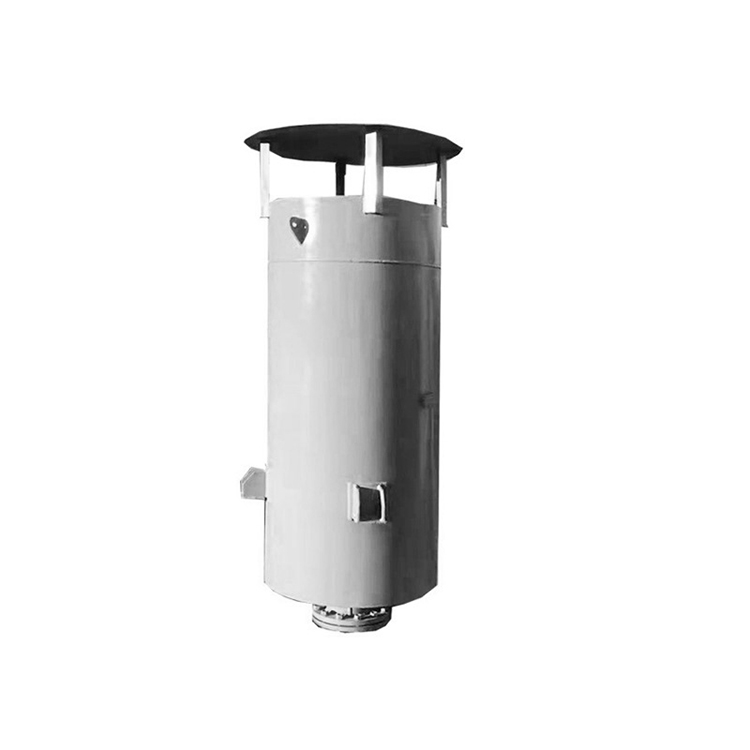
The fiber demister is available in either vertical or horizontal structure, with its core consisting of six main components: air distribution device, fiber filling layer, support layer, liquid collection and discharge device, shell, and cleaning unit. Some models are equipped with differential pressure monitoring and reverse吹 devices for added functionality, offering a compact design and versatile performance.
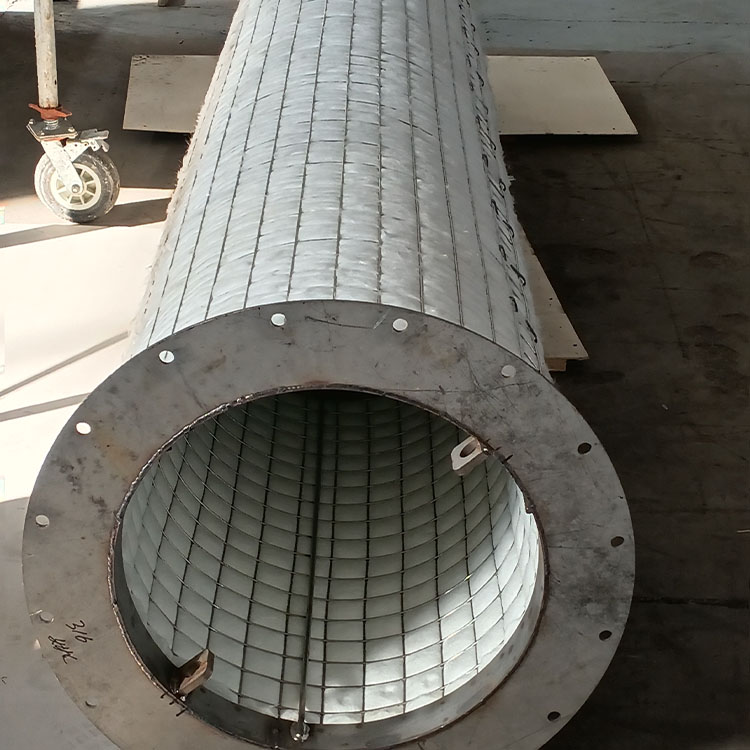
Shell: Made of carbon steel, 304/316L stainless steel, or FRP (fiberglass reinforced plastic), selected based on medium corrosiveness; withstands atmospheric pressure/low pressure (normal design pressure ≤ 0.6MPa), ensuring equipment sealing and structural integrity.
Airflow Distribution Device: Grille/porous plate structure, installed at the inlet, ensuring even phase distribution, avoiding "channeling" and "edge flow," to guarantee the full cross-section efficiency of the packing layer.
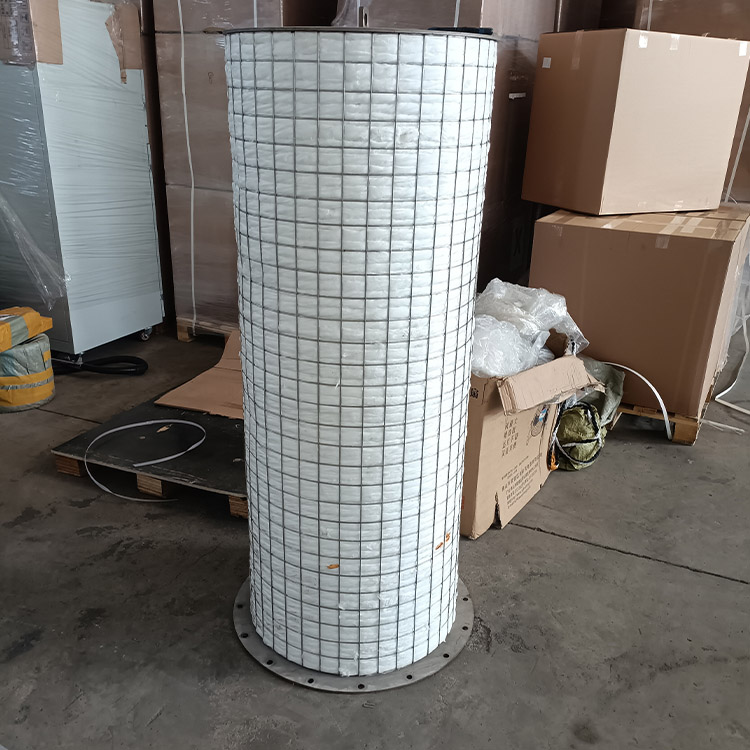
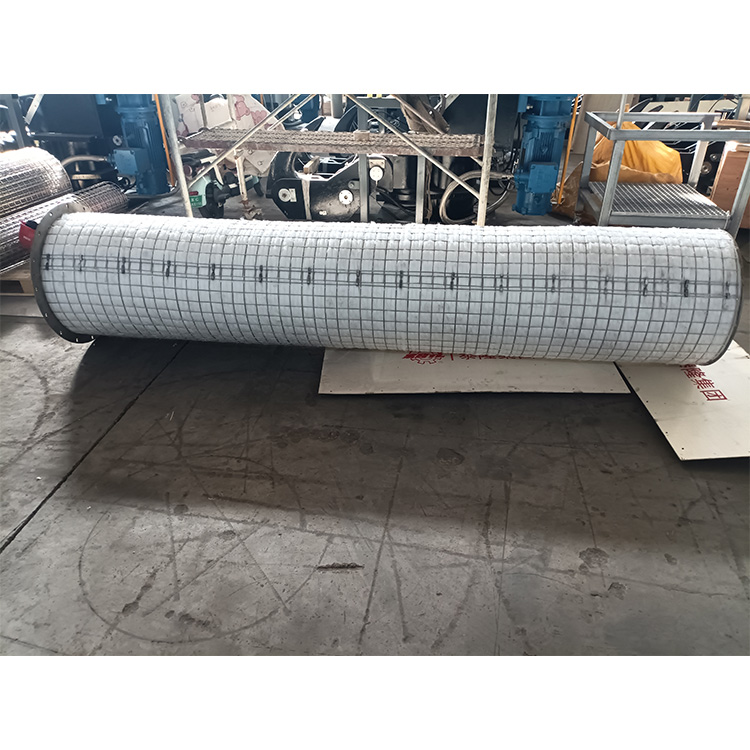
Fiber Filling Layer: Core separation component, consisting of filling blocks/stacks made from fiber strands (glass fiber, polypropylene fiber, metal fiber); can be laid in a single layer/multiple layers, thickness customized according to operating conditions.
Supporting Layer: Metal grille/porous plate, supporting the fiber filling layer, preventing the filling from being blown away by air currents, while ensuring that droplets converge smoothly downwards.
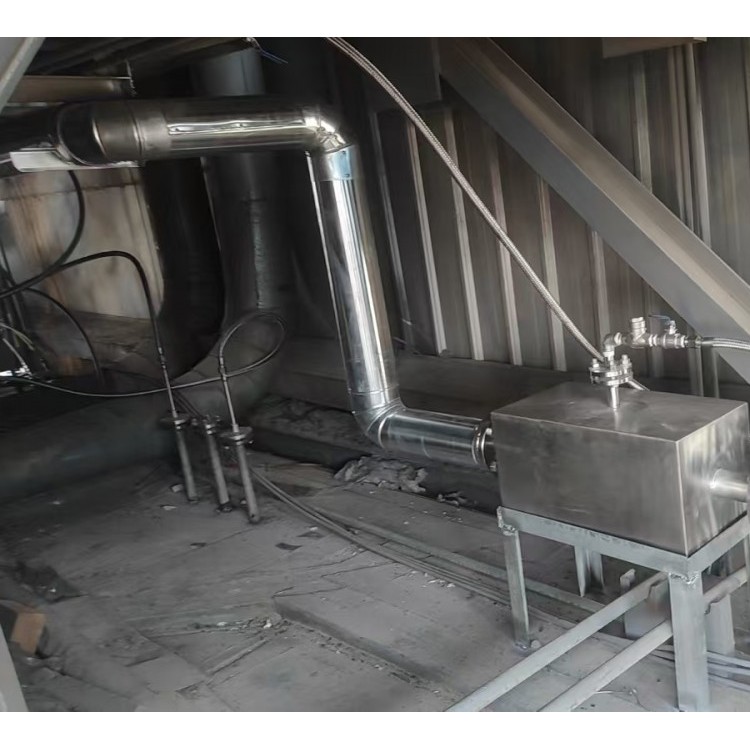
Liquid collection and discharge unit: Liquid collection tank + discharge pipe, collects and concentrates slurry; discharge pipe fitted with water seal/siphon device to prevent gas phase leakage from the discharge port, ensuring separation efficiency.
Cleaning Equipment: Spray pipes + nozzles, installed above/adjacent to the packing layer, regularly wash the packing layer with water/alkali to prevent scaling and clogging of the packing, restore collection efficiency, suitable for conditions with adhesive impurities.
Auxiliary Equipment: Differential Pressure Gauge (monitors resistance of packing layer, determines if cleaning is needed), Backblowing Device (used in dry demisting conditions), Explosion-Proof Device (for flammable and explosive medium conditions).