
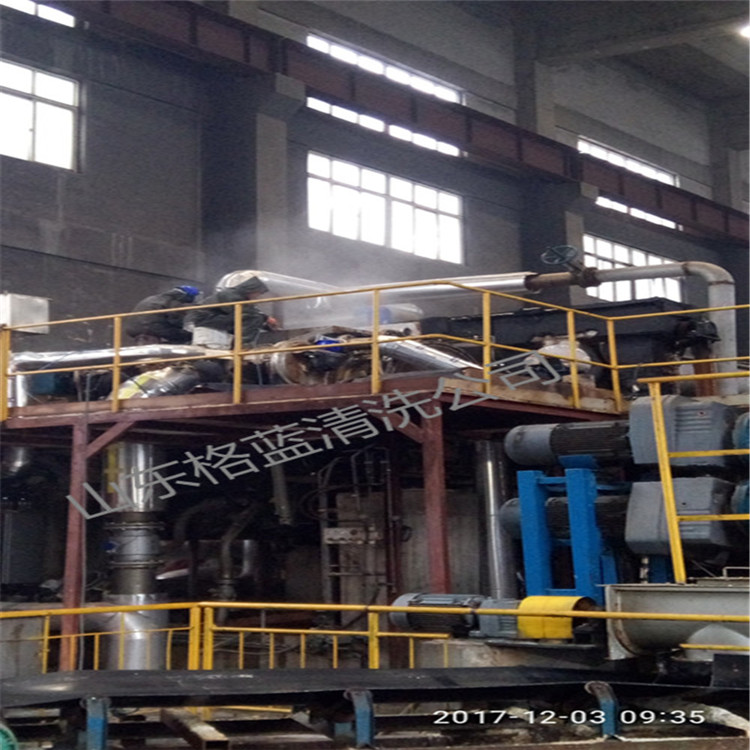







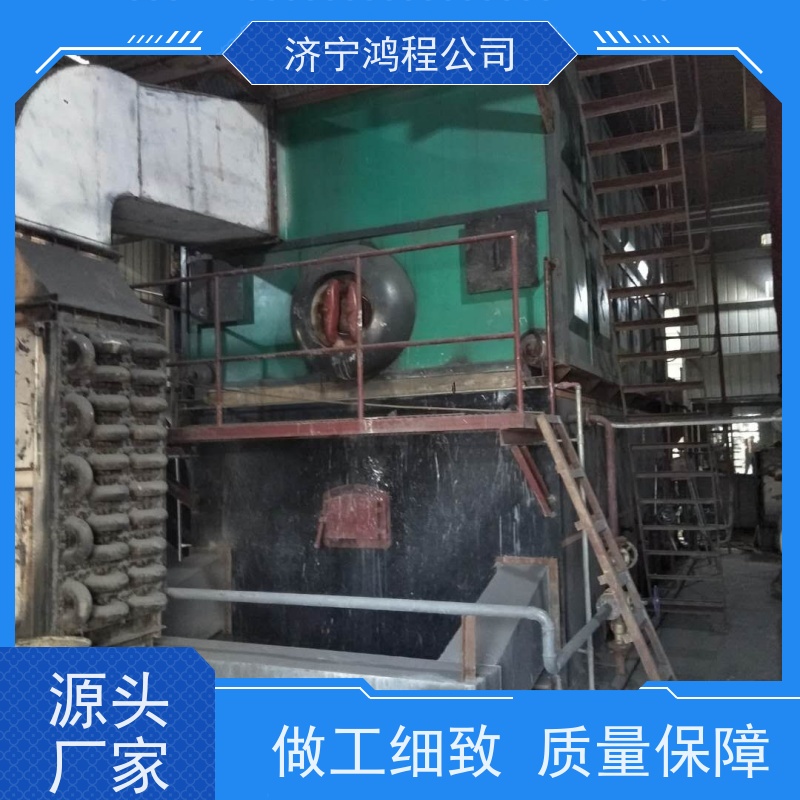
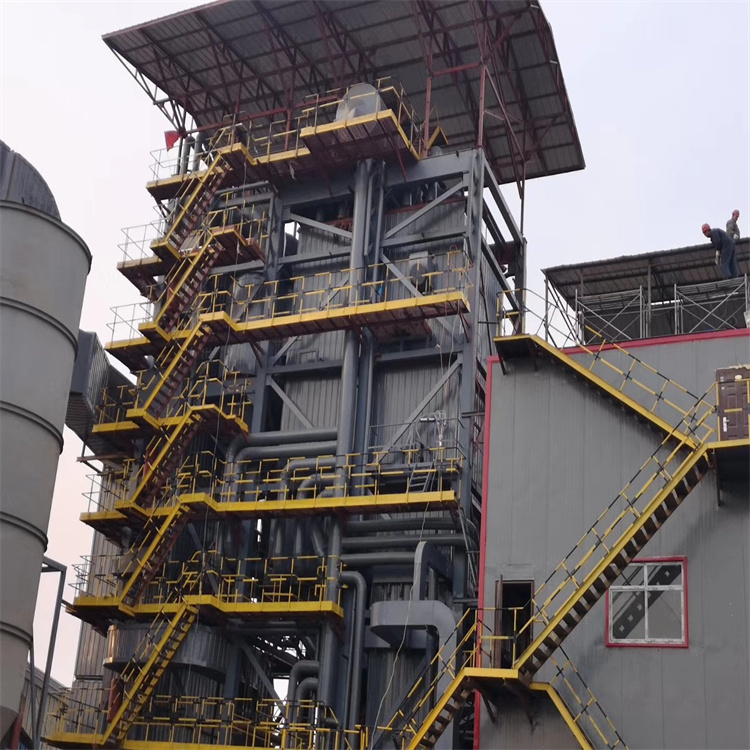

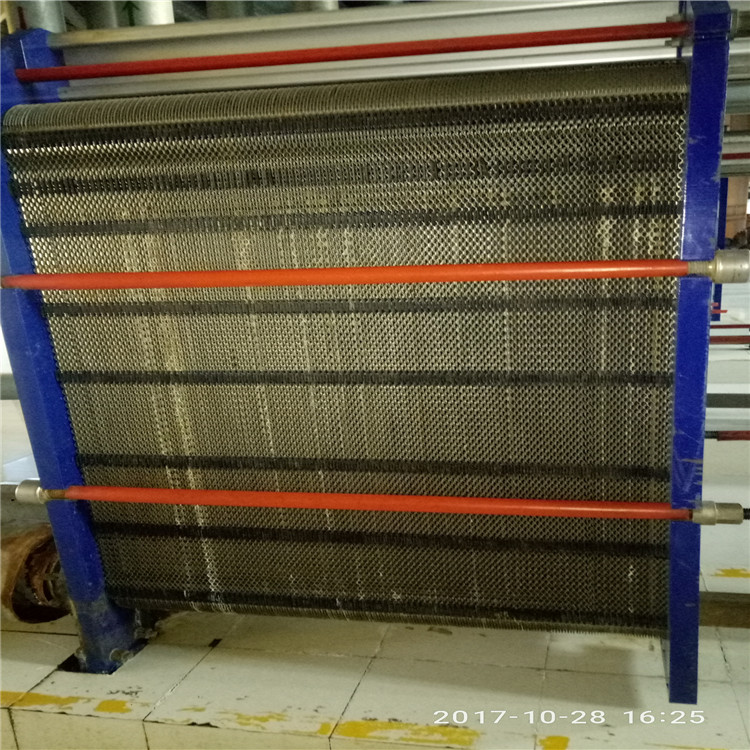
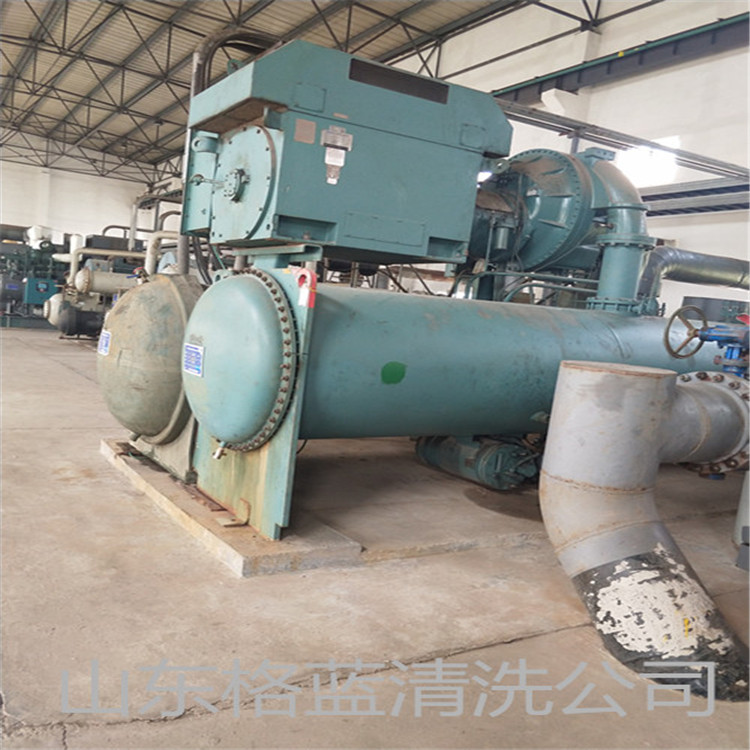
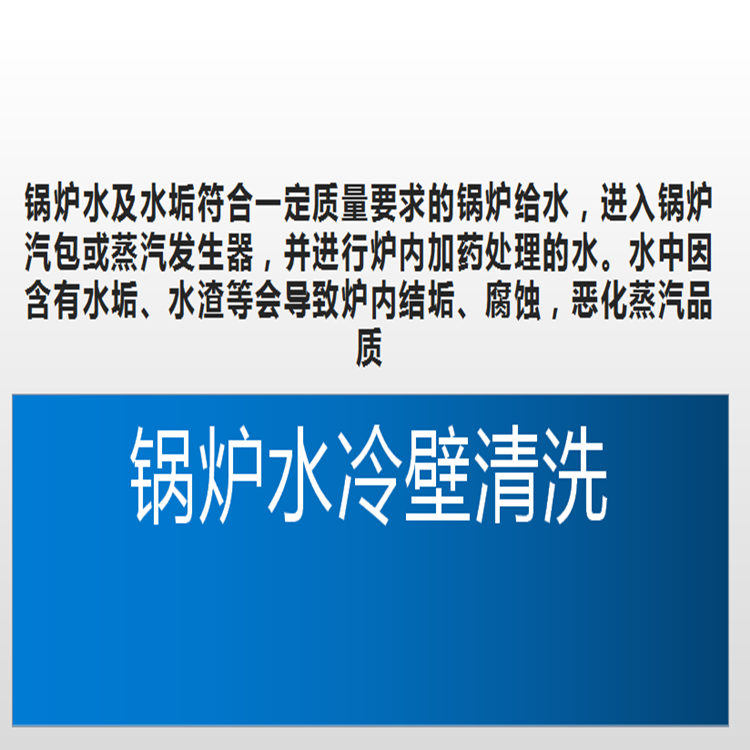
For new boiler systems, the equipment should be cleaned prior to operation. After the boiler is cleaned and the cleaning unit is removed, the boiler should be immediately put into service; if not, protective measures for stopping the boiler should be taken.
(1) Water冲洗. Before cleaning a new boiler, flush out residual matter (new boiler) and loosely adherent deposits, corrosion products, etc. (operational boiler) from the water-steam system with clean water at a higher flow rate. This also serves to check for system leaks and eliminate them.
(2) Alkali washing or alkali boiling. New boilers typically undergo alkali washing to eliminate oil stains and other contaminants picked up during the manufacturing, storage, and installation processes, thereby enhancing the effectiveness of acid washing.
Alkali washing solution is typically prepared by adding Na3PO4 and Na2HPO4 to the desalinated water to achieve a certain concentration, and the water temperature should be heated above 90℃.
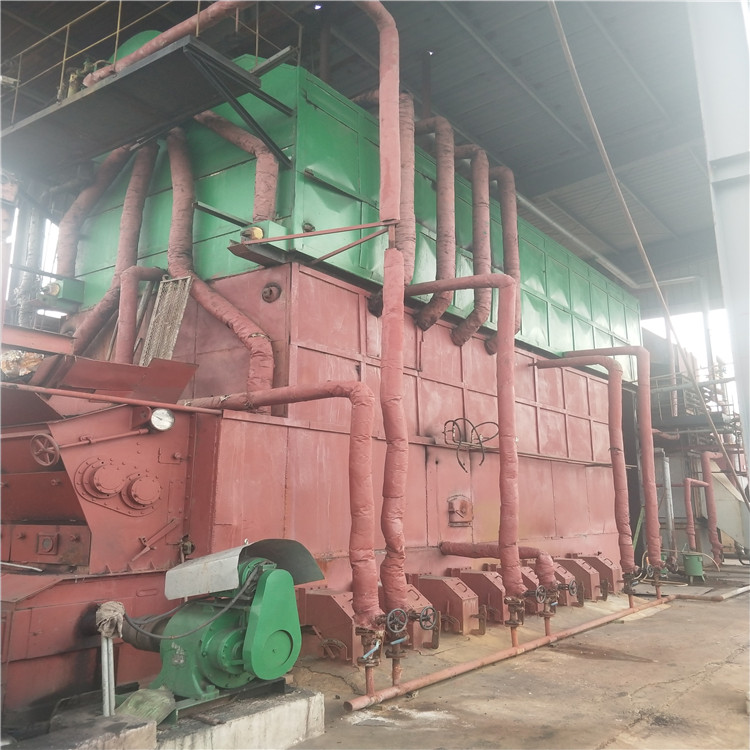
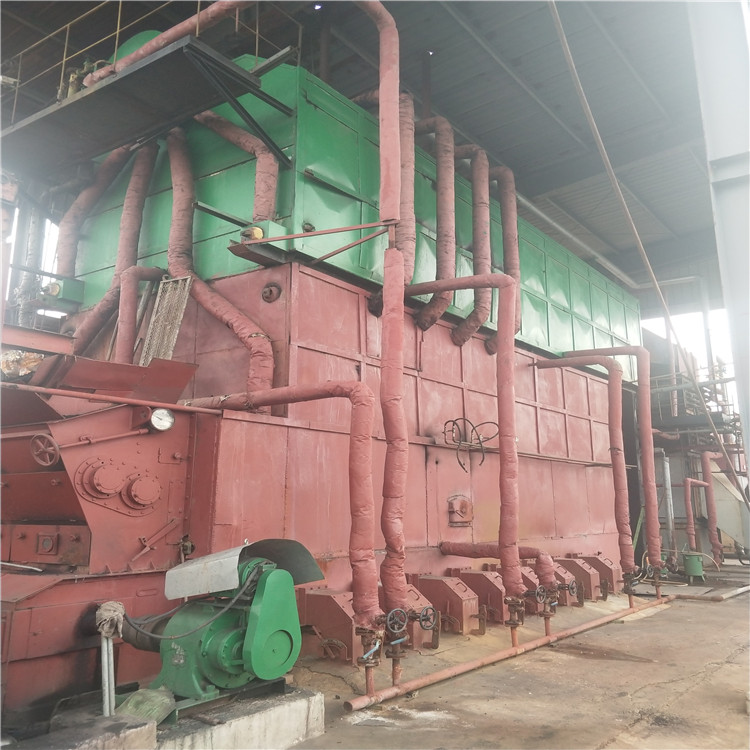
New Boiler
Alkali boiling is generally used for operating furnaces. This is because alkali boiling helps loosen deposits. The alkali typically used is Na3PO4 and NaOH. During the alkali boiling process, it is necessary to repeatedly replenish water and drain the bottom.Since it's an alkaline boil, the boiler must be ignited to bring the pot water to a boil and maintain a certain pressure while boiling for a specific duration. After the alkaline boil, once the water temperature drops below 80°C, drain the waste alkaline liquid and clean the sludge that has been boiled off from the system thoroughly.The ammonia wash follows to eliminate the effect of copper on acid washing, which is referred to earlier as the plating phenomenon. This phenomenon accelerates metal corrosion. After the ammonia wash, the system is flushed clean with demineralized water, followed by acid washing.
(3) Pickling. During pickling, the preparation of the chemical solution can be done either by adding chemicals while circulating or by preparing the cleaning solution in the cleaning tank. Control the pickling conditions, take samples for testing at regular intervals. The pickling process can be terminated when there is no significant change in Fe2+ levels in the circulating cleaning solution.